
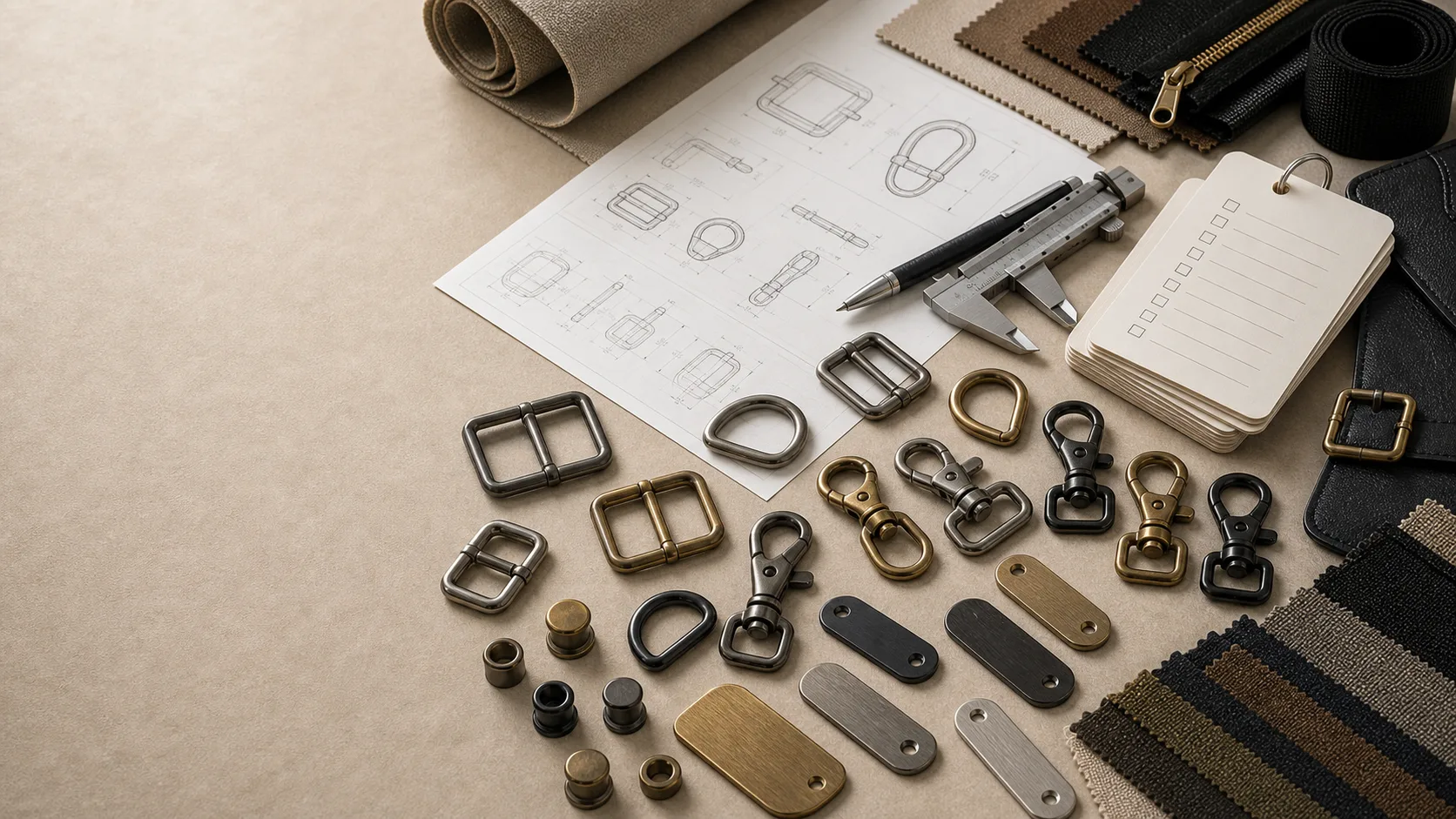
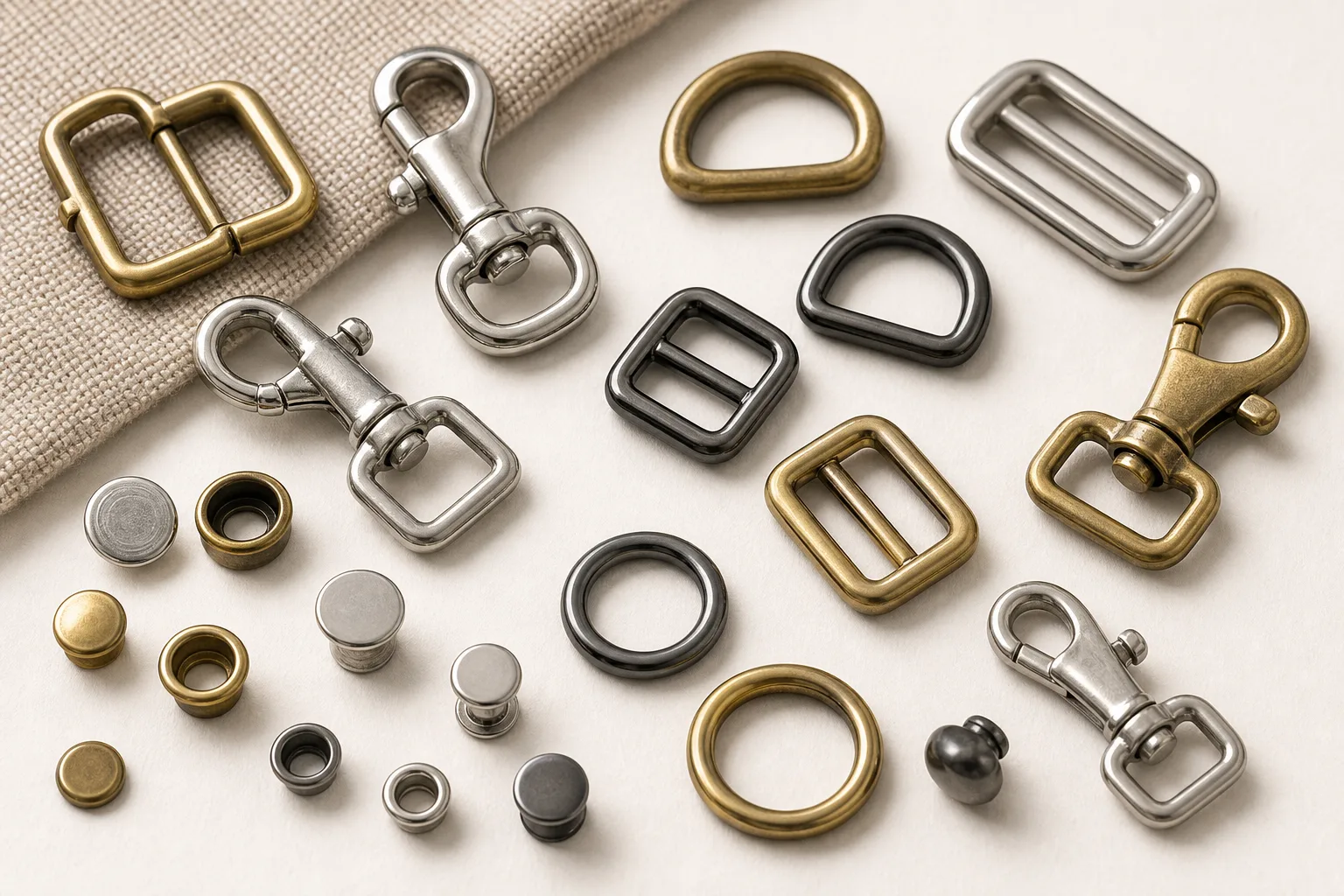
Most quotation delays are not caused by the supplier being slow. They are caused by an enquiry that cannot be answered as written, which starts a round of questions that could have been avoided. This checklist explains what each item changes, so you can judge which gaps matter for your particular part.
Product type and end use, together
Naming the part — buckle, snap hook, eyelet, tack button, rivet — narrows the category. Naming the end use narrows almost everything else, because the same nominal part is specified differently for a handbag, a climbing harness and a child’s coat.
If you can only give one, give the end use. A supplier can suggest the part type from the application, but cannot infer the application from the part type.
Size, specification or a drawing
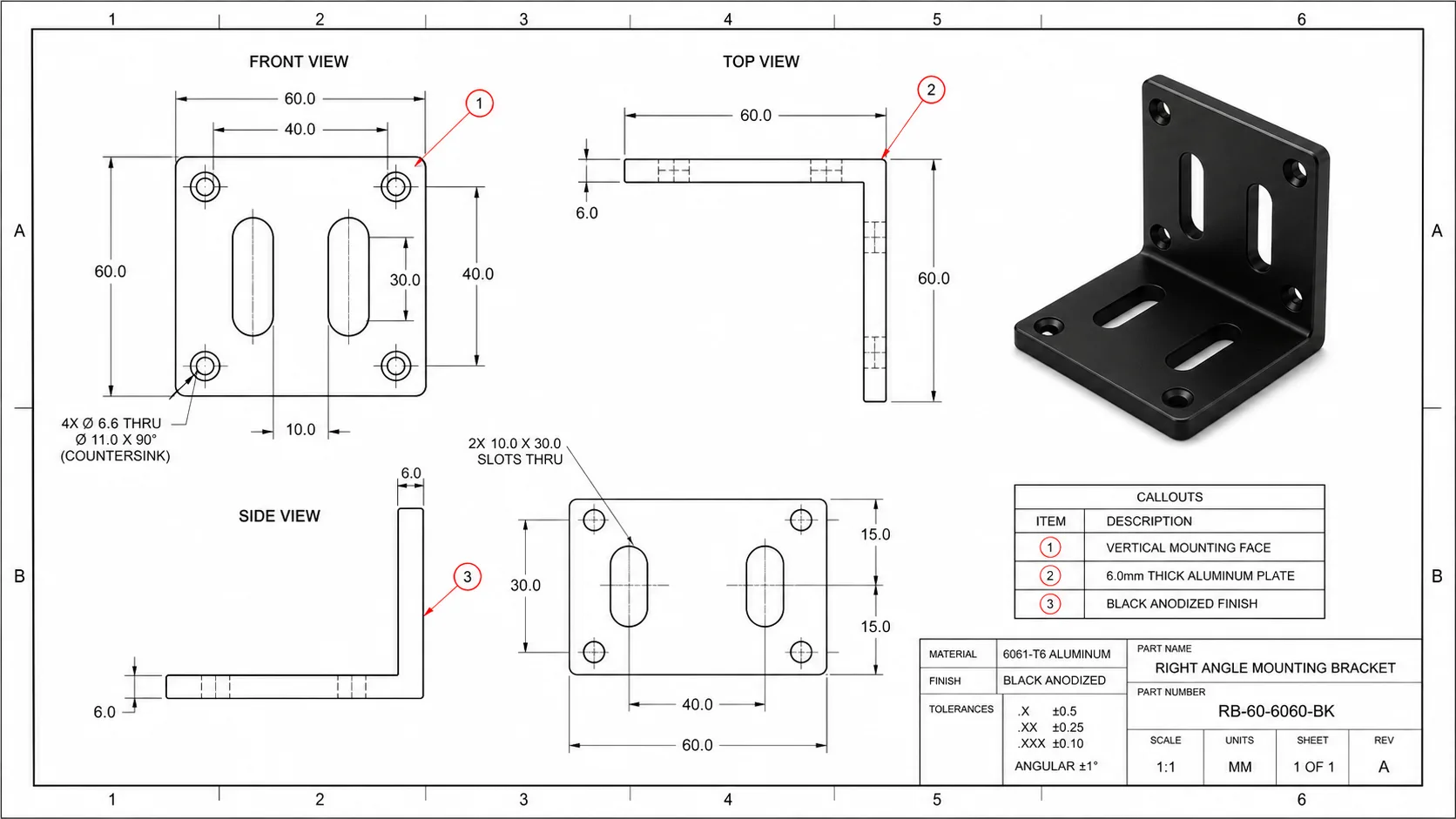
This is the item most often left out and the one that most often makes a quote provisional. Webbing width, inner diameter, total material thickness at the fitting position, or a drawing — any of these anchors the part.
Where the design is not final, say which dimensions are fixed and which are open. That is genuinely useful information, and quite different from leaving the whole question blank.
Material and finish direction, or the property behind them
You do not have to name a material. Stating the property you need — light, strong, corrosion-resistant near salt air, non-magnetic — lets the supplier propose material and finish together, which is how they should be quoted, since plating cost varies with the base metal.
Naming a finish without a base material, or the reverse, is the most common cause of a quote that turns out not to be comparable with another supplier’s.
Quantity per variant, not the total
A total of ten thousand pieces split across five colours and three sizes is a very different production problem from ten thousand identical pieces. Cost per piece follows the run length of each variant, not the overall order.
Give the breakdown you expect, even approximately, and say whether it repeats. A repeating order changes what is worth tooling.
Logo, mold and testing requirements
Say whether a logo is needed and how it should appear — engraved, embossed, printed, or on a separate plate. These are different processes with different cost structures, and some can be applied to an existing part while others cannot.
If you need testing or documents, state the specific standard and scope your market requires rather than asking for documents generally. A specific scope can be quoted; a general request has to be turned back into a question.
What to do when you cannot answer something
Send the RFQ anyway, with the gaps marked as gaps. An enquiry that says “webbing width not yet fixed, likely 25 or 38 mm” is far more actionable than one that silently omits the dimension.
Marking a gap also protects you: it makes clear which parts of the returned quotation are firm and which are conditional on information still to come.
A complete hardware RFQ is short. Eight items, each of which changes the answer, and an honest note against anything not yet decided. That is usually the difference between a quotation that arrives once and one that takes three exchanges.
 RFQ & Sample Guides
 RFQ & Sample Guides
 RFQ & Sample Guides
 RFQ & Sample Guides
 RFQ & Sample Guides
 RFQ & Sample Guides