OEM / ODM Hardware Manufacturing

What Is Bag Hardware?

The four jobs hardware does on a bag, why a hardware set is specified as a group, and the information a supplier needs before quoting.

15+ Years Industry ExperienceOEM/ODM Custom SolutionsQC Ready Global StandardsFast Lead Sample Support
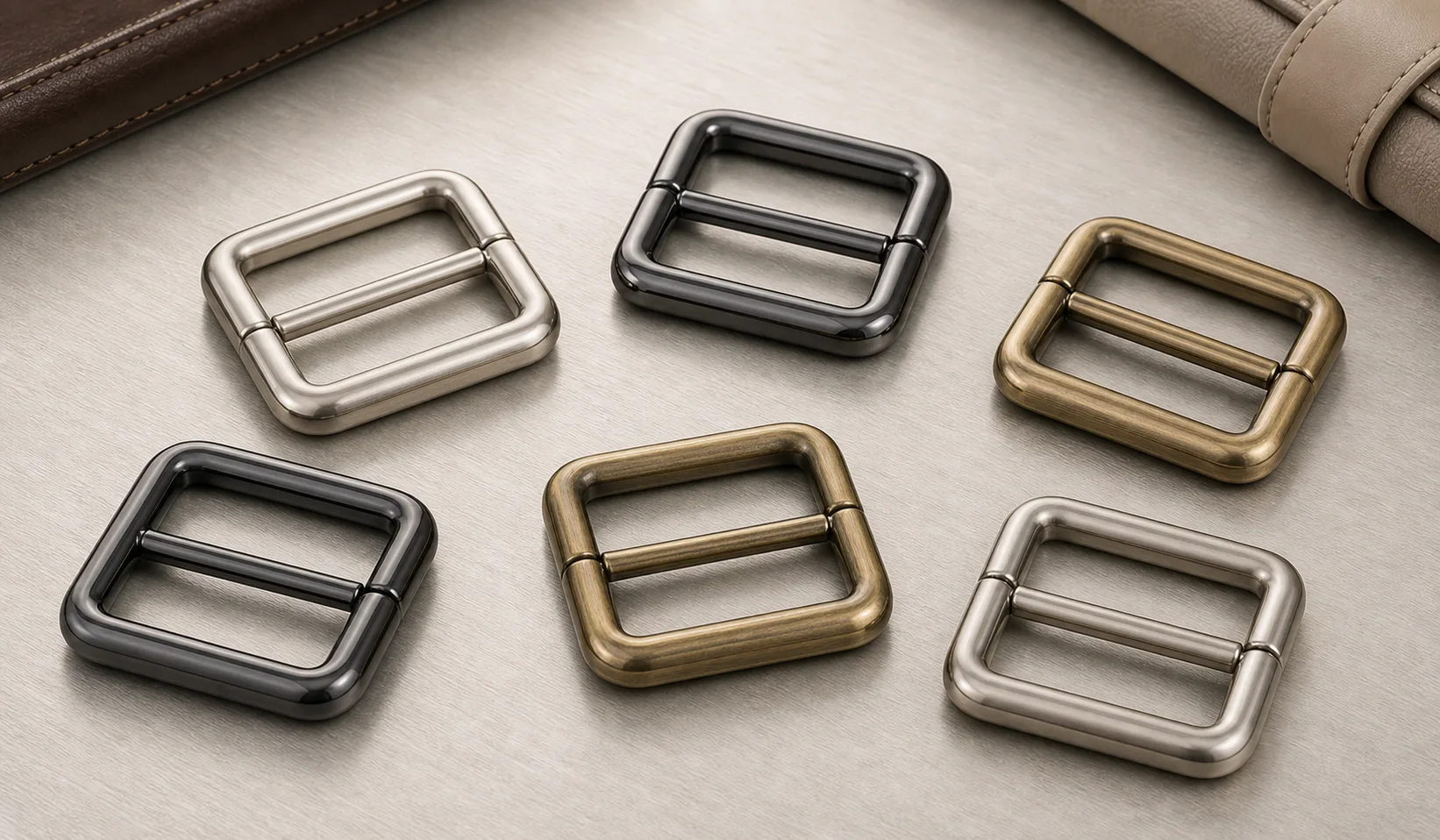
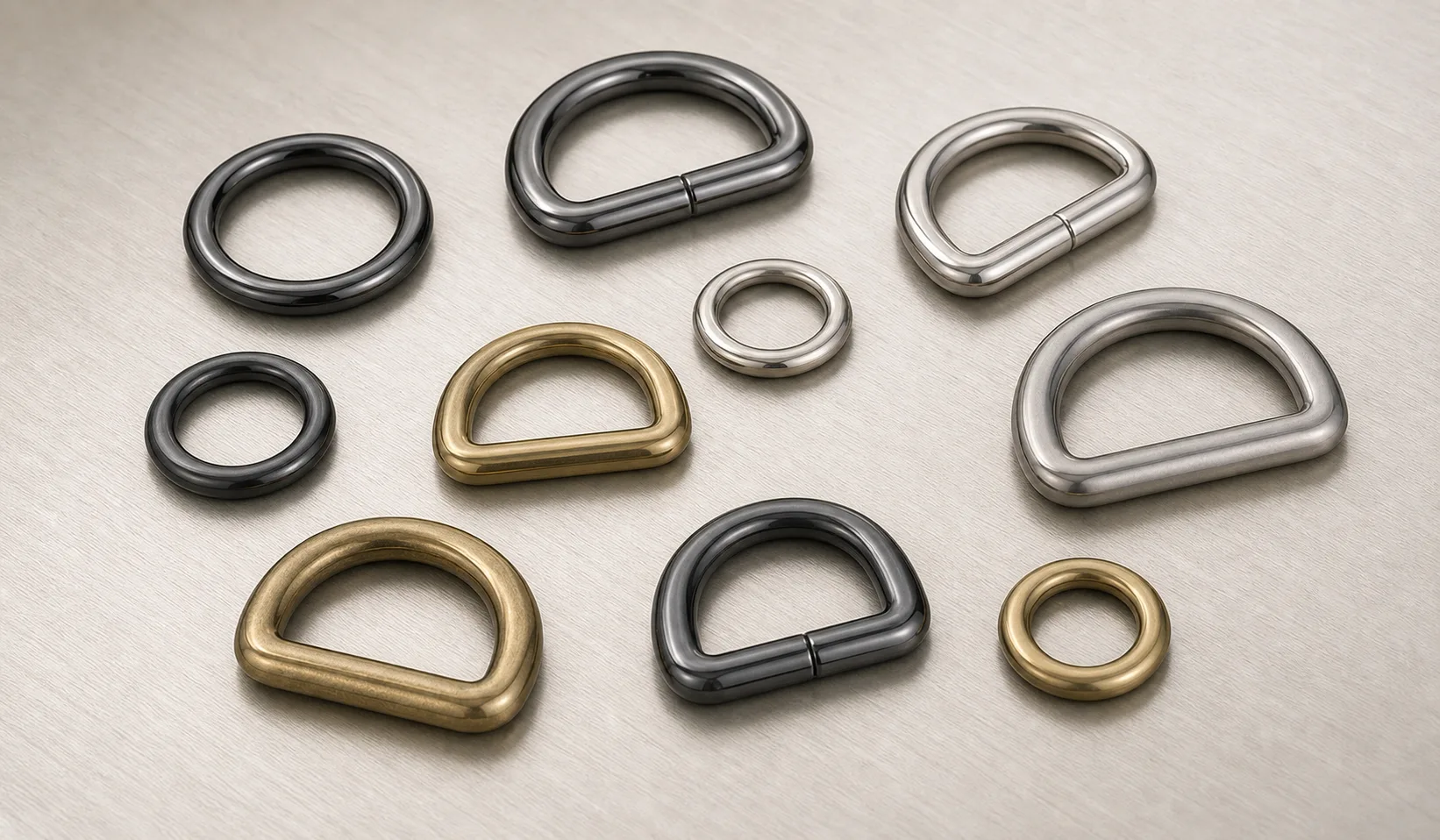
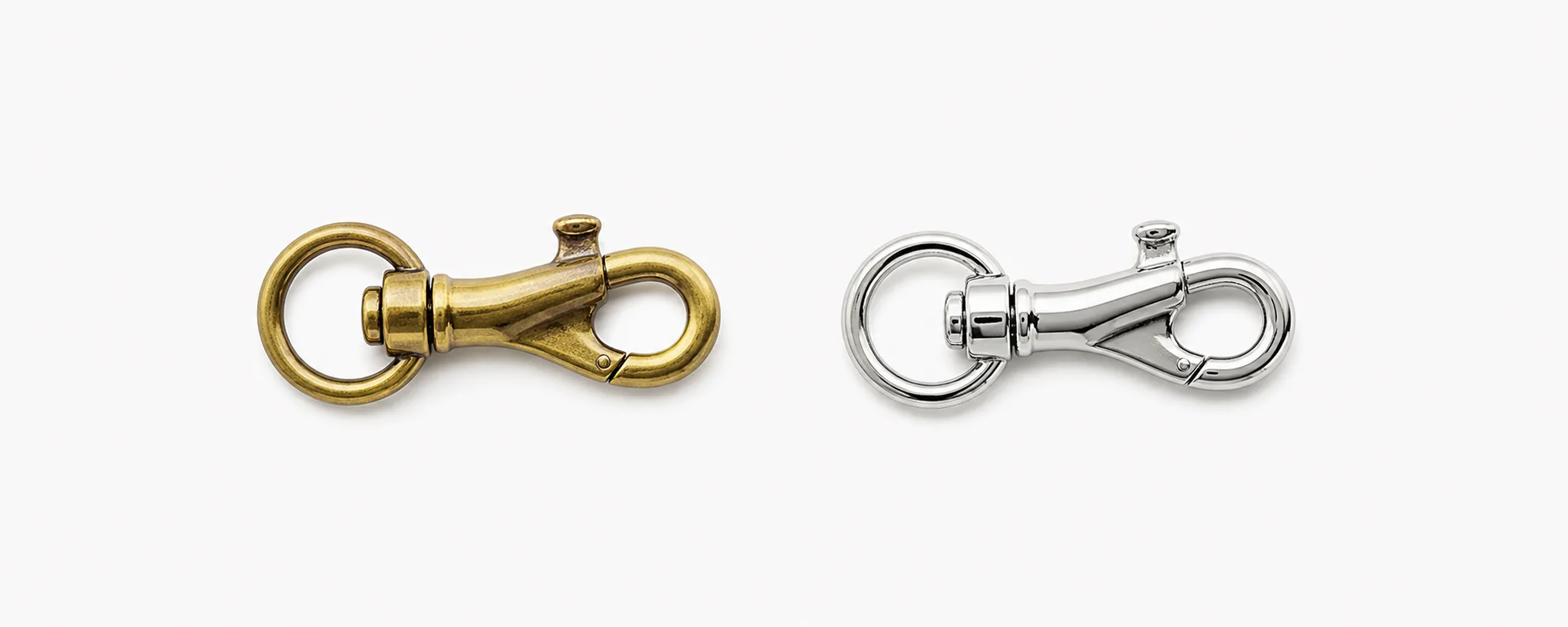
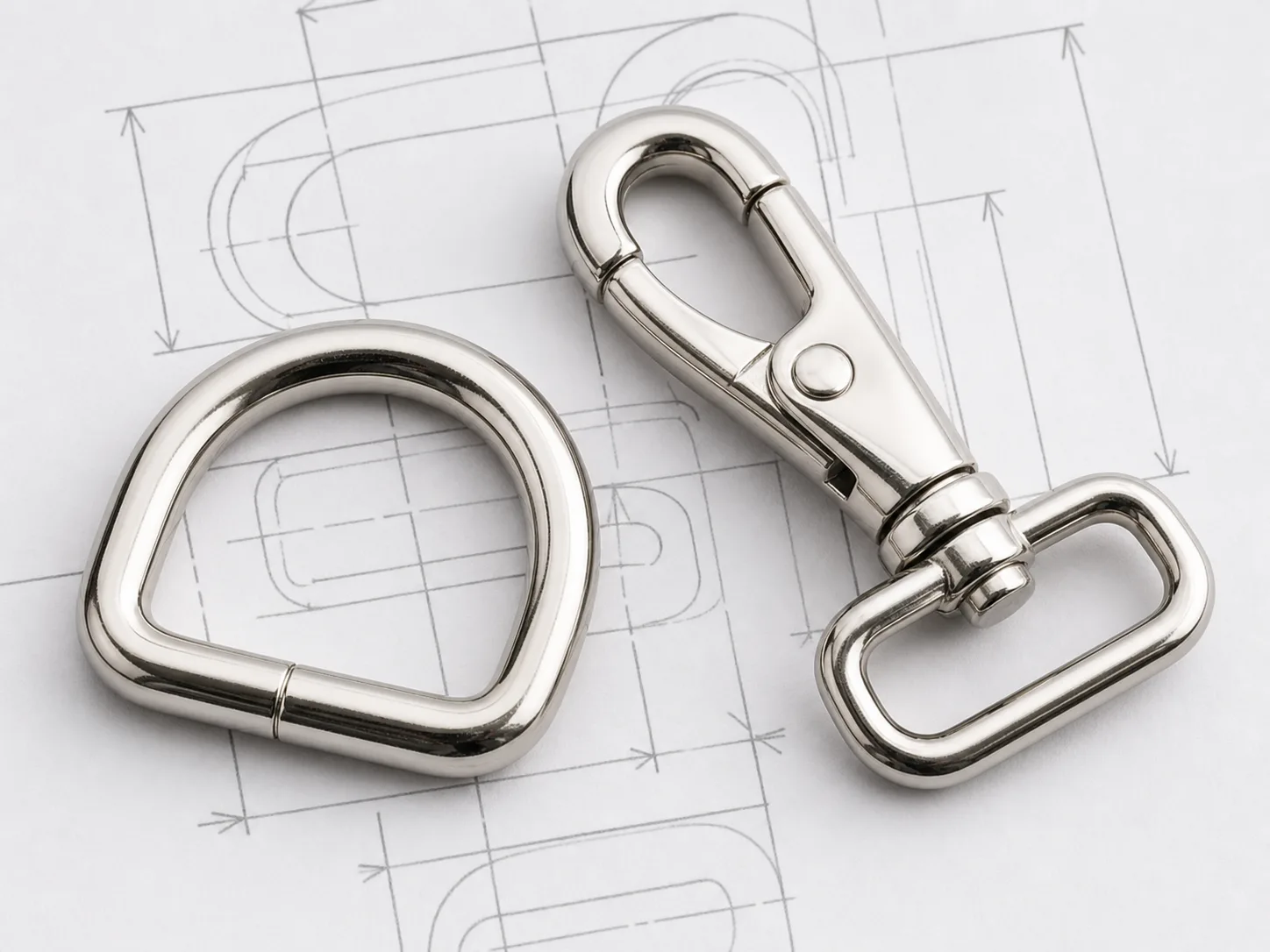
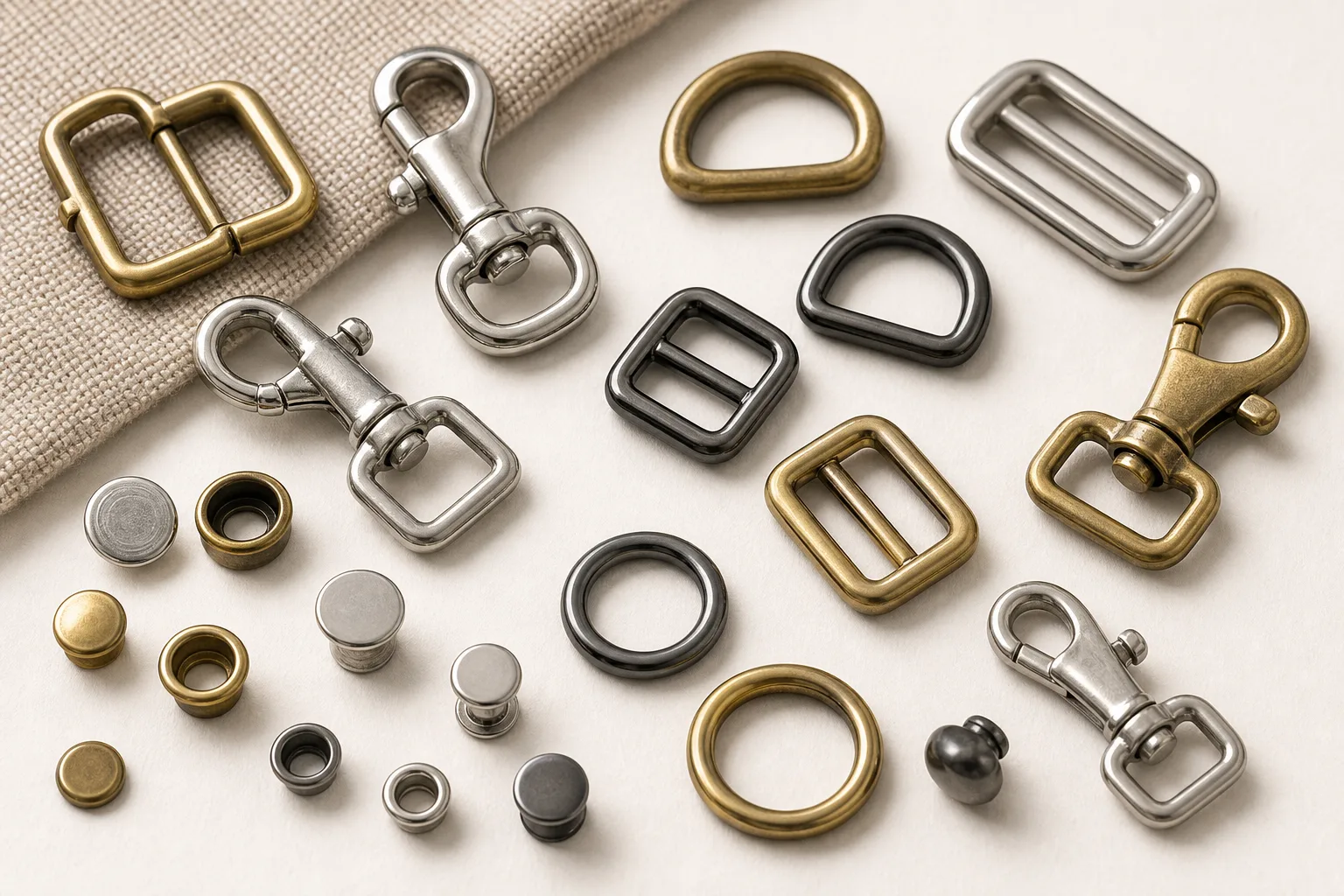
Photorealistic hardware product assortment for related buyer guide products

Article guidance connected to products and RFQ actions

Buyer guides should lead into material/finish decisions, related product categories, downloadable checklists and expert review.

Direct Answer

Zinc Alloy
Density 6.6 - 6.9 g/cm3 · Tensile Strength 280 - 440 MPa · Hardness 80 - 120 HB
Brass
Density 8.4 - 8.7 g/cm3 · Tensile Strength 300 - 550 MPa · Hardness 70 - 120 HB
Acetal
Density 1.39 - 1.42 g/cm3 · Tensile Strength 60 - 70 MPa · Melting Point 165 - 175 °C
Sizes we produce
Bag Strap Buckle and Slider Set: 4 mm, 5 mm, 6 mm, 7 mm, 8 mm, 9 mm, 10 mm, 12 mm · Metal Purse Frame: 8.5 cm

Guide

A bag is a soft structure held together at a small number of hard points. Those points are the hardware, and they determine how the bag is carried, how it opens, how long it survives, and much of how it looks. This guide organises the component families by what they do, which is the way a sourcing conversation is easiest to run.

Four jobs, not one catalogue

Connect: parts that join one element to another and stay joined — D-rings sewn to a body panel, strap anchors, handle attachments, rivets at stress points. Close: parts that open and shut in use — magnetic snaps, twist locks, side-release buckles, zippers and their pullers. Adjust: parts that change length and hold it — sliders, tri-glides, ladder locks, cam buckles. Decorate: parts chosen for appearance — logo plates, corner protectors, feet, ornamental trims.

Sorting a part list this way makes gaps visible. A design with a shoulder strap needs at least one connect part, one adjust part and usually a close part on the strap alone; if the list shows only a buckle, something has been left out.

Structural and decorative are different conversations

Structural parts are in the load path: the strap anchor, the handle attachment, the adjuster that holds the strap length. What matters is section, attachment and the material stack they are fixed into. Decorative parts are not in the load path, and what matters is finish, profile and how they read next to the other parts.

The two conversations use different vocabulary and different acceptance criteria, and mixing them causes trouble in both directions — a decorative construction quietly quoted into a structural position, or a structural part over-specified where nobody will ever see or load it.

The set has to agree with itself

Hardware on a bag is seen together. A gold-tone buckle, an antique brass ring and a gunmetal zipper puller do not become a set by being individually acceptable. Even within one nominal finish, parts made by different processes in different base materials can drift visibly.

The workable process is to approve all the hardware for a bag on one card, in the intended lighting, and to state that batch matching is against that approved set. Proportion matters too: a heavy cast buckle next to a thin stamped ring reads as an accident even when the colours match.

The material the hardware is fixed to

Almost every hardware failure on a bag is really a failure at the joint between the hardware and the material. A rivet with the wrong post length for the corner stack, an eyelet in unreinforced fabric, a prong-set magnetic snap on soft leather without a washer — in each case the part is fine and the joint is not.

This is why suppliers ask for material and thickness at each position. Sending the bag specification with the hardware list, rather than the hardware list alone, removes a whole round of questions.

Materials and finishes in outline

Zinc alloy is die-cast and dominates decorative and shaped parts because it holds detail and plates well. Brass is used where a warm base tone or a particular feel is wanted. Stainless steel and steel appear where section strength matters. Plastics such as acetal are used for lightweight buckles, particularly on outdoor and sports products.

Finish is a separate decision from material and interacts with it: the same nominal finish over different base materials will not necessarily match. This guide does not state corrosion or wear performance for any combination, because that depends on the plating specification, the environment and the test method — those belong in a sample and testing agreement rather than in a catalogue description.

What to prepare before an inquiry

A parts list organised by position on the bag, the job each part does, base material and thickness at each fixing, webbing and strap specifications, whether each part is visible, finish direction for the set, logo requirements, quantity per bag, and any reference sample.

A marked-up drawing or a photograph of a similar bag with positions labelled is the single most useful attachment. It lets the supplier spot missing parts and impossible fixings before anything is sampled.

Bag hardware is best approached by job rather than by catalogue: connect, close, adjust, decorate. Structural and decorative parts need different acceptance criteria, the set has to be approved as a group, and most failures happen at the joint with the material rather than in the part itself.
Key Terms

Bag hardware

The metal and plastic components used to connect, close, adjust and decorate a bag, normally specified as a matched set.

Structural hardware

Parts in the load path — strap anchors, handle attachments, adjusters — judged on section, attachment and the material stack they fix into.

Approved set

A physical card of the approved hardware for one product, used as the matching reference for later batches instead of a colour name.

Buyer Checklist

  • Parts list organised by position
  • Job each part performs
  • Base material and thickness at each fixing
  • Webbing and strap specifications
  • Visible or hidden per part
  • Finish direction for the set
  • Logo requirements
  • Quantity per bag

Key Takeaways

Send a parts list organised by position with the material and thickness at each fixing, and approve the whole hardware set on one card. Those two habits prevent most of the problems that appear at sample stage.

  • Sort parts by job: connect, close, adjust, decorate
  • Structural and decorative need different criteria
  • Approve the whole set together, not part by part
  • Most failures are at the joint, not in the part

Related Articles

Strap Adjusters: Sliders, Tri-Glides and Ladder Locks guide imageBuyer Guides

Strap Adjusters: Sliders, Tri-Glides and Ladder Locks

The three common strap adjusters, how each grips webbing, and how to choose between them by threading, holding behavior and appearance.

Bag BucklesBags & Handbags
2026-06-02
What Is a Bag Buckle? Types and Uses guide imageBuyer Guides

What Is a Bag Buckle? Types and Uses

What a bag buckle does, the main buckle families used in bag production, and how buyers narrow the choice by strap width, load and closure behavior.

Bag BucklesBags & Handbags
2026-06-02
D-Rings vs O-Rings: Structure and Load Direction guide imageBuyer Guides

D-Rings vs O-Rings: Structure and Load Direction

Why the flat bar on a D-ring changes how load travels, when free rotation is an advantage and when it is a defect, and what to specify so a supplier quotes the right ring.

Strap AdjustersBags & Handbags
2026-06-02
Snap Hooks, Swivel Hooks and Trigger Hooks Explained guide imageBuyer Guides

Snap Hooks, Swivel Hooks and Trigger Hooks Explained

The three words describe three separate features that can appear in any combination. Separating gate, base and operation makes it possible to name the hook you actually want.

Bag HardwareBags & Handbags
2026-06-02
What Do First-Time Hardware Buyers Get Wrong? guide imageBuyer Guides

What Do First-Time Hardware Buyers Get Wrong?

The recurring errors buyers make on a first hardware programme, why each one surfaces late, and the specific habit that prevents it.

Bag HardwareBags & Handbags
2026-06-02
Working With a Hardware Supplier: Communication Guide guide imageBuyer Guides

Working With a Hardware Supplier: Communication Guide

Practical communication habits for hardware sourcing: what to put in writing, how to phrase feedback, and how to raise a problem so it gets solved.

Bag HardwareBags & Handbags
2026-06-02

FAQ

Which materials are available for Bag Hardware?

Bag Hardware is quoted in Zinc Alloy, Brass and Acetal. Material and finish are quoted together, because tooling and plating cost change with the combination.

What is Bag Hardware used for?

On this site Bag Hardware is catalogued under Bags & Handbags, Backpacks and Outdoor Gear. End use decides the specification that gets quoted — load, exposure and washing requirements differ between them, so state the end use in the RFQ rather than the part name alone.

Where does Bag Hardware sit in the product range?

Bag Hardware appears in Bag Hardware, Bag Buckles and Hooks & Snap Hooks. Related items in the same category can be quoted on one RFQ, which is usually how buyers keep finish and packaging consistent across a set.

What should buyers prepare before sending a Bag Hardware RFQ?

Prepare product type, application, material, finish, size, quantity, logo requirement, sample expectation and any testing or document request.

Can Bag Hardware samples be requested before bulk production?

Yes. Sample availability and timing should be reviewed by product structure, material, finish and buyer requirements.

Can testing documents be provided for Bag Hardware?

Testing or compliance documents depend on actual material, finish, testing scope and available records. Requirements should be confirmed before sampling.

Start Your Project

Request a Quote

Send article context with product, application, material, finish and testing requirements so the sourcing team can review the request.

RFQ
+86 151 7024 4792info@nceco.cn