
Buyers usually approach this as a durability question and get an unhelpful answer, because durability depends on the specification of each process rather than on the category. The differences that always hold are about what the surface is: a deposited metal layer or an applied coating. Everything practical follows from that.
What each process actually is
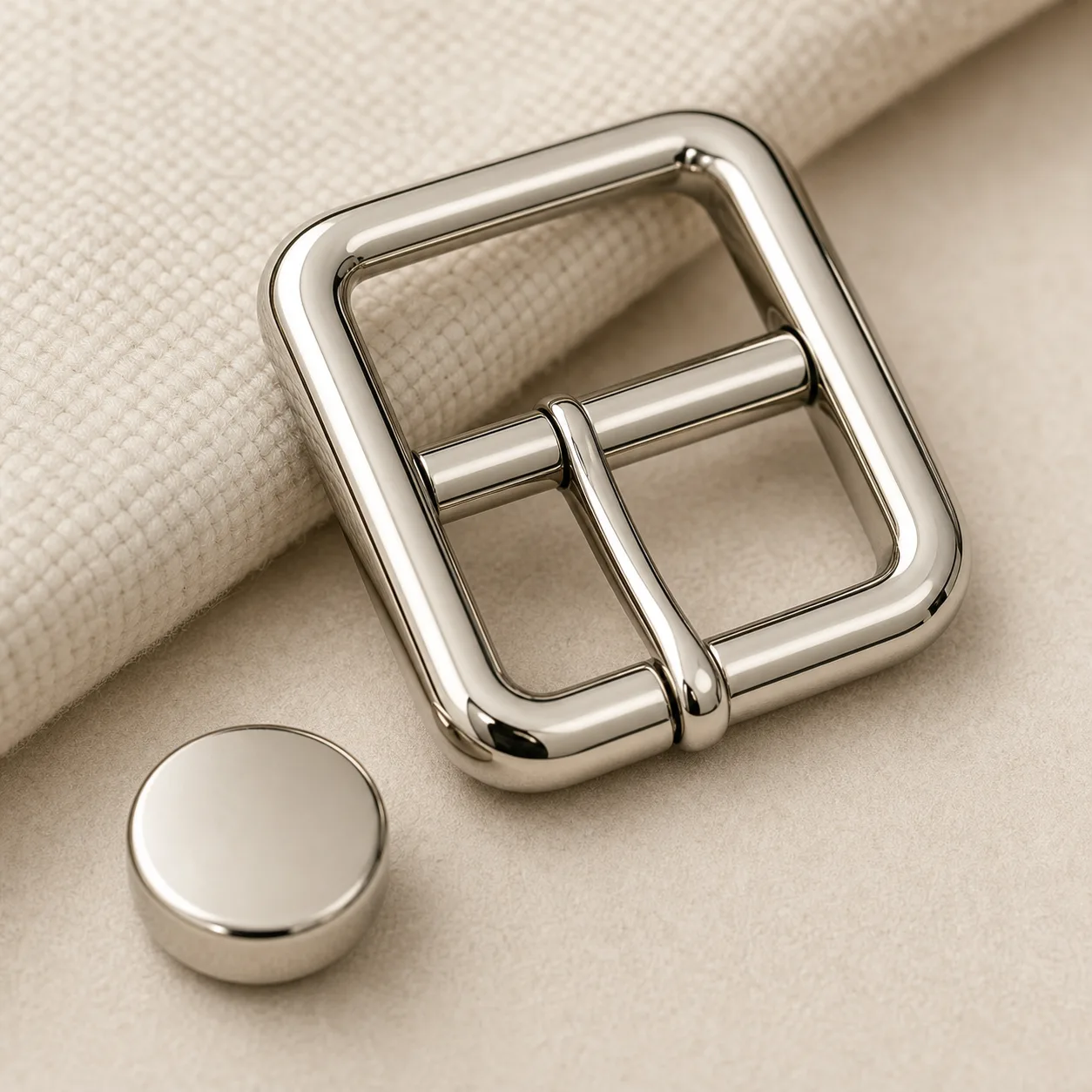
Electroplating passes current through a bath to deposit metal onto the part. The result is metal on metal, generally following the part surface closely, including into recesses and around edges as long as the process is set up for the geometry.
Painting, powder coating and similar processes apply a non-metallic layer that sits on the surface. It is thicker than plating, it can be almost any colour, and it bridges rather than follows fine surface detail. That bridging is exactly why a painted part can look softer and a plated part crisper on the same tooling.
Colour: what each can and cannot reach
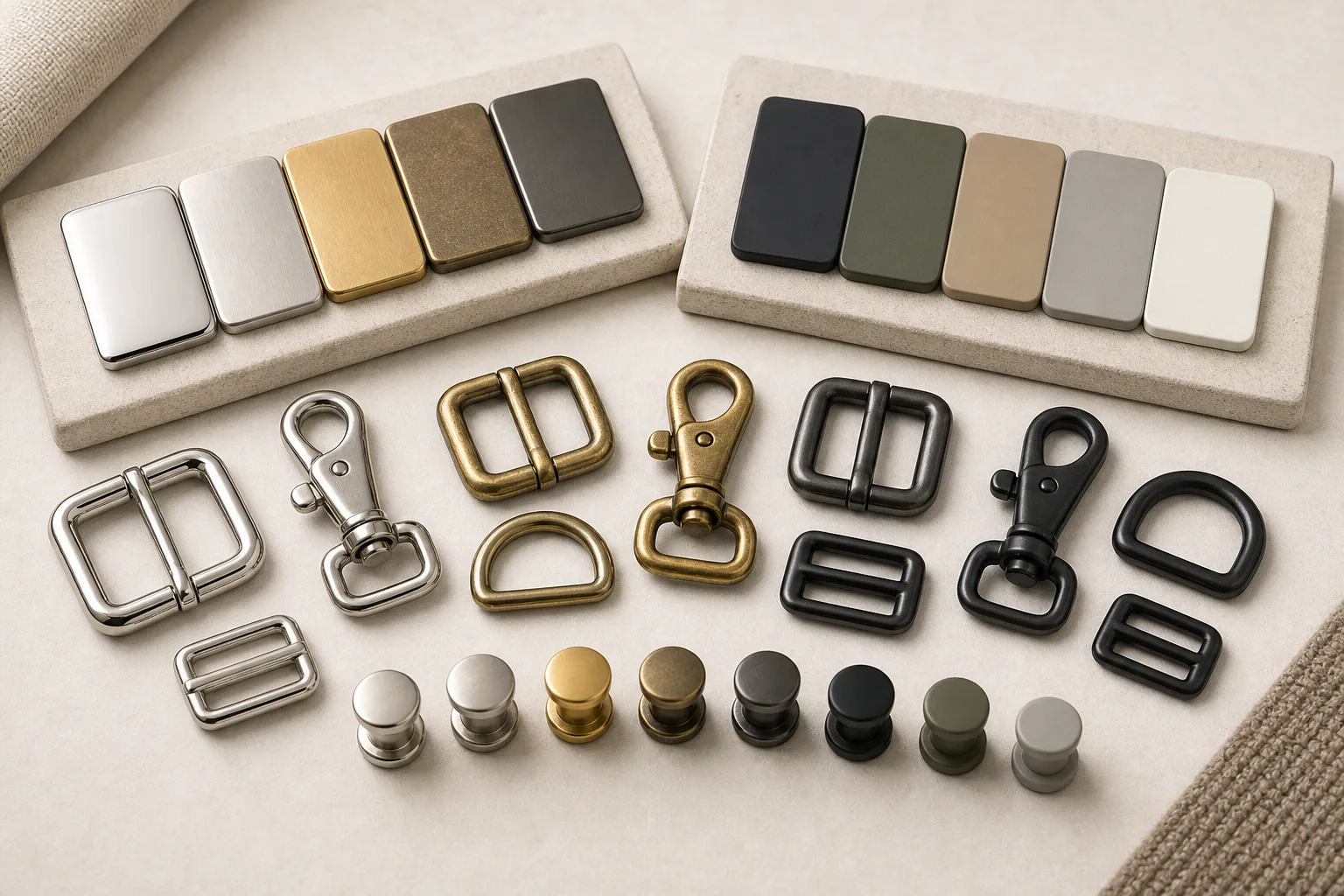
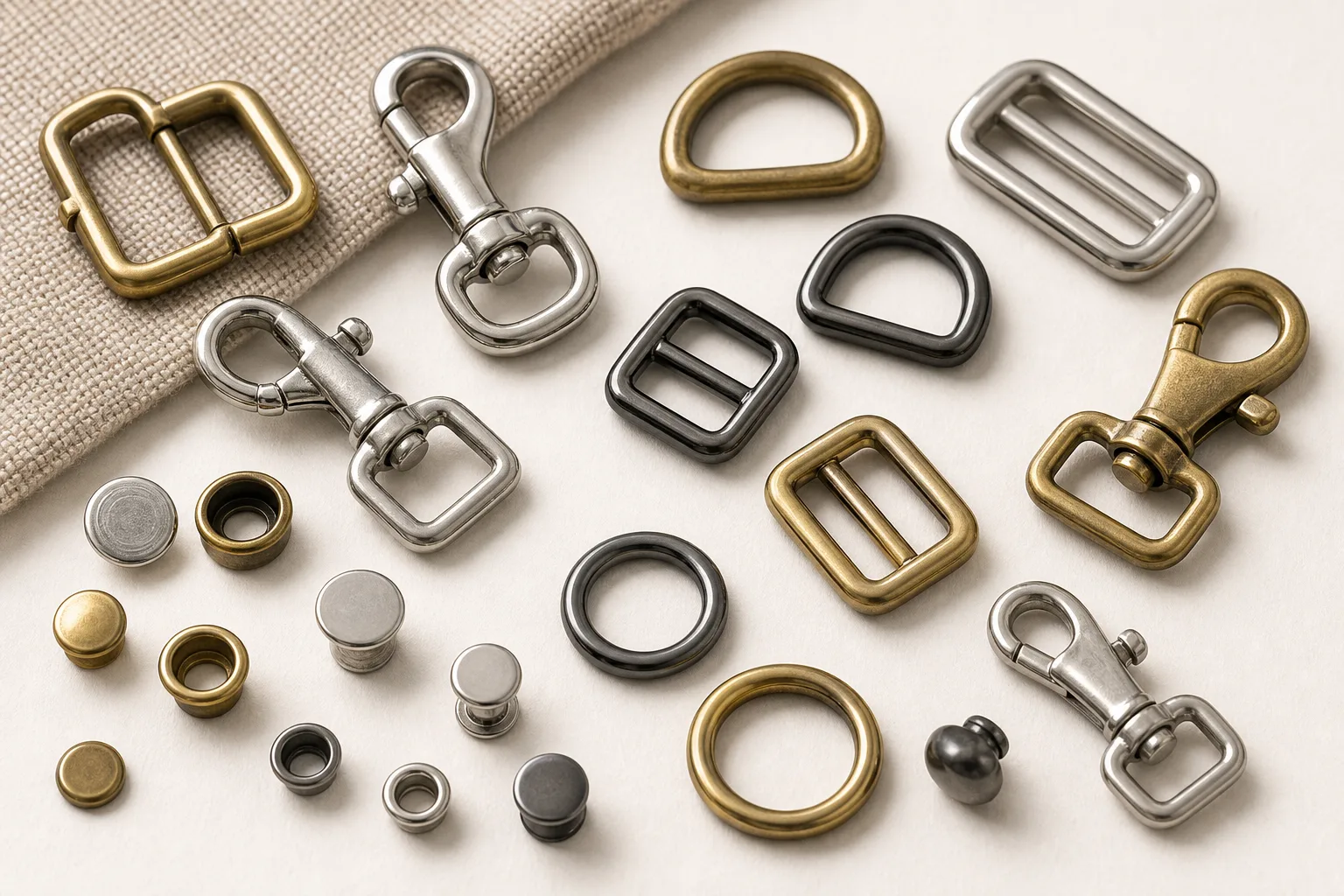
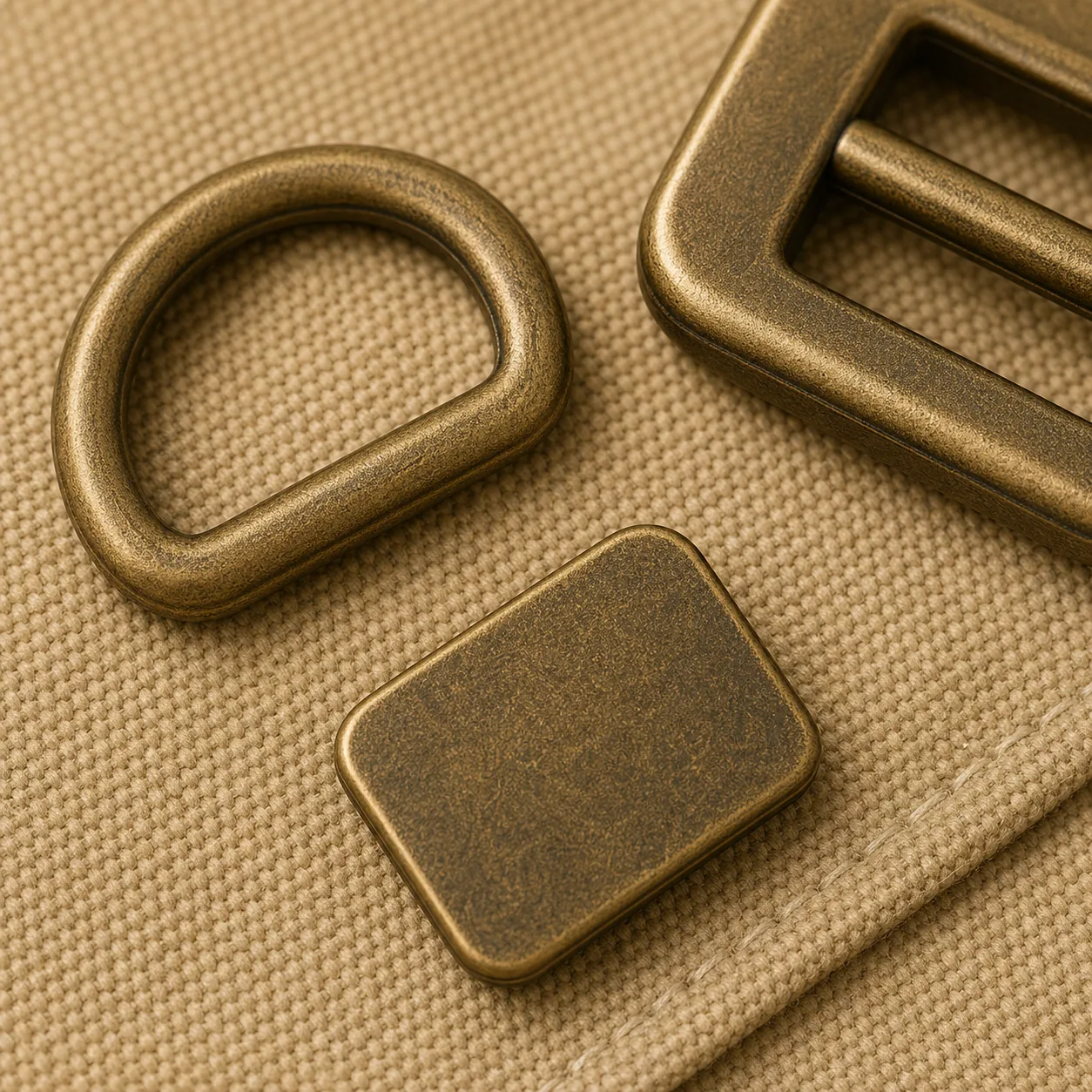
Plating gives metallic tones: nickel, brass, gold, gunmetal, black nickel, antique effects. It cannot produce a flat non-metallic colour, and it cannot match an arbitrary brand colour reference.
Coating can produce flat colours, brand-matched colours, textures and matte or gloss levels. If a brand colour has to appear on hardware, coating or enamel is the route — this is a capability difference, not a quality one.
Edges, recesses and detail
Coatings tend to be thinner on sharp edges and thicker in recesses, because of how liquid behaves on a surface. Edges are therefore the first place a coating shows wear. Plating follows the surface more evenly but has its own geometry sensitivities, particularly deep recesses and internal corners.
On a part with fine relief or an engraved logo, this matters visually. A coating can soften detail; plating usually preserves it. If the logo detail is the point of the part, discuss it with the finish choice rather than after.
How each behaves when damaged
A scratch through plating exposes the base metal, which may then look different in tone and may corrode depending on the metals involved. A scratch through a coating exposes whatever is underneath, often a primer or the base part, and the damage tends to be more visible because the colour contrast is greater.
Neither is self-healing and neither is realistically repairable in the field on a small hardware part. Where the product is expected to take visible abuse, the design answer is usually to choose a finish whose worn appearance is acceptable — antiqued and brushed finishes hide wear better than high-gloss ones of either type.
What has to be agreed before approval
Colour approval should be against a physical sample in the intended lighting, not against a colour name or a screen. Batch matching should be stated against that approved sample. Where the product goes through washing or other processing after assembly, the sample should be approved after that process.
This guide does not state salt-spray hours, coating thickness or abrasion cycles for either route. Those depend on the full specification and the test method; if performance matters, agree the test and the standard in writing and have it run on your part rather than relying on a general figure.
Choosing between them
Choose plating when the part should read as metal, when fine relief or logo detail must stay crisp, and when the palette is metallic. Choose coating when a specific non-metallic or brand colour is required, when a matte or textured surface is wanted, or when colour matching to fabric matters more than metallic depth.
Mixed approaches exist: plated base with enamel fill in recesses, or coated body with a plated accent. These are common on branded hardware and are worth asking about when neither route alone gives the intended look.
Plating is metal deposited on metal; coating is a layer applied over it. That determines the colour range, how edges and detail behave, and what damage looks like. Choose from the intended appearance and the colour requirement, then agree testing separately rather than assuming a durability ranking.
 Finish Guides
 Finish Guides
 Finish Guides
 Finish Guides
 Finish Guides
 Finish Guides
 Material Guides
 Finish Guides