
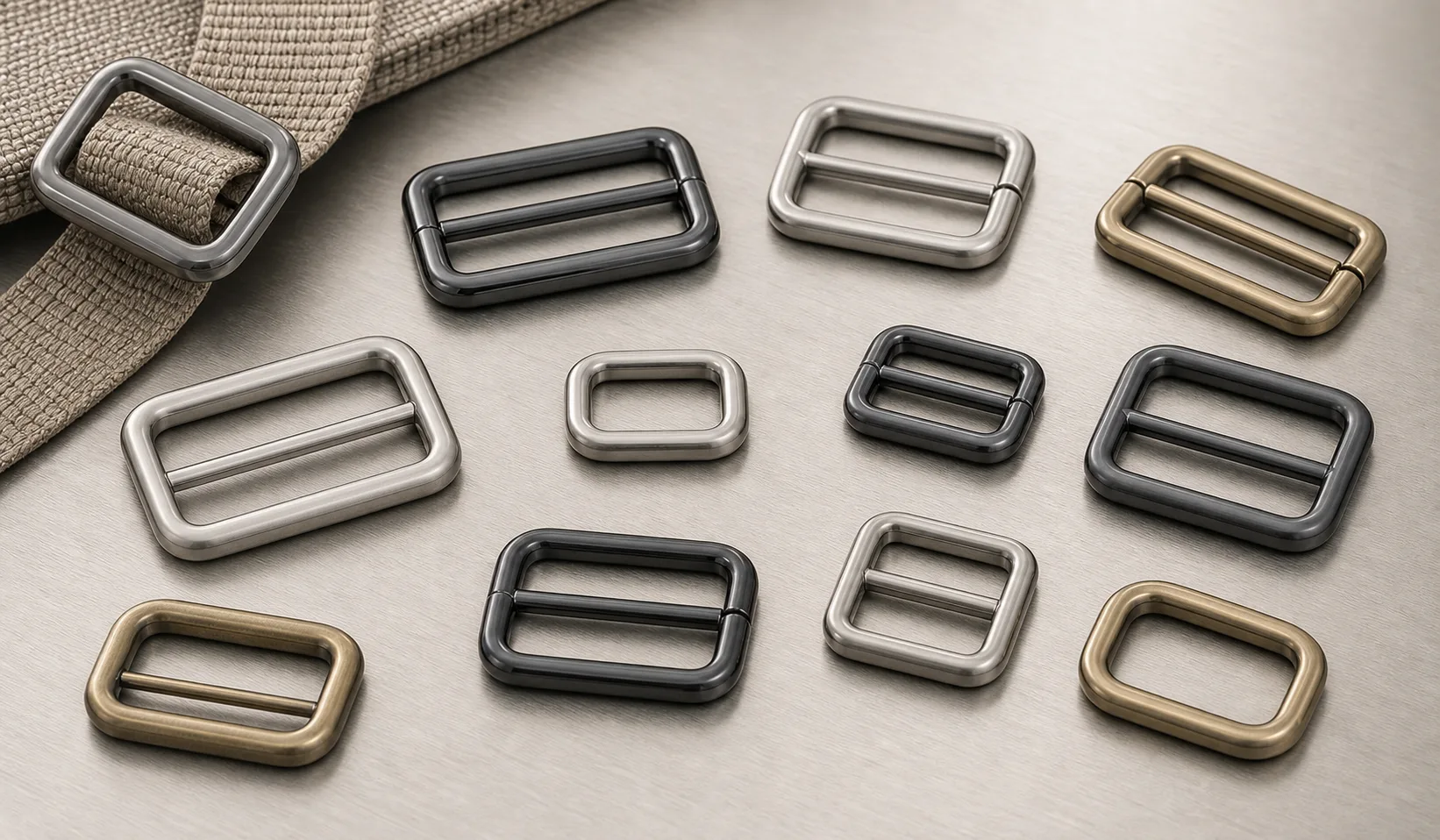
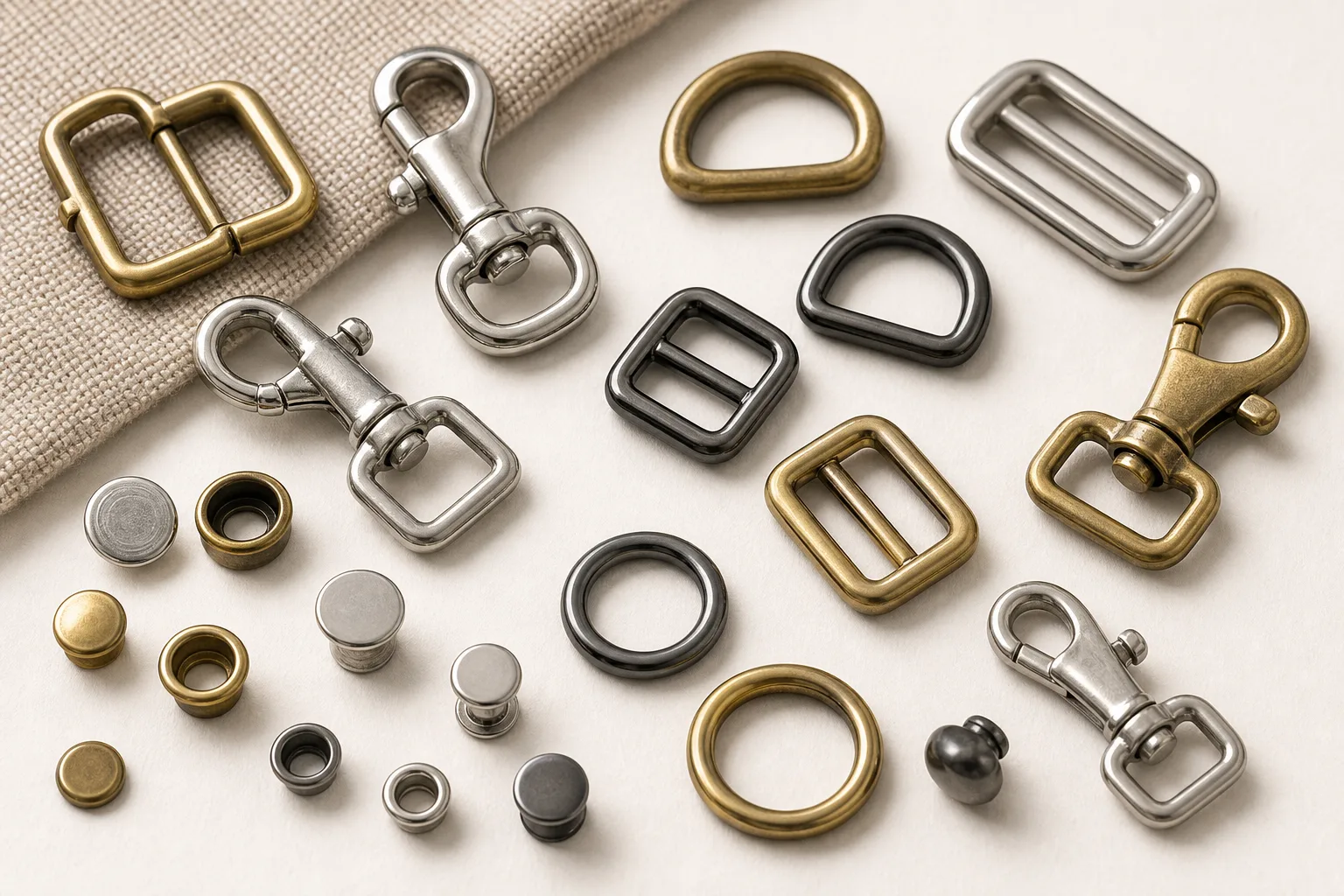
Adjusters are the quiet components of a strap system. They are frequently called buckles in inquiries, quoted as buckles, and then rejected on arrival because they do not come apart. Knowing the three main types by name makes that mismatch easy to avoid.
What an adjuster does and does not do
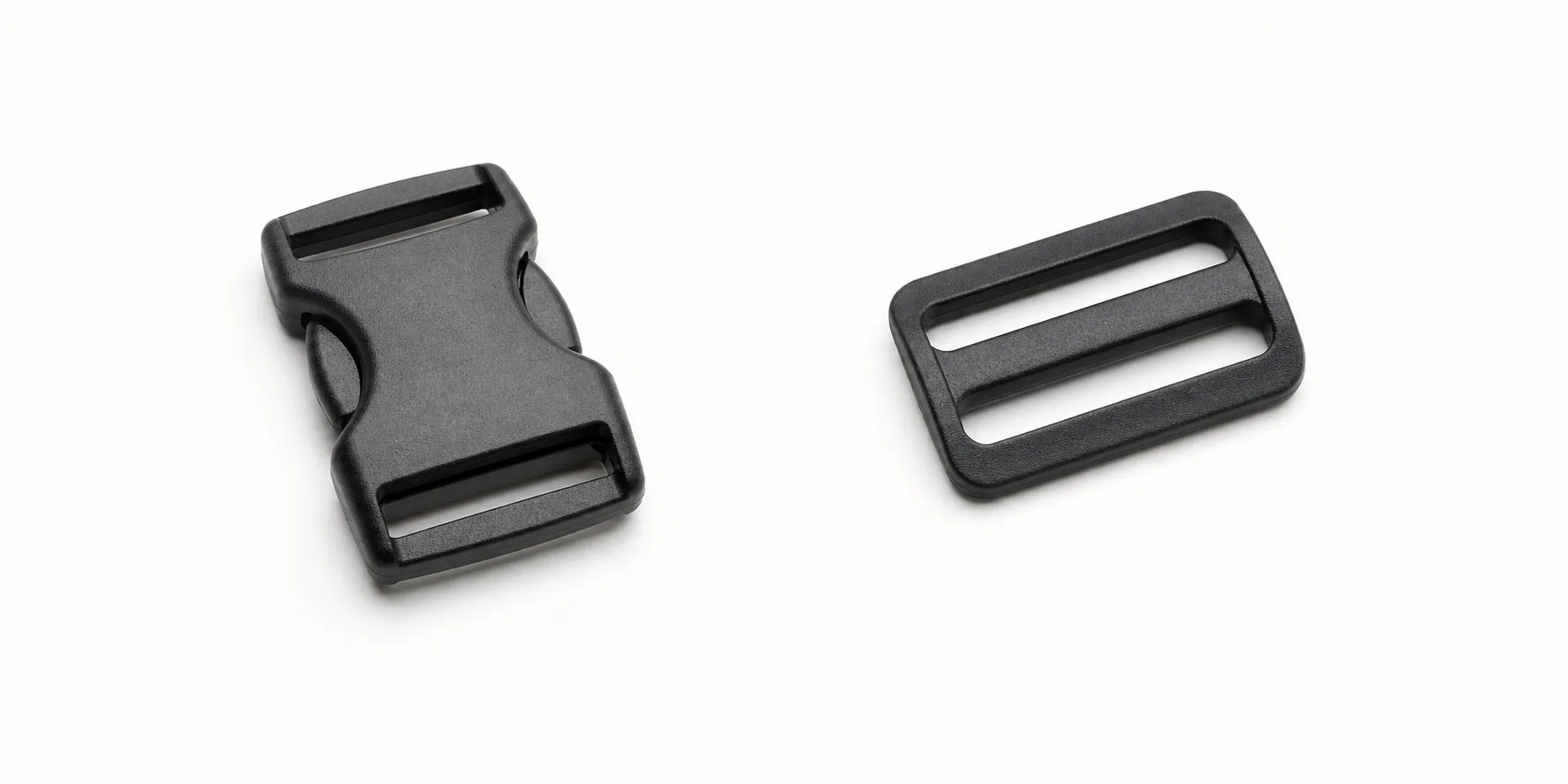
An adjuster changes the working length of a strap by holding webbing at a chosen position through friction or mechanical grip. It stays on the strap permanently. If a part needs to separate so the user can open the strap, that is a buckle, and the two are usually specified together — a side-release buckle for opening plus a slider for length.
Because the adjuster relies on friction against webbing, the webbing itself is half the system. The same adjuster can hold firmly with one webbing and creep with another. This is the single most useful thing to know when troubleshooting a strap that will not stay set.
Sliders
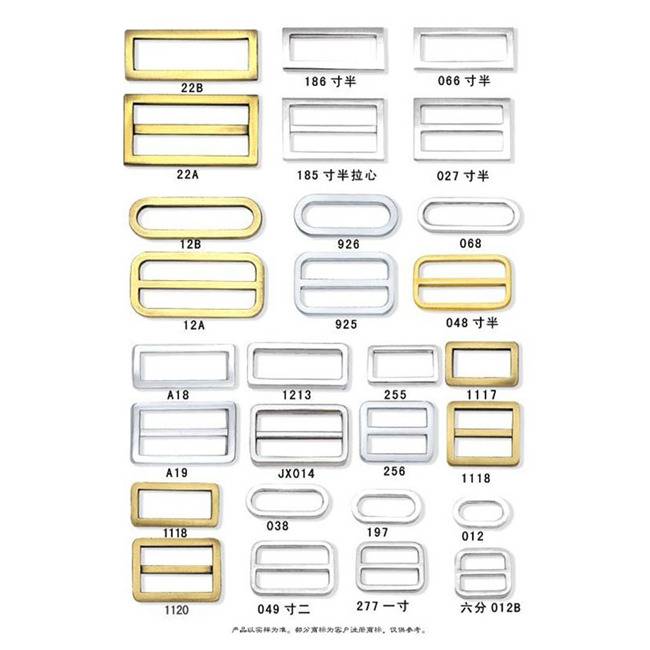
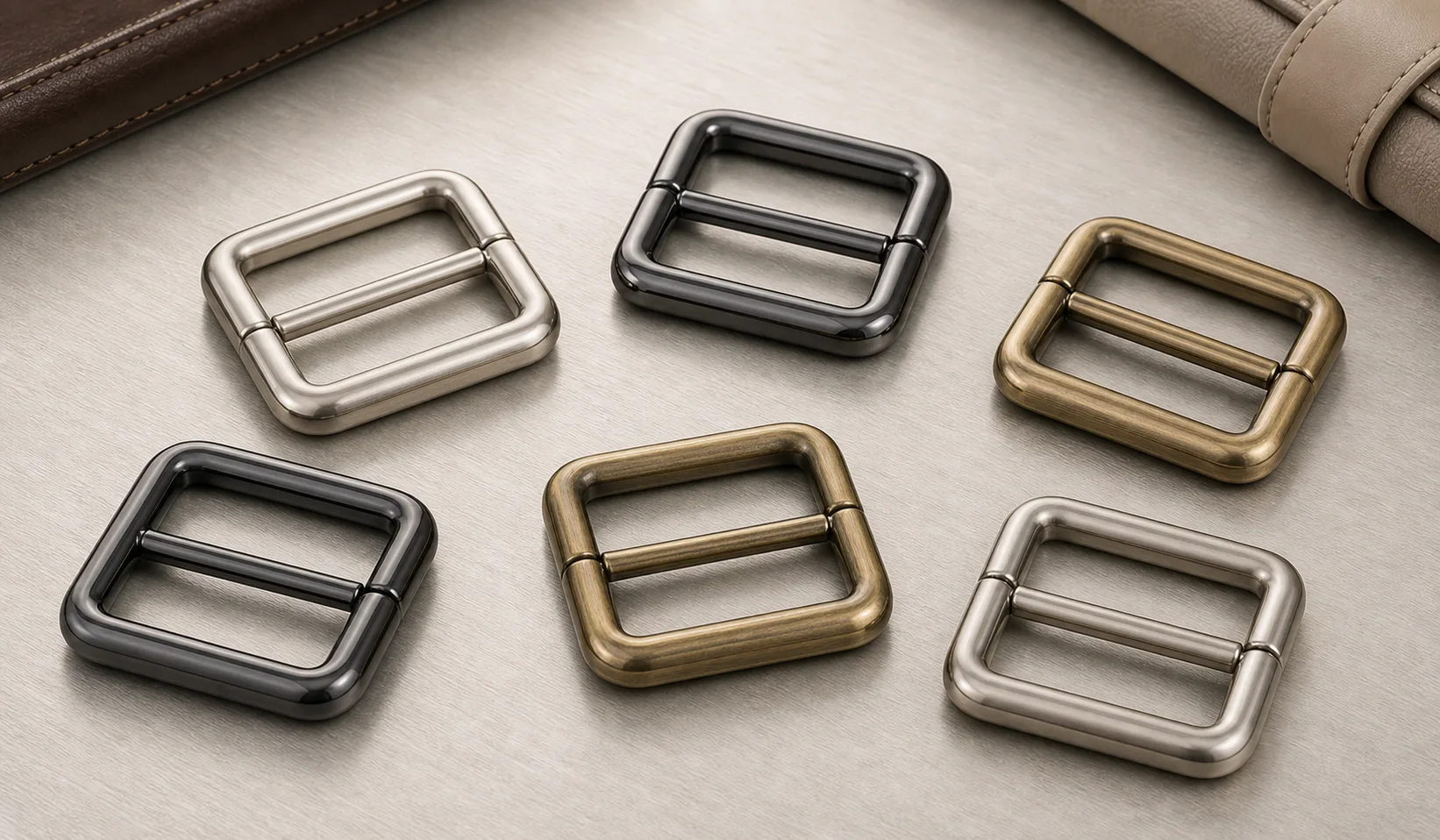
A slider is a rectangular frame with a center bar — effectively two openings. Webbing passes over the center bar and back, and the friction of the fold holds position. It is the simplest and lightest adjuster, and it threads quickly.
The holding force is moderate and depends heavily on webbing texture and the wrap angle. Under vibration or repeated loading, a slider on smooth webbing will creep. That is acceptable on a shoulder strap the user adjusts often, and not acceptable on a load strap that must stay set.
Sliders are common where the adjuster is visible and the design wants a clean minimal part, and where the user re-adjusts frequently enough that occasional creep is not noticed.
Tri-glides
A tri-glide adds a third bar, giving the webbing a longer, more convoluted path. More wrap means more friction, so a tri-glide holds noticeably better than a slider on the same webbing.
The trade-off is threading. A tri-glide takes longer to thread correctly and is easier to thread wrongly, which shows up in assembly time and occasionally in end-user confusion when a strap is re-threaded after washing.
Tri-glides suit straps that are set once and expected to stay set — pack compression, adjustable shoulder straps on luggage, harness webbing. Where holding matters more than quick re-adjustment, this is usually the right choice.
Ladder locks
A ladder lock uses a hinged or ribbed bar that bites into the webbing surface. Pulling the free end tightens; lifting the bar releases. Unlike sliders and tri-glides, it adds a mechanical grip rather than relying purely on wrap friction, so it holds under load with less dependence on webbing texture.
The mechanical grip is also its limitation. The gripping surface bears on the webbing face, and over many cycles it can wear the surface — more noticeably on lighter or softer webbings. For a product with a long service life and frequent adjustment, that is worth checking on a sample.
Ladder locks are common on technical outdoor products, load straps and anywhere one-handed tightening under tension is expected.
Choosing between them
Start with how often the strap is adjusted and how much it matters if it slips. Frequent adjustment with low consequence points to a slider. Set-and-forget with real consequence points to a tri-glide or a ladder lock. One-handed tightening under load points to a ladder lock.
Then check the webbing. If the webbing is smooth, slippery or coated, friction-based adjusters will underperform and a ladder lock is more predictable. If the webbing is soft or light, a ladder lock may mark it, and a tri-glide may be kinder.
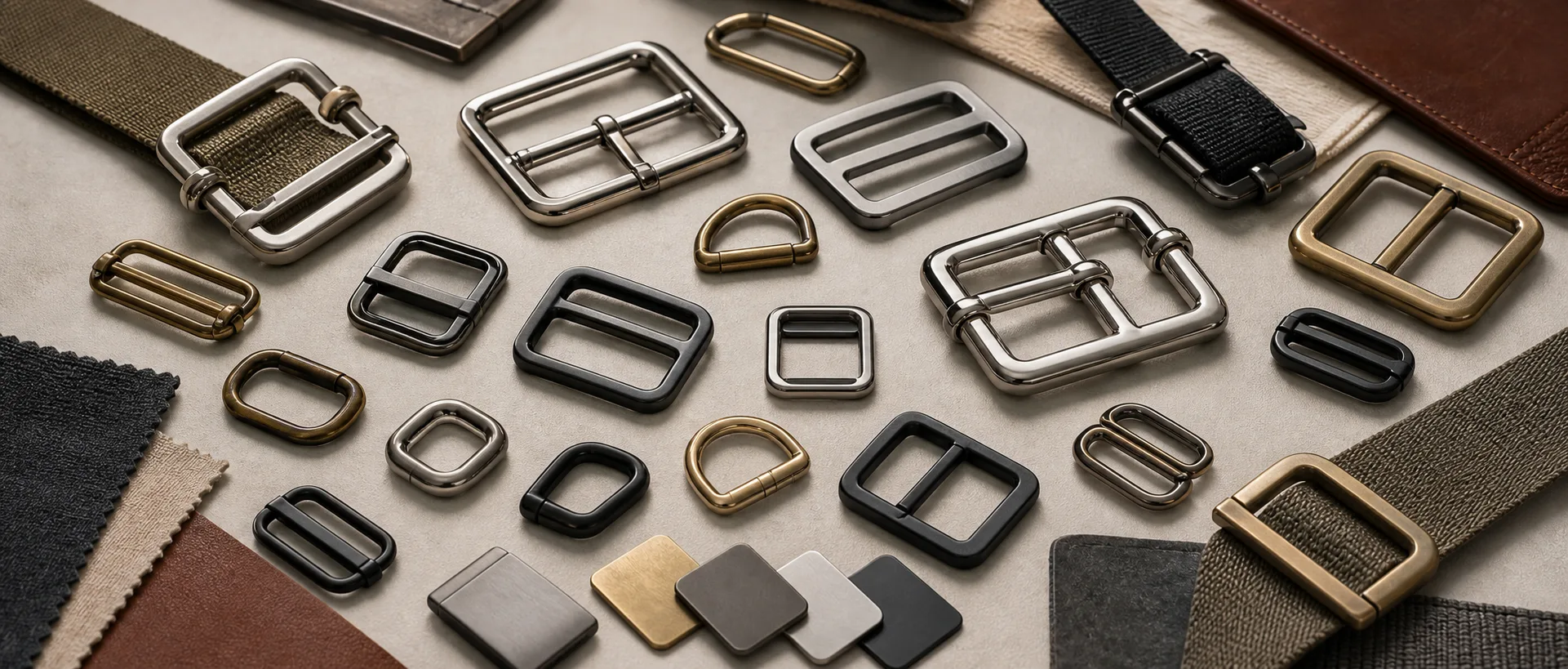
Finally consider appearance and profile. Adjusters sit on the strap permanently and are often visible. A metal slider reads very differently from a molded ladder lock, and on a fashion product that may outweigh the mechanical argument.
What to specify
Name the adjuster type, the webbing width and thickness, the material and finish direction, and how the strap is used — adjusted often or set once, loaded or slack, one hand or two. Sending a length of the actual webbing is the most reliable way to confirm holding behavior before production.
If the adjuster is paired with a buckle, specify both together and say which one carries the sewn-down end of the strap. Adjusters and buckles are frequently quoted separately and assembled by a different team, and that is where mismatches appear.
Sliders, tri-glides and ladder locks solve the same problem with increasing grip and decreasing convenience. The webbing matters as much as the adjuster, so confirm the pair together rather than each alone.
 Buyer Guides
 Buyer Guides
 Material Guides
 Buyer Guides
 Buyer Guides