
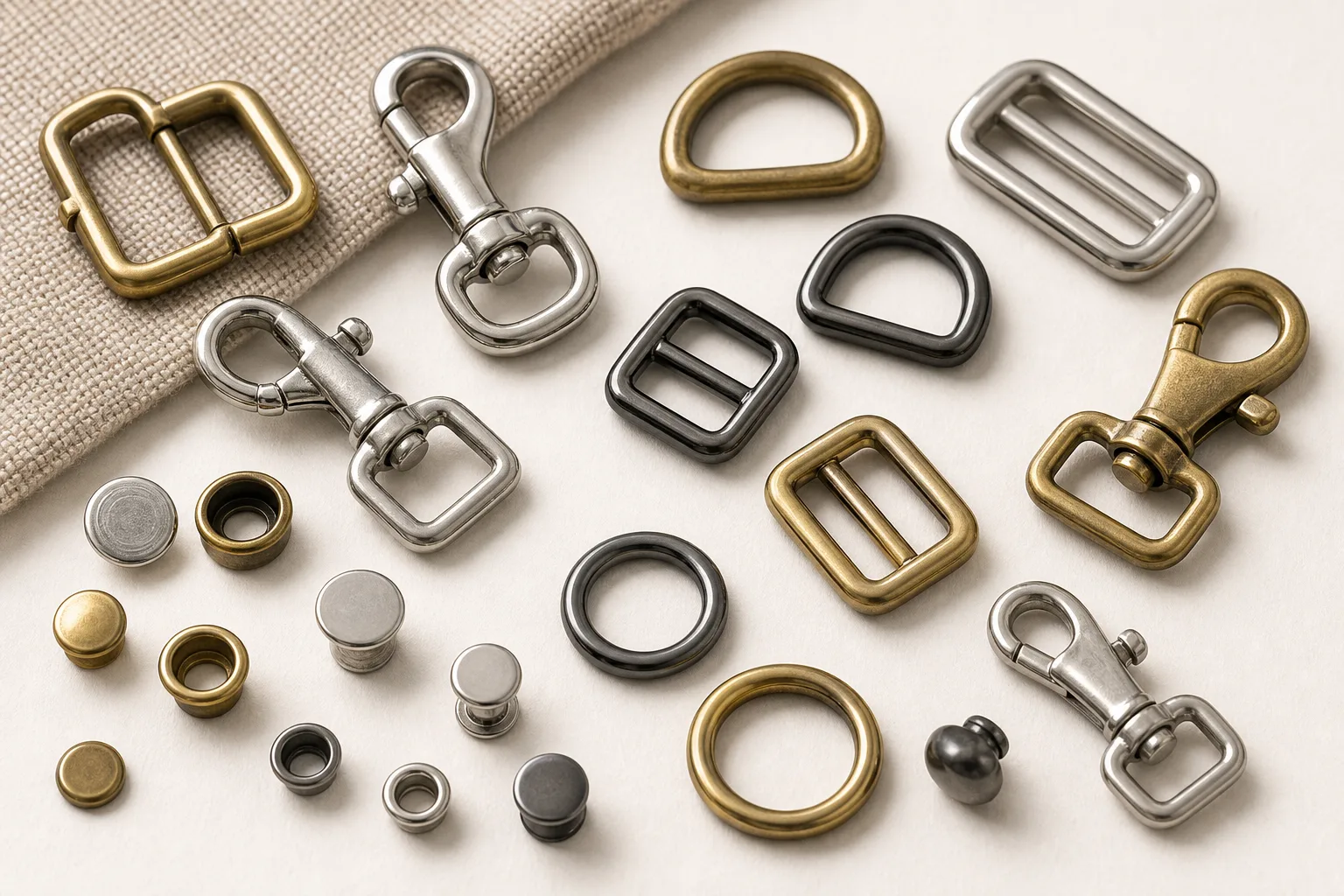
Buckle is one of the broadest words in bag hardware. It covers parts that behave very differently in use, which is why two suppliers can quote completely different components against the same word. This guide separates the main families by mechanism, so you can name the part you actually need before sending an inquiry.
What a buckle actually does
Every buckle performs some combination of three jobs: it closes a strap, it releases that closure, and it adjusts length. Most confusion in sourcing comes from assuming a buckle does all three when it only does one or two. A side-release buckle closes and releases quickly but does not hold adjustment on its own — the webbing usually runs through a separate slider or through the buckle body in a way that lets it creep under load. A cam buckle grips the webbing and adjusts, but opening it means lifting a lever rather than separating two halves.
When you describe a buckle to a supplier, describing the behavior is more reliable than describing the shape. "Closes and releases in one motion, holds adjustment on the fixed side" identifies a part far better than "plastic buckle", which could mean a dozen different structures.
The main buckle families
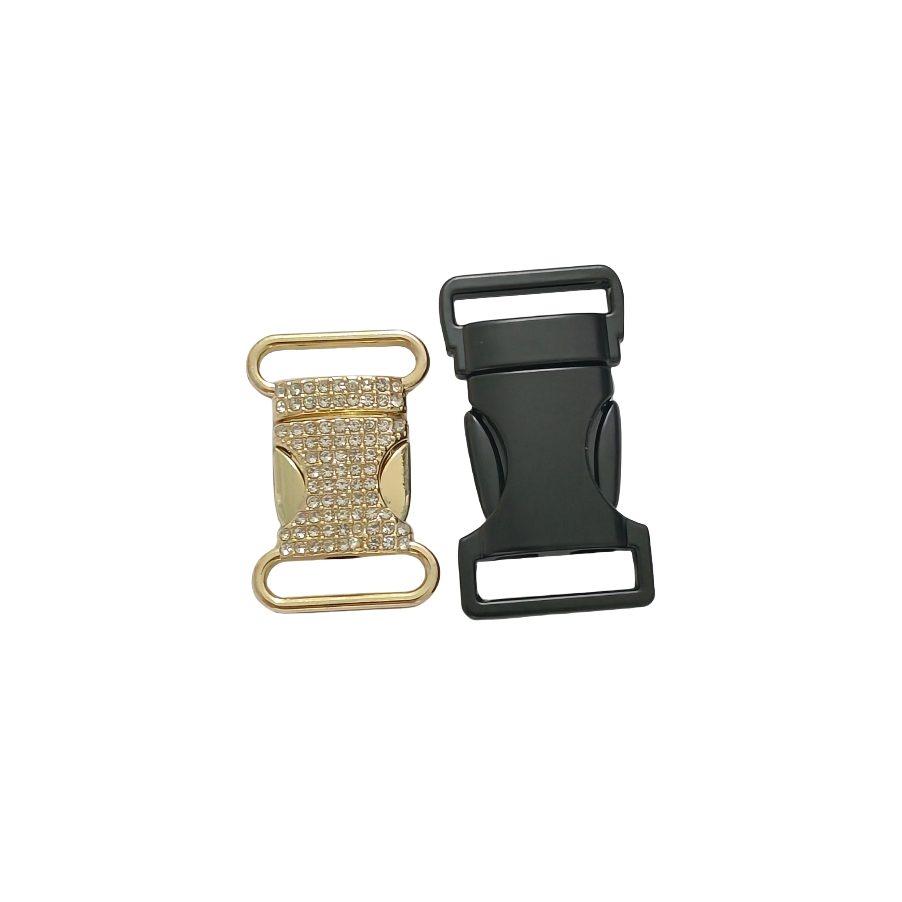
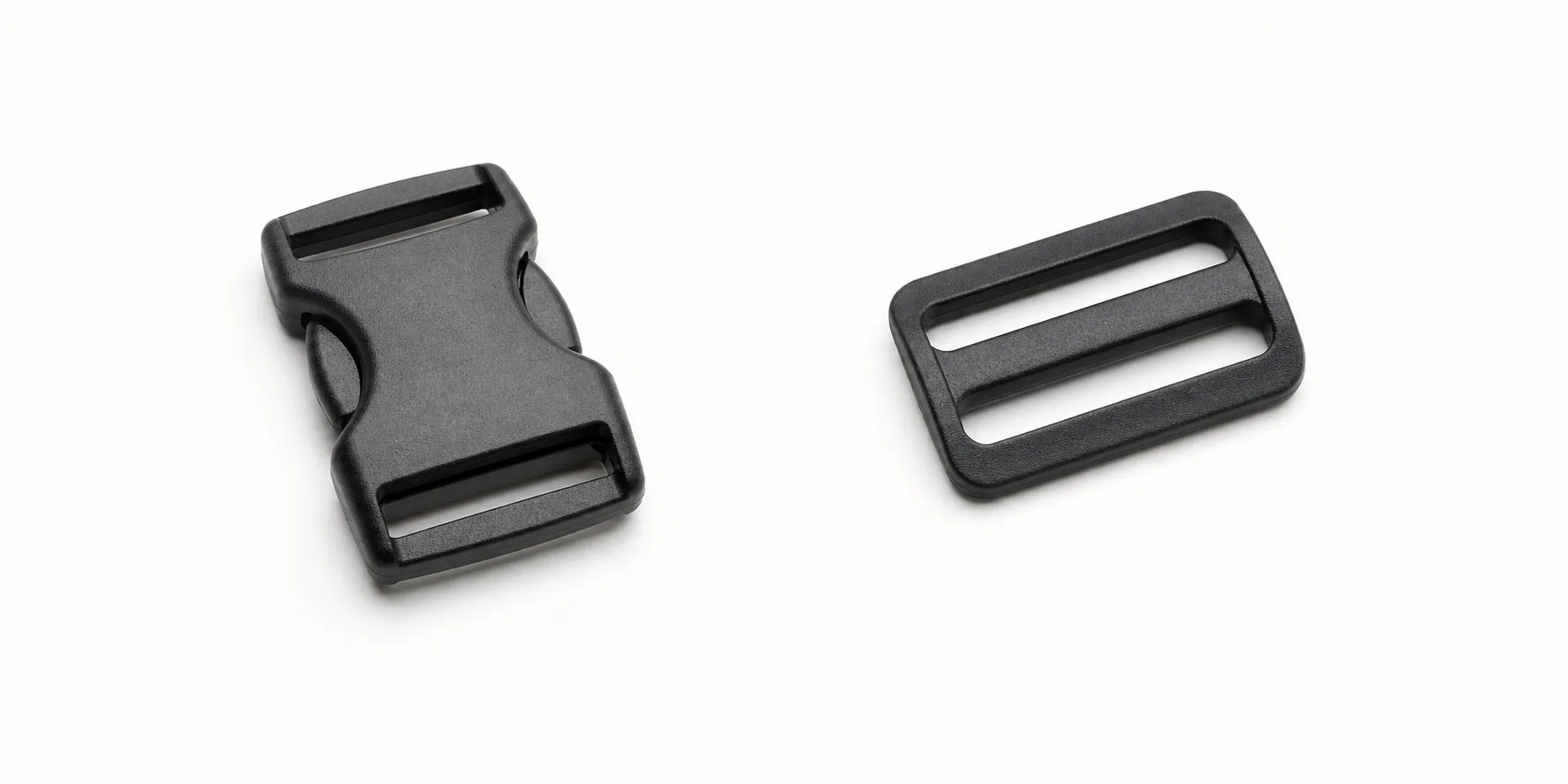
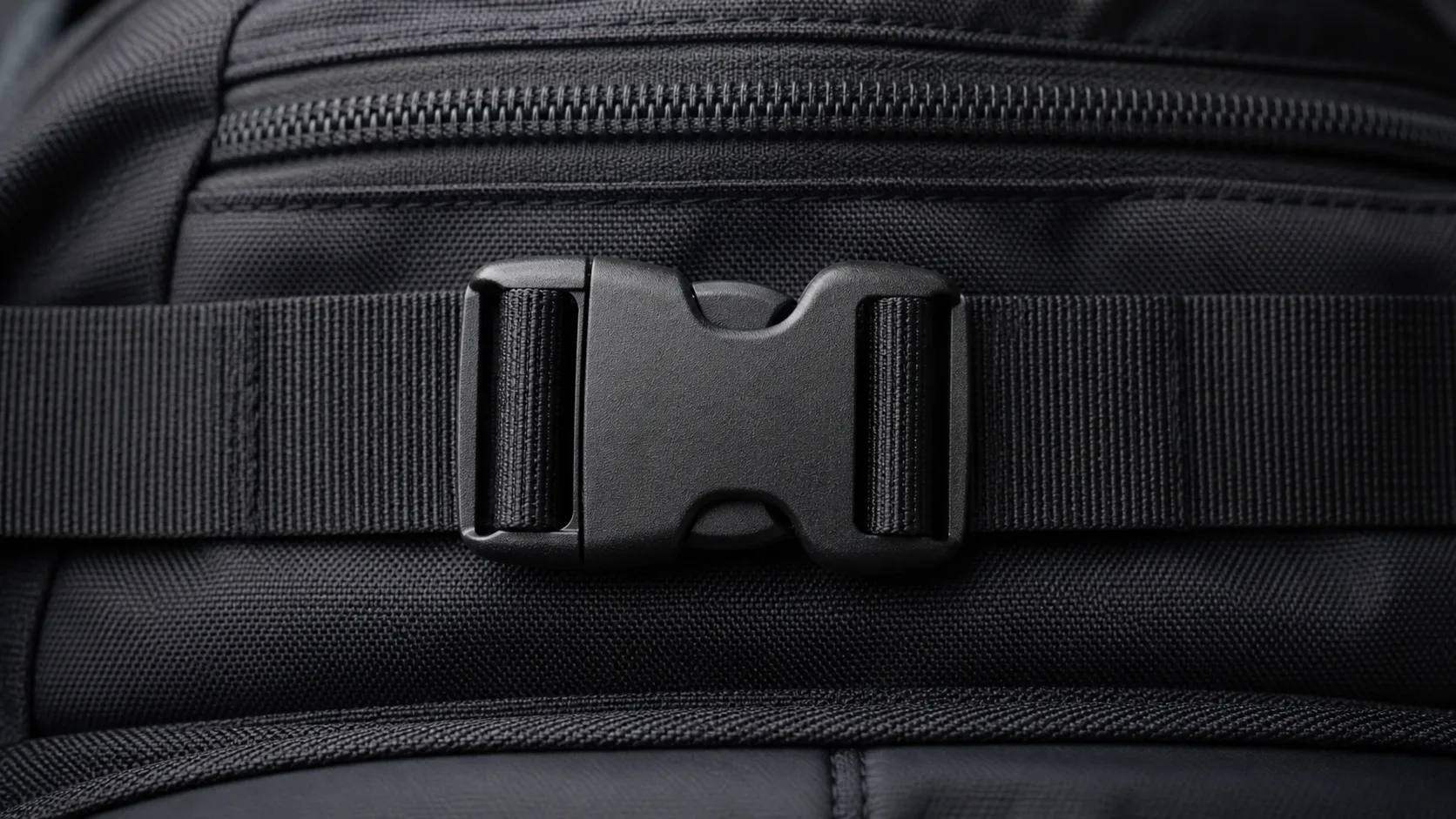
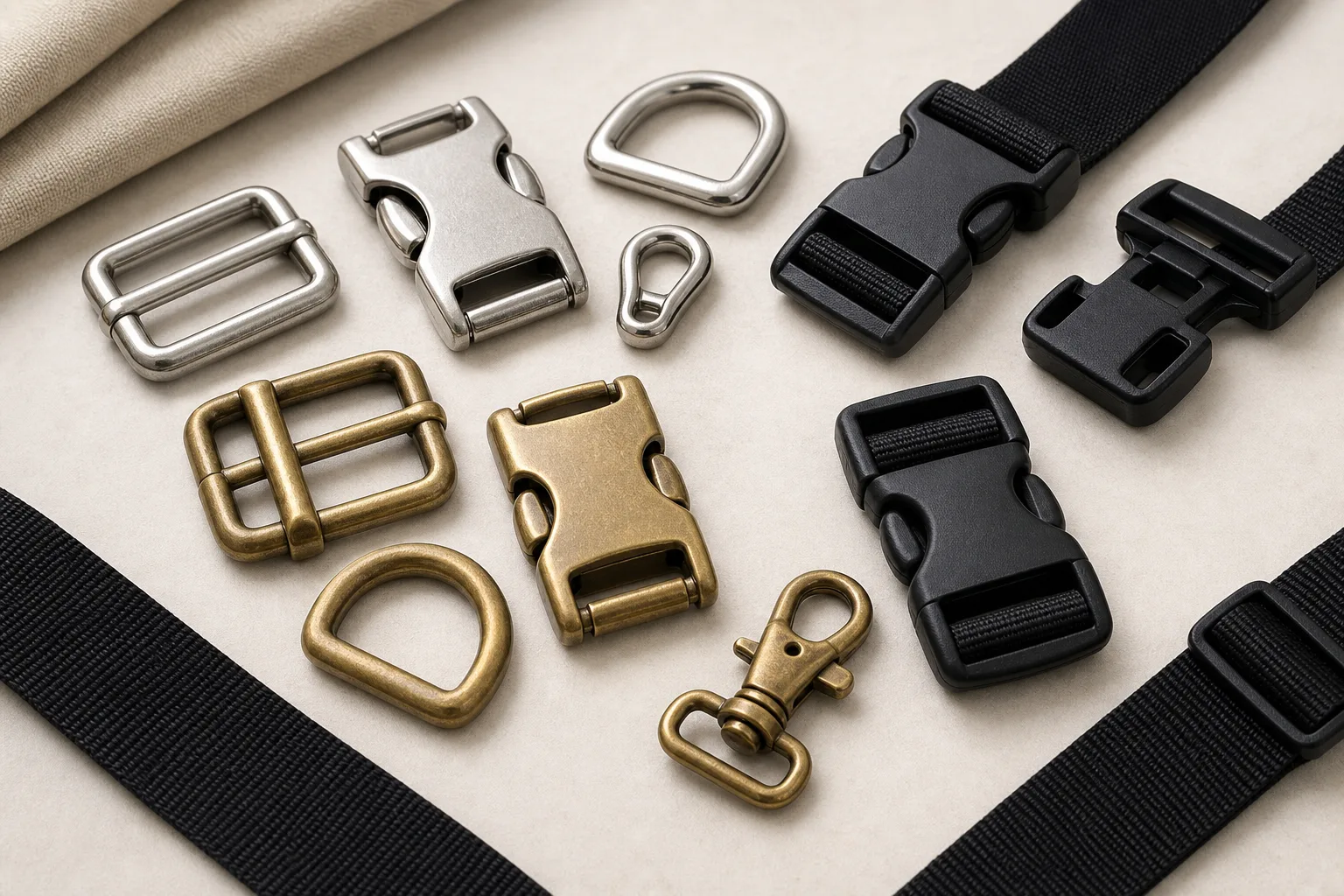
Side-release buckles (sometimes called quick-release or snap buckles) split into a male prong section and a female housing. Squeezing the exposed arms releases them. They dominate backpacks, sports bags, pet collars and anything the user opens frequently. The critical dimensions are the webbing width they accept and the depth of the prong arms, which determines how much finger access the user gets.
Cam buckles use a spring-loaded lever that pinches webbing against a fixed bar. They hold well under steady tension and adjust quickly, which suits load straps and compression straps. They rely on friction, so webbing type and surface finish affect holding behavior more than with a mechanical lock.
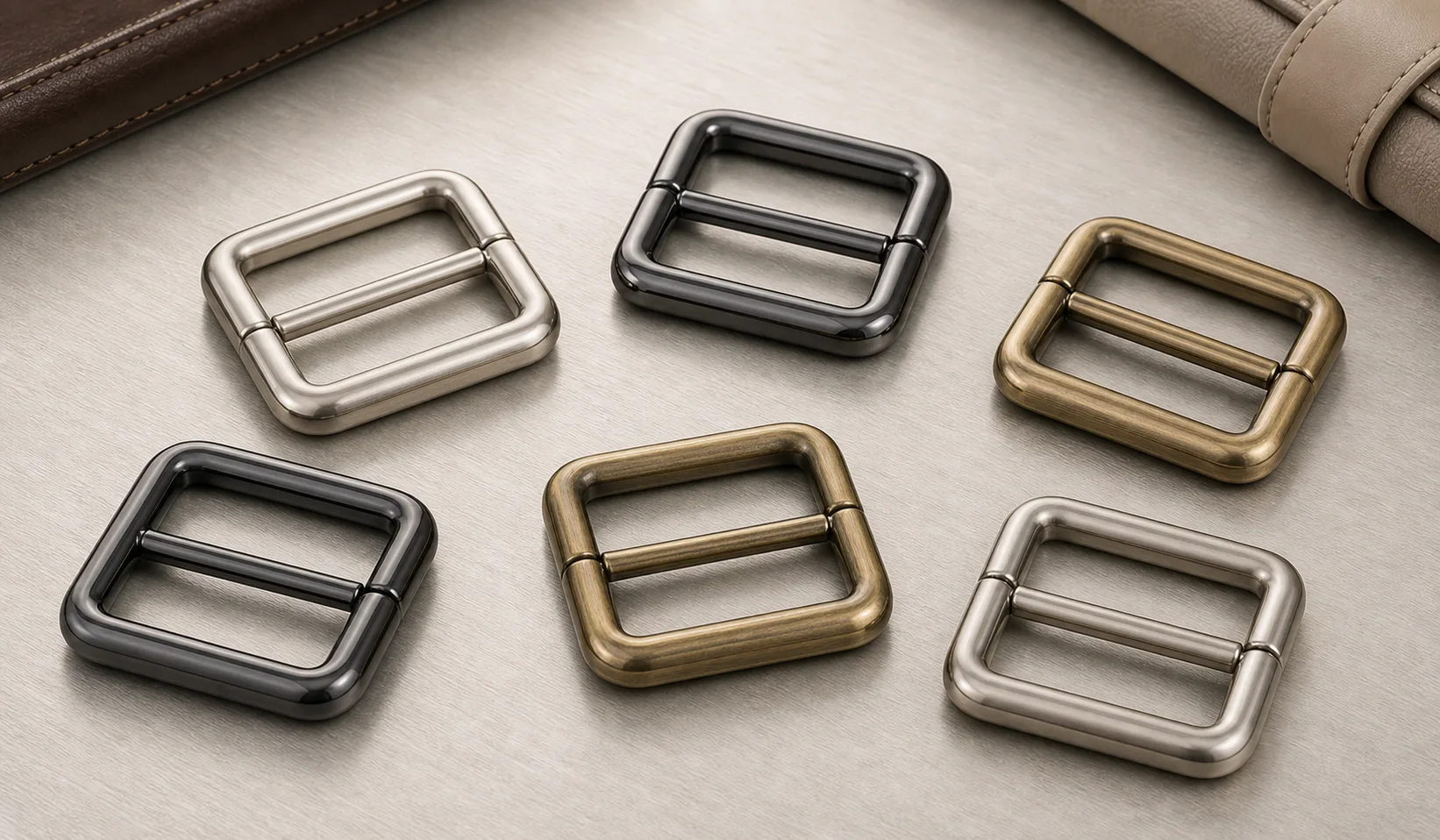
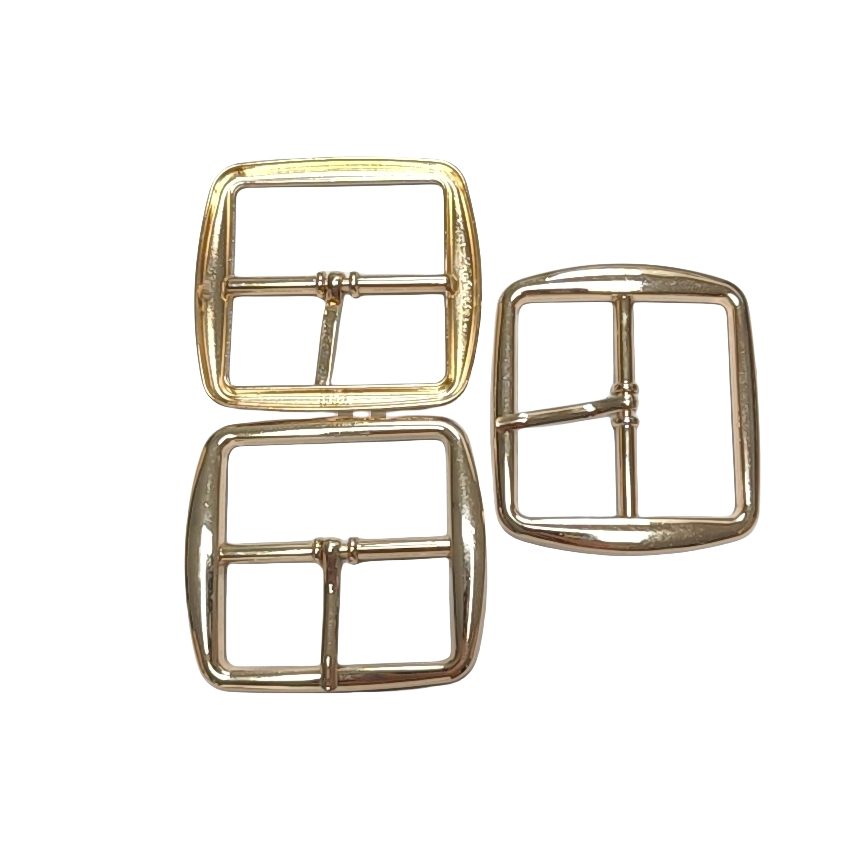
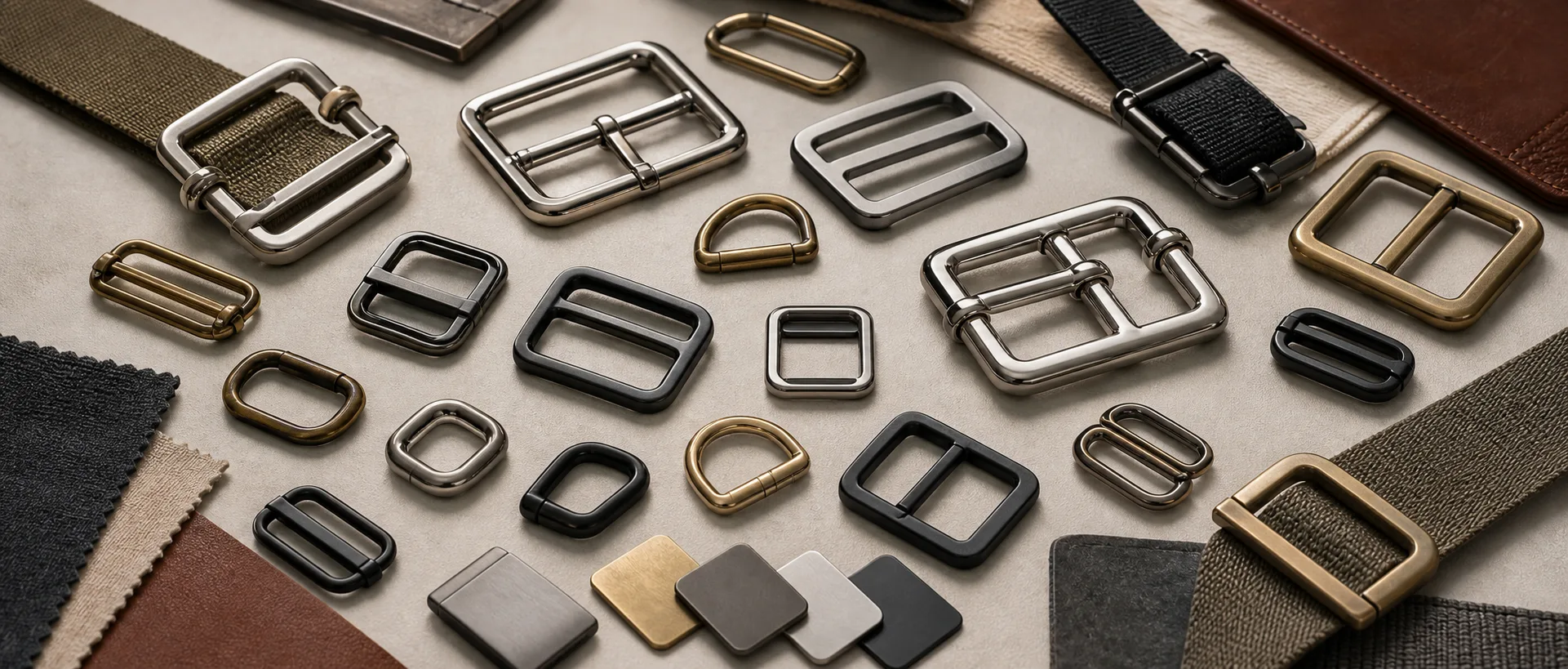
Roller and pin buckles are the belt-style family: a frame, a center bar, a pin that passes through a hole or through the weave, and often a roller to reduce wear. They give discrete, repeatable positions rather than continuous adjustment, and they read as more formal, which is why they appear on fashion straps and shoulder straps.
Magnetic and twist-lock closures sit at the decorative end. They close a flap rather than carry strap load. They are chosen for how they look and how the closing action feels, and they are usually specified alongside a visible finish because they sit on the front face of the product.
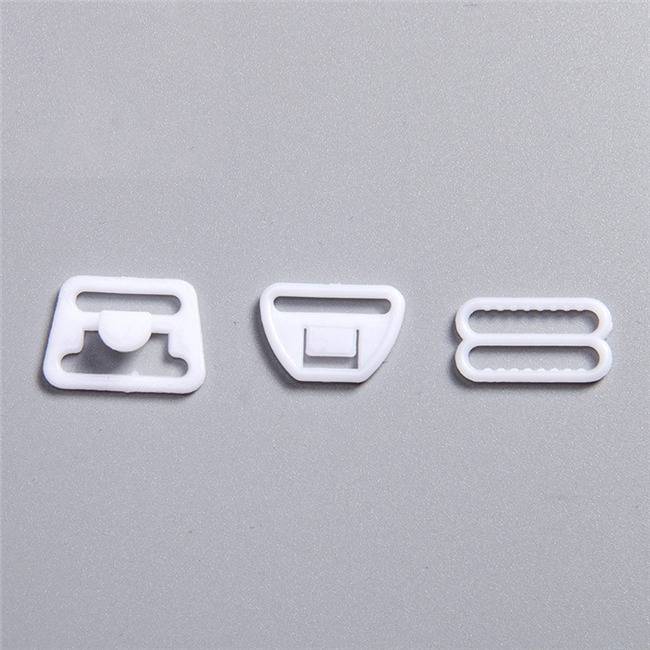
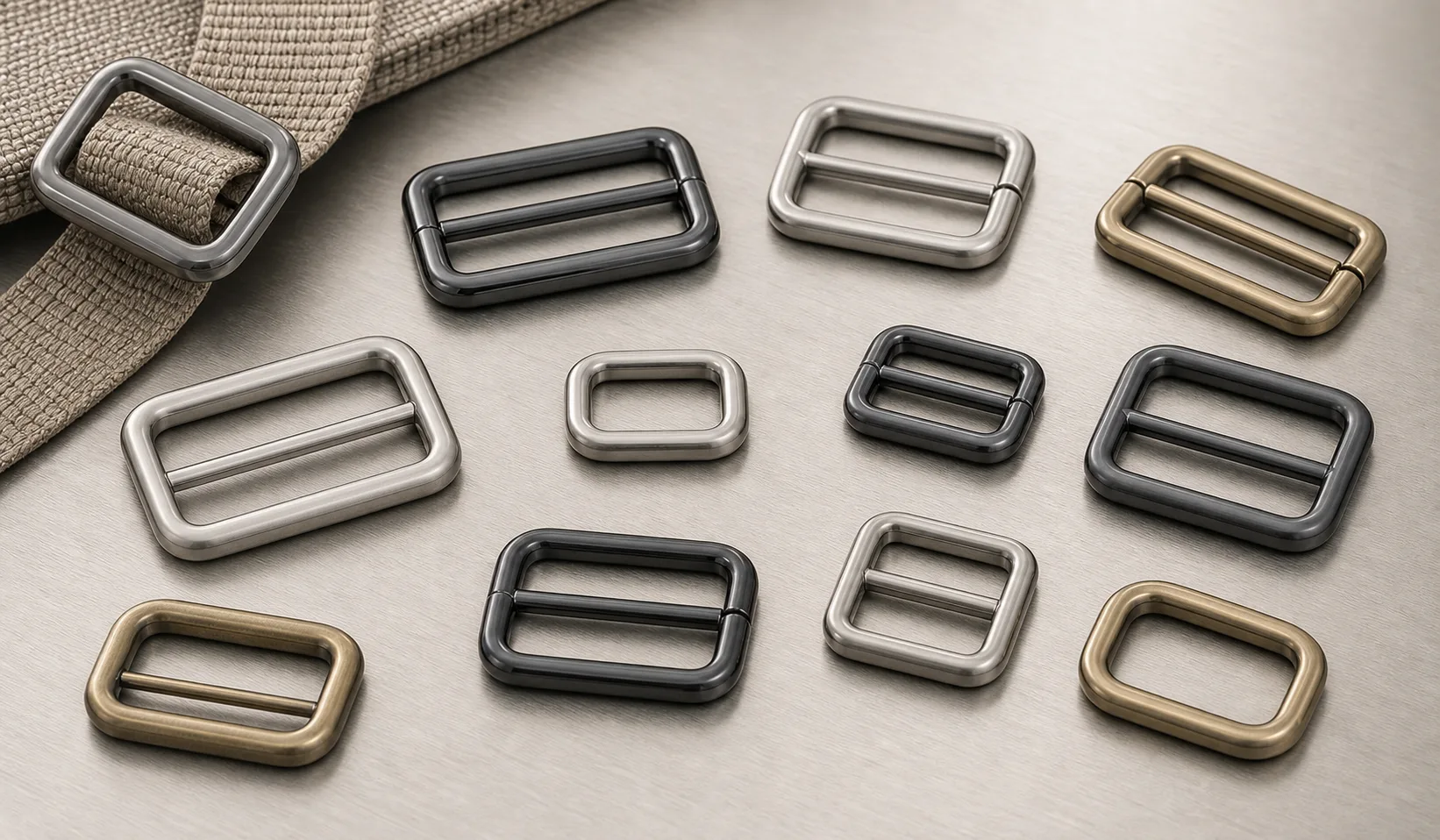
Adjuster-only parts — sliders, tri-glides, ladder locks — are often called buckles in inquiries but never separate. They change strap length and nothing else. If your part must not come apart, an adjuster is what you are describing.
Metal or plastic
Material choice usually follows the product position rather than the mechanism. Moulded plastic buckles are lighter, will not corrode, and can be produced in colors, which suits outdoor gear, sports bags and children’s products. Metal buckles carry a heavier hand feel and can take plated or aged finishes, which suits fashion bags, leather goods and premium straps.
The two are not always interchangeable at the same size. A plastic side-release buckle needs a certain wall thickness to be reliable, so it will sit visually larger than a metal part rated for similar use. If you are switching a design from plastic to metal or back, check the visual proportion against the strap, not only the webbing width.
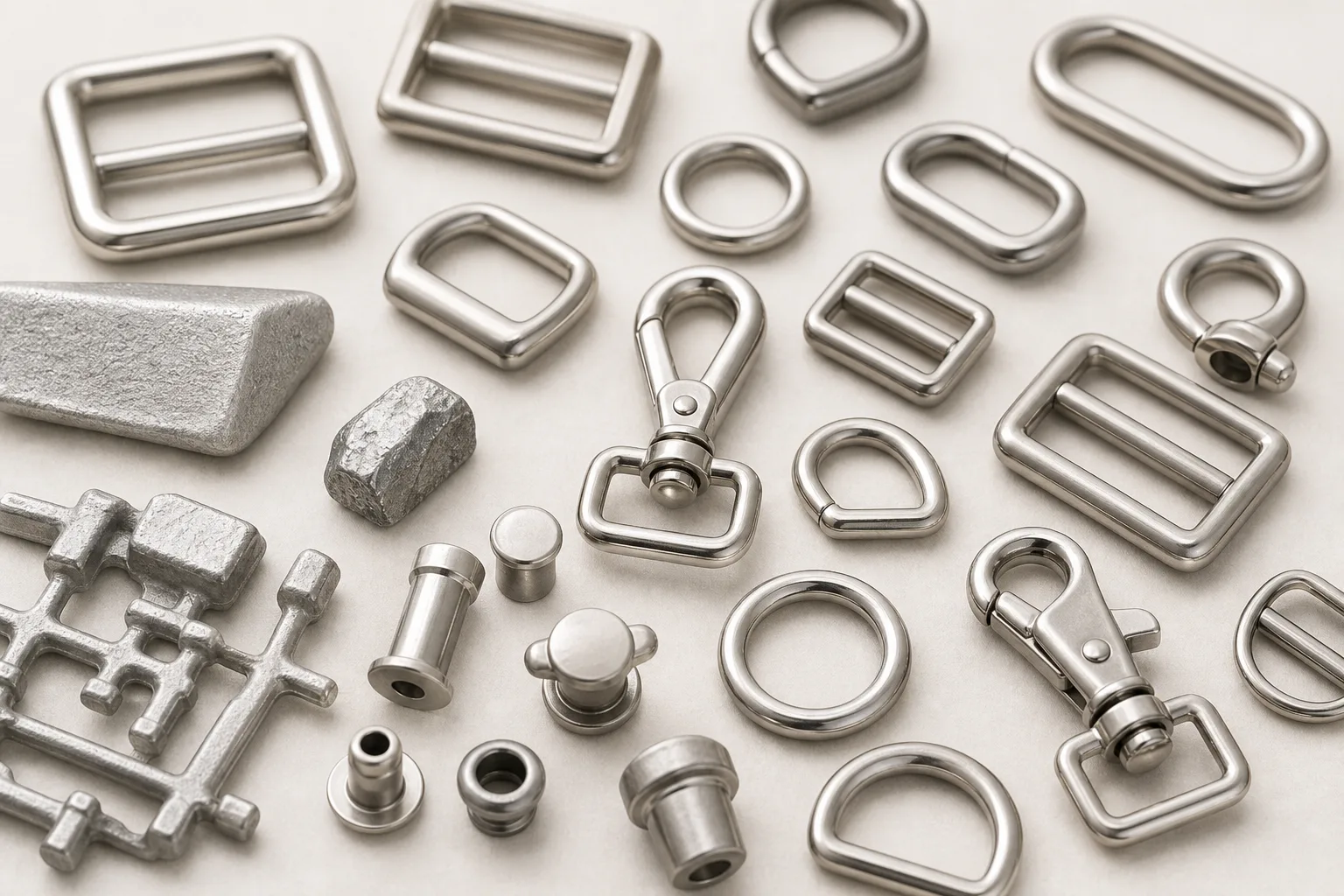
For metal buckles, the base material and the finish are separate decisions and both affect appearance and wear. Our material guides and finish guides cover those choices in more detail.
Sizing: the number that matters most
Buckles are specified by the webbing width they accept, not by their outside dimensions. A 25 mm buckle takes 25 mm webbing. Getting this wrong is the single most common cause of a rejected sample, because a buckle that is even slightly oversized will let webbing skew and twist under load.
Webbing thickness matters too, and it is easy to overlook. Two 25 mm webbings can differ noticeably in thickness depending on weave and material. A buckle slot sized for thin webbing may not accept a thicker one at all, and a slot sized for thick webbing will let thin webbing slip. When you send an inquiry, giving both width and thickness — or simply sending a length of the actual webbing — removes most of this risk.
If the strap is leather or a laminated material rather than webbing, say so early. Slot geometry and edge radius are usually adjusted for those, because a sharp internal edge that is harmless against webbing will score leather over time.
What to prepare before asking for a quotation
Suppliers can respond much faster when the inquiry names the mechanism, the webbing width and thickness, the material direction, the finish direction and the application. A reference photo helps, but a photo alone rarely settles the mechanism question, because many buckle families look similar from the front.
If the buckle carries a logo, note the method you have in mind — engraved, debossed, enamel-filled, or a separate plate. The method affects which face of the buckle needs a flat area, and that can change the tooling.
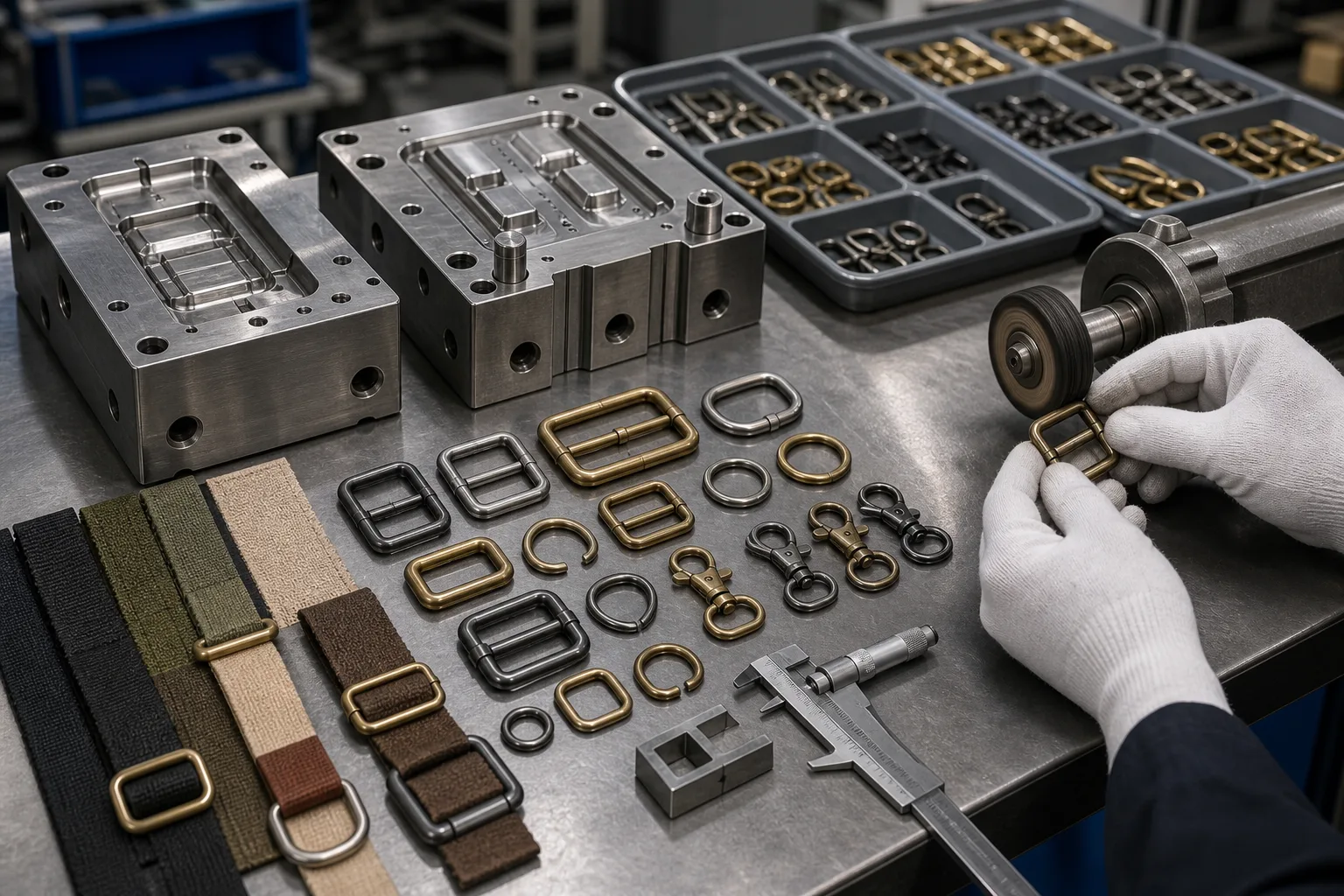
Where the design is new rather than a catalog item, expect the conversation to include mold review. Whether an existing mold can be adapted or a new one is needed is usually the largest single factor in timing.
Naming the mechanism, the webbing width and the material direction turns a vague buckle inquiry into something a supplier can quote directly. Everything else — finish, logo, packing — is easier to settle once the part itself is unambiguous.
 Buyer Guides
 Buyer Guides
 Buyer Guides
 Buyer Guides
 Comparison Guides
 Material Guides
 Material Guides