
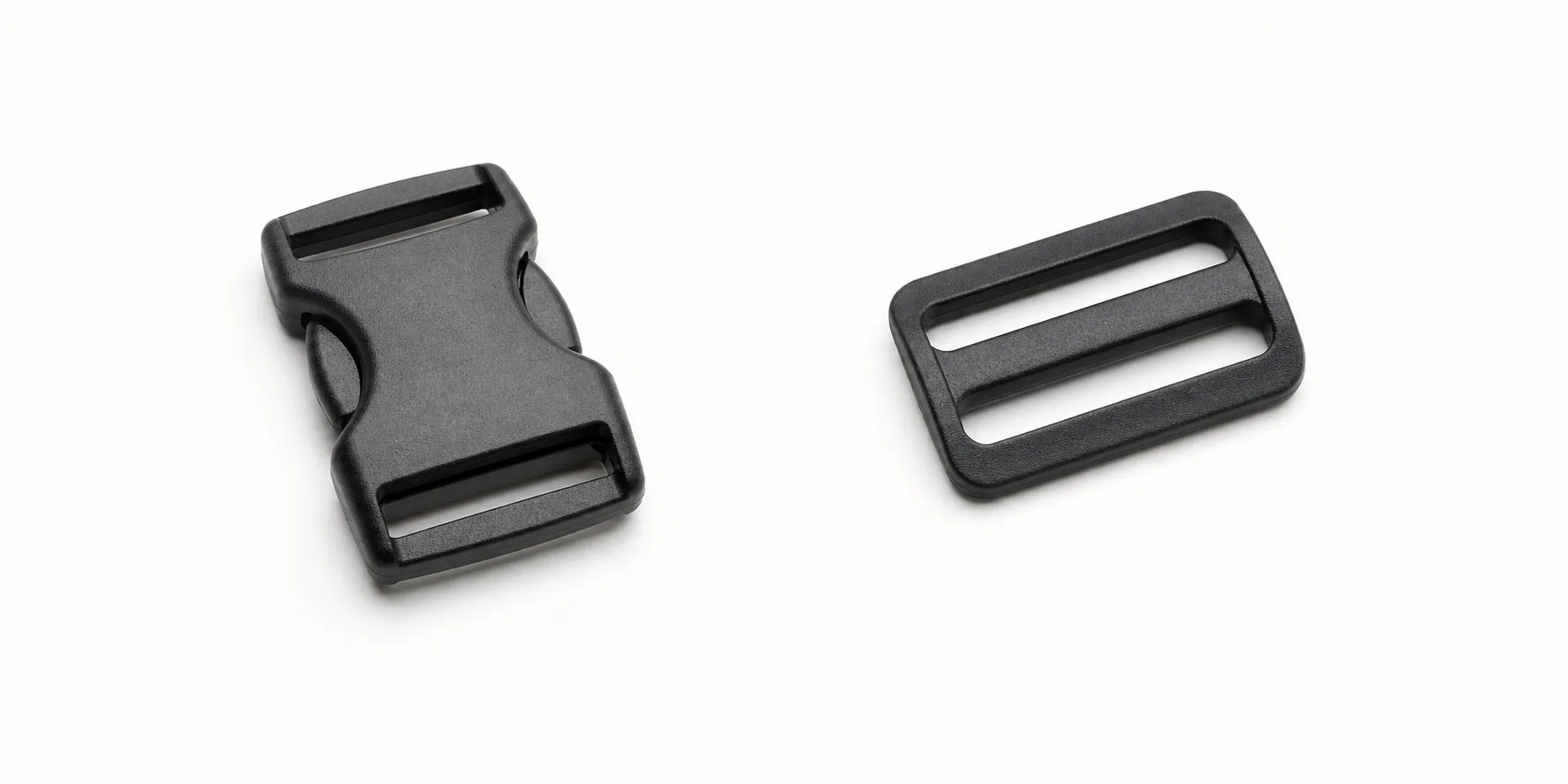
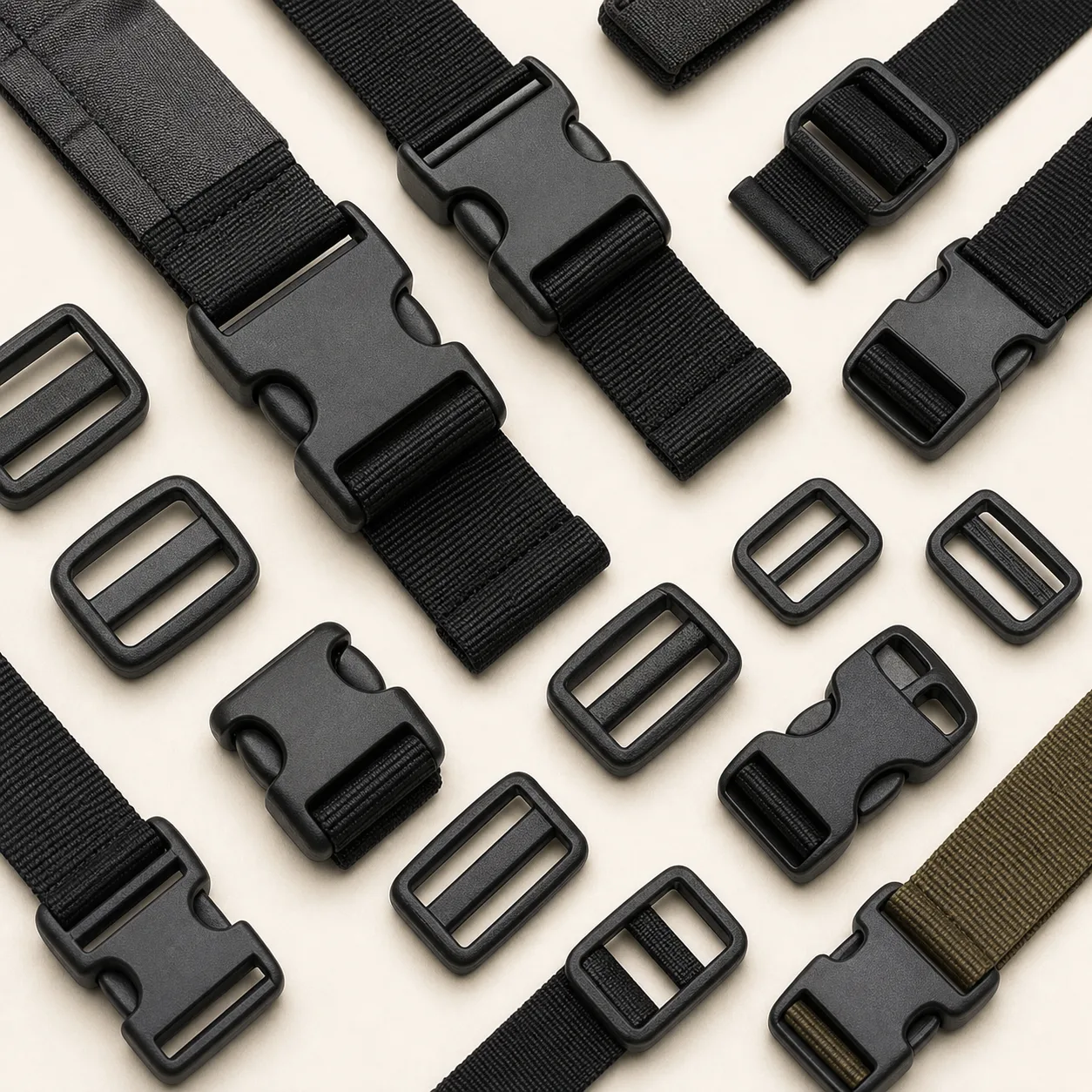
Plastic buckles are often treated as the budget option, which misses why they are actually specified. In several applications a molded buckle is the better engineering answer, not the cheaper compromise. This guide covers where they fit, what they are made from, and the trade-offs worth knowing before you choose.
Where plastic buckles are the right answer
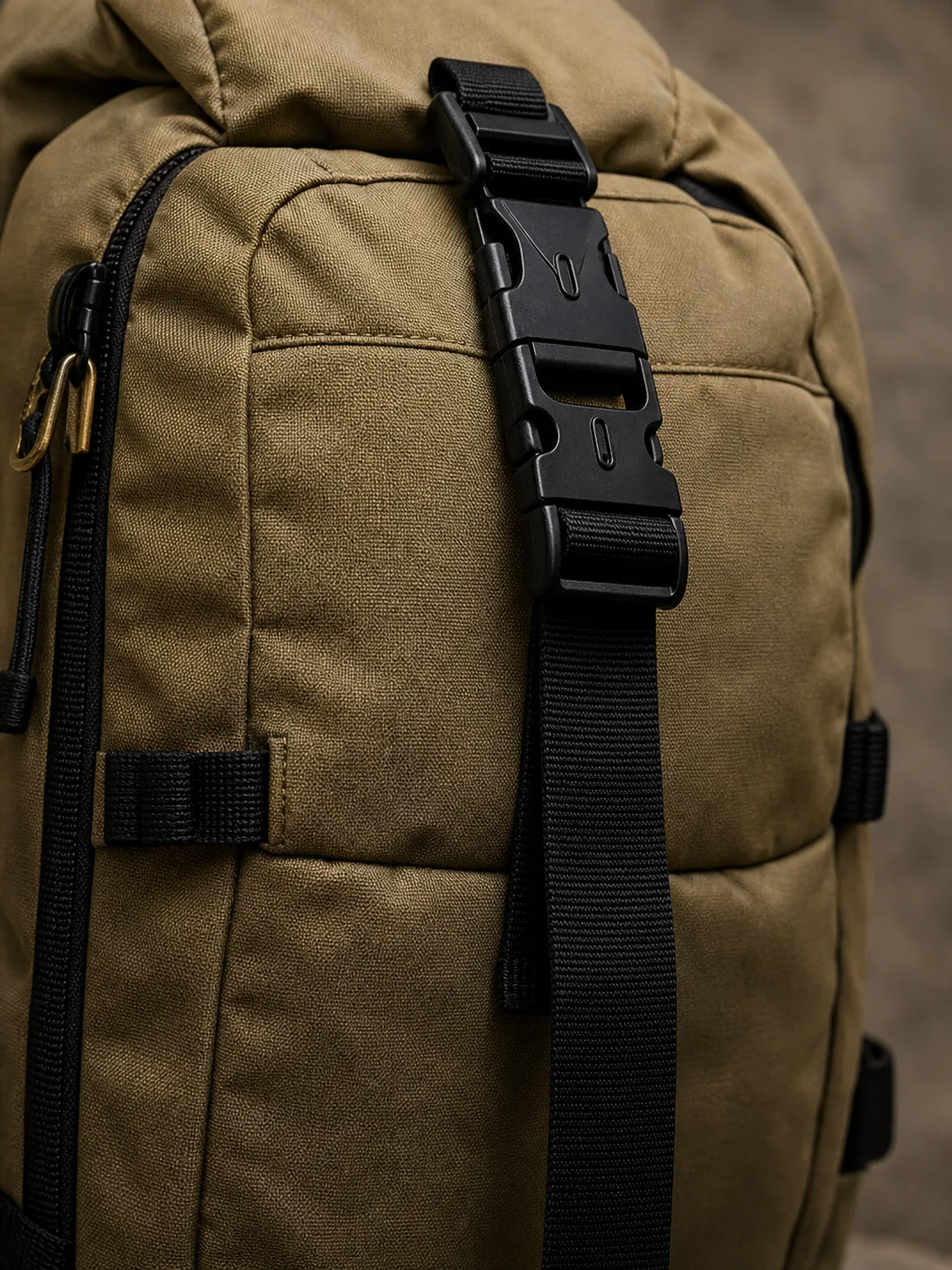
Weight is the most obvious reason. On a technical backpack with a dozen strap junctions, molded hardware makes a real difference to the finished weight, and it is a difference the end user feels. The same logic applies to running vests, hydration packs and travel gear where every component is scrutinised.
Corrosion resistance is the second. Plastic does not rust or develop plating defects, so it holds up in wet, humid and salt-air conditions. Marine bags, watersports gear, pet products that get washed, and anything used outdoors year-round all benefit from that.
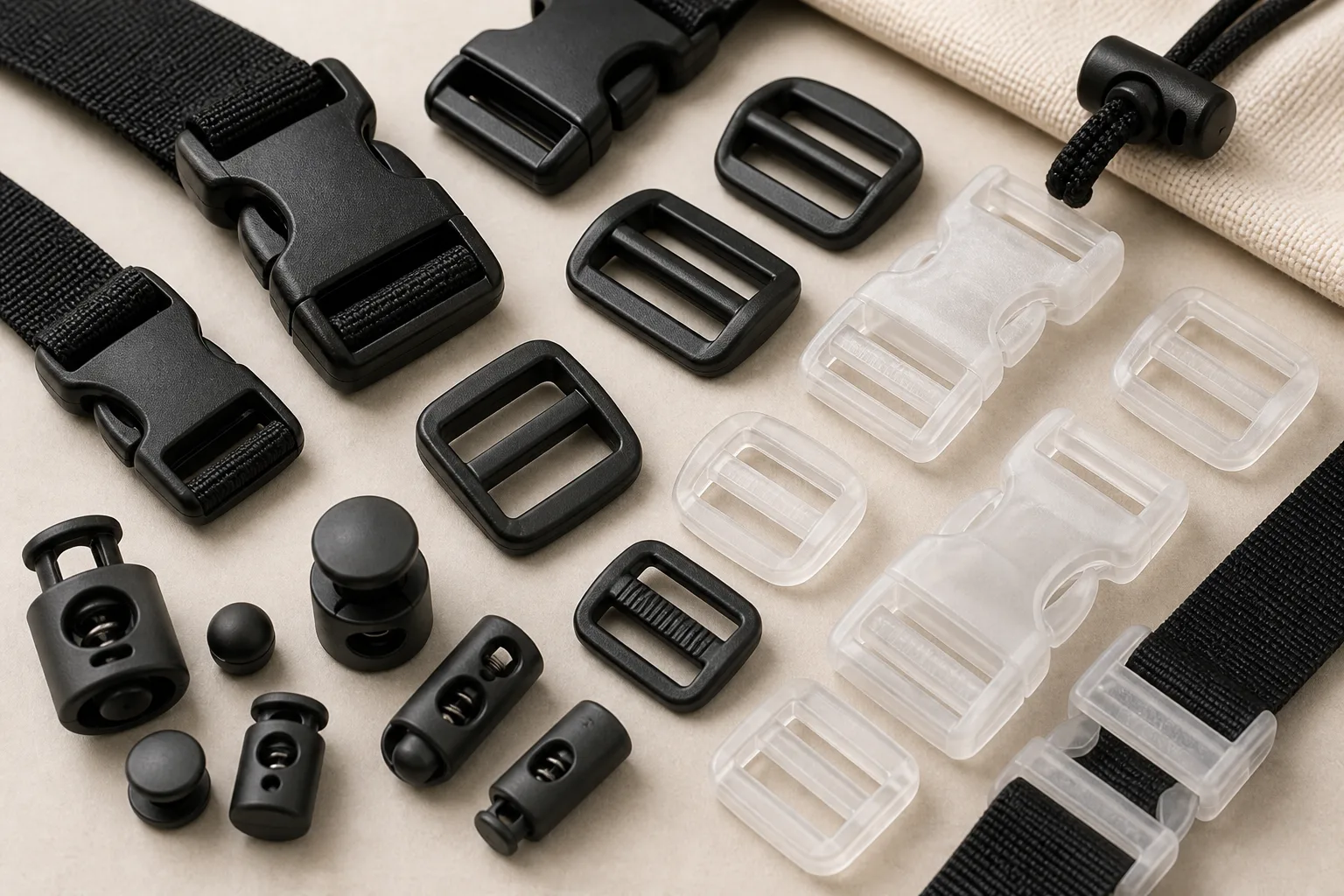
Color is the third and it is often underrated. A molded buckle can be produced in the color itself rather than coated, so the color goes all the way through and will not chip to reveal a different substrate underneath. For products with strong color identity, or for size and model coding across a range, that is difficult to match in metal.
There are also contexts where metal is actively unwanted: products that must not conduct heat or cold against skin, items that go through metal detection, and childcare products where a lighter part reduces the consequence of an impact.
Which polymers are used
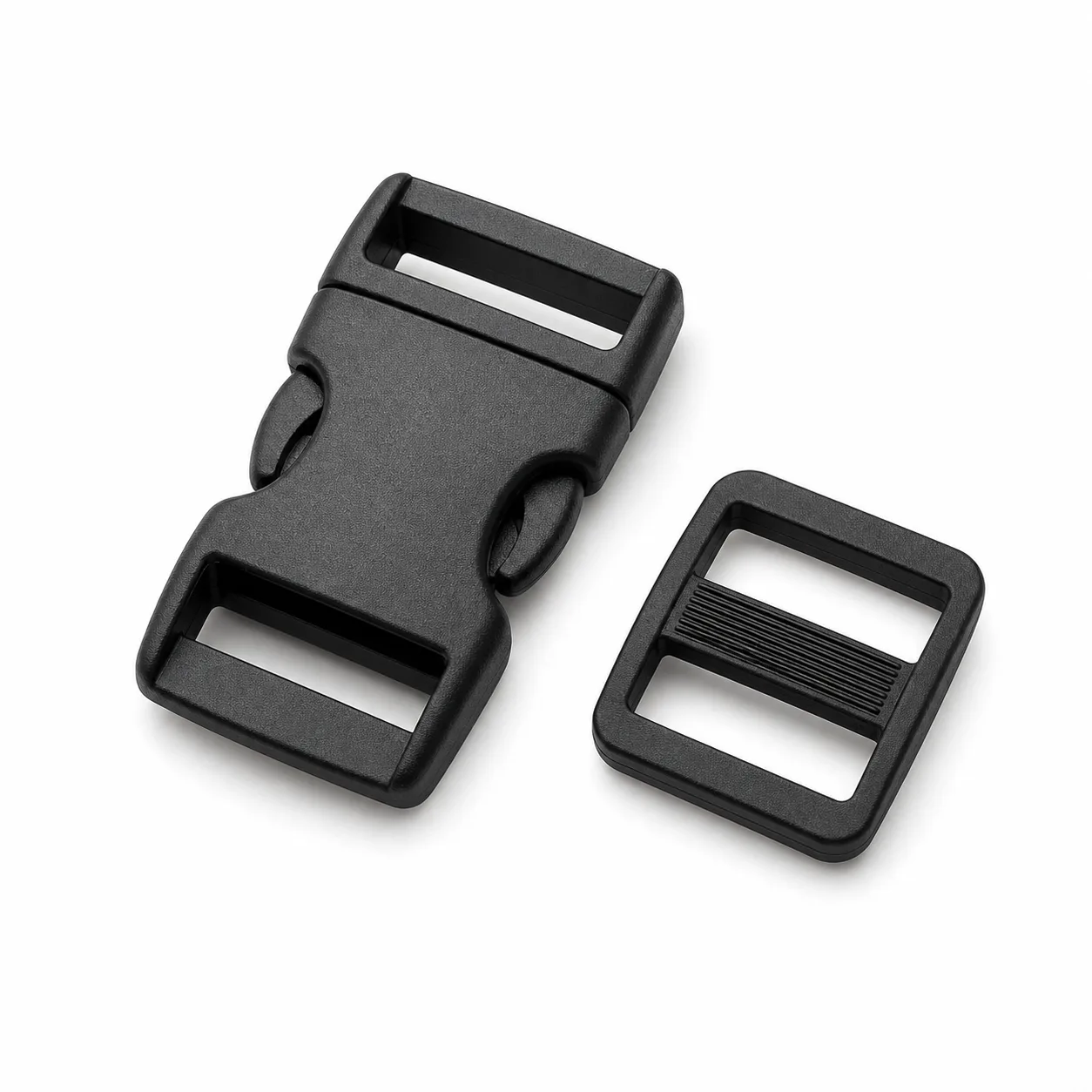
Acetal, usually written POM, is the common choice for load-bearing buckles. It is a rigid engineering plastic with good dimensional stability, low friction and reliable spring behavior — the arms of a side-release buckle need to flex thousands of times and return to shape, and acetal does that consistently.
Nylon is the other frequent option. It is tougher and more impact-resistant than acetal, and it tolerates a wider range of conditions, but it absorbs moisture, which can shift dimensions slightly. That matters more for parts with tight tolerances than for simple sliders.
General-purpose plastics appear in decorative or low-load parts where the buckle is not carrying meaningful tension. They are not usually appropriate for closures that take strap load in use, and it is worth being explicit about the intended load when you enquire so the material direction is chosen on the right basis.
Glass-fibre reinforcement is sometimes added for stiffness. It changes the surface appearance and the feel, and it can affect how the part behaves at the flex points, so it is a decision to confirm on a sample rather than on a specification sheet.
The trade-offs against metal
Plastic buckles are bulkier for equivalent use. A molded part needs wall thickness to be reliable, so it will read visually larger than a metal part in the same application. On technical products that is accepted as part of the look. On a fashion bag it usually is not.
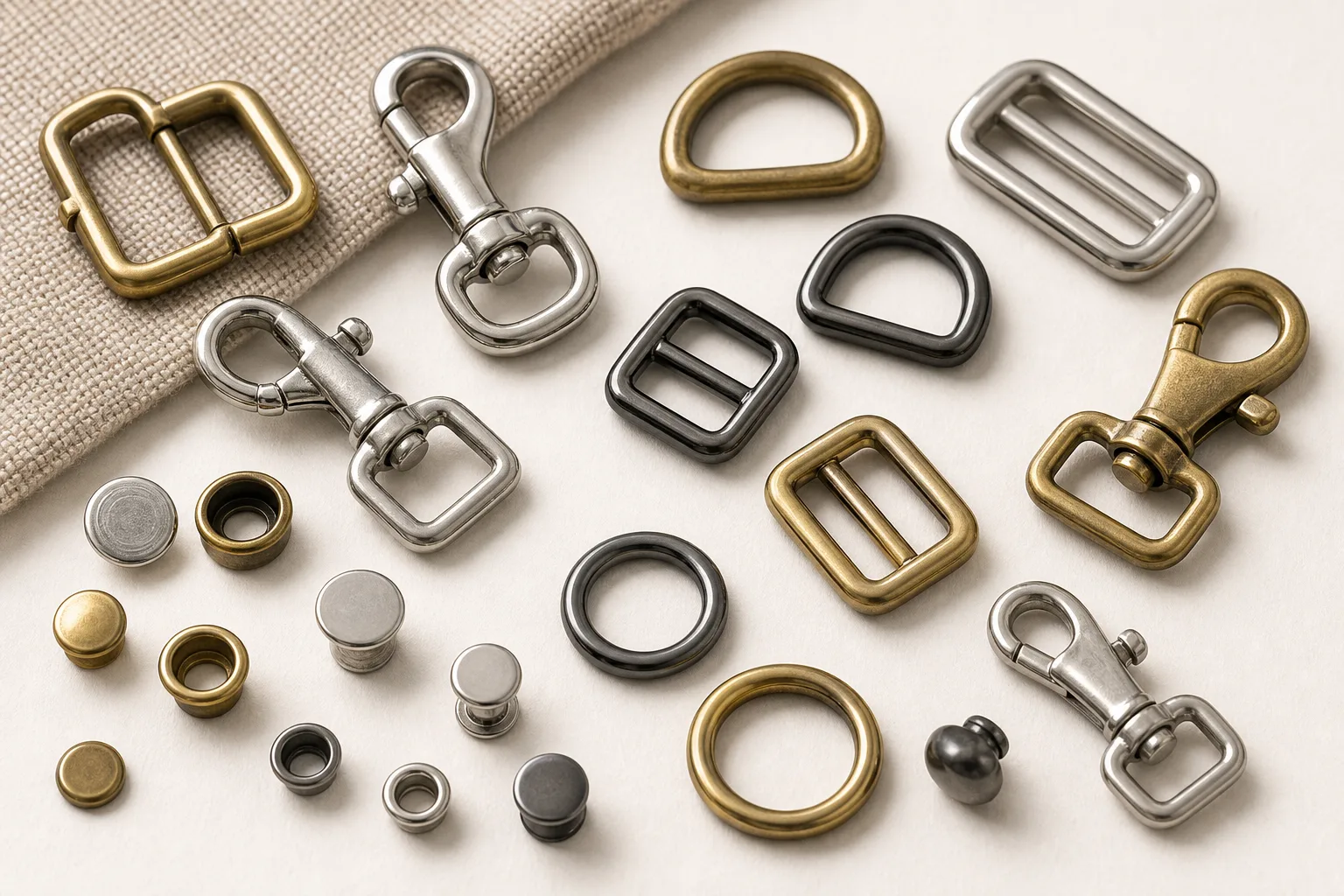
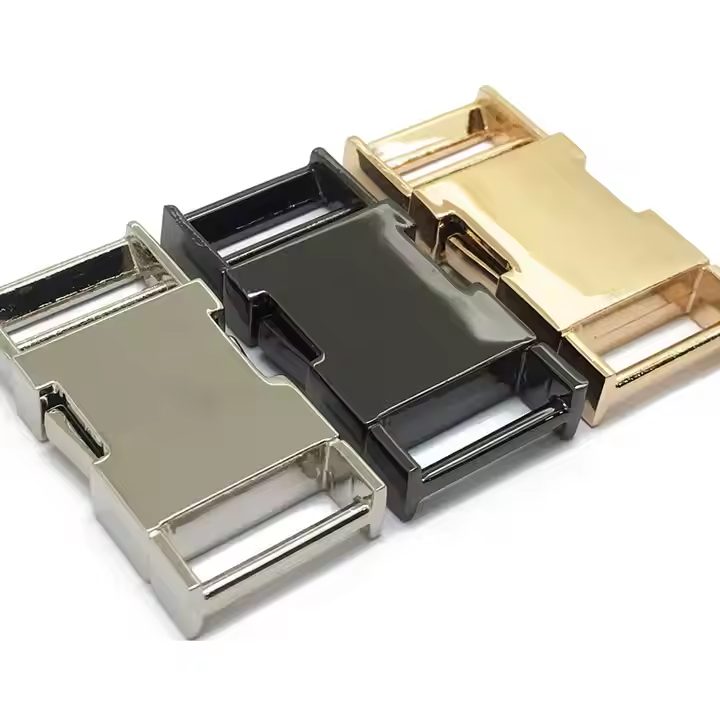
Appearance is the other trade-off. Plastic cannot take plated or aged metal finishes, so the design language is different — matte or gloss molded color rather than brushed, antiqued or polished metal. Some products mix the two deliberately, using molded parts where function dominates and metal where the part is visible.
Long-term behavior differs as well. Plastics can become brittle with prolonged UV exposure and with repeated deep cold, and the rate depends on the polymer and any additives. For products with a long expected service life outdoors, that is a conversation worth having during selection rather than after.
Moulded parts and tooling
Plastic buckles are injection molded, so the shape is defined by a mold. Standard sizes and shapes are made from existing molds and are quick to quote. A custom shape, a custom logo raised or recessed on the surface, or a modified slot geometry needs tooling work, and that is normally the main factor in lead time for a new part.
If your design is close to a standard part, it is worth asking whether an existing mold can be adapted rather than assuming a new one is needed. Small changes such as a logo cavity are often less involved than a fully new tool.
Color matching is done by pigment in the material, and it is a separate step from the mold. Ask how color will be confirmed — against a physical reference is more reliable than against a printed or on-screen color, because molded surfaces read differently from print.
What to specify
Give the webbing width and thickness, the buckle mechanism, the intended application, the color reference and whether the part carries load in normal use. If the product will be used outdoors or washed regularly, say so — it affects the material recommendation.
For a logo, note whether you want it raised, recessed or printed, and whether it must be legible at arm’s length or is a detail. Moulded logos have practical limits on how fine they can go, and that is easier to resolve before tooling than after.
Plastic buckles earn their place on weight, corrosion resistance and color rather than on cost alone. Choosing between acetal and nylon, and being explicit about load and environment, matters more than choosing between plastic and metal in the abstract.
 Buyer Guides
 Buyer Guides
 Comparison Guides
 Finish Guides
 Application Guides
 Material Guides
 Material Guides