
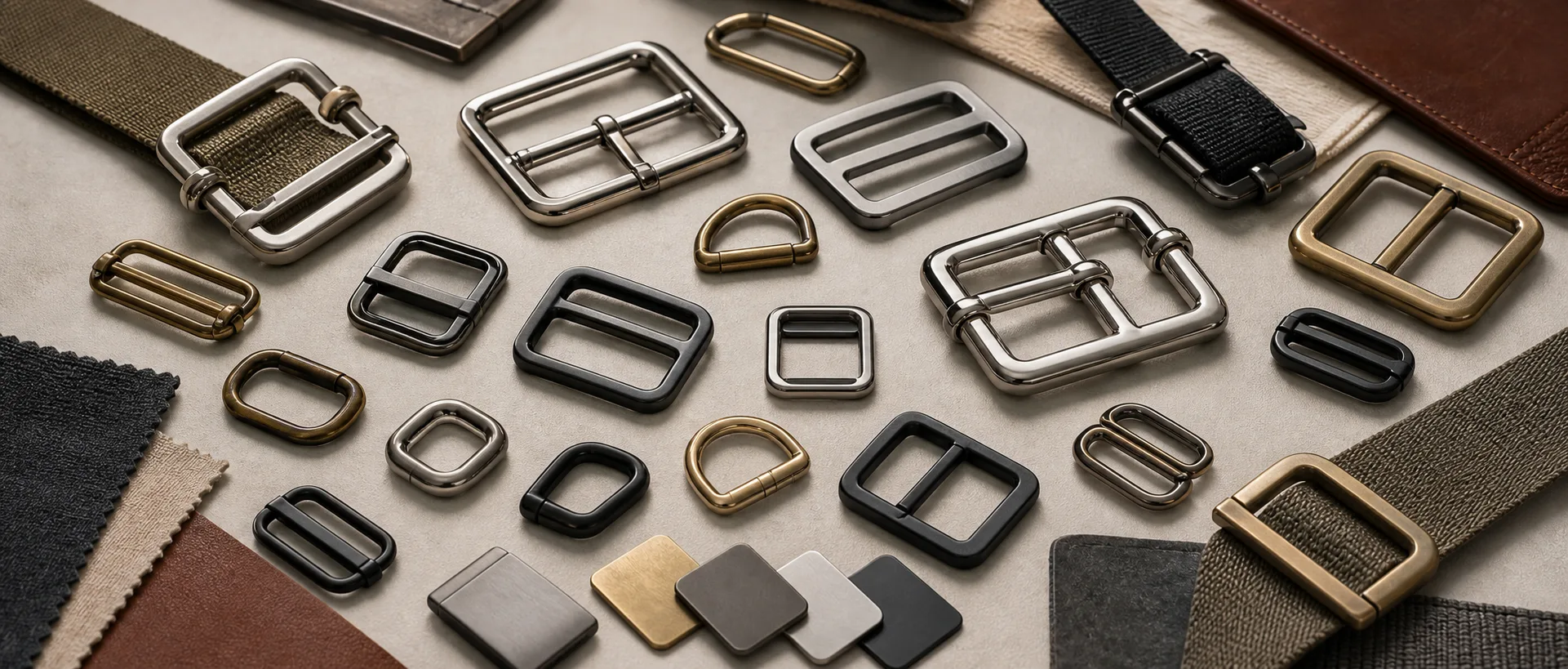
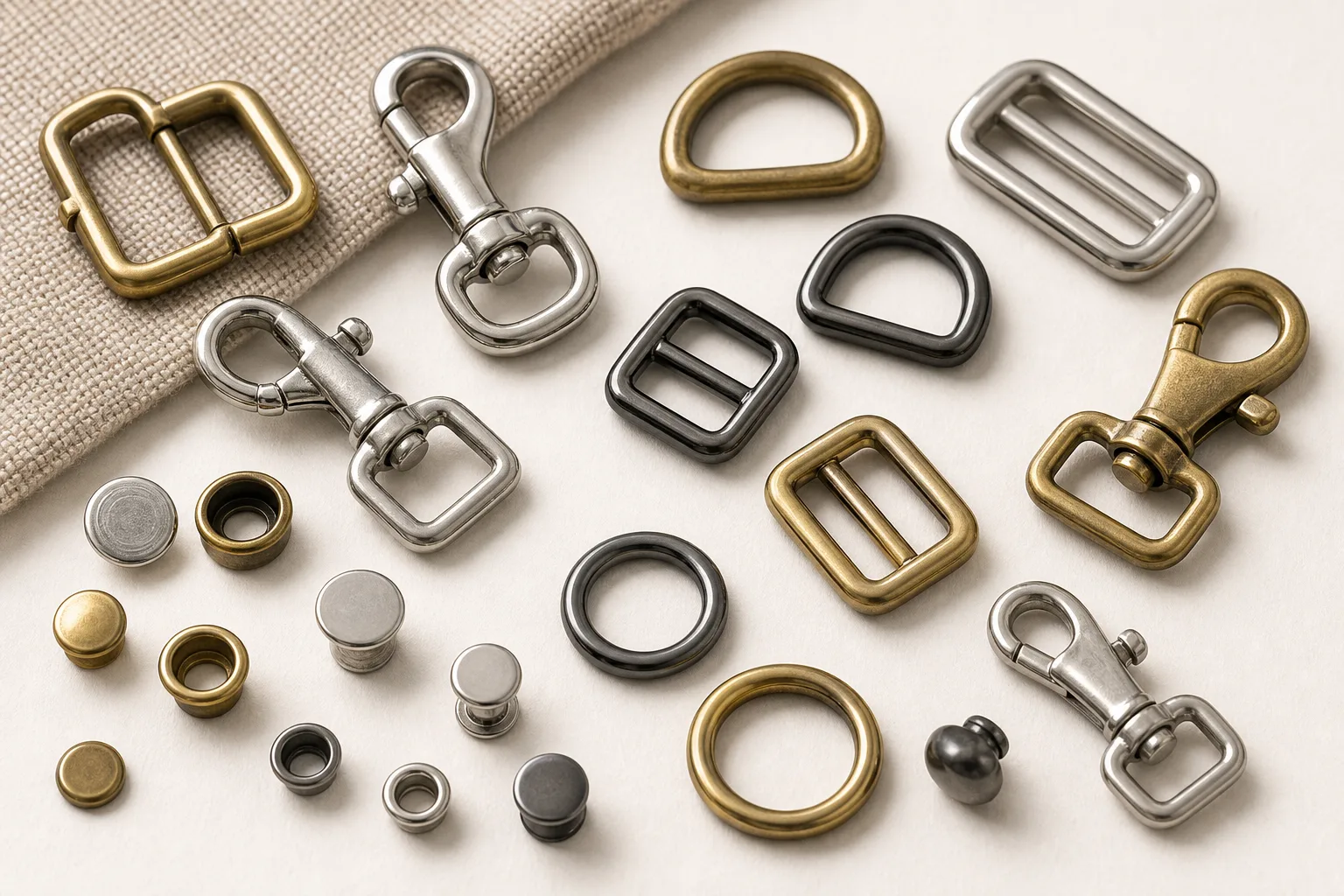
Two metal buckles can share a material, a finish and a size, and still be very different parts — because they were made differently. Understanding the three main production routes explains most of the price, appearance and durability differences you will encounter.
Die casting, stamping and wire forming
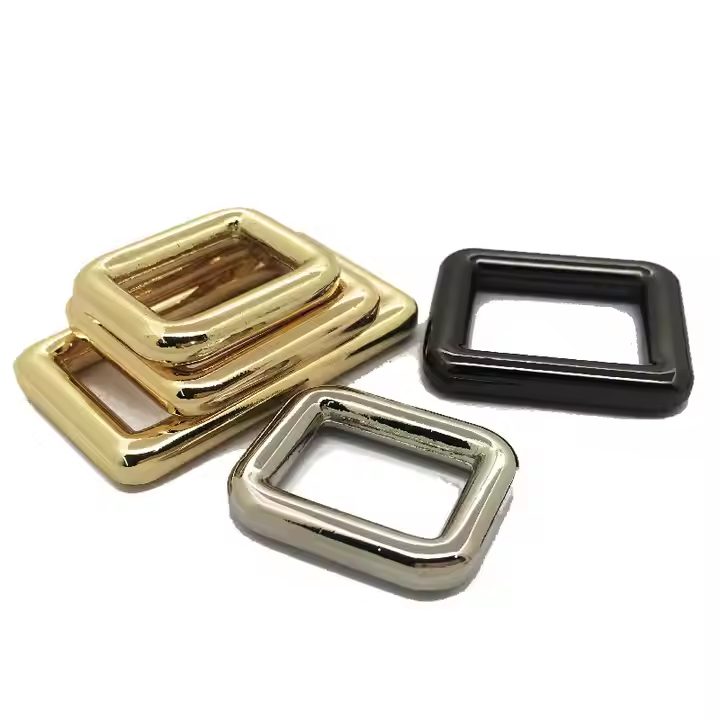
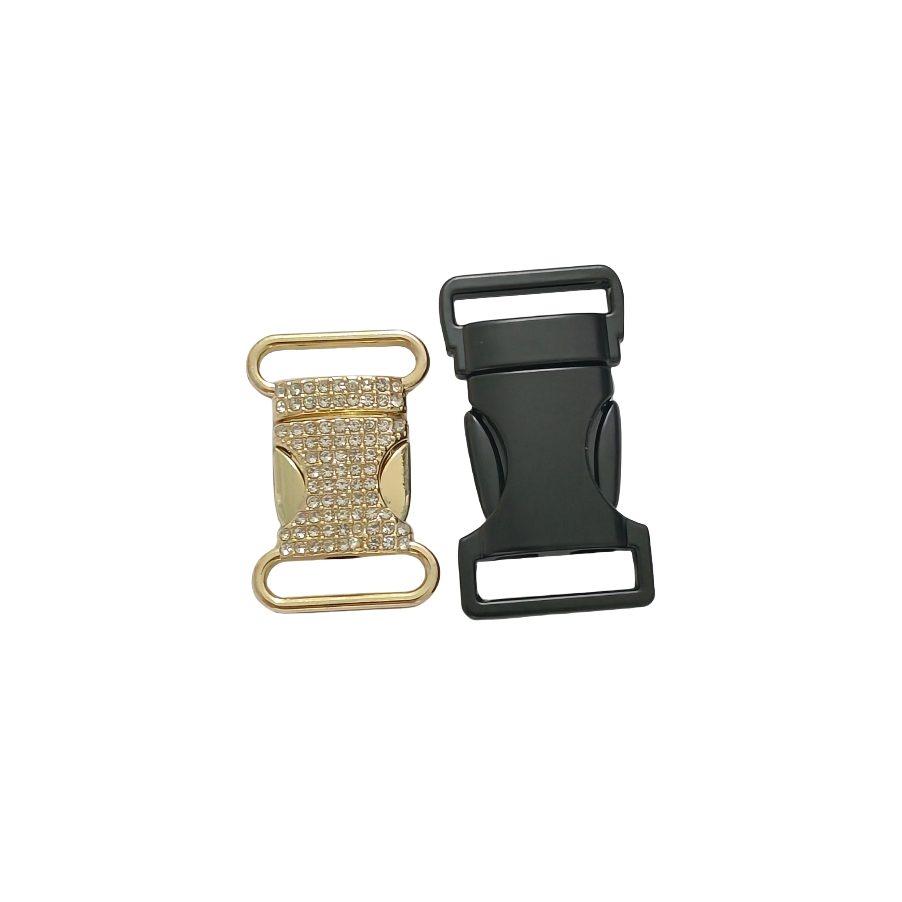
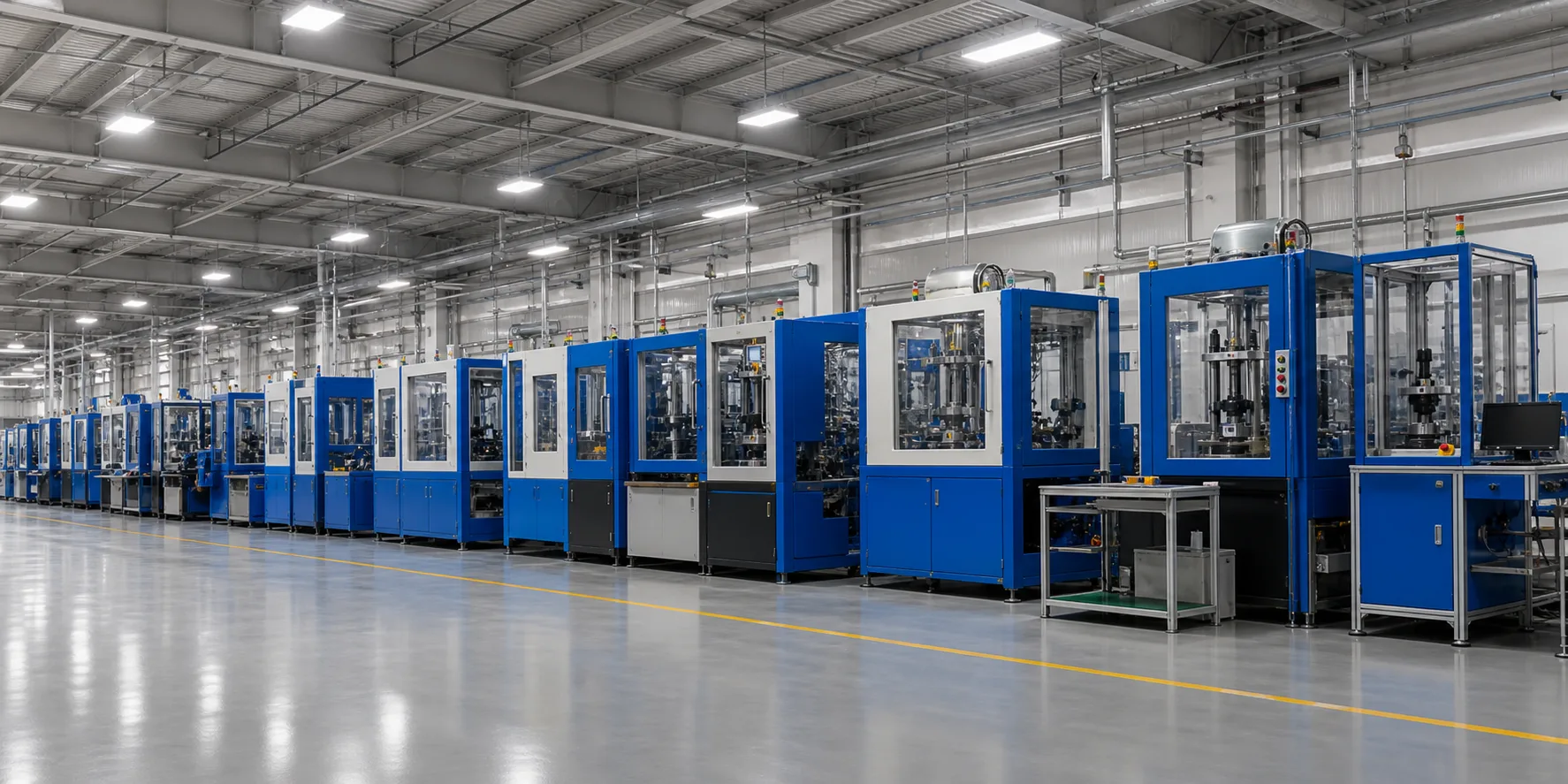
Die casting injects molten metal into a mold. It allows complex three-dimensional shapes, varying thickness, undercuts and integrated logo details, which is why decorative and sculptural buckles are usually cast. Zinc alloy is the common casting material because it flows well and reproduces fine detail. Cast parts need finishing work after molding — removing gate marks and polishing — and that labour is a real part of the cost.
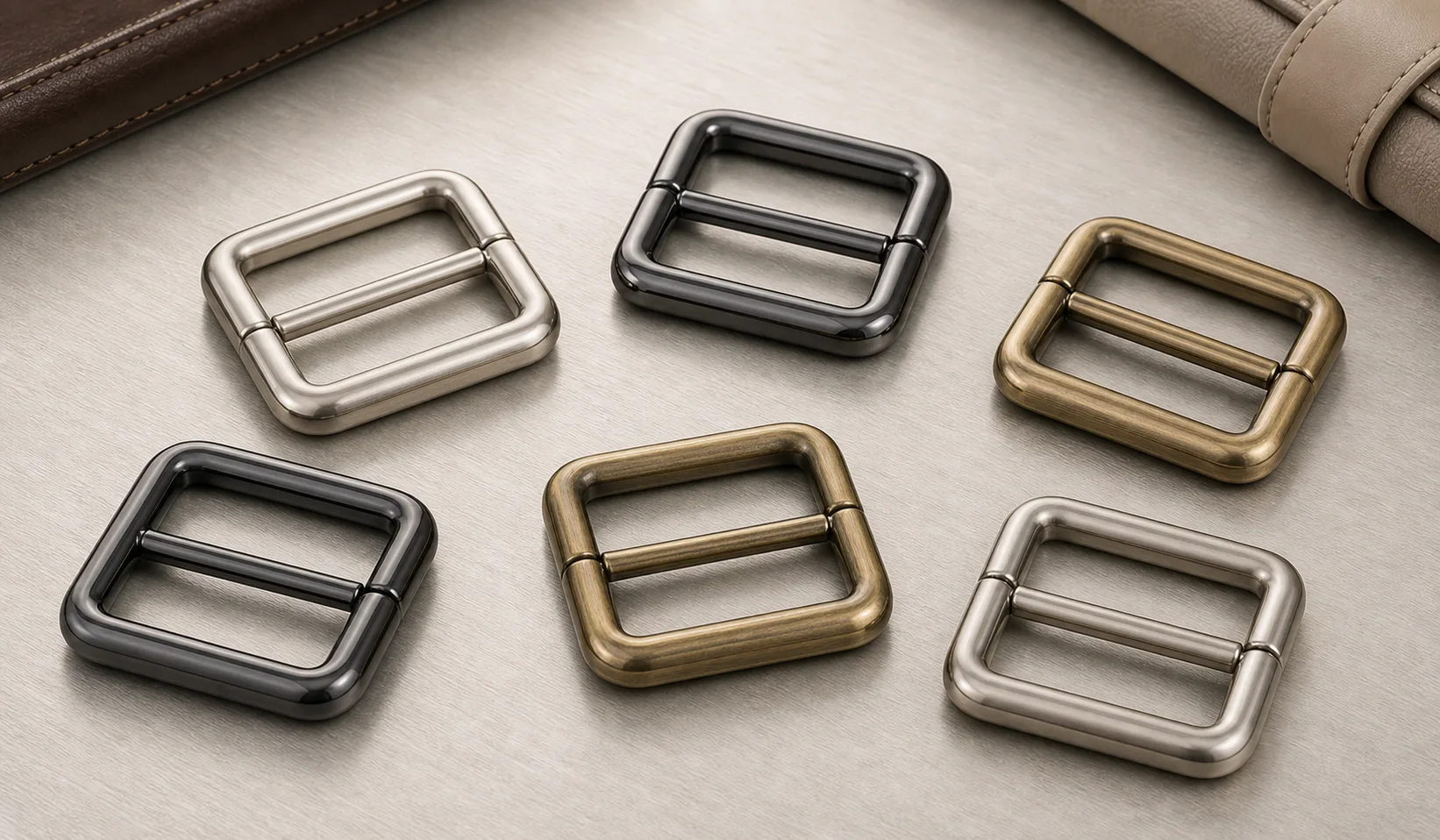
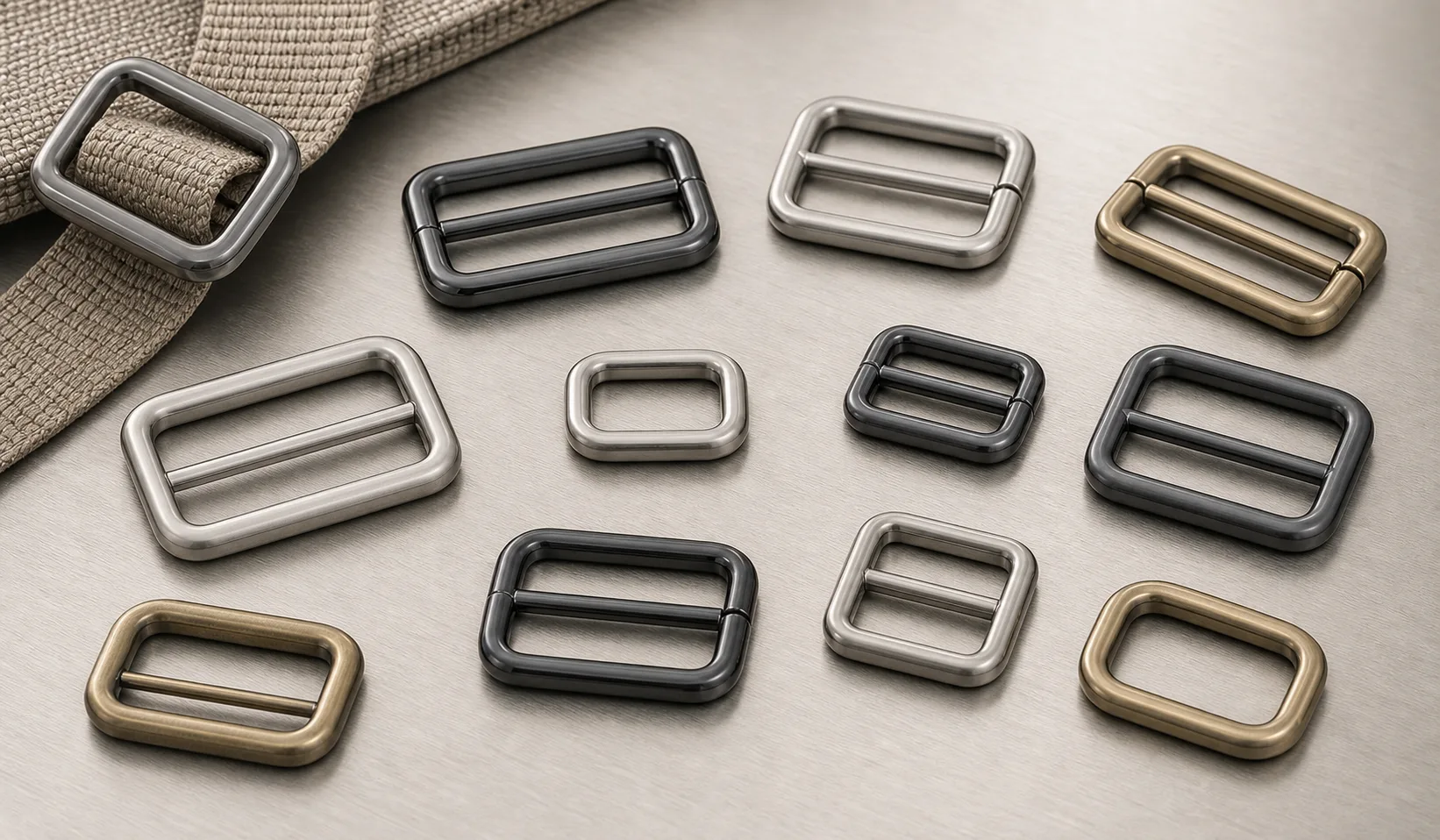
Stamping presses shapes from flat sheet. It produces parts of uniform thickness with clean, consistent geometry, and it suits flat frames, plates and simple buckle bodies. Stamped parts are typically stronger in-plane than cast parts of similar size, because the metal keeps its rolled grain structure rather than being cast. The limitation is that everything derives from a flat sheet, so deep three-dimensional form is not available in the same way.
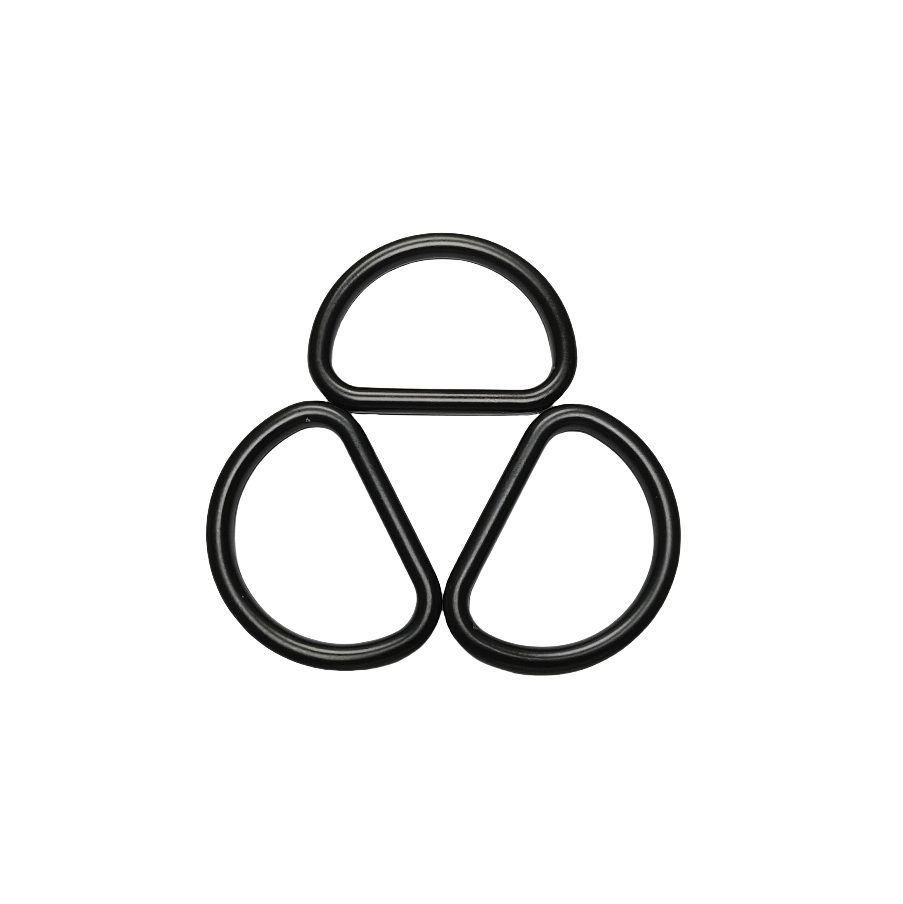
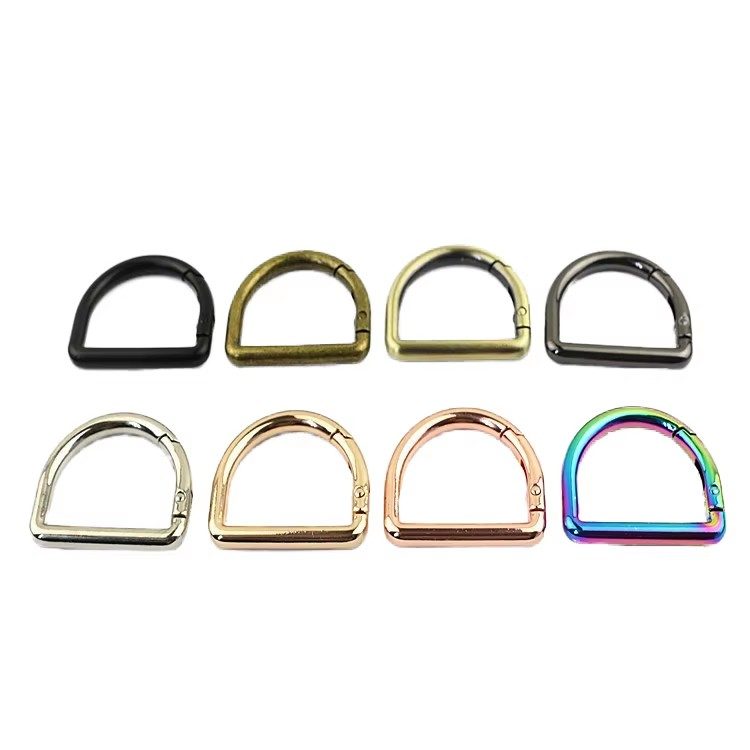
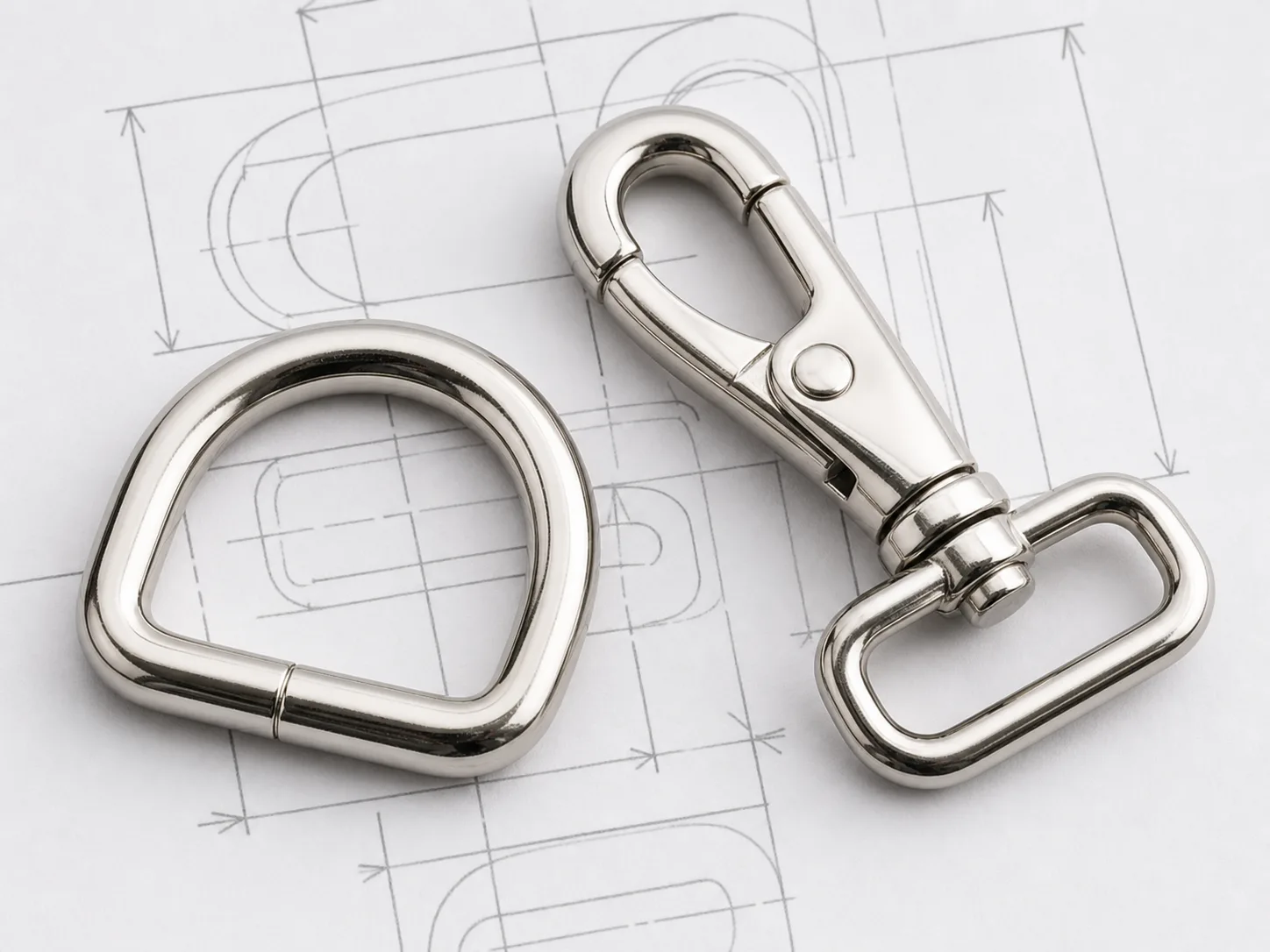
Wire forming bends round or shaped wire into rings, frames and simple buckle bodies. It is efficient, produces smooth continuous surfaces with no seams, and is common for D-rings, O-rings and lighter frames. Where the wire ends meet, the joint method — welded or simply butted — becomes the critical detail, because that is where the part will open under load if it is going to.
How structure affects what you get
A cast buckle can carry a raised logo, a curved profile and a varying section, so it reads as designed rather than assembled. It will generally be heavier for its size. Because casting fills a mold, thin sections and sharp internal corners are where problems concentrate, so a design that looks fine on screen may need thickening in specific places to be reliable.
A stamped buckle reads flatter and more industrial. It takes a brushed or polished finish evenly because the surface starts uniform. Edges need attention — a stamped edge is sharp until it is deburred, and on a part that touches skin or a fabric strap, edge treatment is worth specifying explicitly.
A wire-formed part has no flat faces to carry a logo, so branding usually moves to an adjacent component. The advantage is a smooth, continuous surface that is comfortable against a strap and easy to finish consistently.
Sizing metal buckles
As with any buckle, the specification number is the strap width the buckle accepts, not the outside dimension. Two 25 mm buckles from different suppliers can have very different overall footprints while both correctly accepting 25 mm webbing.
Internal clearance is the detail that decides whether a buckle works with your strap. It has to accommodate the strap thickness, and for leather straps it must also allow for the strap not compressing the way webbing does. If the strap is folded or has a lining, the effective thickness at the buckle may be much greater than the material thickness, and that is a common source of a sample that will not assemble.
For pin buckles, the pin diameter and the hole spacing on the strap have to correspond. A pin that is generous relative to the hole will stretch and eventually tear the hole; a pin that is undersized will let the strap shift under load.
Matching structure to application
Fashion bags and leather goods usually favor cast buckles, because the shape and the surface are part of the design and the loads are moderate. Belt and shoulder-strap applications often use stamped or wire-formed frames with a pin, because repeatable positions and reliable strength matter more than sculptural form.
Garment applications tend toward smaller, lighter parts where flatness against fabric matters, so stamped components are common. Where a buckle sits against skin or over a seam, the profile height and edge treatment matter as much as the strength.
For load-carrying straps on luggage and outdoor products, the connection between the buckle and the strap is usually the weakest link rather than the buckle itself. Specifying how the strap is attached — stitched, riveted, folded — is part of specifying the buckle.
What to prepare
Send the strap width and thickness, a reference image or drawing, the intended application, the material and finish direction, and whether the part carries a logo. If you have a physical sample of a part you like, that resolves the structure question faster than any description — a supplier can identify the production method immediately by handling it.
Where the shape is new, the conversation will move to tooling. Cast parts need a mold; stamped parts need dies; wire-formed parts need forming tooling. Asking which route your design implies, early, will tell you a lot about timing before any numbers are discussed.
The production method behind a metal buckle explains most of its character — how it looks, what it weighs, where it is strong and what it costs to make. Naming the method, or sending a sample that shows it, makes an inquiry much easier to answer.
 Comparison Guides
 Buyer Guides
 Comparison Guides
 Finish Guides
 Buyer Guides
 Buyer Guides
 Buyer Guides