
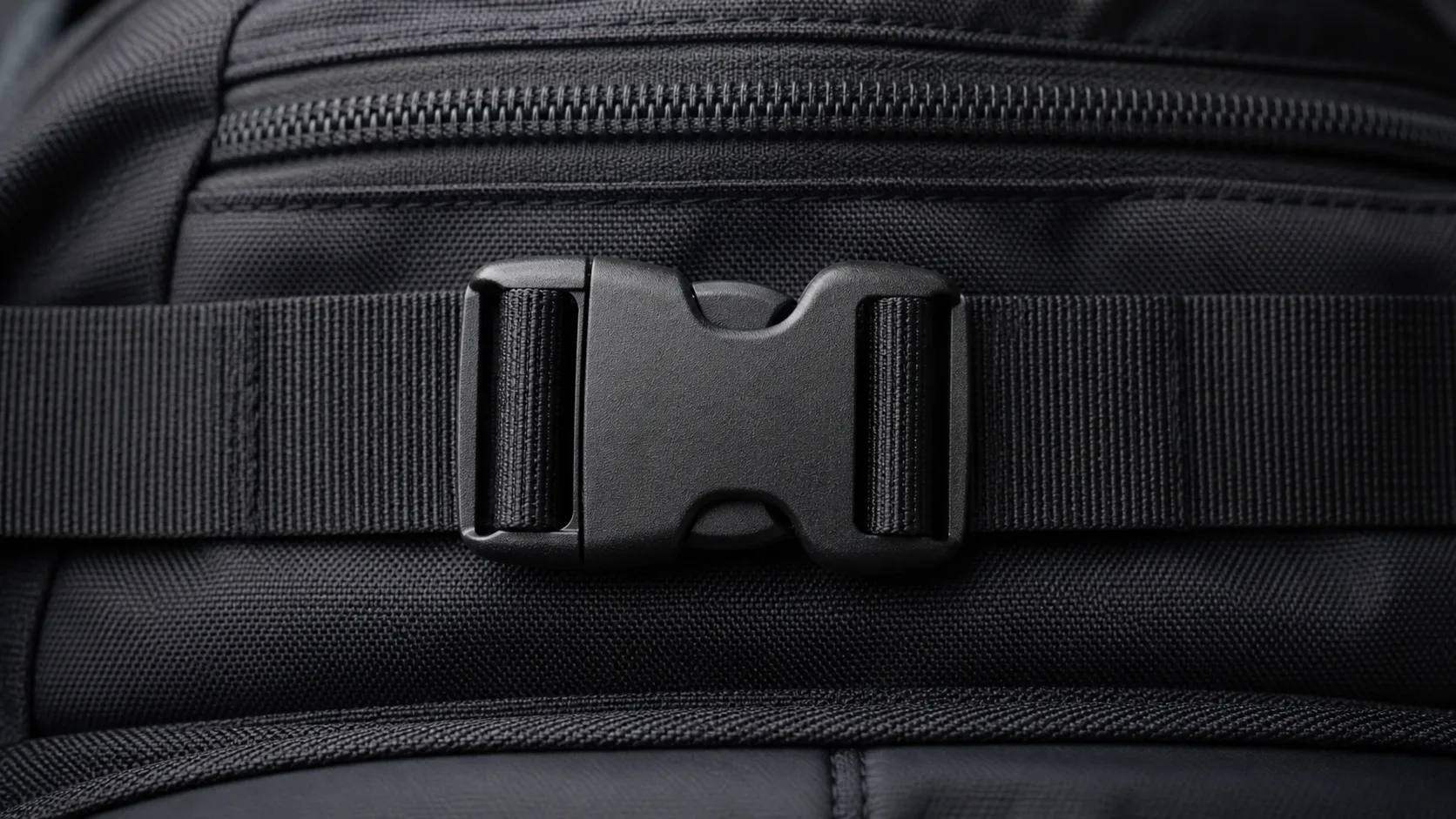
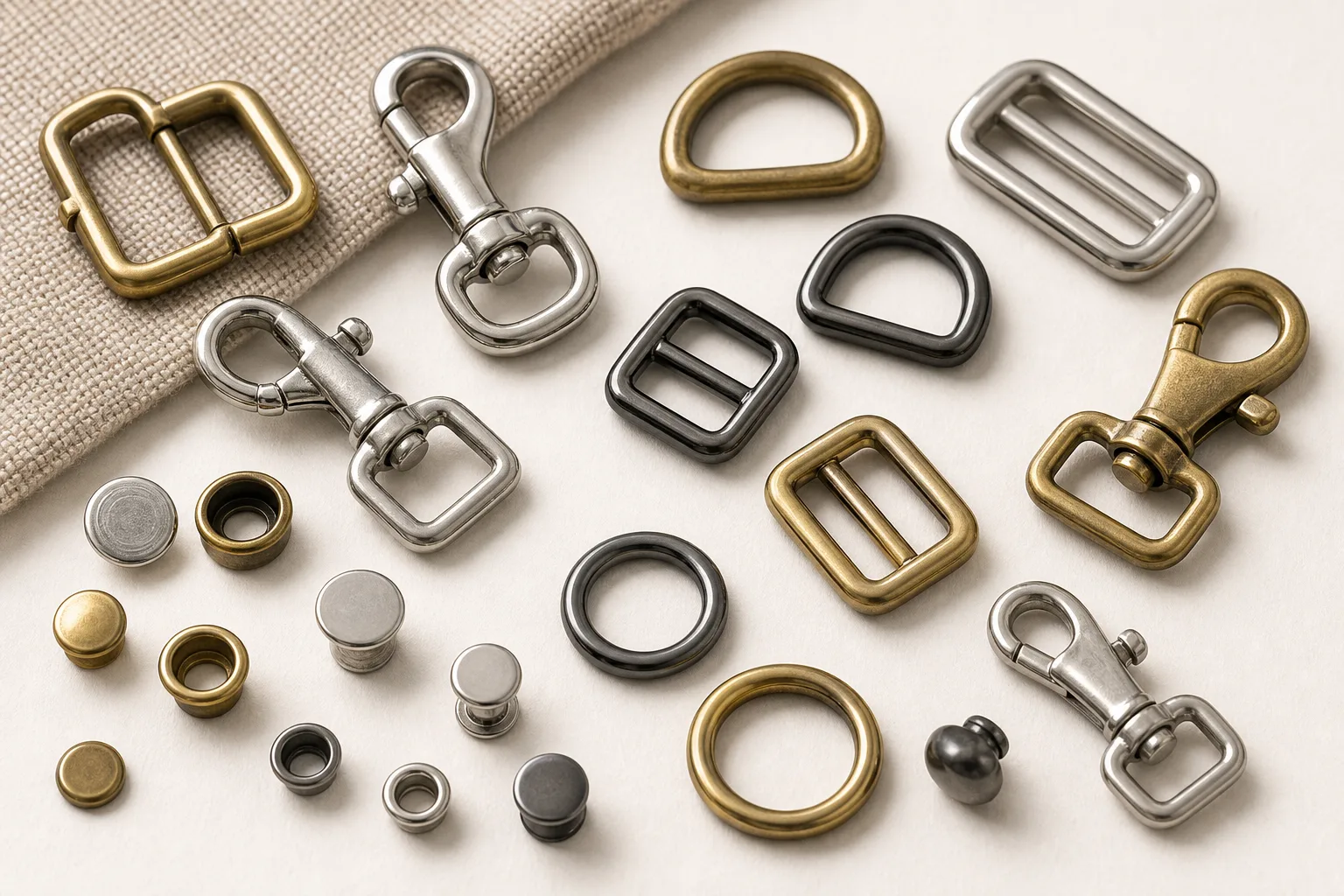
The side-release buckle is probably the most recognisable piece of bag hardware in the world, and one of the easiest to specify badly. The mechanism is simple; the details that decide whether it feels confident or cheap in the hand are not.
How the mechanism works
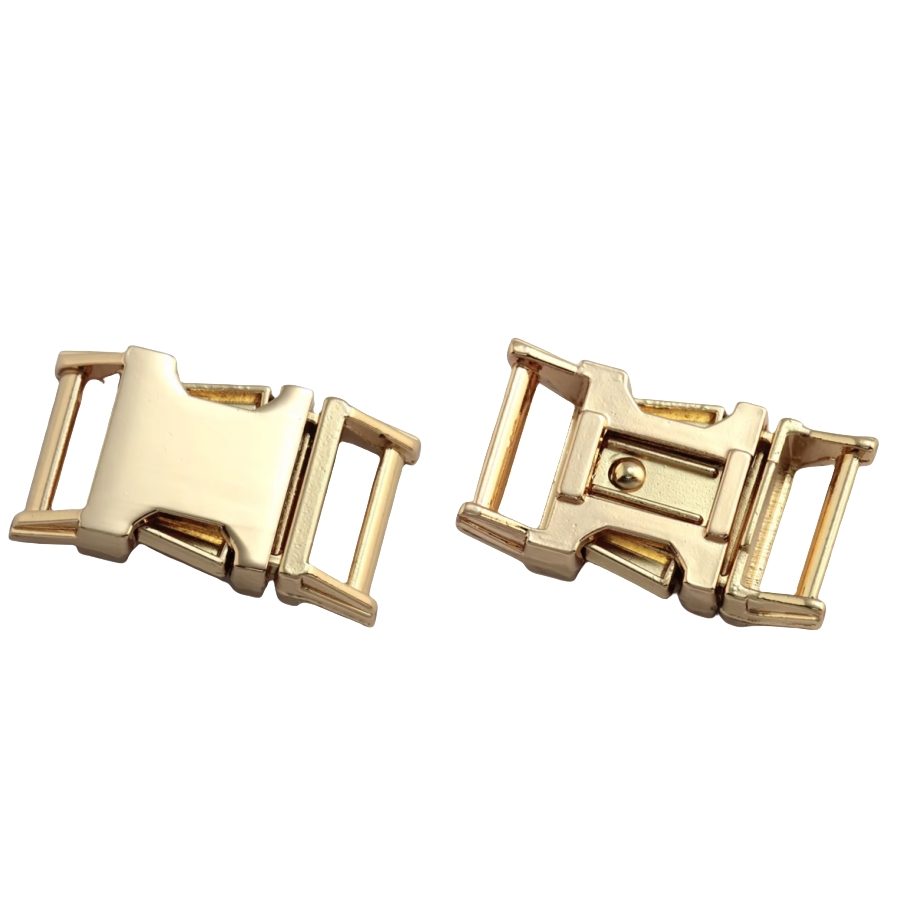
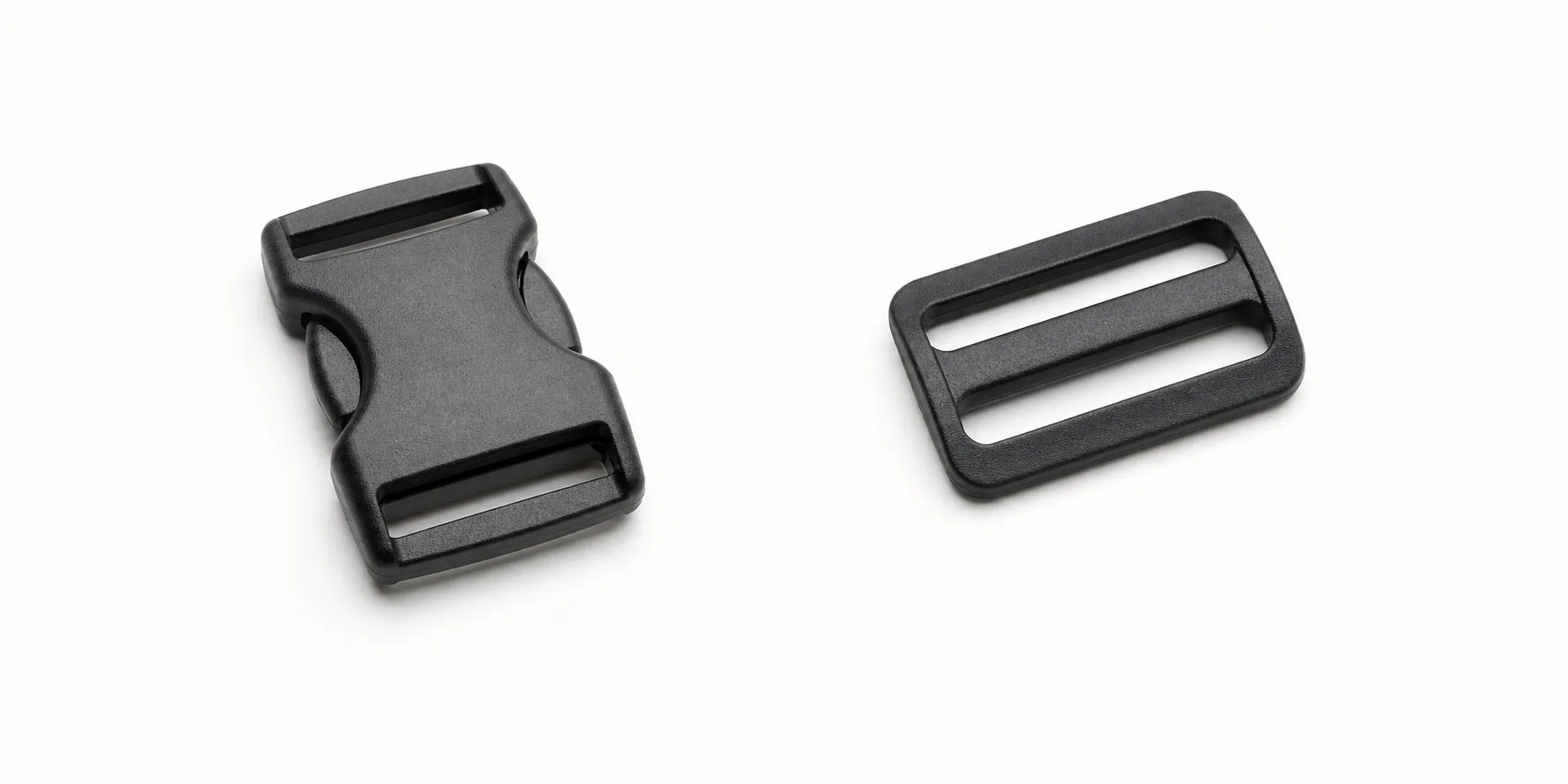
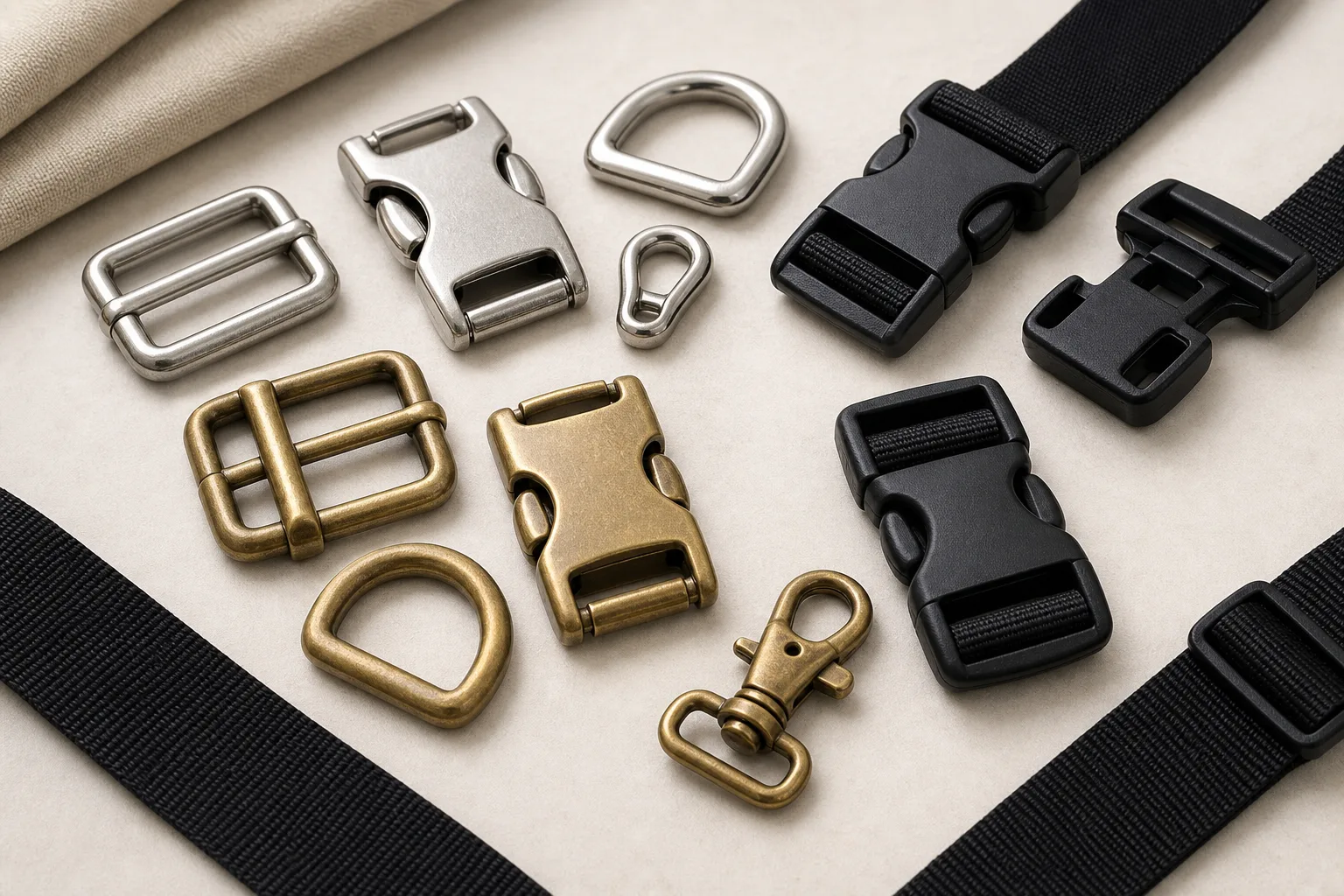
The male half carries two or three flexible arms with barbs near their tips. Pushed into the female housing, the arms deflect inward, then spring outward so the barbs catch behind openings in the housing wall. To release, the user presses the exposed arm tips inward until the barbs clear, and the two halves separate.
Everything that matters about the buckle happens in those arms. They must deflect far enough to insert and release easily, spring back reliably thousands of times, and be stiff enough that the buckle does not release accidentally when squeezed against a body or a load. Those requirements pull against each other, which is why arm geometry and material choice are the substance of a good buckle.
A three-arm design adds a center arm that does not release but guides alignment, which makes engagement feel more positive and reduces side-to-side play. It is common on larger sizes where a two-arm buckle would feel loose.
Single-adjust and dual-adjust
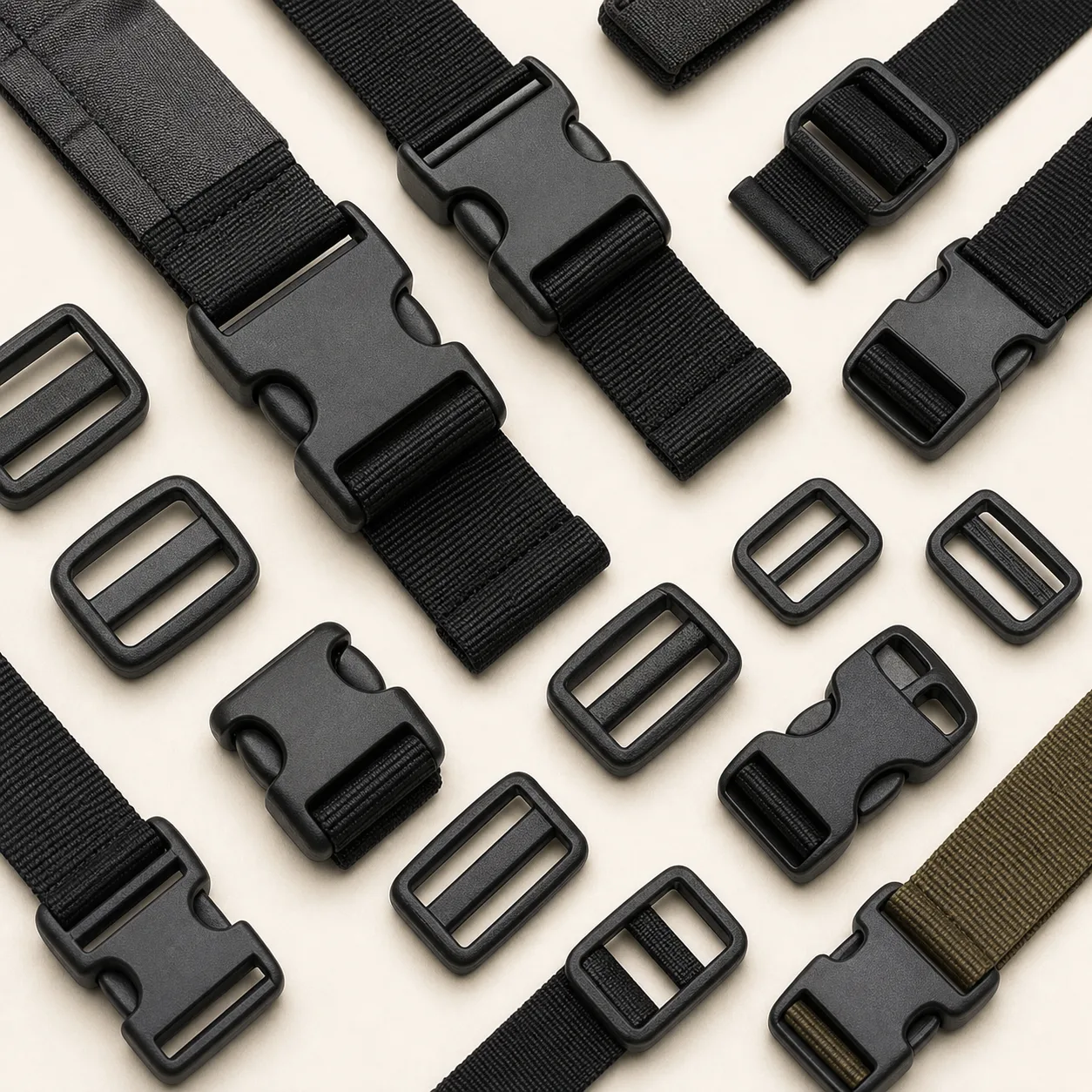
On a single-adjust buckle, one half has a fixed slot where the webbing is sewn permanently, and the other half has an adjustable slot arrangement that lets the user change strap length. This is the usual configuration when one side of the strap is anchored to the product.
On a dual-adjust buckle, both halves adjust. This suits straps that are free at both ends, such as a removable strap or a compression strap that pulls from two directions.
Choosing the wrong one is a frequent error and it is not always caught until assembly. It is worth stating explicitly in the inquiry which half, if either, is sewn down — that single sentence removes the ambiguity.
Sizing and fit
Side-release buckles are named by webbing width — 20 mm, 25 mm, 38 mm and 50 mm are among the common sizes, though the exact range varies by supplier. The buckle must match the webbing, because webbing that is narrower than the slot will skew under tension and wear unevenly.
Webbing thickness matters for the adjustable side in particular. The adjuster relies on the webbing folding around a bar with enough friction to hold. Webbing that is too thin will slip; webbing that is too thick may not thread at all, or will be so stiff that adjustment is unpleasant to use.
The physical size of the arms determines how usable the buckle is. A small buckle on a heavy strap can be technically adequate and still be frustrating, because there is not enough arm exposed to grip — particularly with gloves, or for users with limited hand strength. If the product will be used in cold conditions or by children or older users, that is worth raising during selection.
Common failure points
Arms break at the root, where they join the body, because that is where bending stress concentrates. A design with a generous radius at that junction lasts longer than one with a sharp internal corner. This is visible on a sample if you know to look for it.
Accidental release happens when the arms sit proud enough to be squeezed by a load pressing against the buckle. On a pack that is compressed in a vehicle or under other bags, a recessed or shrouded arm design reduces the chance of this. Some designs deliberately shroud the arms for exactly this reason.
Webbing slipping through the adjuster is usually a webbing-and-buckle mismatch rather than a defect. Confirming both together, on a real sample, catches this before production.
UV and cold both affect polymer arms over time. For products expected to spend years outdoors, this belongs in the material discussion at selection rather than being discovered in the field.
What to specify
Name the webbing width and thickness, state single-adjust or dual-adjust and which side is sewn, give the material direction, and describe the use environment and the user. If gloves are involved, say so. If the buckle will be visible on the front of the product, note the color reference and the finish expectation.
For a custom shape or a molded logo, expect a tooling discussion. A logo on the flat face of the female housing is the most common request and usually the most straightforward.
Where the closure carries meaningful load, discuss what happens at the strap attachment as well. The buckle is rarely the first thing to fail on a well-made product.
A side-release buckle is judged by how its arms behave — how easily it opens, how confidently it holds and how long it keeps doing both. Specifying webbing dimensions, the adjust configuration and the use environment covers most of what a supplier needs.

 Buyer Guides
 Buyer Guides
 Buyer Guides
 Comparison Guides
 Comparison Guides