
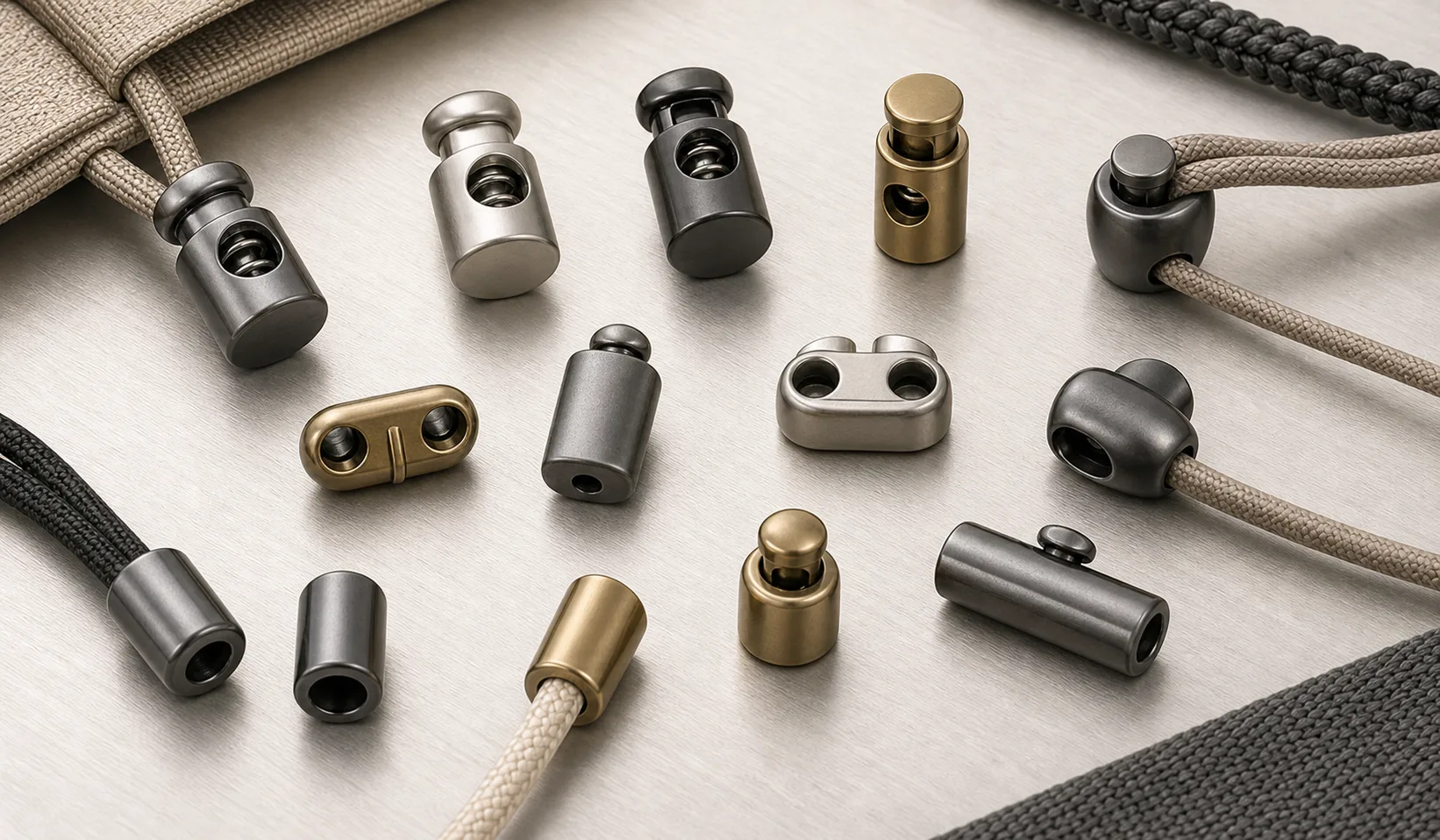
Drawstring hardware is easy to underestimate because the parts are small and inexpensive. But a cord lock that does not match the cord slips, and one that is too tight for the cord will not release cleanly — and both faults are found by the wearer rather than in the factory. The cord specification is the centre of this conversation, not the hardware.
The cord is the specification
A cord lock grips by compressing the cord between a moving barrel and a spring. How well it grips depends on the cord diameter, how compressible the cord is, and how smooth its surface is. A soft braided cotton cord and a stiff coated polyester cord of the same nominal diameter behave very differently in the same lock.
That is why an inquiry that names only the lock leaves the important part unsaid. Send the cord: diameter, construction (braided, twisted, hollow, with or without a core), material and any coating. If a sample length can go with the inquiry, it removes the guesswork entirely.
Single-hole and double-hole locks
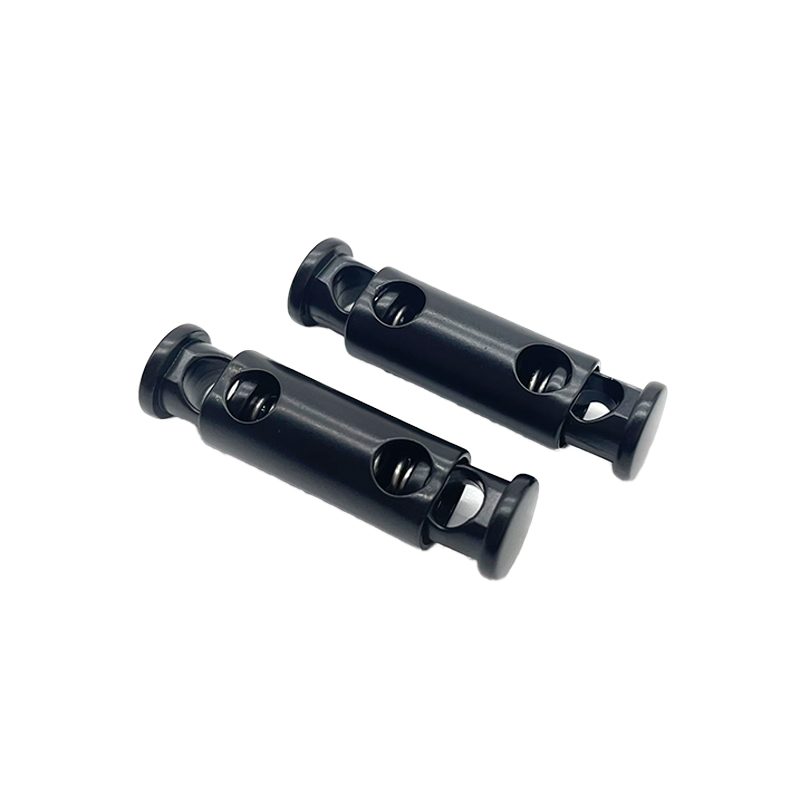
A single-hole lock takes one cord and is used where a drawstring runs to a single tail — a hood on one side, a bag closure with one end. A double-hole lock takes both ends of a loop and is the usual choice for a hood drawn from both sides or a cinch closure that gathers evenly.
The choice is not only functional. A double-hole lock sits at the meeting point of two cords and is more visible; a single-hole lock can be tucked into a channel. If the lock is a visible design element, that affects the profile and the finish discussion.
Spring, button and release feel
The spring inside a cord lock sets how hard it is to press and how firmly it holds. A stiffer spring holds better and is harder to operate, which matters for children, for gloved hands, and for anything worn in cold weather. This is worth stating explicitly rather than leaving as a default.
Button size and profile follow from the same requirement. A small flush button suits a discreet garment closure; a large, textured button suits outdoor gear where it will be operated with gloves. Neither is intrinsically better.
Cord ends: crimp, screw and moulded
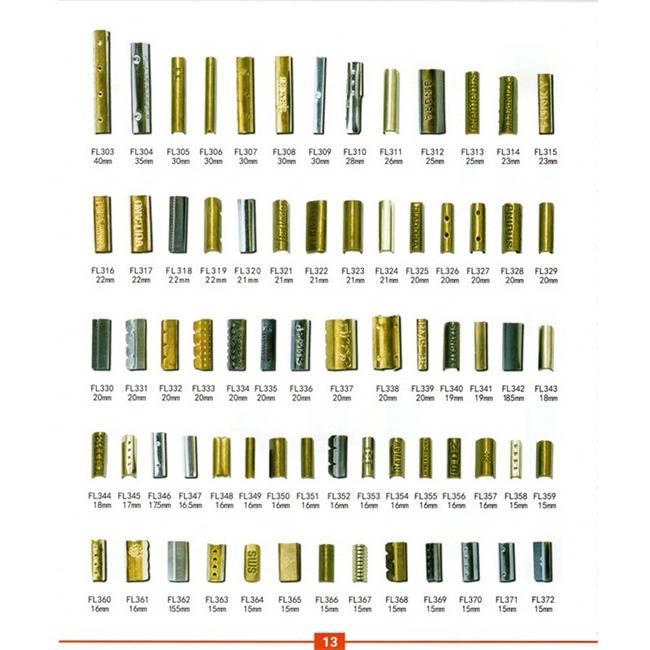
Cord ends attach in several ways. Crimped metal tips are pressed onto the cord and depend on the crimp being right for the cord diameter. Screw-together ends clamp the cord between two threaded parts and can be fitted without a press. Moulded or heat-shrunk tips form around the cord and suit synthetic cords.
Cord ends do more than finish the look. They stop the cut end fraying back into the channel, and their weight helps the cord hang straight rather than curling. On a hood cord, a tip that is too light lets the cord ride up into the channel and disappear.
Specifying the set together
A drawstring assembly is a lock, two cord ends and a cord, and they should be quoted as a set. Finishes need to match across metal parts, profiles need to look deliberate together, and the cord has to suit both the lock and the tips. Buying them separately from different sources is how mismatched sets happen.
Where the garment or bag is washed after assembly, include that process in the inquiry. It affects plated metal tips and any painted or coated finish on the lock body.
What to send
Cord diameter, construction, material and coating; single-hole or double-hole; required release feel or intended user; cord end attachment method; visible or hidden position; material and finish direction; quantity per product; and any wash or dye process after assembly.
A short length of the actual cord, sent with the inquiry, answers more of these questions than a paragraph of description.
Drawstring hardware is a system rather than a list of parts: the cord decides what the lock must grip, the lock decides how it is operated, and the cord ends decide whether the cord stays where it should. Specify the cord first and the rest follows.
 Buyer Guides
 Material Guides
 Buyer Guides
 Comparison Guides
 Application Guides
 Buyer Guides