
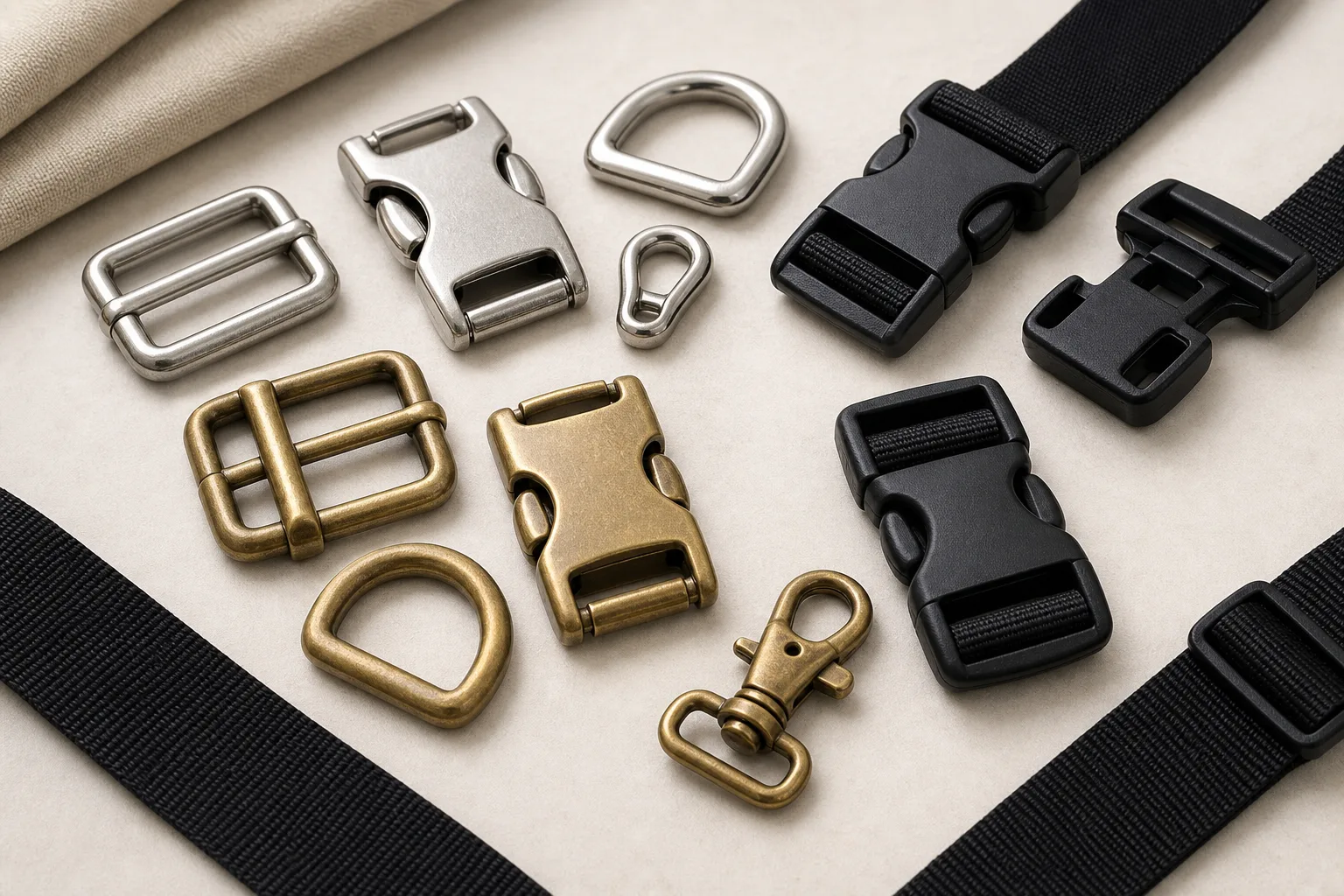
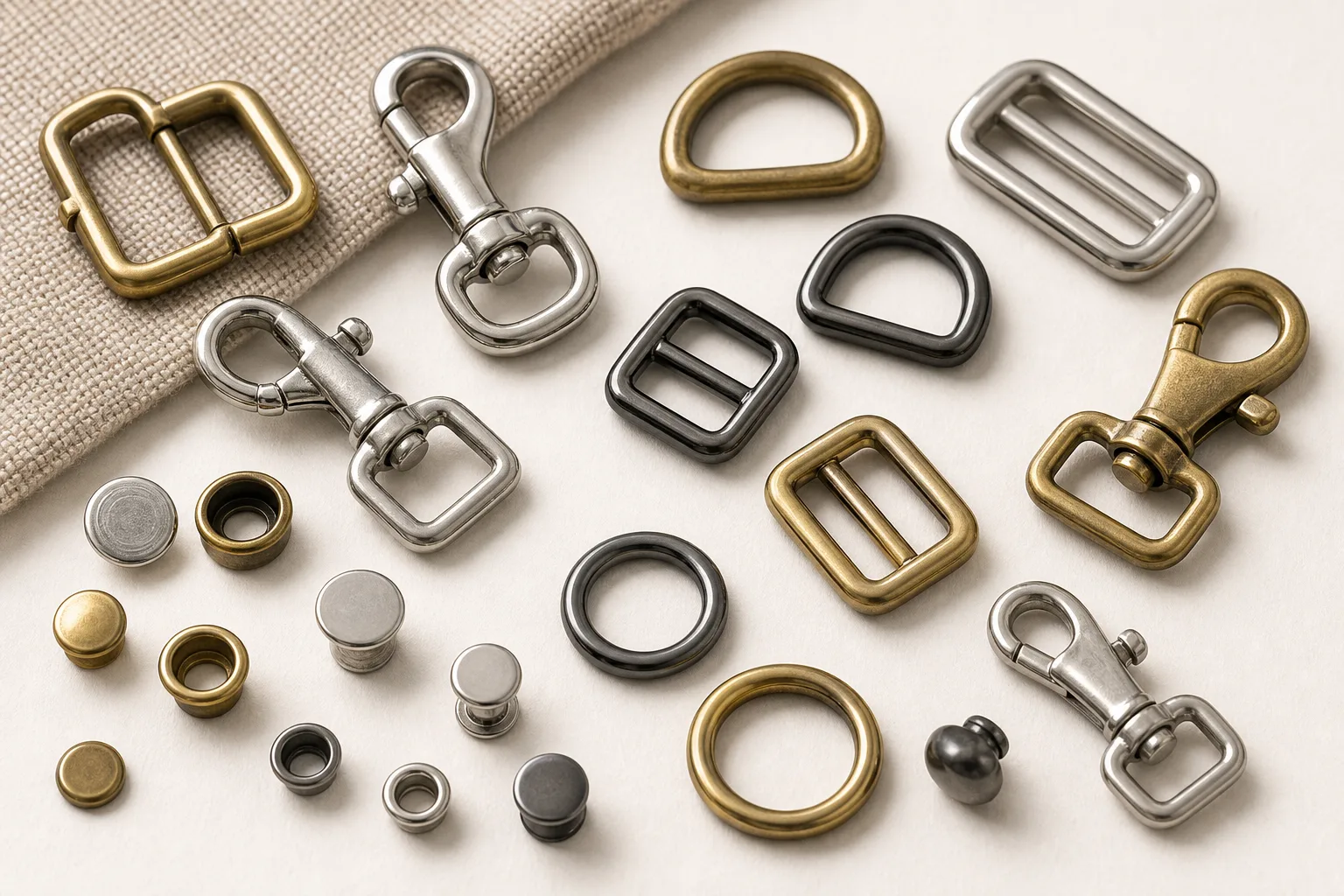
Buyers often frame this as durable versus cheap. That is not how it works in practice — technical outdoor gear is full of plastic buckles chosen deliberately, and plenty of fashion bags use metal that would fail immediately in an outdoor load path. What separates them is weight, feel, temperature behaviour and how they fail, and each of those points to different products.
Weight, and where it is felt
On a single buckle the weight difference is trivial. On a pack with a dozen buckles, adjusters and sliders, it becomes a specification. Technical packs and sports products count grams because the user carries them all day, which is the main reason those categories default to plastic.
Weight also affects the soft goods around it. A heavy metal buckle on a lightweight webbing strap swings and pulls, and on a light garment it distorts the fabric. If the product is light, the hardware needs to be proportionate.
Feel, appearance and what the user reads from it
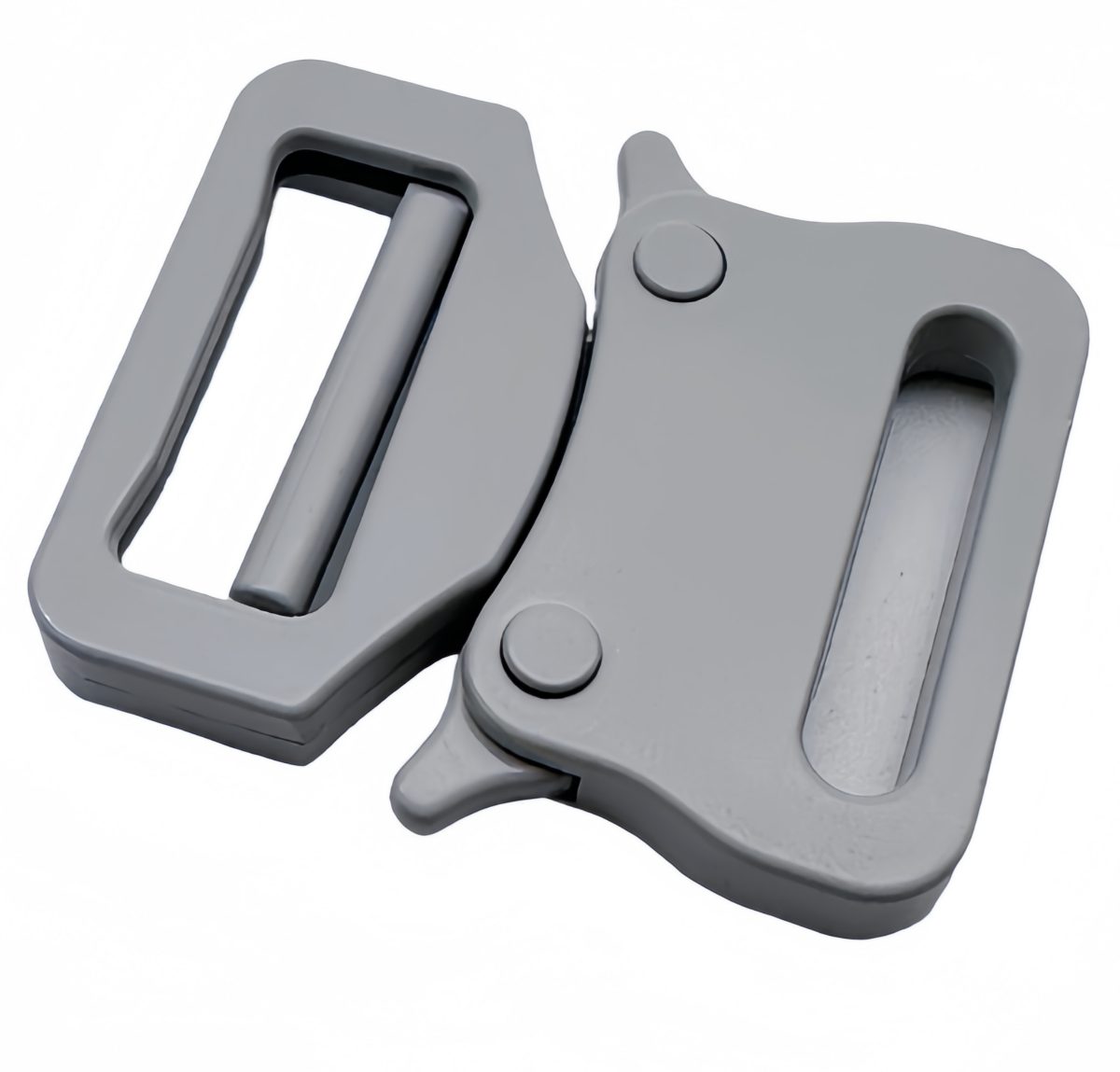
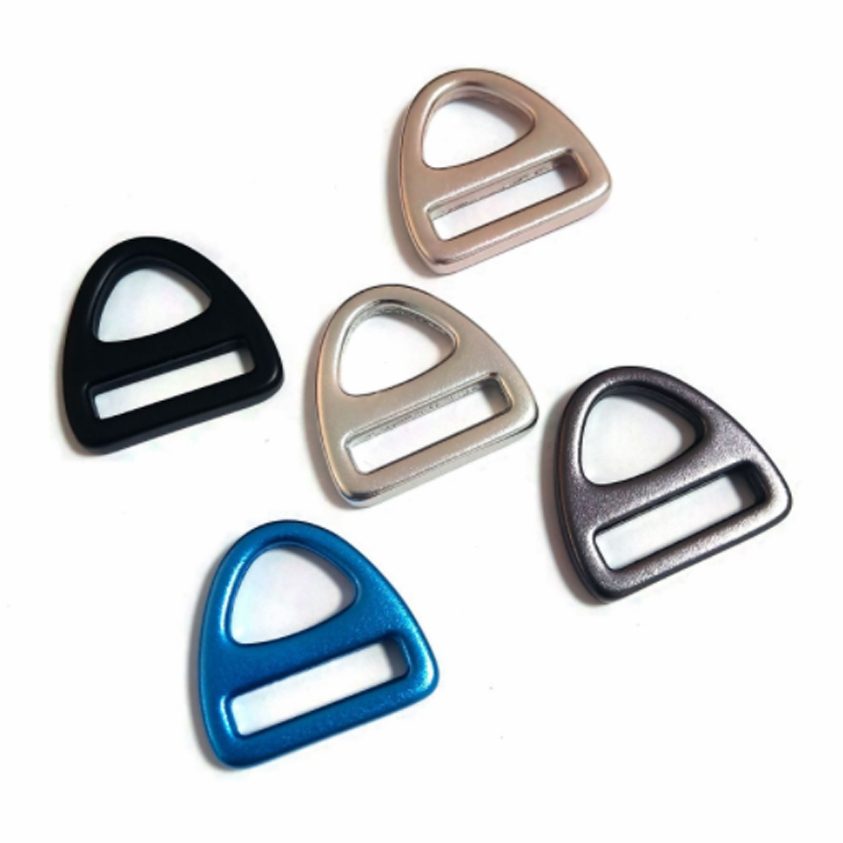
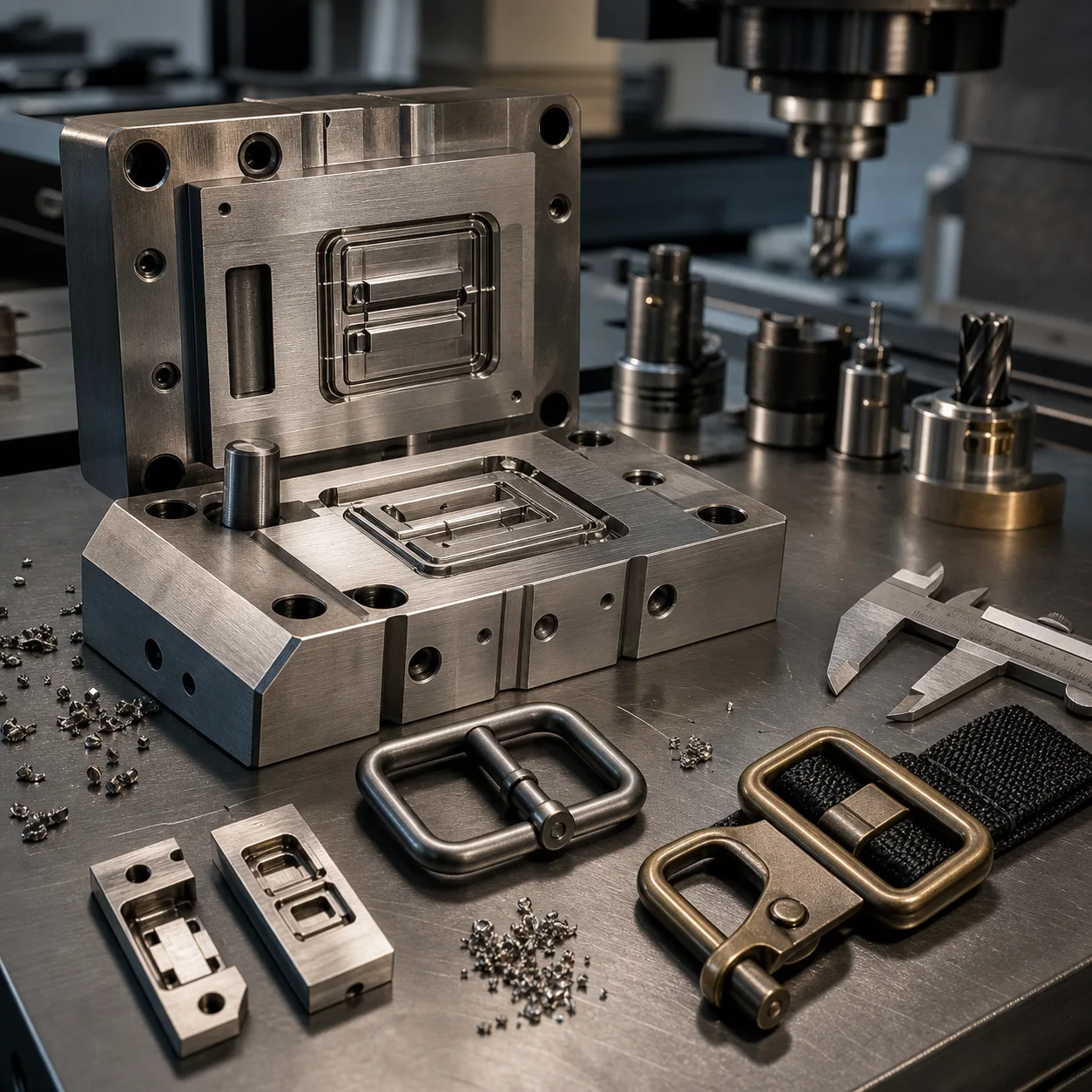
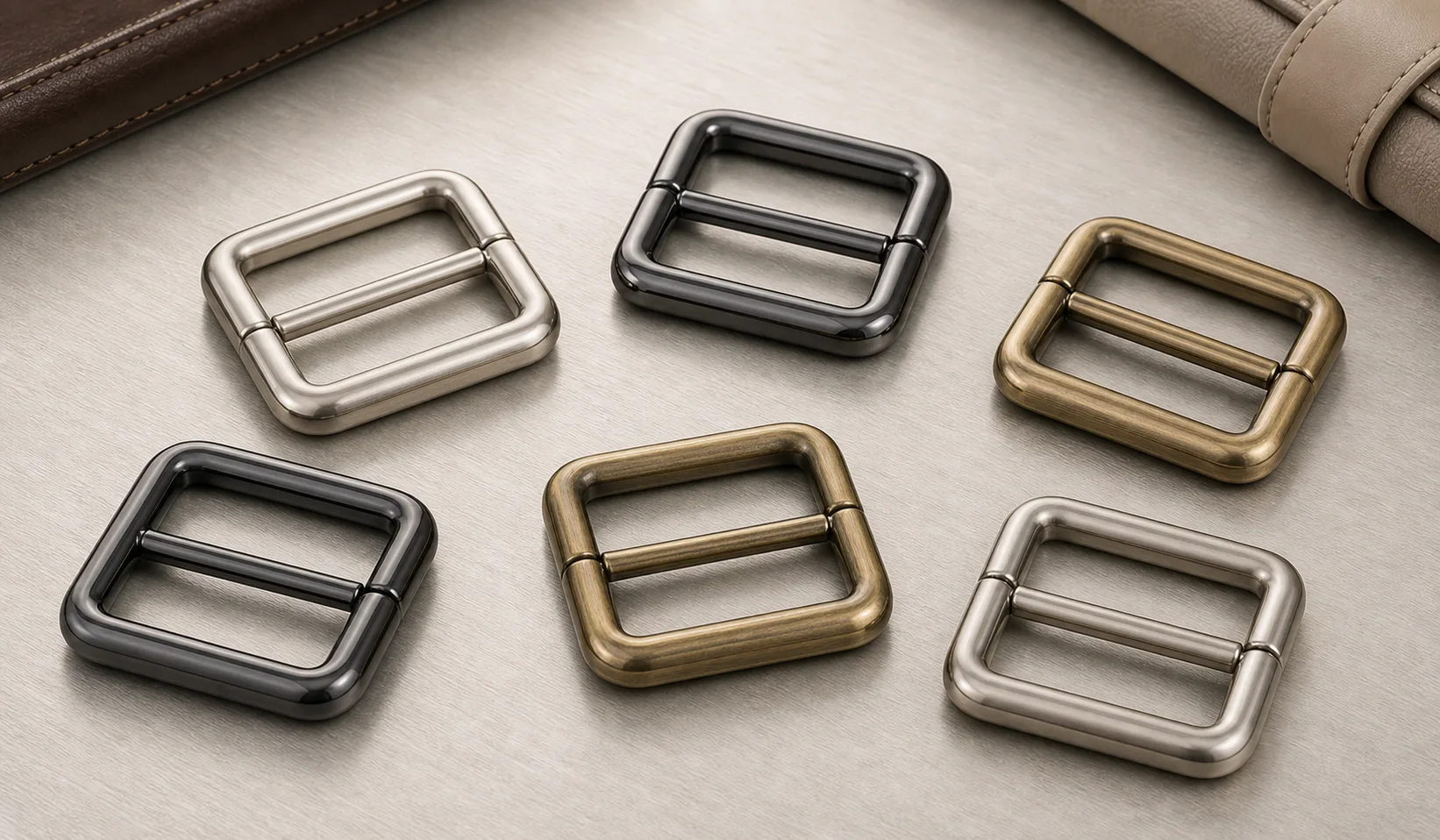
Metal reads as solid and permanent, which is why it appears on bags where the hardware is part of the design language. It takes plated finishes that plastic cannot match, and it can carry crisp relief and engraved logos.
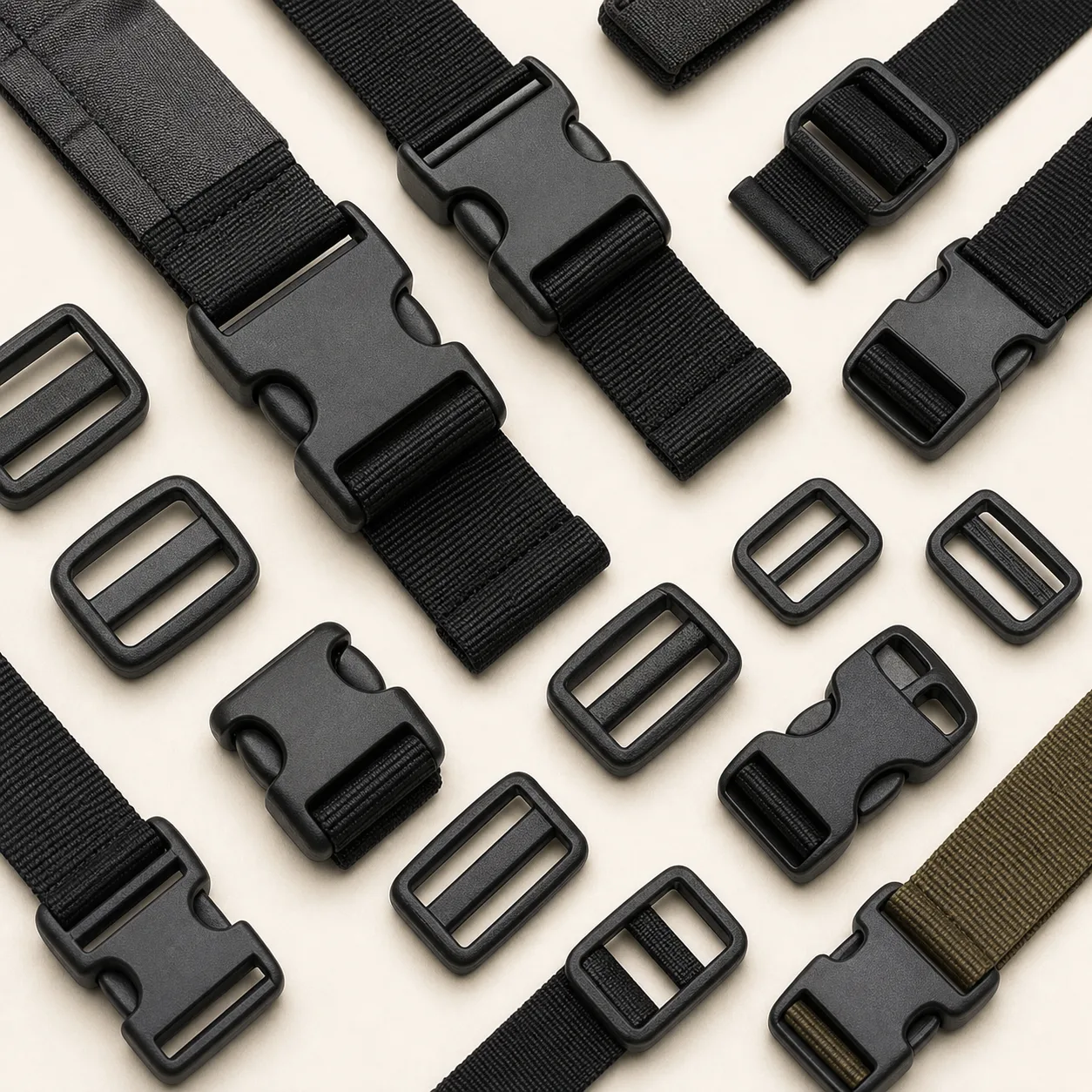
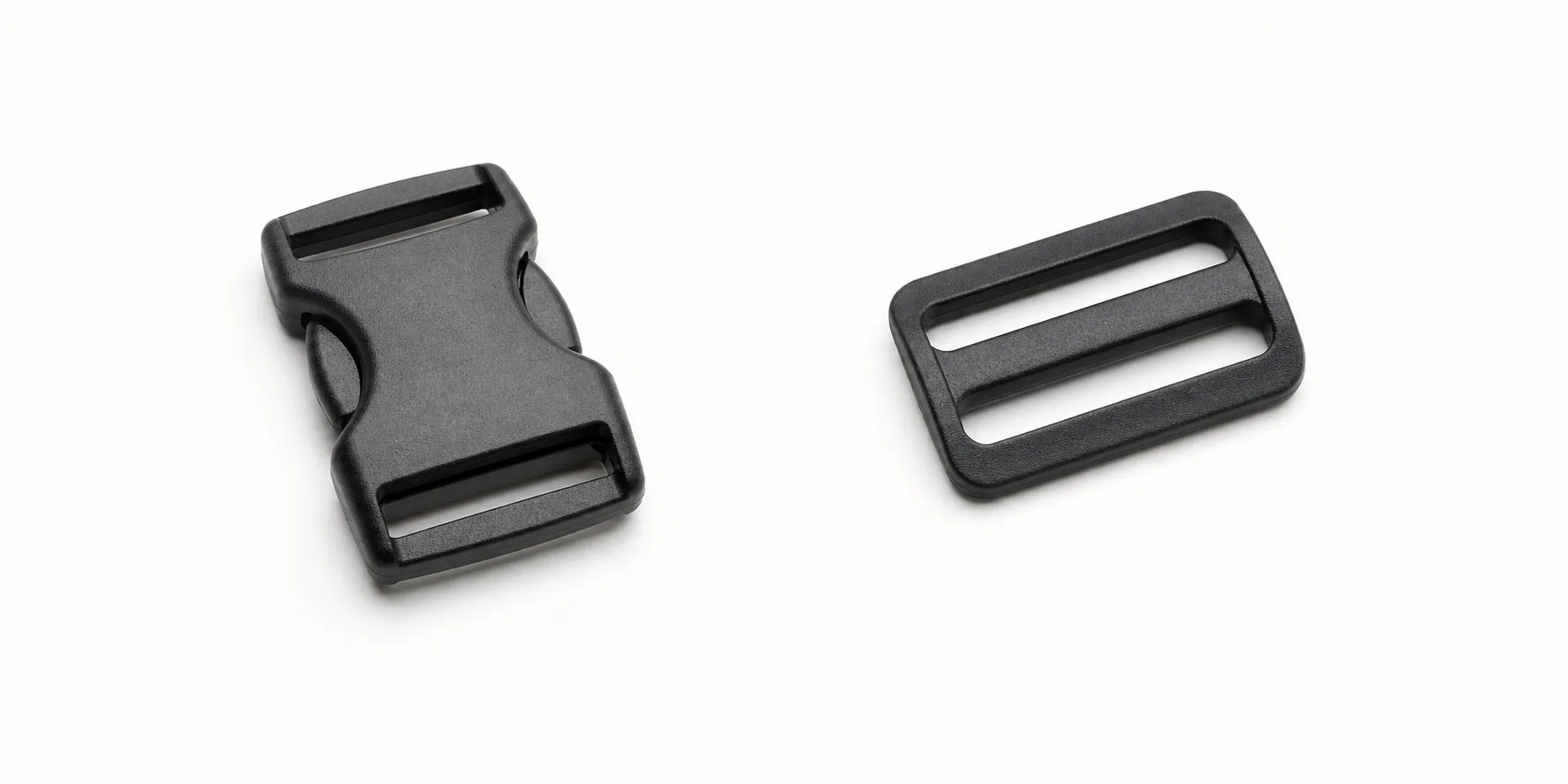
Plastic reads as technical. It can be moulded in colour, matched to webbing, and marked with a logo in the tooling, but it does not have the surface quality of a plated metal part. On products where the hardware is meant to disappear, that is an advantage rather than a compromise.
Temperature and environment
Metal conducts heat: a metal buckle left in the sun is hot to touch, and in cold weather it is unpleasant against bare skin. That matters on anything worn against the body outdoors, which is a large part of why plastic dominates in that category.
Environment cuts both ways. Plastics can be affected by prolonged ultraviolet exposure and by very low temperatures; plated metals can corrode in salt or high humidity. This guide does not state how any specific material behaves over time, because that depends on the grade, the finish and the exposure — describe your environment and ask the supplier what they recommend and what testing is available.
How each fails
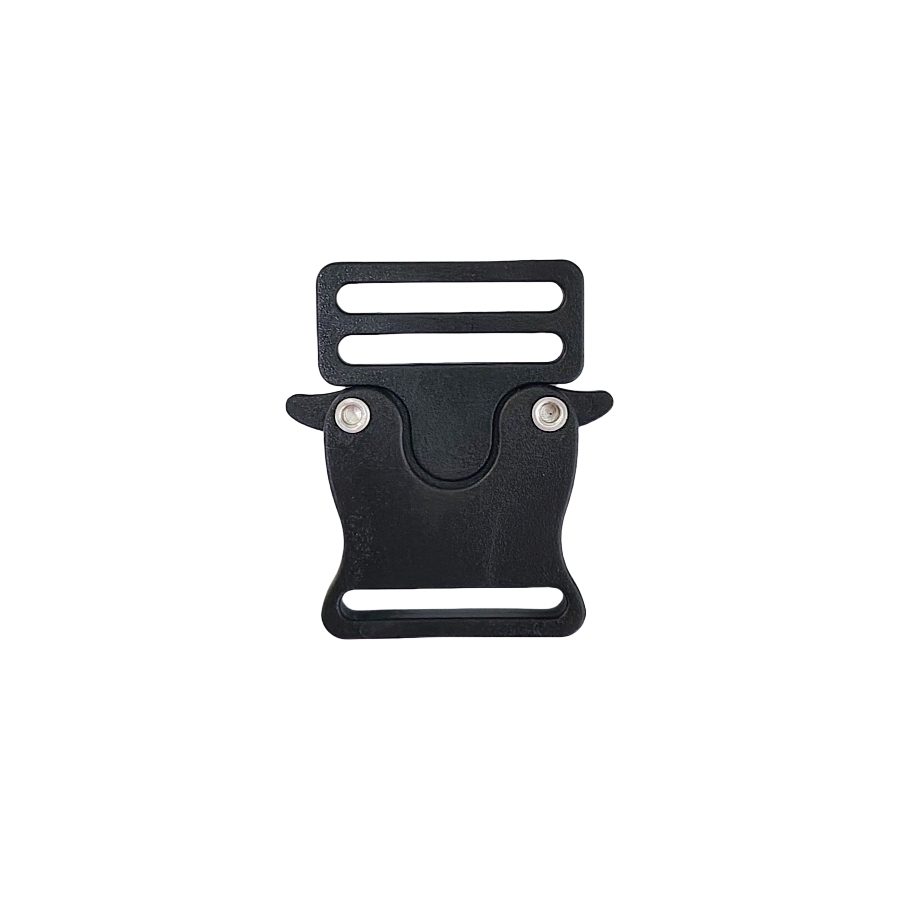
Metal buckles tend to bend or deform before they break, which often gives a warning and sometimes leaves the strap still attached. Plastic buckles tend to hold their shape and then crack, usually at the gate arms or at a stress concentration, which is a sudden failure.
Neither is universally better. A gradual failure is preferable where the user can notice and act; a part that holds its dimensions right up to failure is preferable where consistent behaviour matters. What is important is knowing which mode you have designed in.
The webbing is part of the decision
Both families grip webbing, and both depend on it. Webbing width, thickness, stiffness and surface determine whether an adjuster holds; a buckle that works with one webbing can slip with another of the same nominal width.
Plastic buckles are usually designed around specific webbing dimensions, so substituting webbing is more consequential than it looks. Send the webbing specification with the inquiry and, if possible, a sample length.
Which suits which product
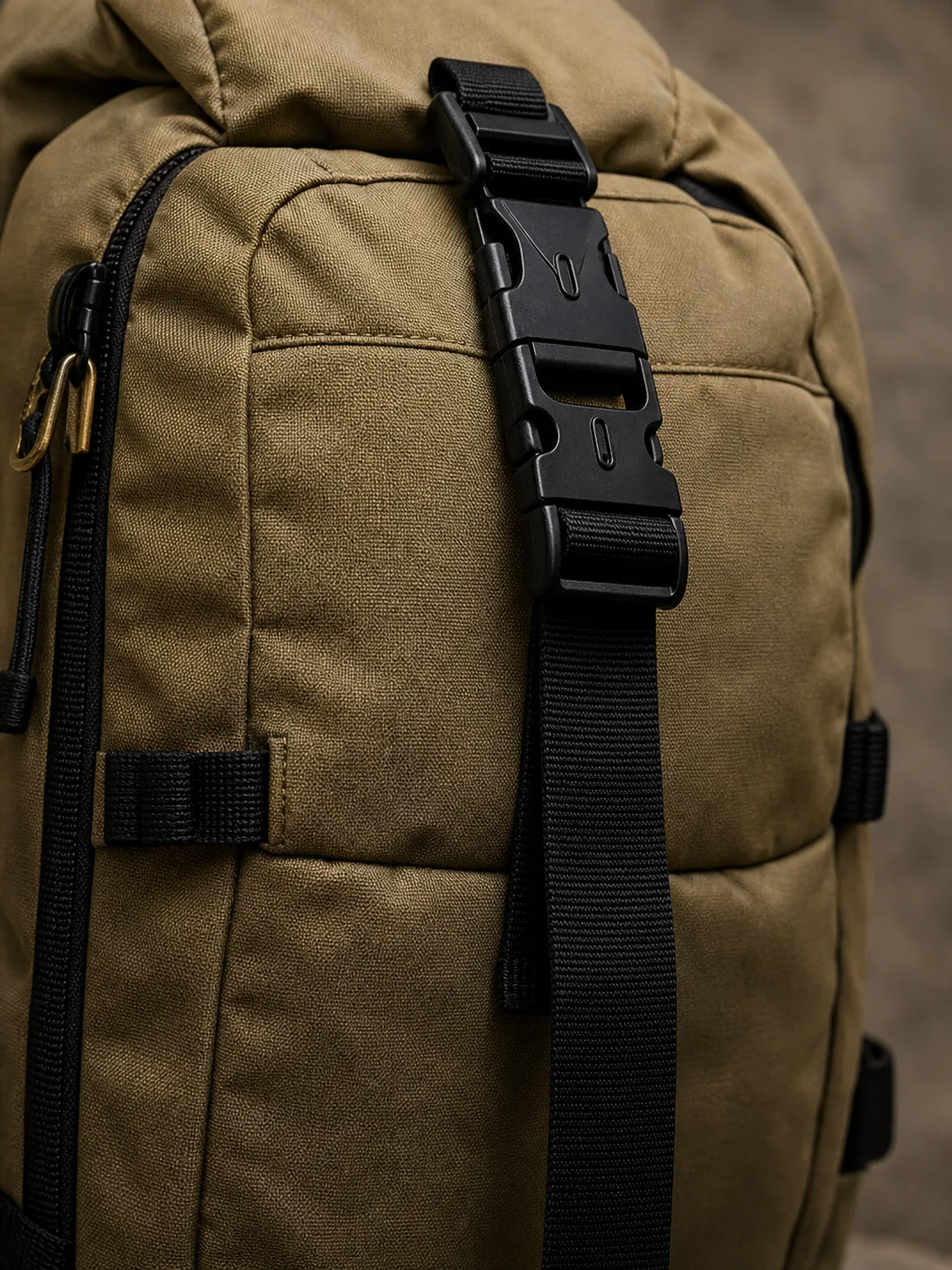
Metal suits fashion bags, luggage where the hardware is visible, belts, and anything where the hardware carries the brand. Plastic suits backpacks, sports and outdoor products, technical straps, pet products where weight matters, and anything worn against skin outdoors.
Mixed sets are normal and sensible: a metal logo plate and a plastic side-release buckle on the same pack, each doing what it is good at. The requirement then is that they look intentional together.
Choose by weight, feel, temperature behaviour and failure mode rather than by an assumed durability ranking. Metal suits visible, brand-carrying positions; plastic suits technical, weight-conscious and skin-contact positions. In both cases the webbing specification decides whether the buckle actually works.
 Comparison Guides
 Custom Hardware Guides
 Application Guides
 Buyer Guides
 Buyer Guides