
This comparison is unusual because only one side of it is a material. Standard plastic is a commercial description, not a specification, and that is exactly why the comparison matters: the risk is not that the unnamed plastic is bad, but that nobody has committed to what it is, so it can change between batches without breaking any agreement.
Standard plastic is not a specification
When a quotation says plastic buckle without naming the polymer, it is describing a price point rather than a material. The moulder may be using a polyolefin, a filled compound, regrind, or a blend, and any of those may change between orders as material prices move.
The practical consequence is that the sample you approve and the bulk you receive can differ in stiffness, colour stability and cold behaviour without anyone having broken a commitment, because no commitment was made.
What naming POM changes
POM is a defined engineering polymer with consistent stiffness and dimensional stability. Naming it fixes the family, makes batches comparable, and gives you something concrete to reference if a delivery behaves differently from the approved sample.
It also changes the conversation with the supplier: a moulder quoting POM knows what raw material they are buying and prices accordingly, so the quotation itself becomes more meaningful.
What the difference feels like in a buckle
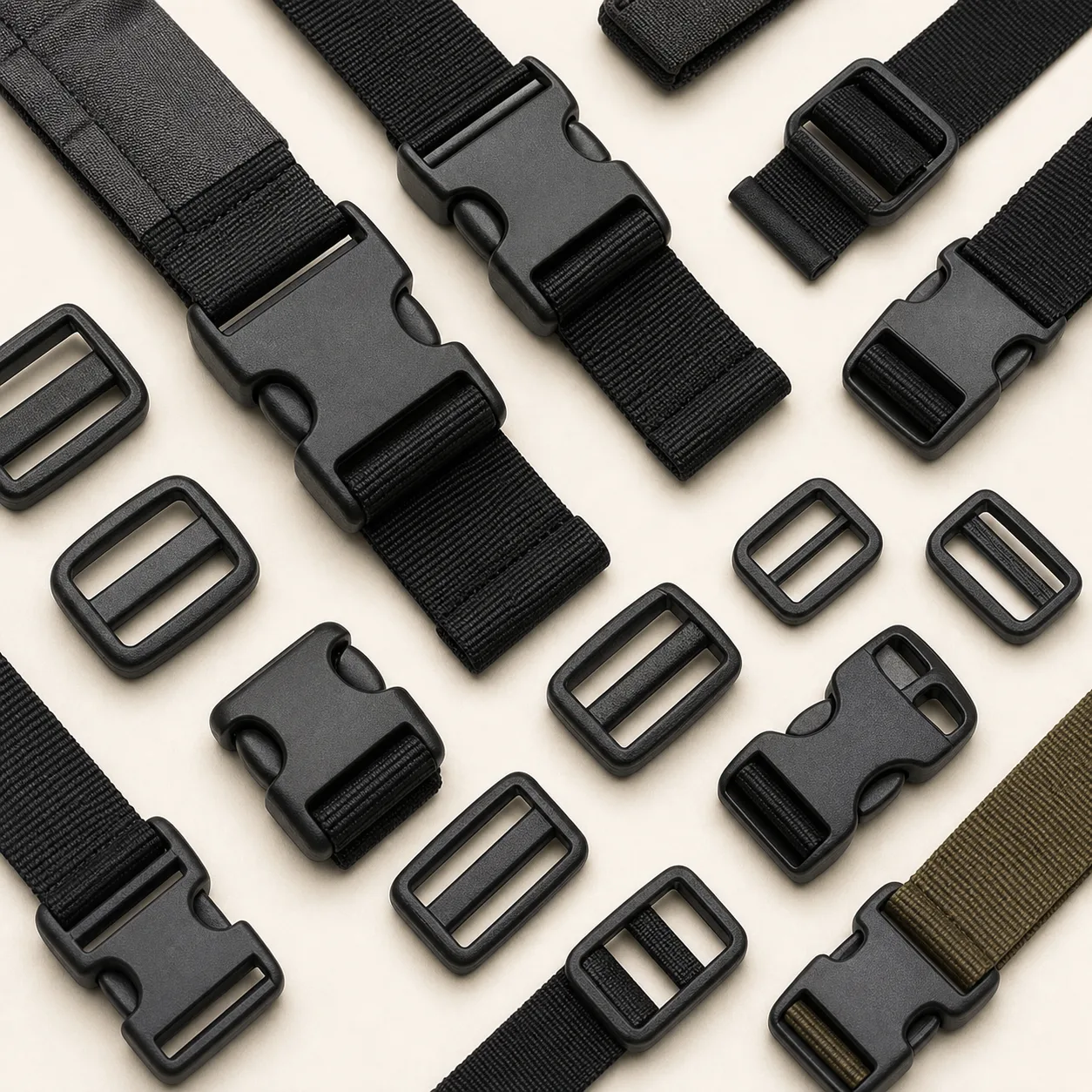
A buckle gate needs to deflect a controlled amount and spring back. Softer or more variable polymers deflect further and return less predictably, so the lock feels vague and the fit loosens over cycles. Adjusters behave the same way: the grip on webbing depends on the geometry holding its shape.
This is why an unnamed plastic buckle can pass a first inspection and still disappoint later. The failure is usually gradual loss of positive engagement rather than an obvious break.
Recycled and filled compounds
Recycled content and filled compounds are not automatically inferior and may be exactly what a brand wants for other reasons. The problem is only when they are unstated, because they change mechanical behaviour and colour consistency, and because a brand making recycled-content claims needs documentation it can actually stand behind.
If recycled content is wanted, specify it and ask what documentation is available. If it is not wanted, say so — otherwise it may appear without notice.
Colour, UV and outdoor exposure
Colour stability under sunlight differs by polymer and by the pigment and stabiliser package. Products that live outdoors — packs, outdoor gear, pet products — see this over a season or two as fading or chalking.
This guide does not state UV performance for any material, because it depends on the compound and the exposure. If the product lives outside, say so in the inquiry and ask what stabilised grades are available.
How to write it so it is enforceable
Name the polymer family in the purchase specification, state whether recycled content is permitted, note the colour approval method as a physical sample, and state that the material may not change without written notice. Keep an approved sample.
None of this requires laboratory testing to be useful. Most of the benefit comes from having written down what was agreed, so that a change is a change rather than a matter of interpretation.
The choice is not really POM against another material — it is between a named material and an unnamed one. Naming the polymer, stating whether recycled content is allowed, and keeping an approved sample turns a price point into a specification you can hold a supplier to.
 Comparison Guides
 Material Guides
 Buyer Guides
 Material Guides
 Application Guides
 Buyer Guides