
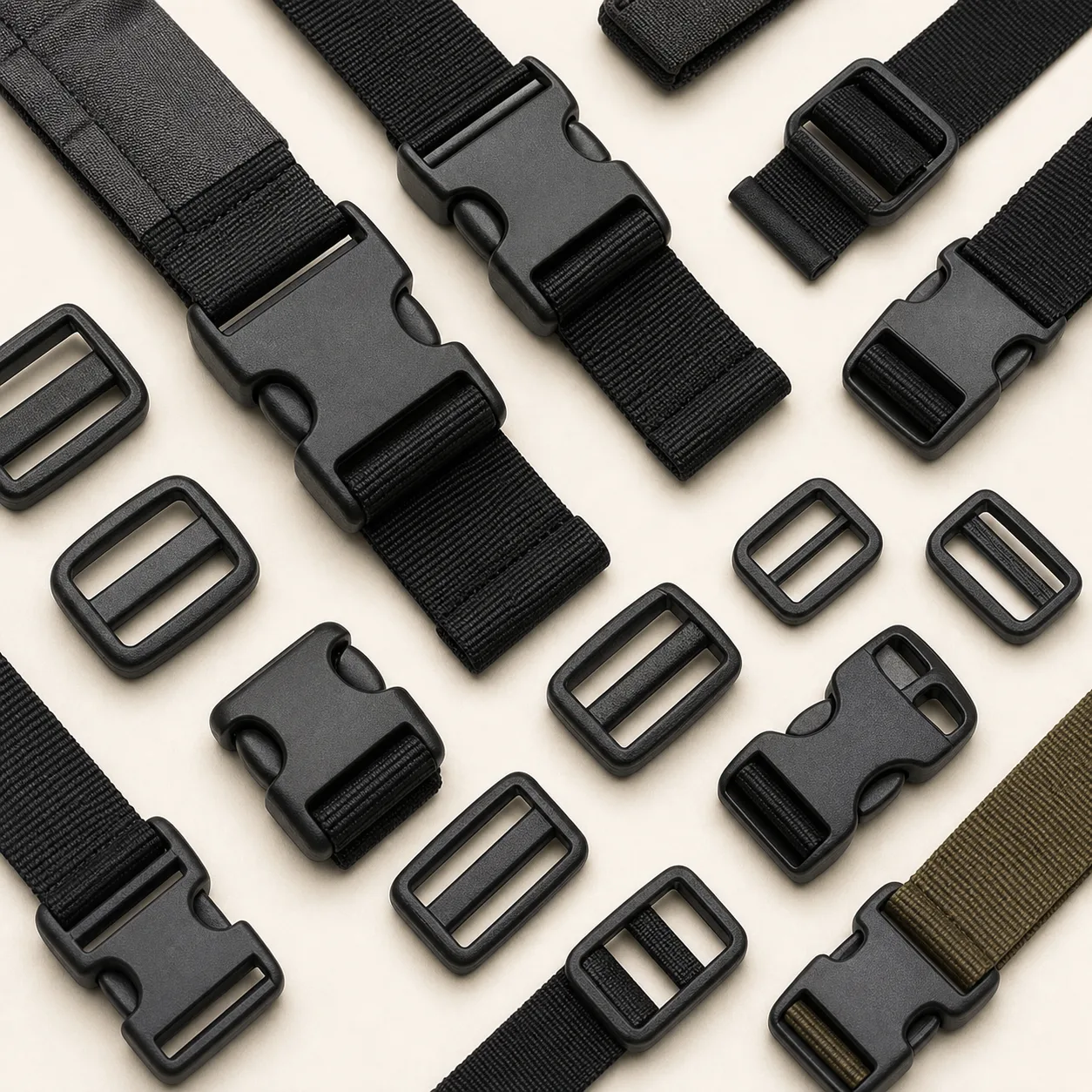
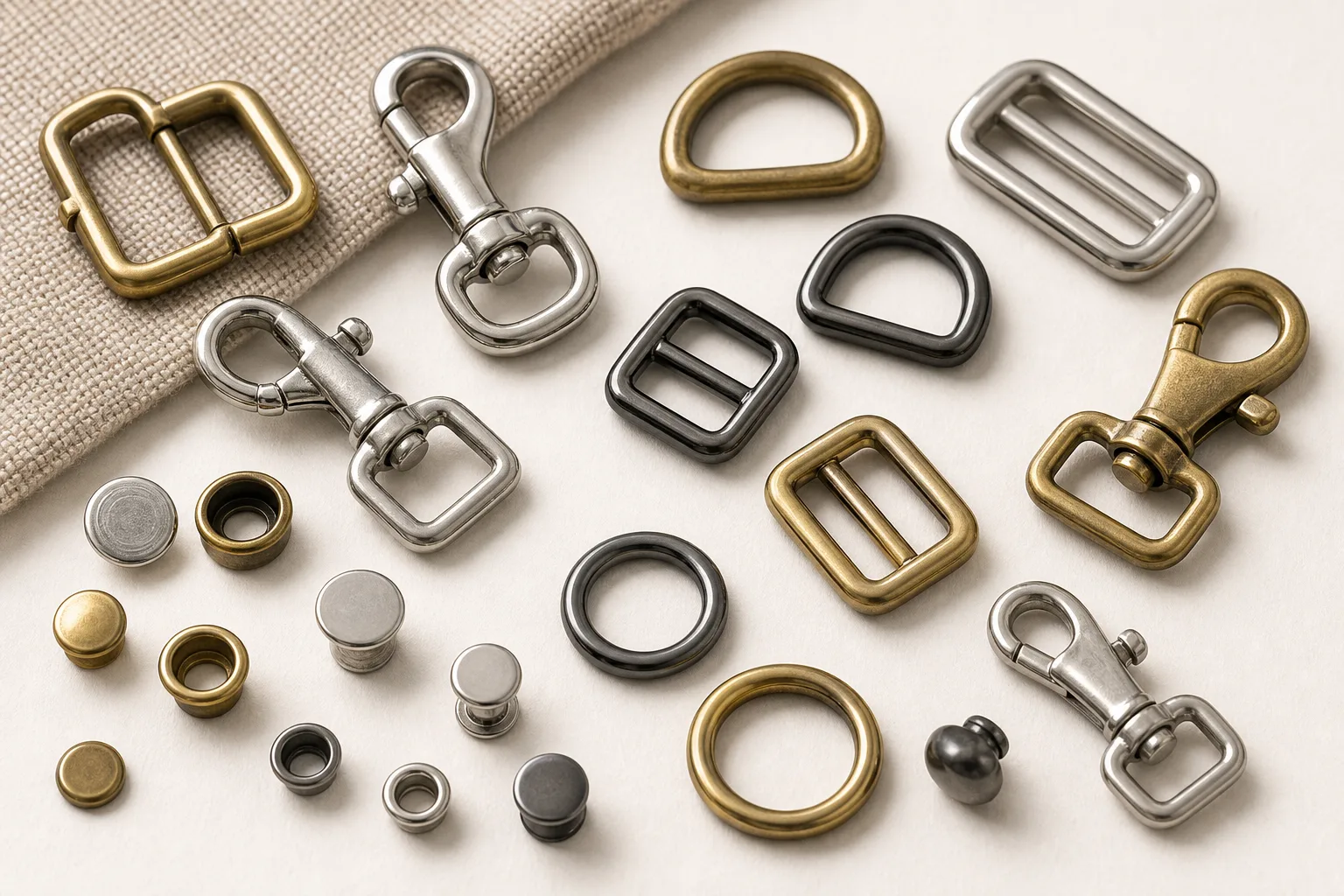
Once a design settles on a plastic buckle, the next question is which plastic — and the answer is not interchangeable. Acetal and nylon are both engineering plastics used across webbing hardware, and they behave differently in exactly the properties that matter for a buckle: stiffness, dimensional stability and how they respond to cold.
Stiffness and why a buckle needs it
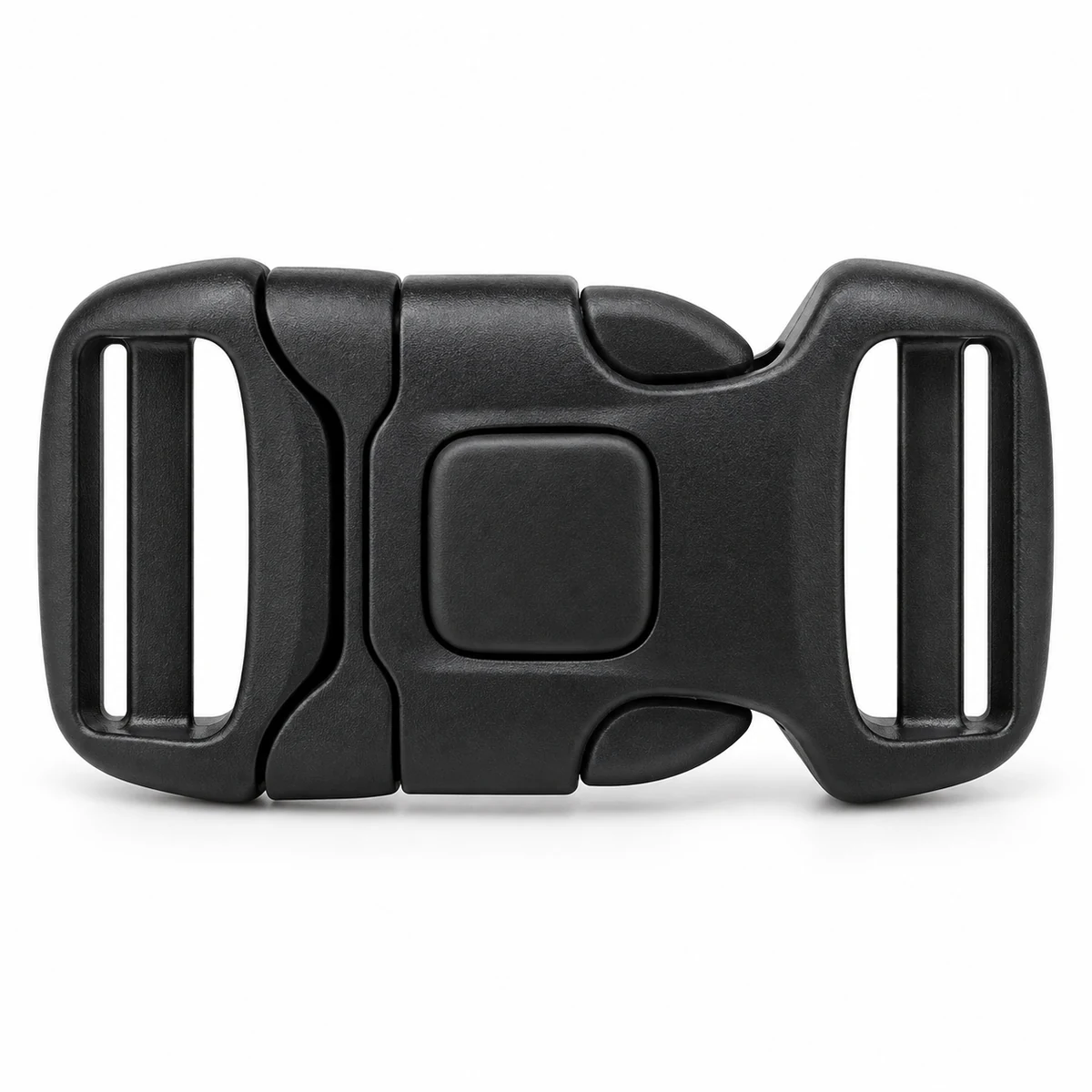
A side-release buckle works because two arms deflect a controlled amount and then spring back to lock. That behaviour depends on the material being stiff and returning reliably. Too flexible and the arms do not hold; too brittle and they break rather than deflect.
Acetal sits in a useful place on that scale, which is why it dominates the category. Nylon is more flexible, so an identical geometry moulded in nylon feels different in the hand and locks differently.
Moisture and dimensional stability
Nylon absorbs moisture from the air, and that changes its dimensions and its stiffness slightly. For many products this is irrelevant. For a buckle where two halves must engage within a small tolerance, and for an adjuster whose grip depends on a fixed geometry, it is a consideration.
Acetal absorbs much less, so a part holds its dimensions more consistently across climates. On a product sold worldwide and used from dry cold to humid heat, that consistency is worth having.
Toughness and impact
Nylon is generally tougher — better at absorbing an impact without cracking. Where a part will be dropped, stepped on or hit, that toughness is a genuine advantage, and it is why nylon appears in some heavy-duty and industrial applications.
The trade-off is the stiffness the buckle mechanism wants. Which matters more depends on the failure you are trying to avoid: sudden cracking under impact, or a gate that no longer locks reliably.
Cold weather
Plastics get stiffer and more brittle as temperature drops, and how much varies by material and grade. This is a real design consideration for outdoor and winter products, where a buckle may be operated with cold hands on a cold part.
This guide does not give temperature ratings or impact figures for either material, because those depend on the specific grade, any additives and the test method. If the product is used in cold conditions, say so — grades formulated for that exist and the supplier can advise.
What the webbing does to the choice
Both materials grip webbing by geometry, and both depend on the webbing being what the buckle was designed for. Substituting a stiffer, thicker or more slippery webbing changes the grip regardless of which plastic is used.
Send the webbing specification with the inquiry, and if a sample length can go with it, do that. Buckle material is a secondary decision compared with getting the webbing fit right.
How to specify
The material preference if you have one, webbing width and thickness, expected temperature range, whether impact is foreseeable, colour requirement, logo requirement, and quantity. If a competitor product performs the way you want, sending it lets the supplier identify what it is.
Where colour matching to webbing matters, note that moulded colour and dyed webbing are matched by physical sample, not by colour name.
Acetal is stiffer and holds dimensions, which is what a webbing buckle mechanism needs, and it is the usual choice. Nylon is tougher under impact and appears where that matters more. In both cases the webbing specification decides more than the plastic does.

 Comparison Guides
 Comparison Guides
 Application Guides
 Buyer Guides
 Buyer Guides
 Comparison Guides