
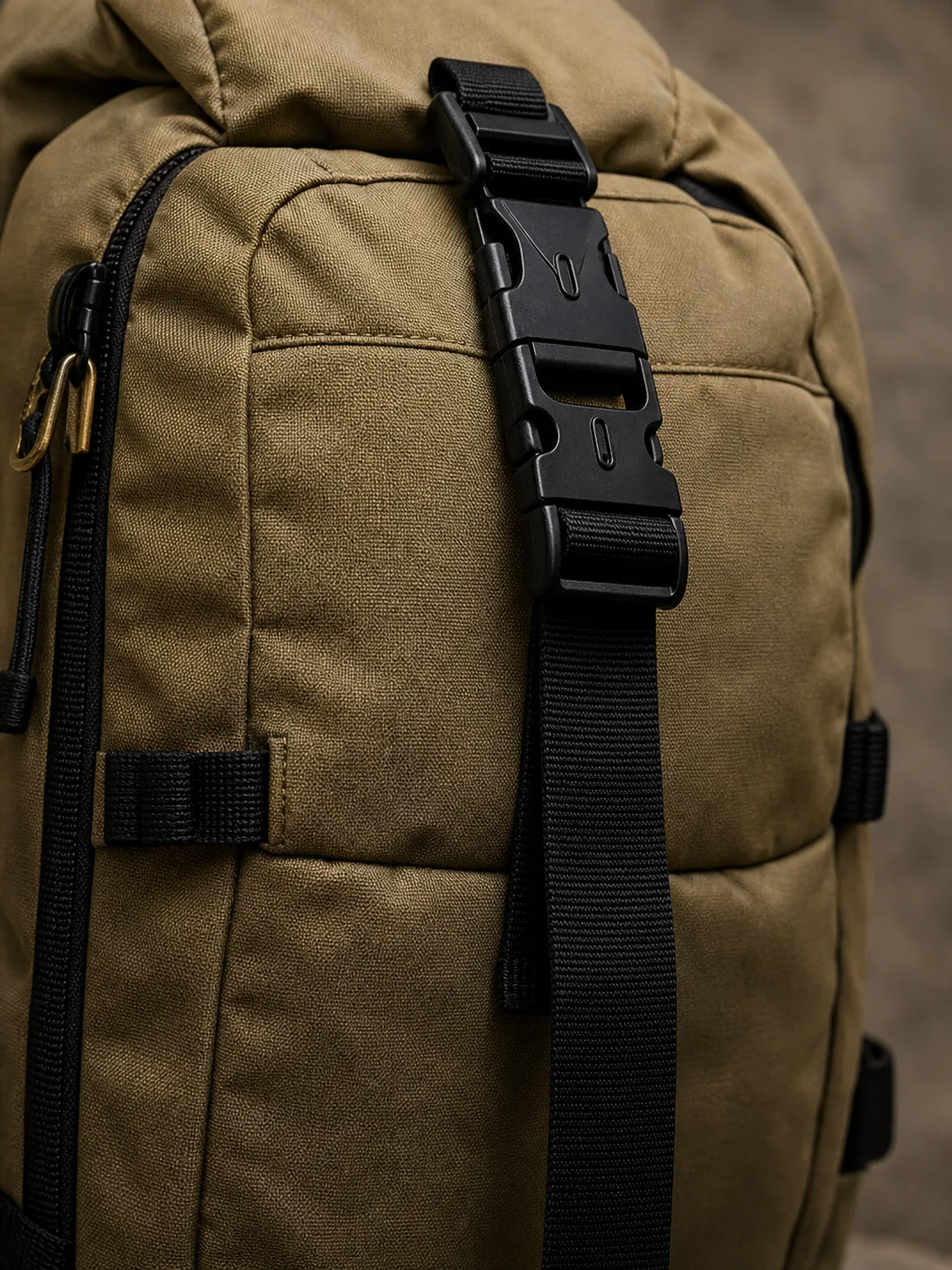
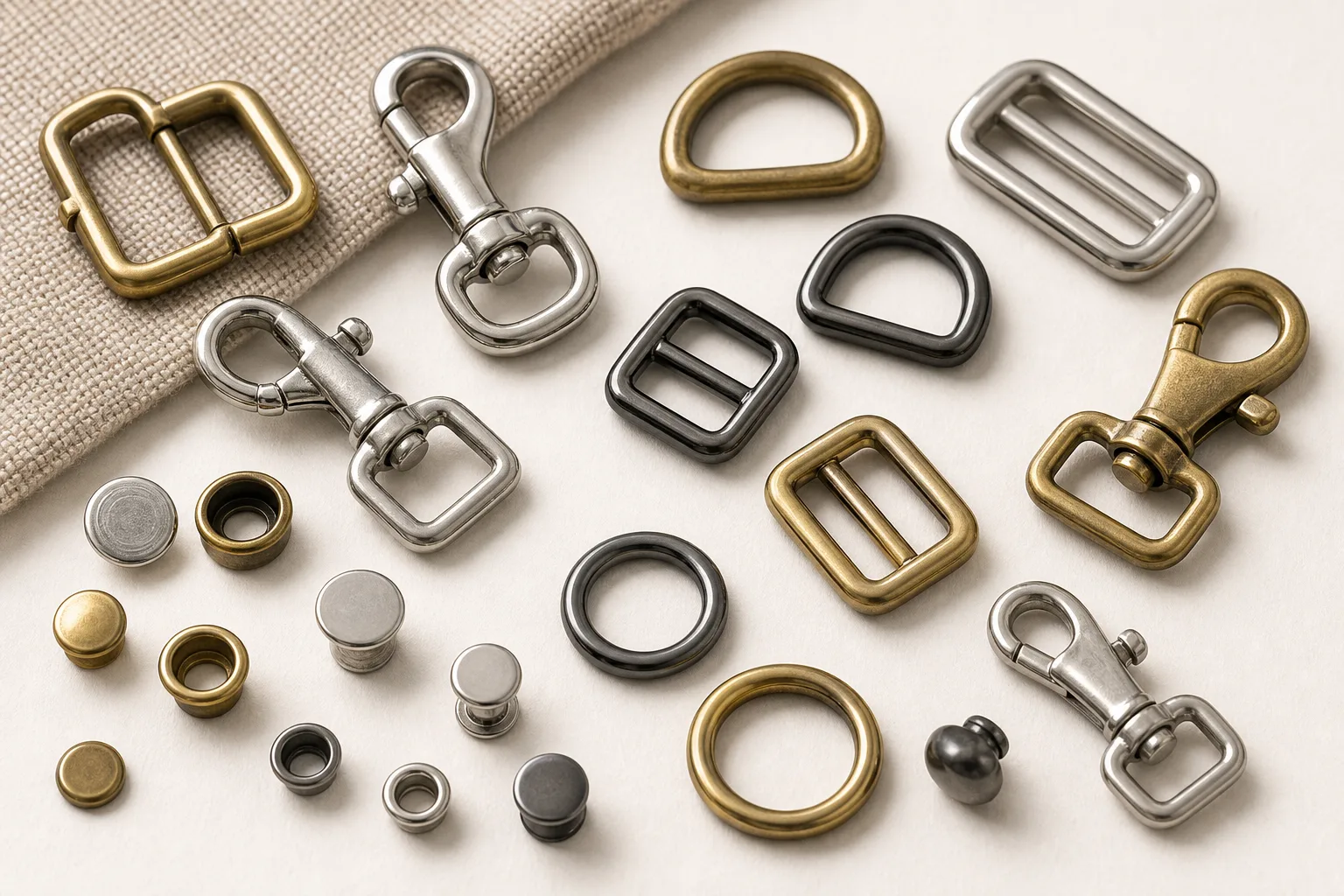
Buckle selection usually starts in the wrong place: with a photograph of a buckle that looks right. On a backpack the buckle is a node in a webbing system, and the system imposes most of the constraints. Getting the order right removes most of the back-and-forth from a first quotation.
Webbing width is the controlling dimension
Every buckle is sized to a webbing width, and that width is usually already fixed by the strap design and the sewing operations around it. Quoting a buckle without stating the webbing width leaves the single most important dimension open, which is why it is the first question a supplier asks back.
Width alone is not always enough. Webbing thickness and stiffness affect how the strap feeds and holds, and a thick or coated webbing may not behave in a slot sized for a standard tape. Where the webbing is unusual, send a length of it with the enquiry.
What each buckle type is actually for
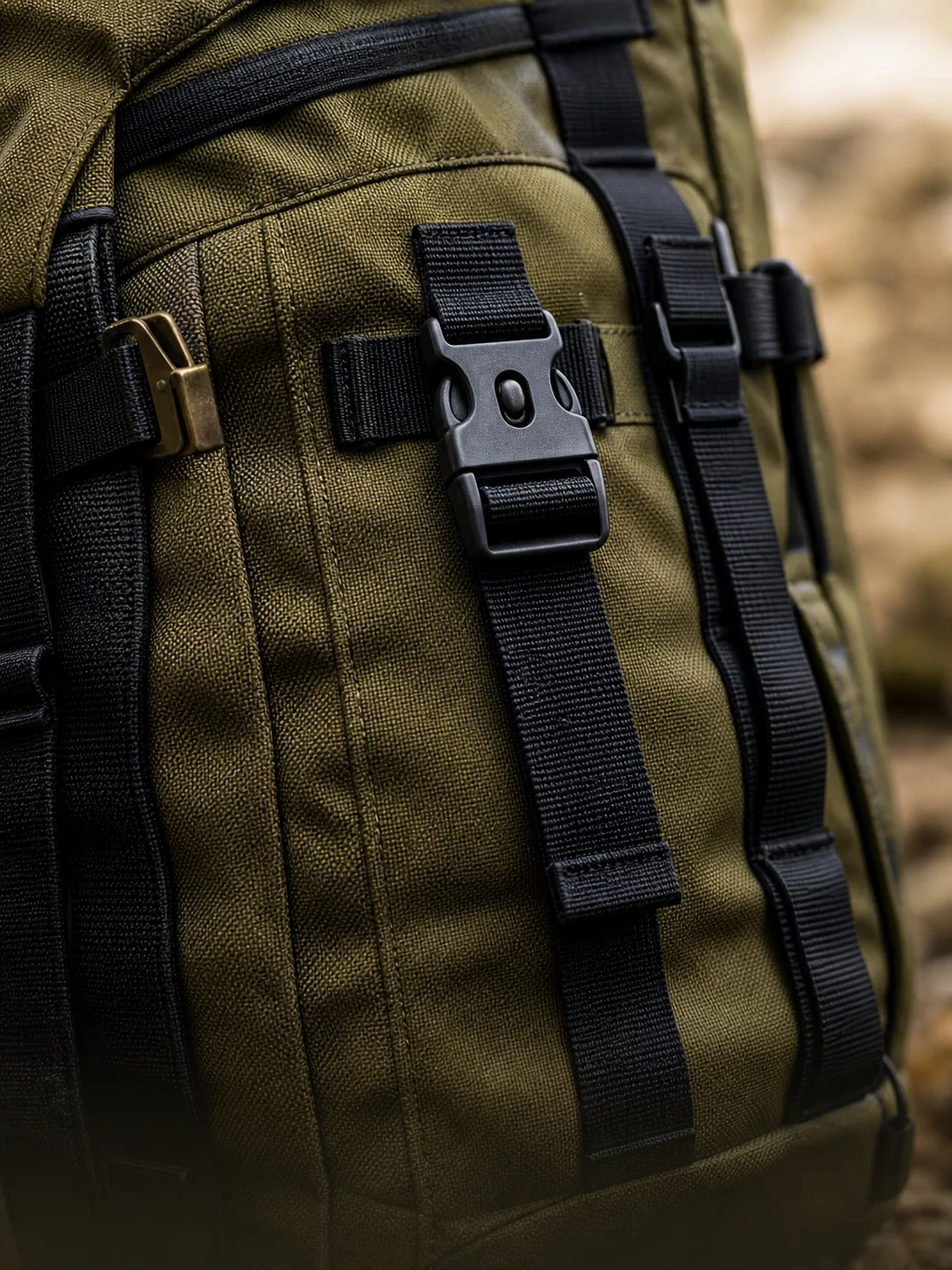
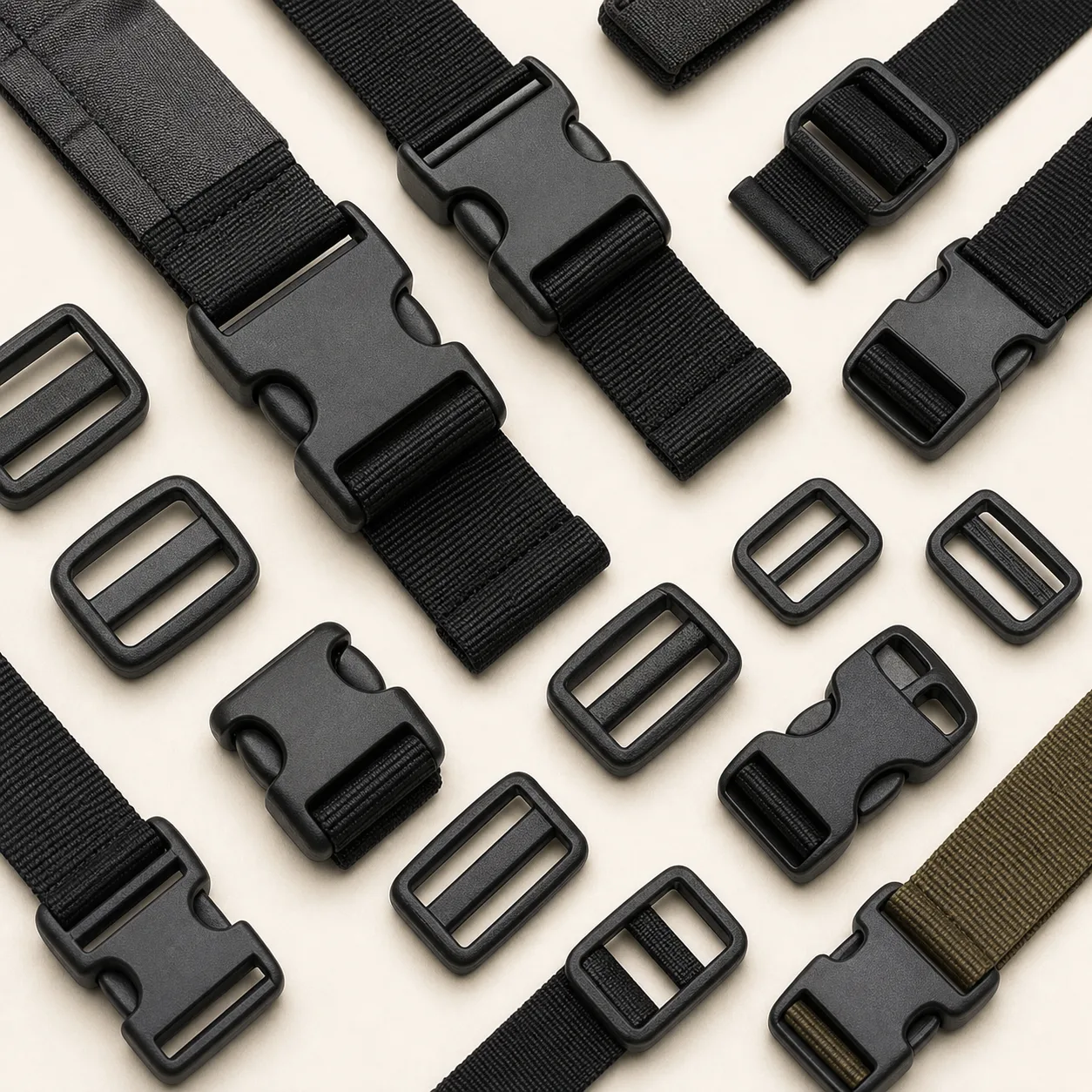
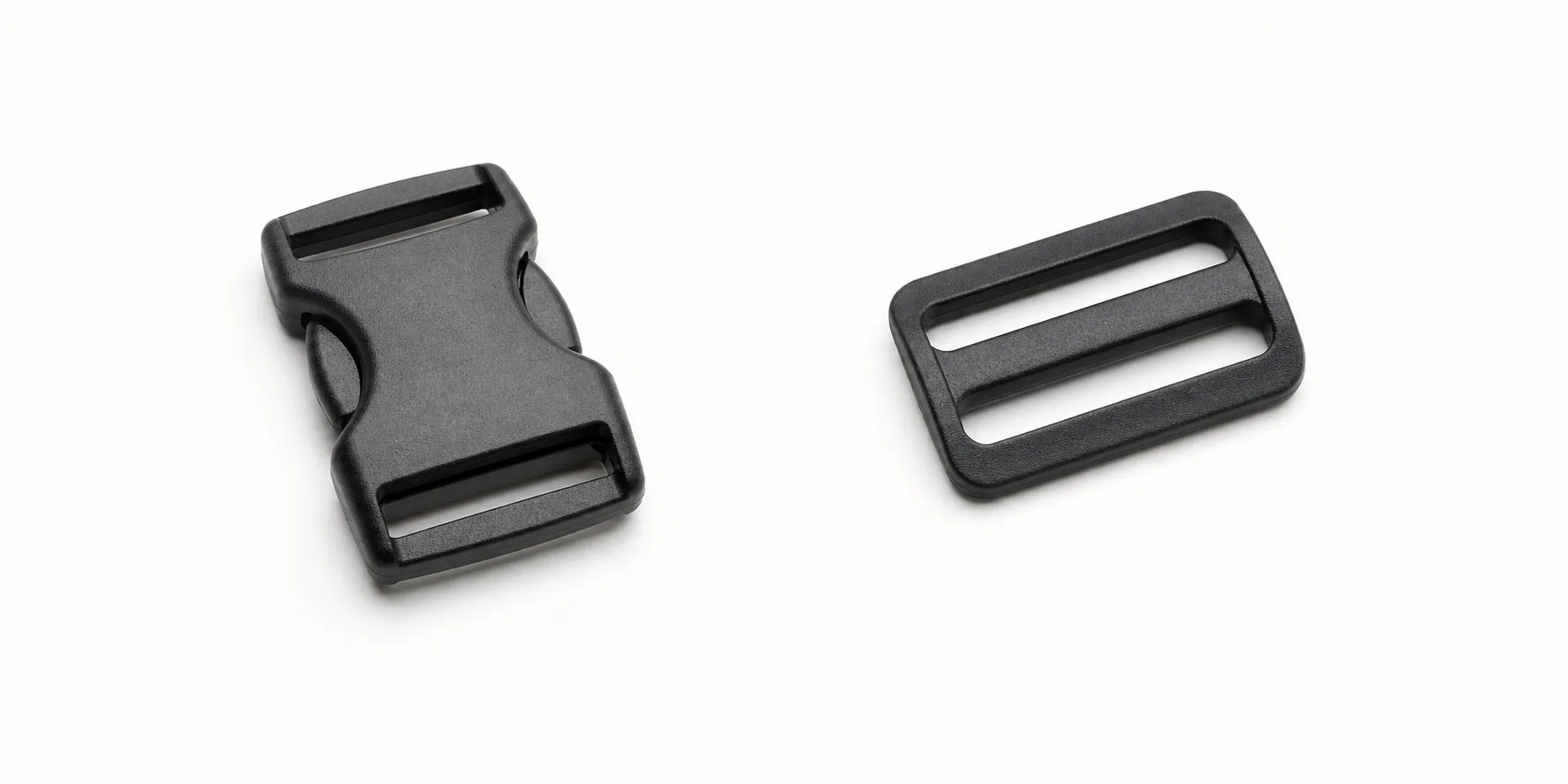
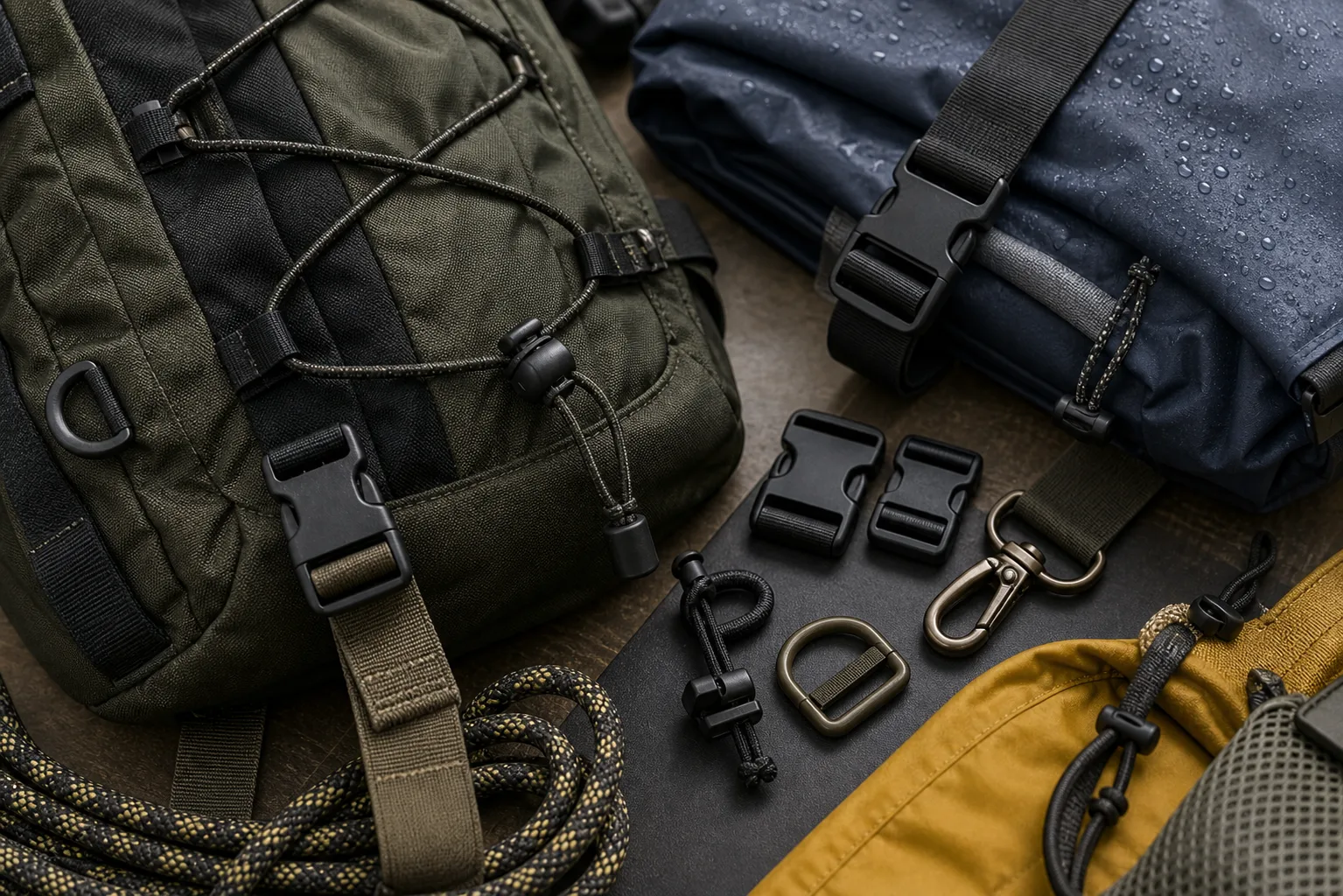
A side-release buckle joins and separates two strap ends quickly and is the closure at chest, waist and lid positions. A ladder lock adjusts strap length and is not designed to be opened under load. A cam buckle grips the tape and holds tension for compression straps. A hook or clip transfers load to a fixed point rather than to another strap.
Confusing adjustment parts with closure parts is a common source of field complaints. A ladder lock asked to act as a release, or a side-release asked to hold fine adjustment, will disappoint even when the part itself is well made.
Load path decides structural from non-structural
Trace where the weight goes. Shoulder strap attachments, load lifters and haul loops carry real load; sternum straps, lid straps and compression straps mostly manage position. The structural positions justify tighter specification and testing attention; the others often do not.
This guide states no load figures, because they depend on the pack design, the webbing, the stitching and the test method. What it can say is that the figure belongs on the structural positions and should be discussed there rather than applied uniformly across every buckle on the pack.
Plastic or metal, decided by use rather than image
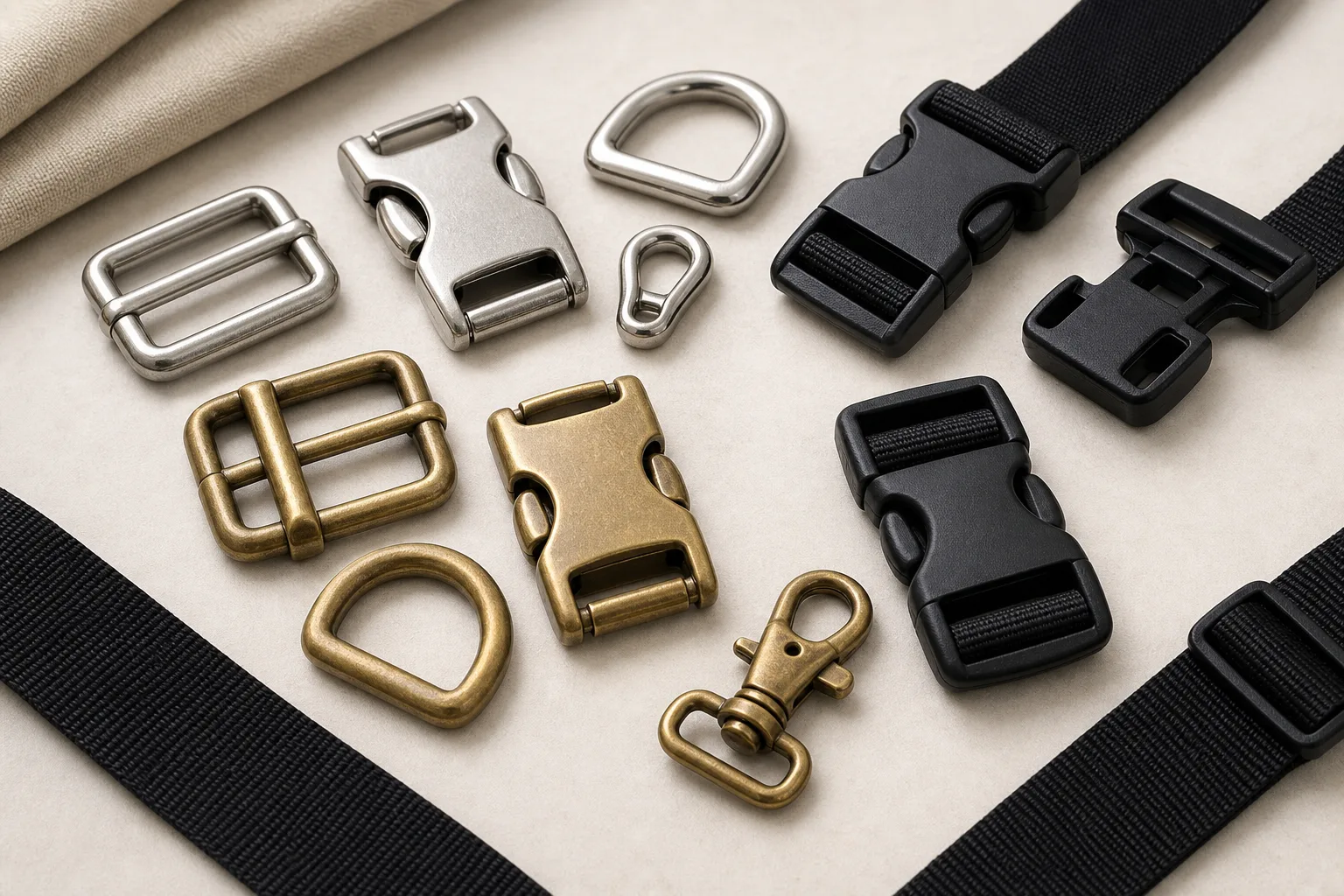
Acetal and nylon buckles are light, do not corrode, do not conduct cold, and fail predictably. Metal buckles are heavier, can be finished to match branding, and tolerate abrasion and heat better. For most adjustment positions on a pack, plastic is the appropriate engineering answer.
Where metal is chosen for a visible position, that is a legitimate branding decision — but pay attention to weight distribution and to how a cold metal part feels against a chest or hip in winter use. A mixed system, metal where it is seen and plastic where it is not, is common and reasonable.
Customisation: what is worth tooling
Custom buckles usually mean one of three things: a logo on an existing body, a modified body dimension, or a new shape. The cost and lead-time difference between these is large, and only the third normally requires a full new mold.
Before asking for a custom shape, check whether a logo on a standard body achieves the brand intent. Many packs get the recognition they wanted from a marked side-release without carrying the tooling cost or the risk of an unproven geometry.
What to specify
Webbing width and thickness for each position, whether the position is structural or adjustment, buckle type per position, material preference or the property behind it, finish and logo requirement for visible parts, expected use environment, and quantity per size.
A sample pack, or even photographs with the strap positions marked, resolves more questions than a written description. Where the design is still moving, say which dimensions are fixed and which are open — that alone changes what a supplier can suggest.
Backpack buckles are selected from the webbing outwards. Fix the width and thickness, identify which positions carry load and which only adjust, then choose type and material for each position rather than for the pack as a whole.

 Application Guides
 Comparison Guides
 Comparison Guides
 Finish Guides
 Buyer Guides
 Comparison Guides
 Application Guides
 Custom Hardware Guides