
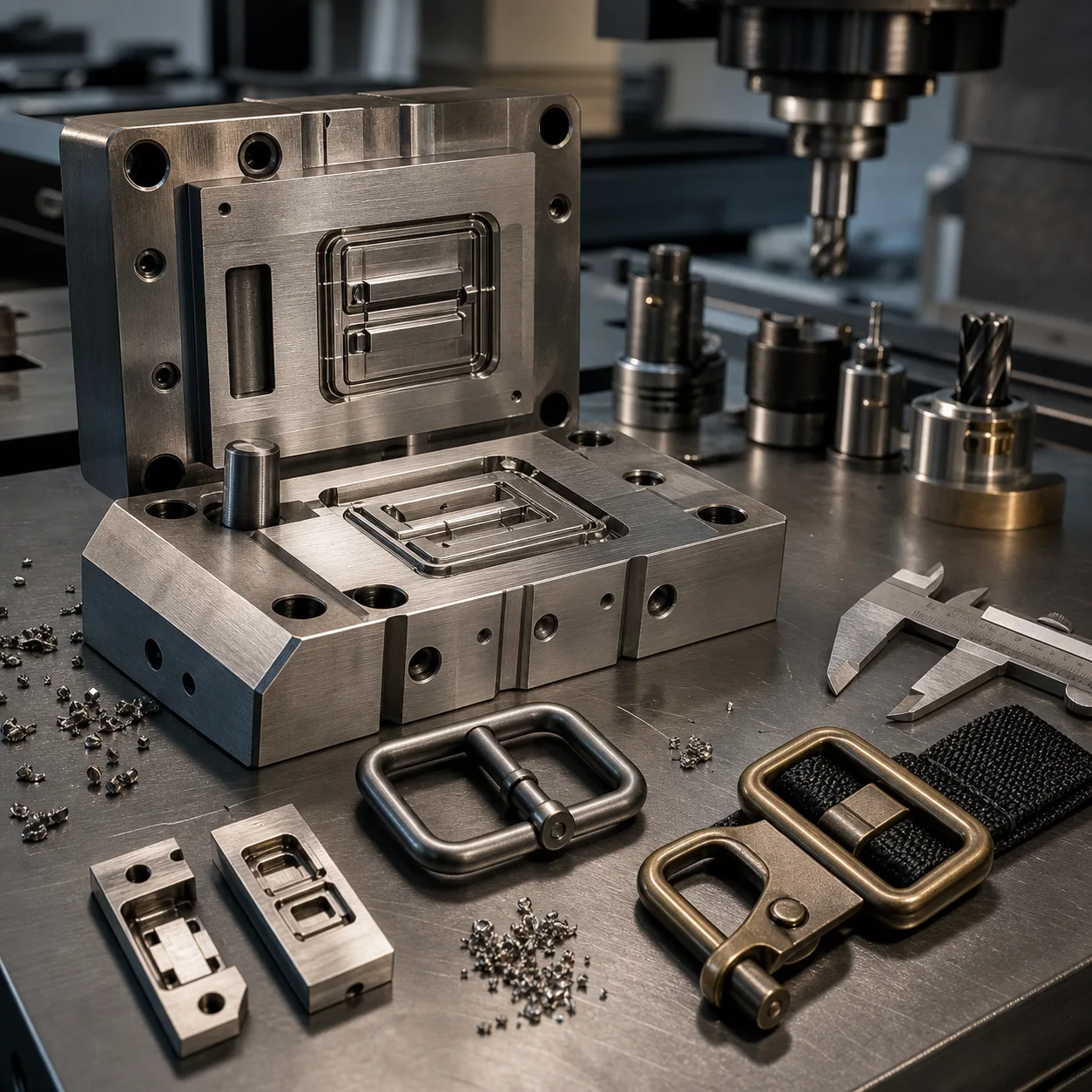
Buyers usually ask how long a mold takes. The more useful question is what makes it take longer, because the answer is almost always the number of times the design goes back for review — and that is within the buyer’s control in a way that machining time is not.
Stage one: design review and manufacturability
Before any mold is designed, the part is reviewed for whether it can be made: wall thicknesses, draft, parting line position, gate location, undercuts and where the part can tolerate a witness mark.
This is where buyer input matters most. A cosmetic surface that must be unmarked, or an undercut that must be preserved, changes the mold design substantially and is far cheaper to raise here than after machining.
Stage two: mold design
The mold is designed around the reviewed part: cavity layout, number of cavities, ejection, cooling and how the mold will be maintained. Cavity count is a commercial decision as much as a technical one, since it trades tooling cost against unit cost.
Discuss expected volumes here rather than later. A mold built for one volume assumption and used at another is a common source of avoidable cost.
Stage three: machining and assembly
This is the stage buyers picture when they think about lead time, and it is the stage least affected by anything the buyer does after it starts. It proceeds on its own schedule once the design is frozen.
Changes requested during machining are the most expensive kind. If a decision is still open, it is better to hold the design than to start and change it.
Stage four: trial shots and correction
The first parts off a new mold are used to check dimensions, appearance and how the part behaves. Some correction is normal and planned for — a new mold that needs no adjustment at all is the exception, not the standard.
Review trial parts against the specification sheet rather than against expectation, and give consolidated feedback in one pass. Piecemeal feedback turns one correction cycle into three.
Stage five: sample approval and first article
Once the corrected mold produces acceptable parts, samples are submitted for approval and a first article is agreed as the reference for production. That reference is what later deliveries are judged against.
Approve deliberately. An approval given quickly to save a week defines the standard for every subsequent order.
What actually moves the timeline
In order of impact: how complete the initial brief was, how quickly and how completely the buyer responds at each approval point, whether the design is frozen before machining, and only then the mold complexity itself.
This guide gives no timeline figures, because they depend on part complexity, cavity count, finish requirements and current workload. Ask for a stage-by-stage schedule for your specific part rather than a general number.
Mold development is a sequence of decisions, not a single machining job. Front-load the brief, raise cosmetic and functional constraints during design review, freeze the design before machining, and give consolidated feedback on trial parts.
 Custom Hardware Guides
 Comparison Guides
 Application Guides
 RFQ & Sample Guides
 Buyer Guides
 Buyer Guides