

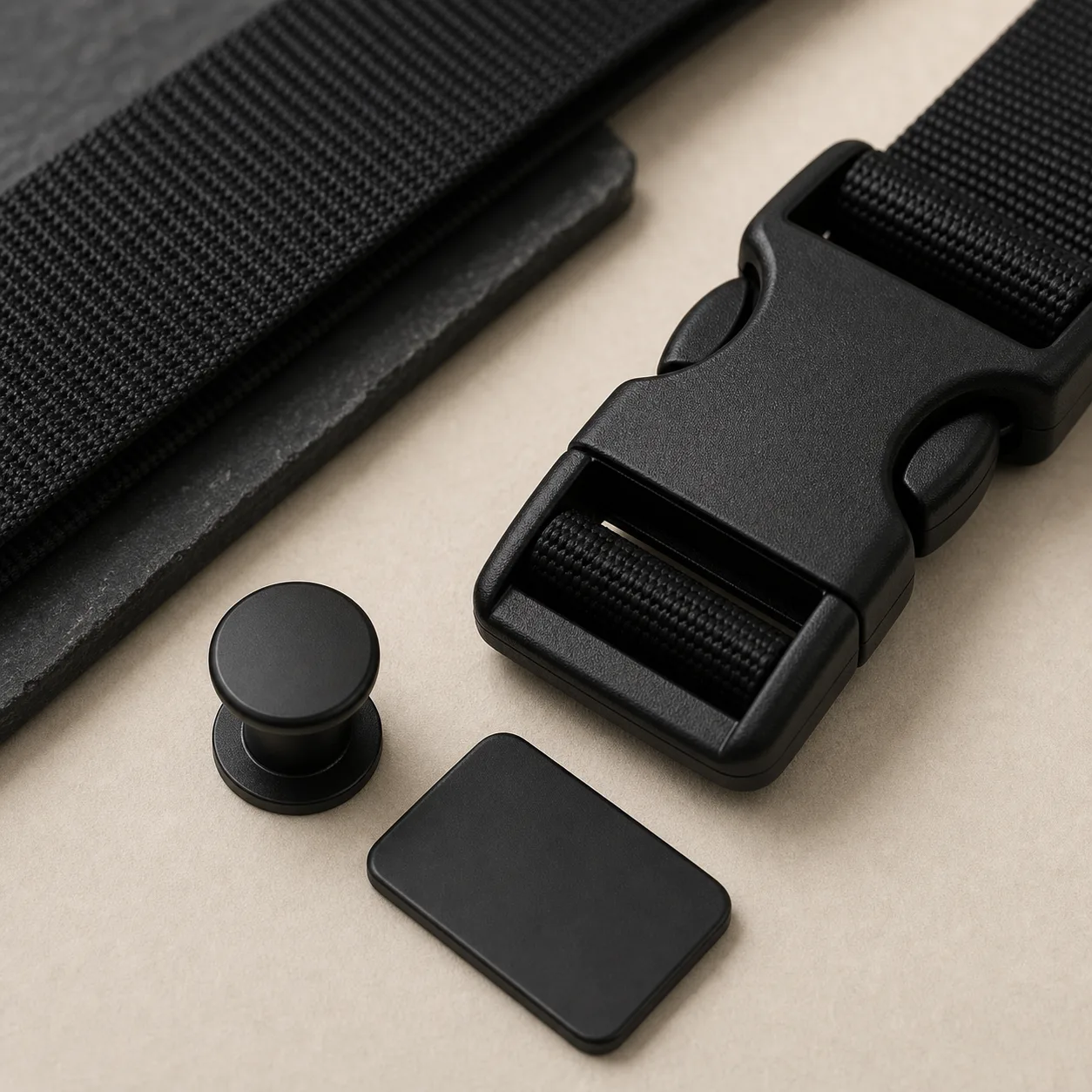
Matte black is chosen for two quite different reasons — a flat graphic look, and the practical fact that it makes mixed materials match. Both are legitimate. The sourcing risks are narrow and specific, which makes this an easy finish to specify well if you know what to pin down.
Why mixed sets use it
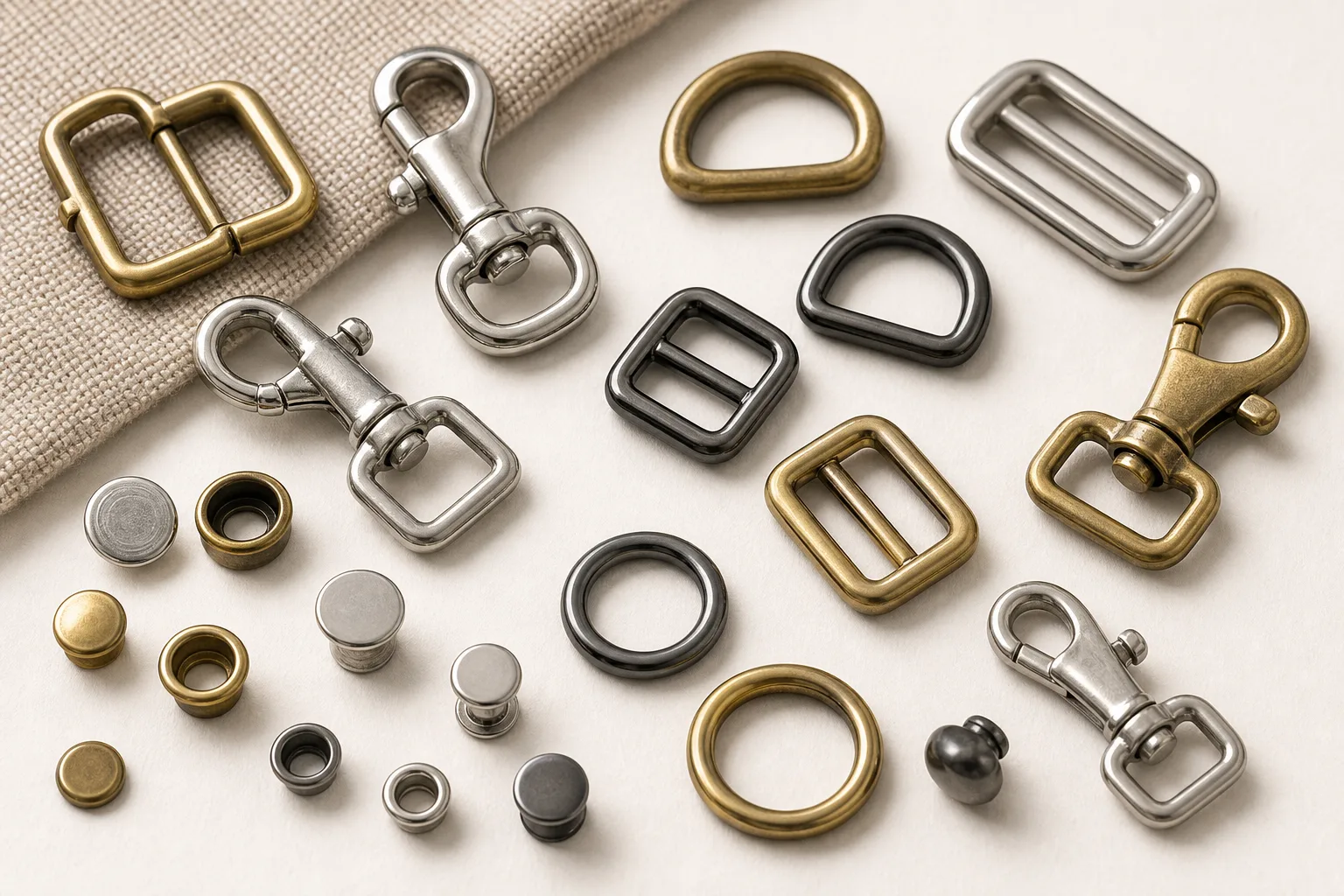
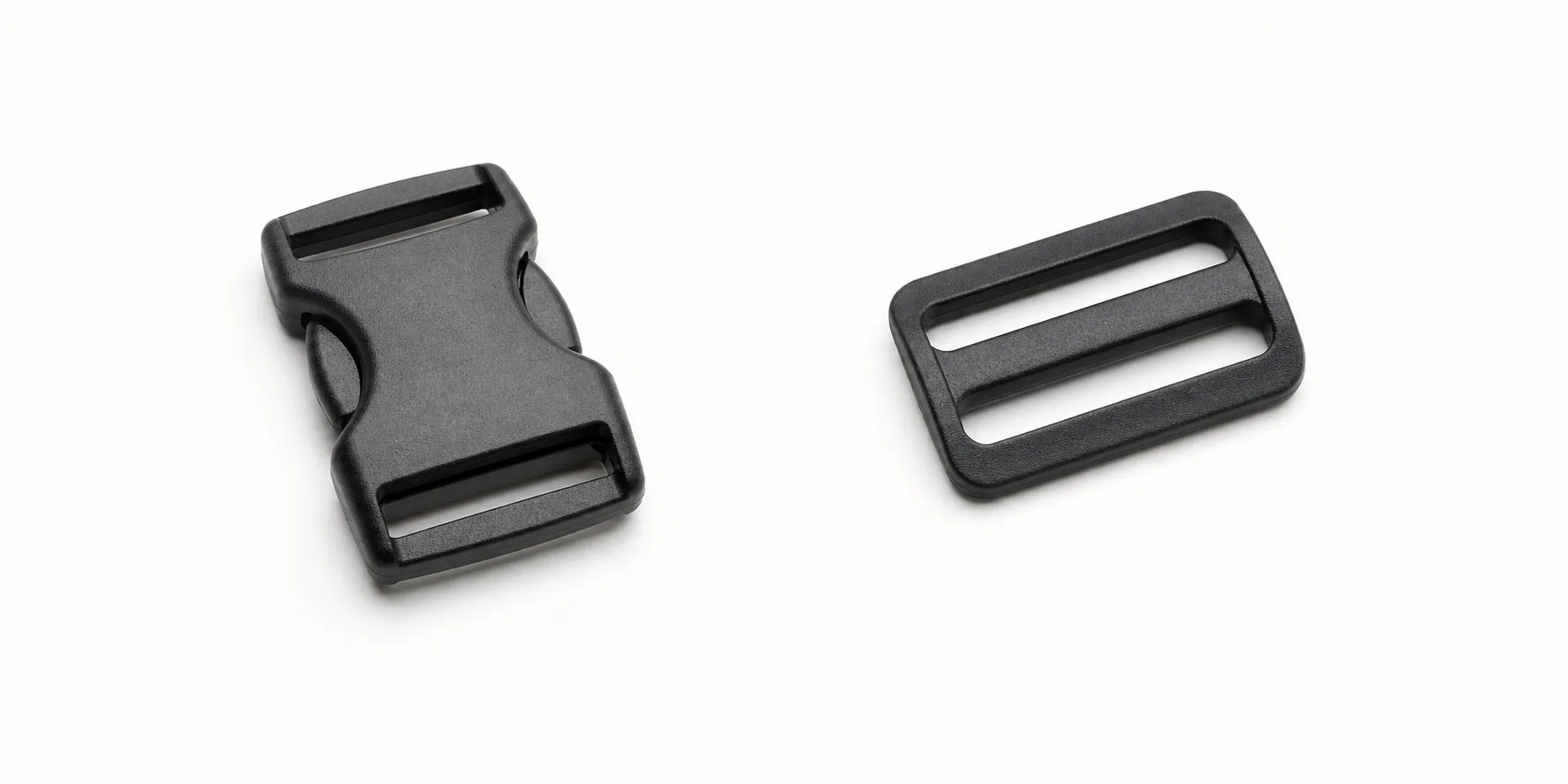
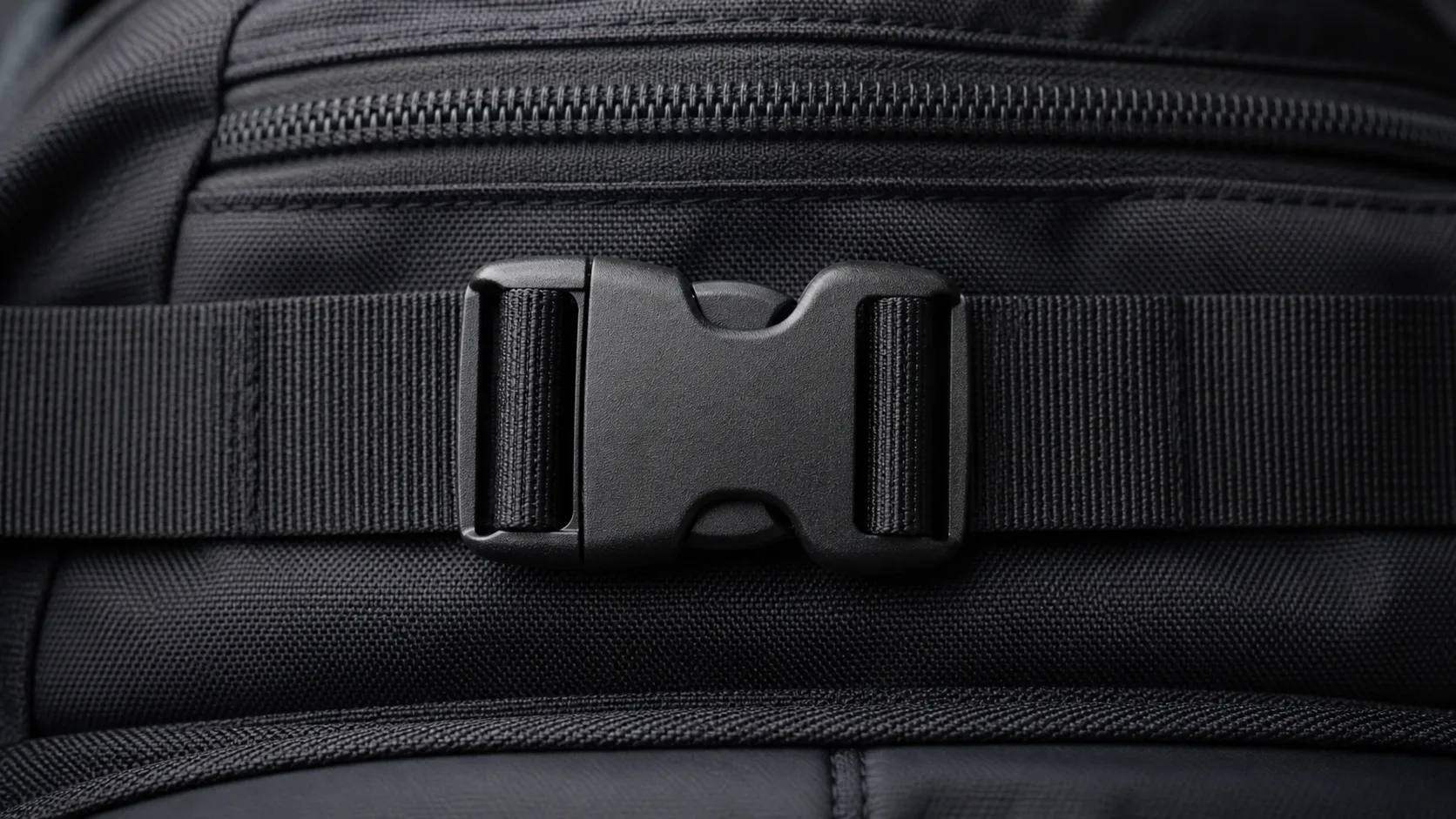
A hardware set often combines a cast zinc buckle, a stamped ring and a moulded plastic adjuster. Getting those to match in a metallic finish is difficult because the metallic response depends on what is underneath.
A flat coating removes most of that problem: it covers the substrate and scatters light evenly, so different constructions read as the same colour. That practical advantage is why many technical products standardise on it.
Gloss level is the specification
Matte is not a single value. There is a visible difference between a dead flat surface, a low sheen and a satin black, and the same word covers all of them. Two suppliers can both deliver matte black and produce visibly different parts.
Pin the gloss level with a physical sample. If a set is being made by more than one supplier, they should all match the same physical reference rather than each other in principle.
Edge wear and what shows underneath
Coatings are thinner at sharp edges, so edges are where wear appears first, and on black the contrast with what is underneath is usually high. A worn edge on a matte black part is visible.
Design responses include radiusing edges, choosing positions with less contact, or accepting the wear as part of how the product ages. Discuss it rather than discovering it in returns.
Texture and fingerprints
Very flat surfaces can show fingerprints and handling marks more than a slightly textured one. On hardware that is handled constantly — a frequently used buckle, a pull — a light texture can be more practical than a dead flat finish.
This is worth raising at sample stage, because it is a texture decision that is easy to adjust before tooling or process is fixed and awkward afterwards.
Where matte black is the wrong choice
On a part whose relief or logo detail is the point, a flat coating reduces the light response that makes detail visible. A dark metallic finish keeps that; matte black tends to flatten it into a silhouette.
Also on products where the hardware is meant to read as metal. Matte black reads as a coated object, which is right for technical products and wrong for a design that wants visible metal.
What to specify
Gloss level by physical sample, all parts in the set including different substrates, edge treatment, whether texture is wanted, the process after assembly, and quantity.
This guide states no abrasion or coating thickness figures. If edge durability matters, agree the test and the standard on your actual part.
Matte black is the practical choice for sets mixing substrates, and its specification comes down to gloss level, edge treatment and texture. Where relief detail or a metal read matters, a dark metallic finish serves better.
 Finish Guides
 Finish Guides
 Application Guides
 Buyer Guides
 Finish Guides
 Buyer Guides
 Finish Guides