
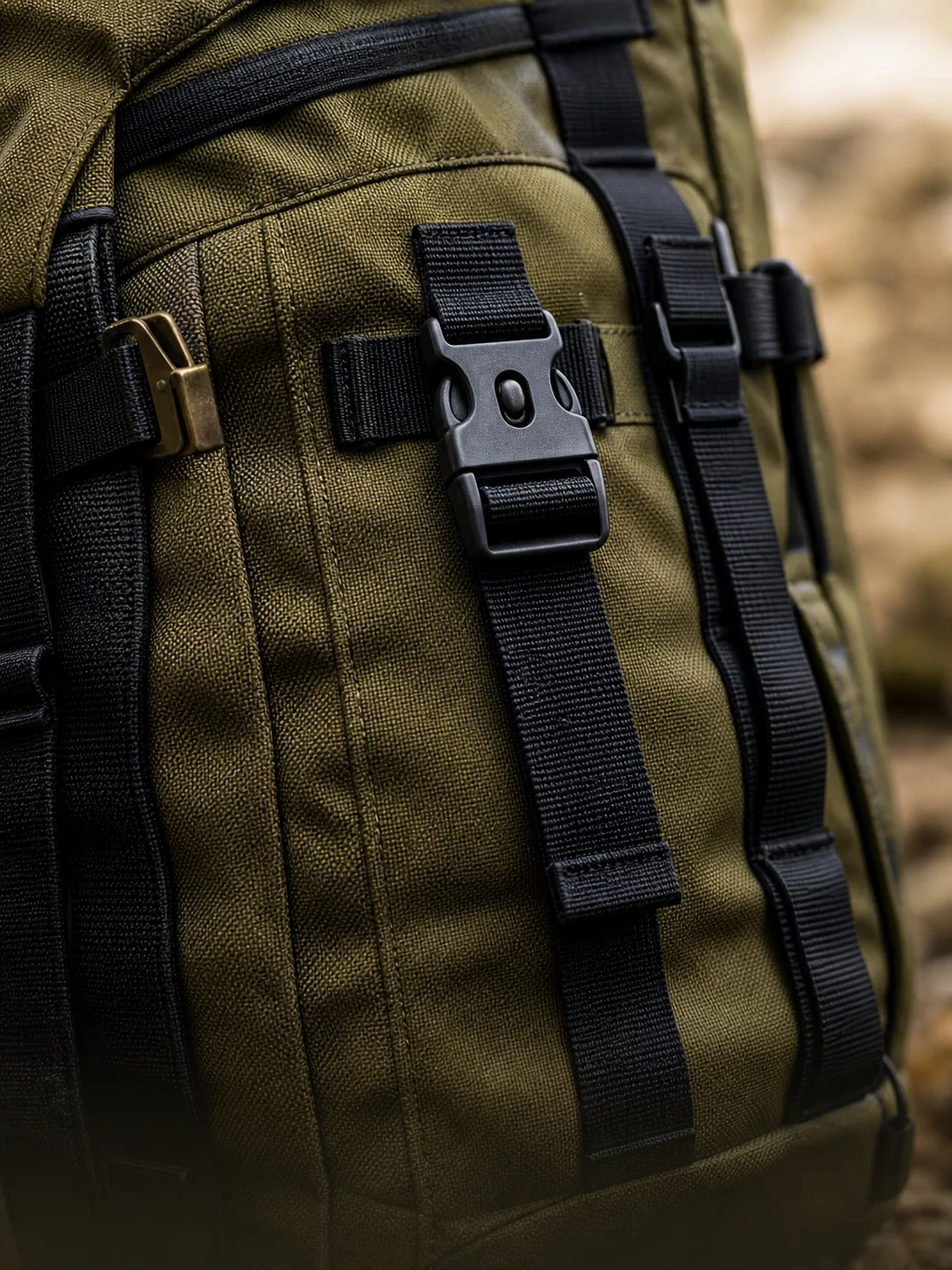
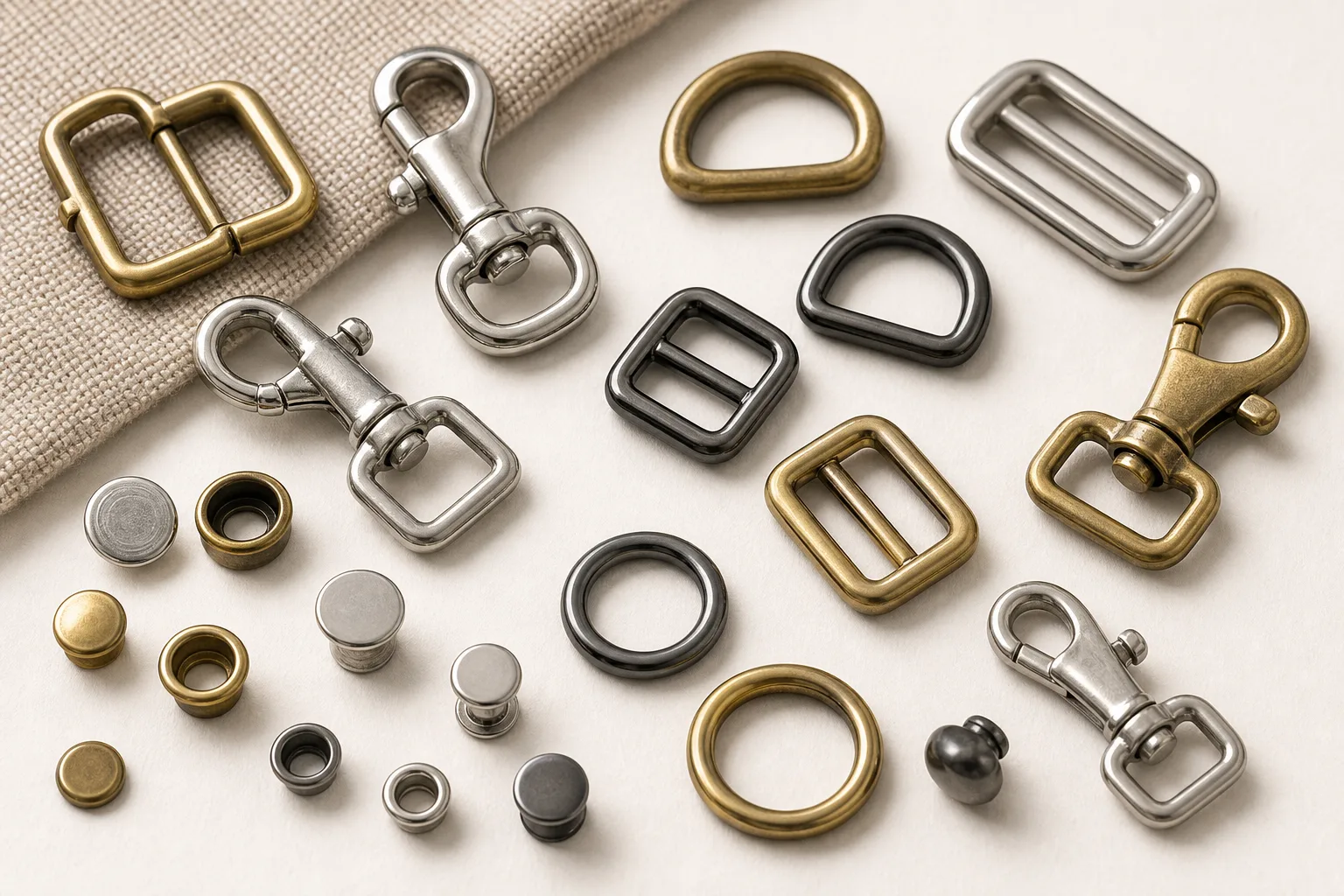
A pack strap in a city carries a laptop; the same strap on a hillside is shock-loaded, dragged over rock, rained on and operated by someone wearing gloves. Those four differences, not the nominal weight, are what make outdoor hardware a separate selection problem.
Load arrives dynamically
Outdoor use means the load is applied suddenly and repeatedly: a pack swinging onto one shoulder, a strap catching, a load shifting on uneven ground. Peak forces are higher than the carried weight and arrive many times over the product life.
The practical consequence is at the interfaces — stitching, webbing and the geometry where the part meets the tape — more than in the part cross-section. Reviewing how the assembly behaves under a sharp pull tells you more than a static hang test.
Corrosion is about environment, not material alone
Coastal, marine, alpine and mixed-season use present different exposures: salt, meltwater with road treatment, prolonged damp, repeated wet-dry cycling. A material that is entirely adequate inland can be the wrong choice near salt air.
State where the product will be used and for how long a season. This guide gives no corrosion test figures, because those depend on the material, the finish, the exposure and the test method — but the exposure description is what makes a sensible material recommendation possible.
Grit, mud and abrasion
Outdoor hardware ingests dust, sand and mud. Anything with a spring, a sliding face or a close-fitting mechanism can be jammed or worn by contamination that a bag component would never encounter.
Simpler mechanisms usually survive better. Where a mechanism is necessary, ask how it behaves when contaminated and whether it can be cleared in the field, rather than only how it performs when clean.
Cold hands and gloves
A buckle that is easy to release indoors can be impossible in gloves, and metal parts conduct cold directly to bare skin. Grip size, release force, the direction of operation and the tactile edges all become functional requirements.
Test samples wearing the gloves the user will actually wear. This is the single most revealing test for outdoor hardware, and it is routinely skipped.
Plastic and metal outdoors
Acetal and nylon do not corrode, stay light, and do not conduct cold — real advantages outdoors. Metals bring abrasion resistance, heat tolerance and the finish options a brand may want on visible parts.
Neither is categorically correct. The workable pattern is to place each material where its property matters: metal on abrasion and load-critical visible positions, plastic where cold, weight and corrosion dominate.
What to specify
Product and activity type, expected exposure environment and season length, webbing widths and thicknesses, which positions are load-critical, whether operation with gloves is required, contamination expected, finish and logo needs for visible parts, and quantity per size.
Describe the intended use in ordinary language as well as in specifications. Knowing that a product is for coastal kayaking rather than general outdoor use changes the material recommendation immediately.
Outdoor hardware is selected against dynamic load, environment, contamination and handling. Describe where and how the product will be used, mark the load-critical positions, and test samples in the conditions and with the gloves the user will actually have.
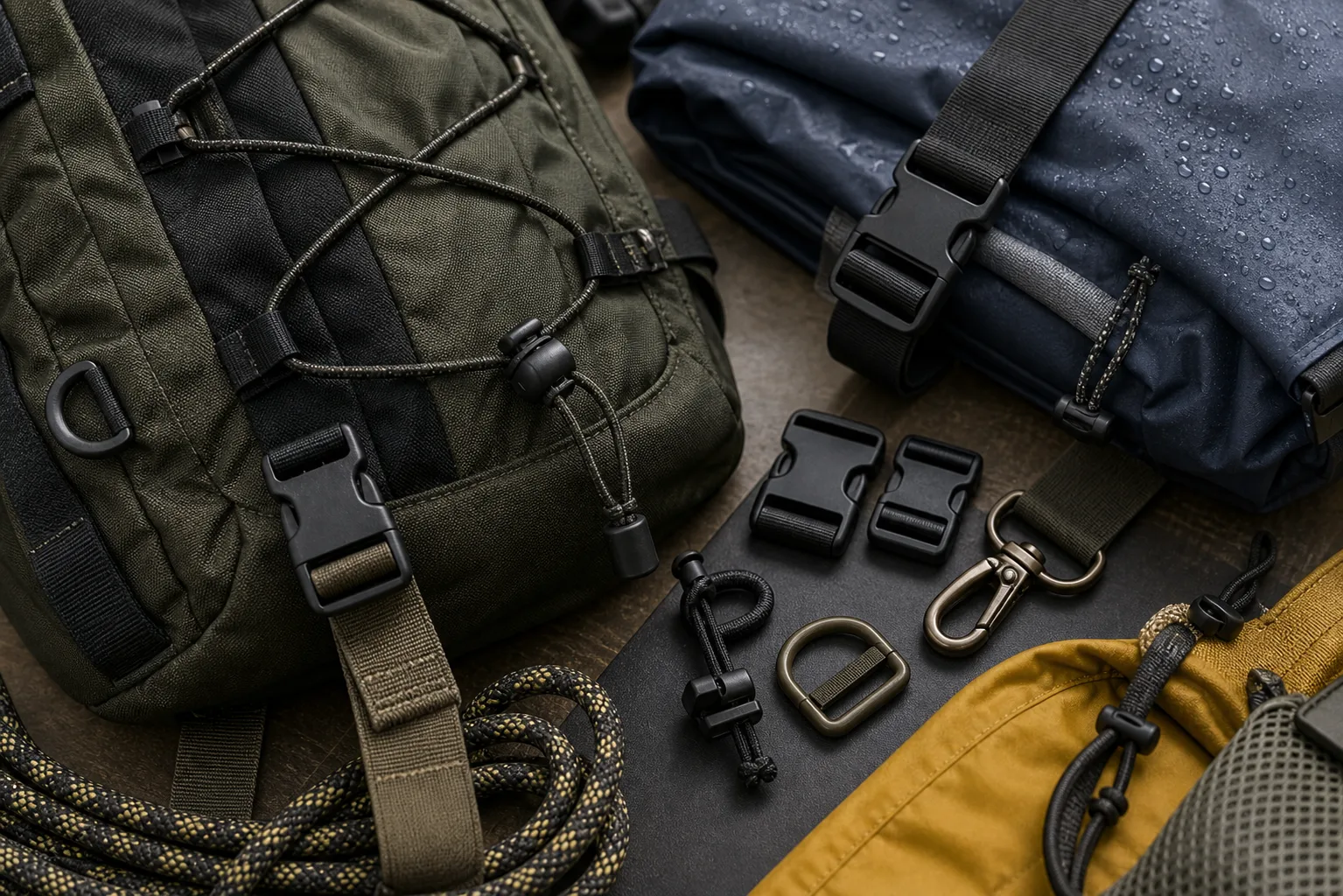 Application Guides
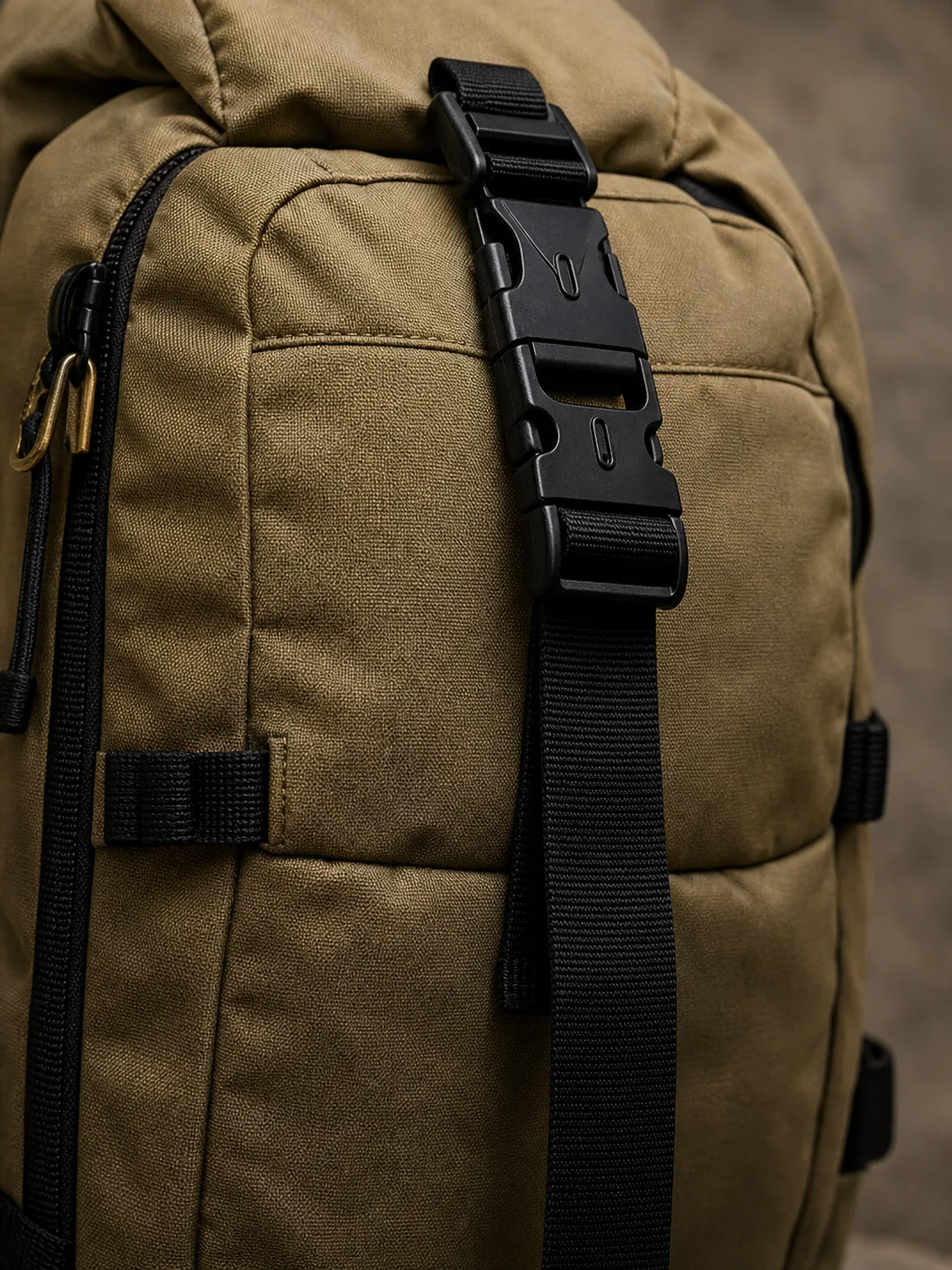 Application Guides
 Comparison Guides
 Material Guides
 Application Guides
 Comparison Guides