
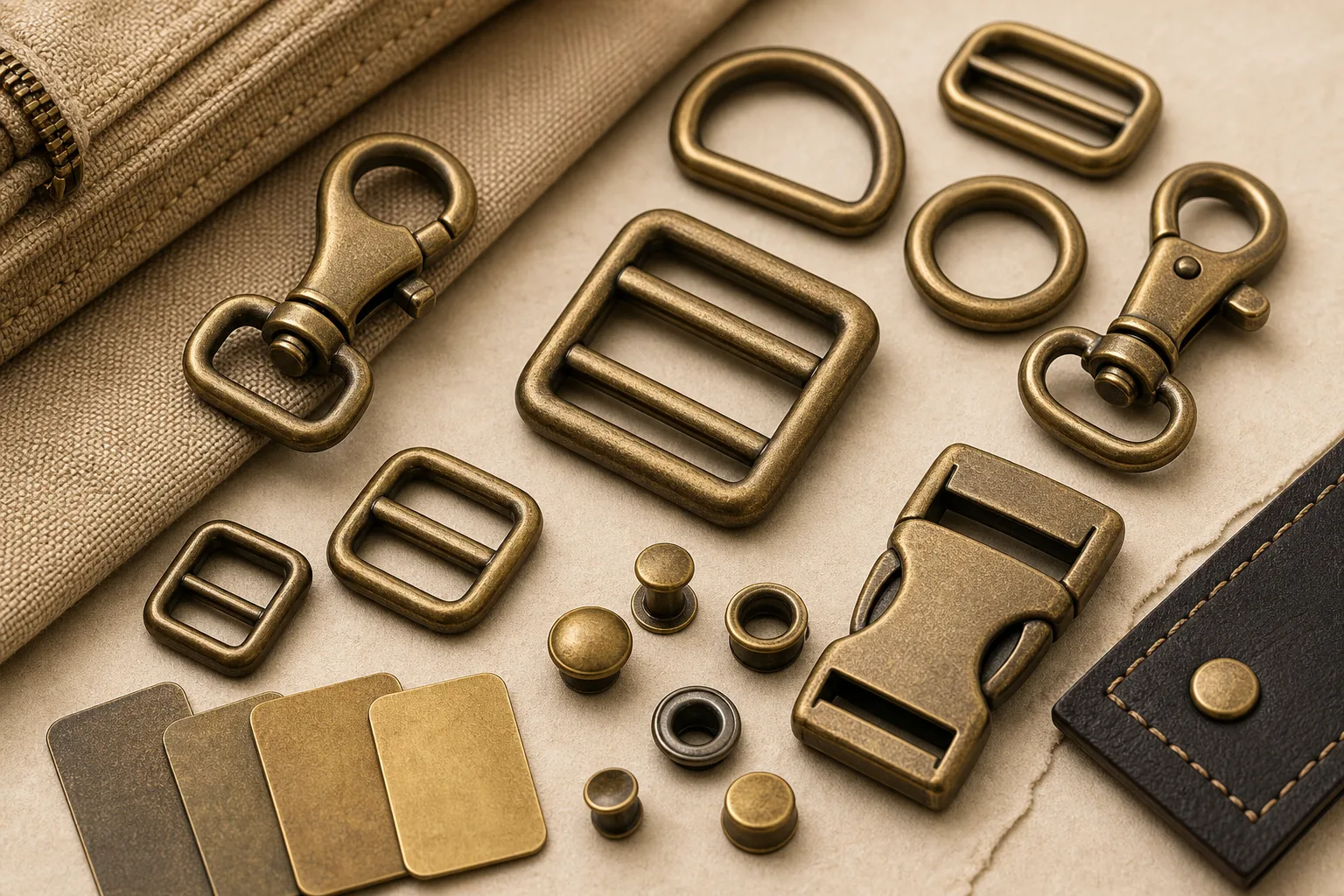
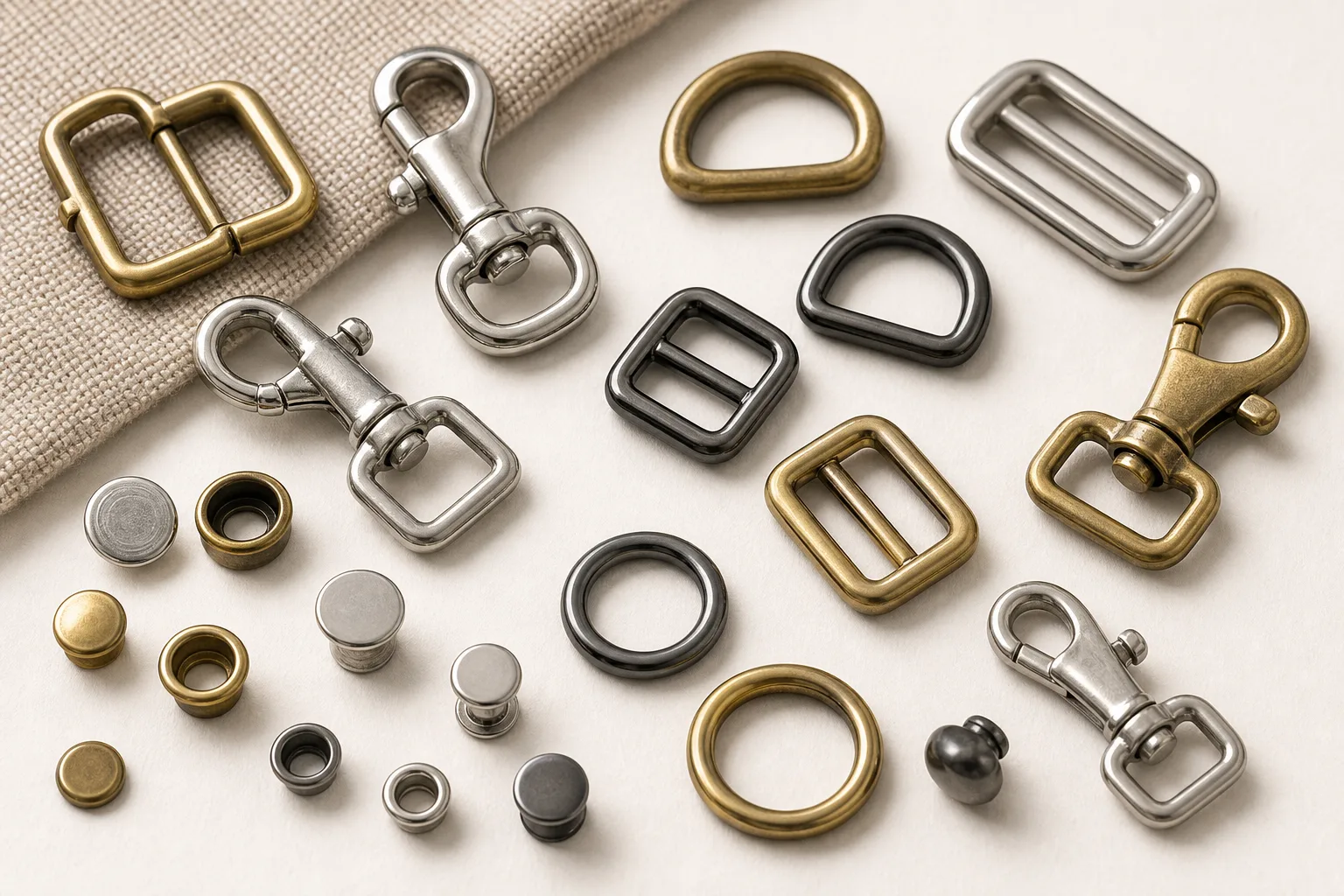
Antique brass is one of the most-used hardware finishes and one of the most-argued-about. The arguments are structural: the finish is a deliberate irregularity, and irregularity cannot be specified as a single target. Setting up the approval correctly at the start removes most of the disputes later.
The steps, and where variability enters
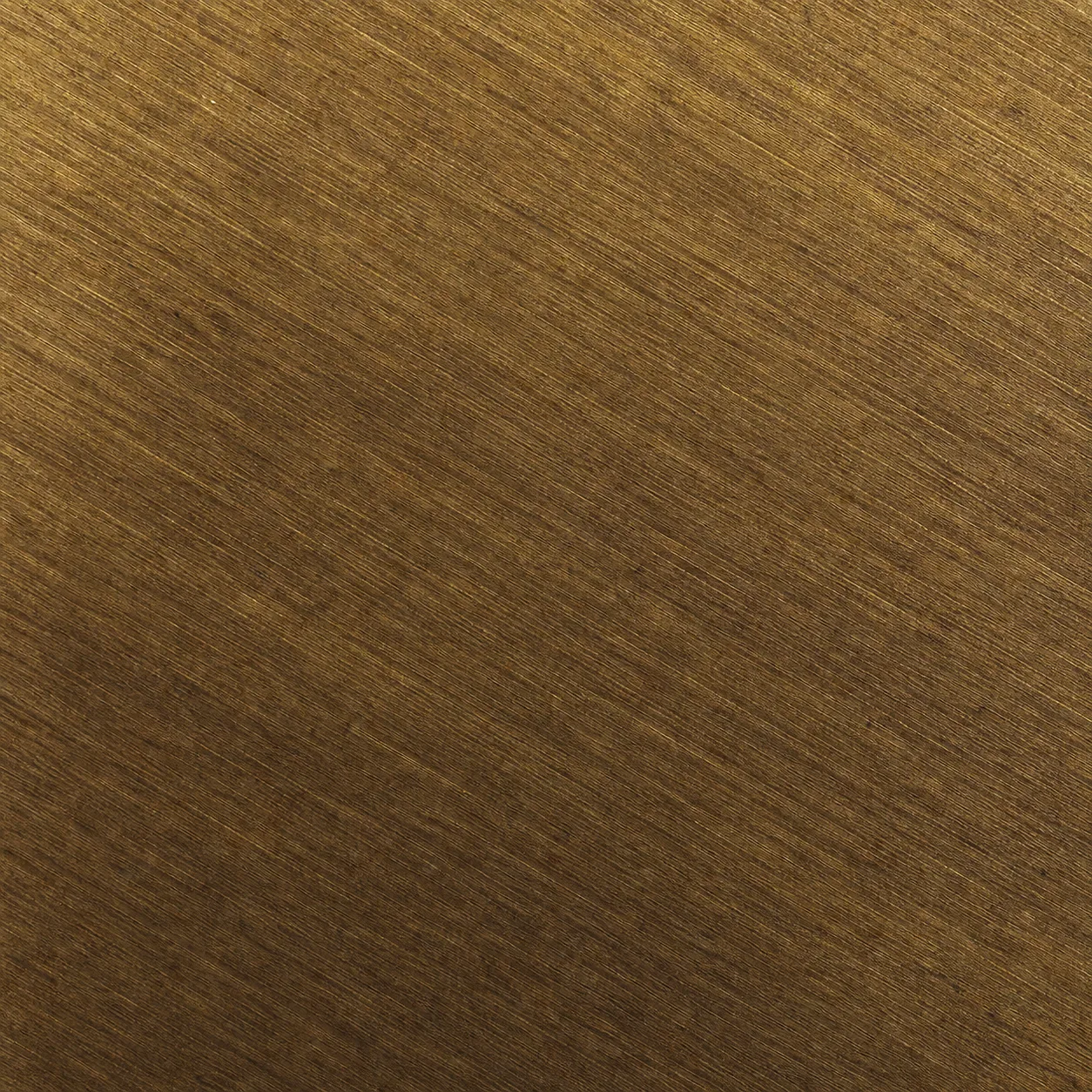
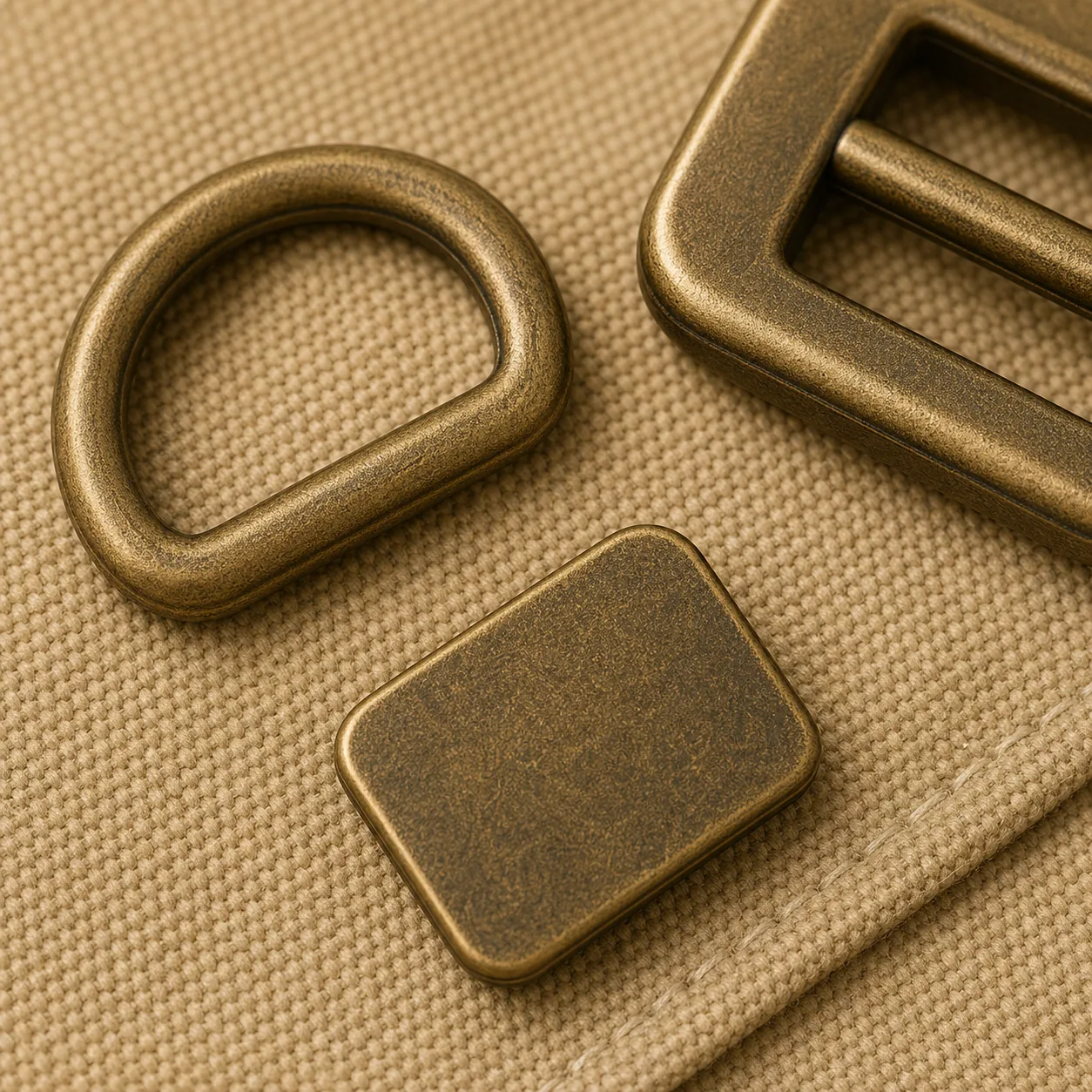
The base tone comes from plating and is the most controllable step. Darkening fills recesses and depends on chemistry and time. Relieving removes darkening from raised areas, mechanically or chemically, and depends on how it is applied.
Each step adds a variable, and the relieving step adds the most because it interacts with the part shape. Three steps with three variabilities is why this finish drifts more than a single-layer plated tone.
Geometry decides the result
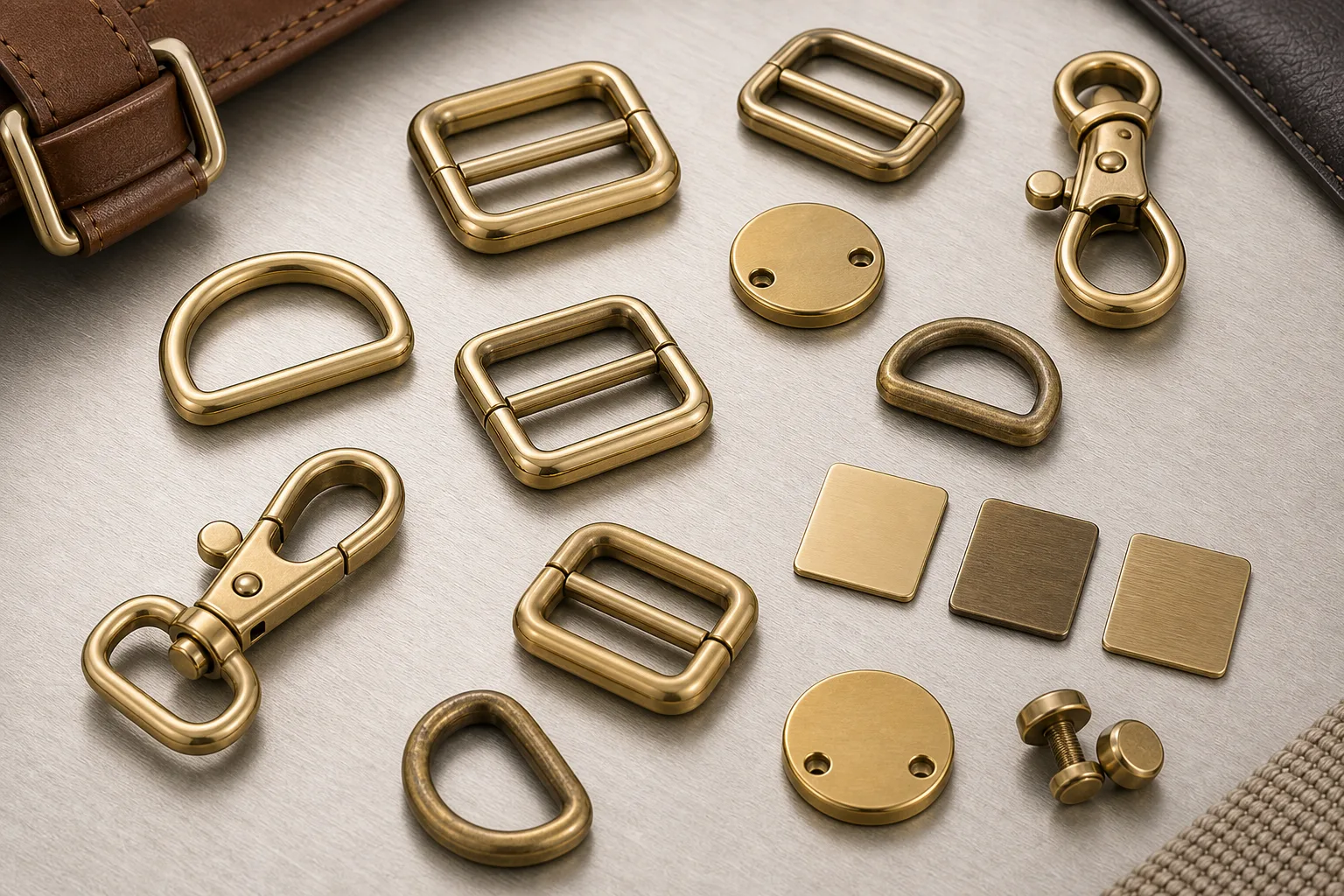
The effect depends on there being relief to darken and raised areas to relieve. A deeply cast buckle produces strong contrast; a flat stamped plate produces very little and can look patchy rather than antiqued.
On a set that mixes constructions, the same process gives different-looking results. This is not a defect but it must be approved as such, geometry by geometry, or the set will look inconsistent.
Limit samples: the working method
Instead of one approved sample, approve two: the lightest and the darkest acceptable result. Batch acceptance then becomes a judgement about whether a batch falls inside those bounds, which is decidable, rather than whether it matches a single piece, which it never exactly will.
State this explicitly in the purchase terms. It converts a recurring argument into a stated tolerance and is the single most useful thing a buyer can do on this finish.
Lighting and background
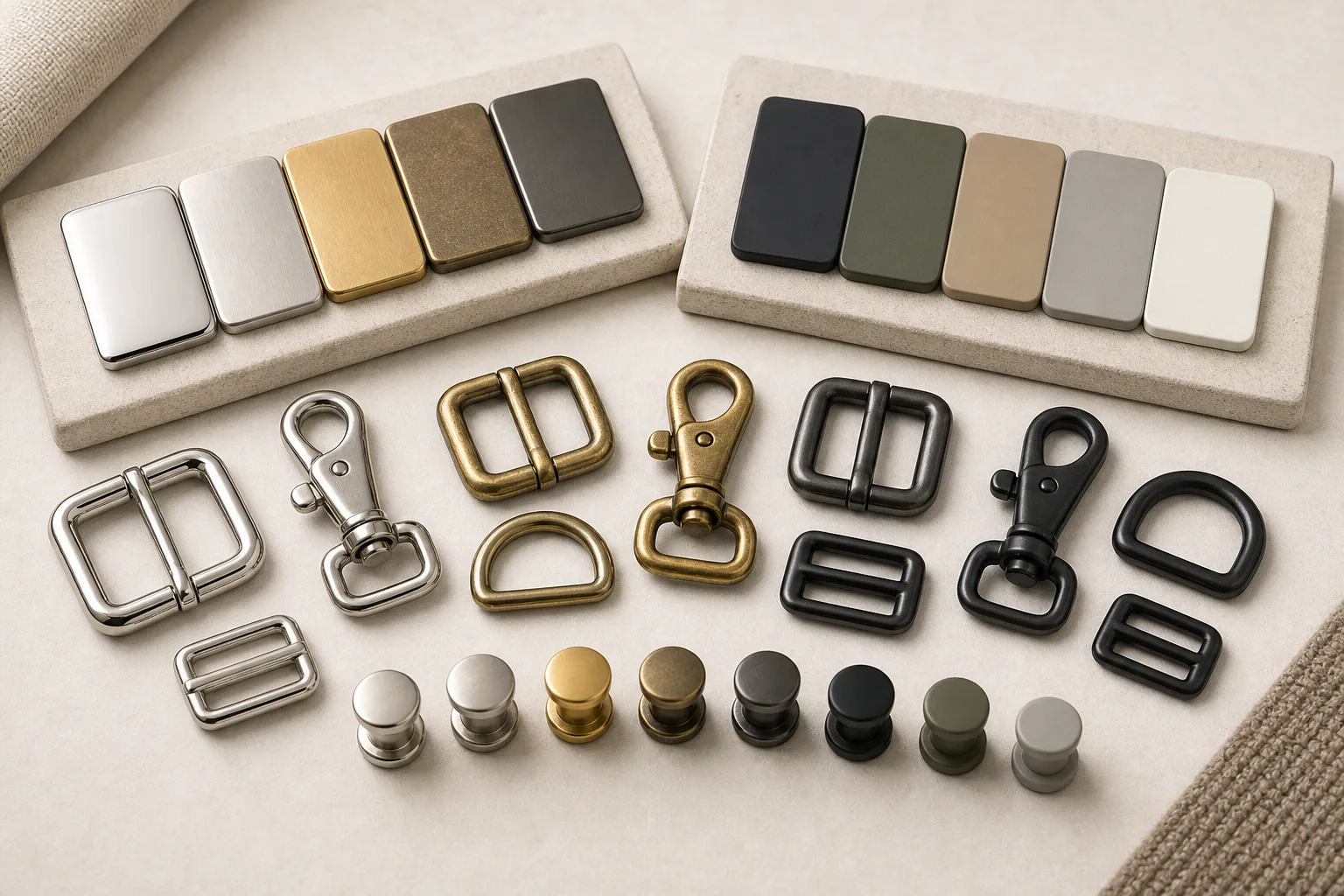
Antique brass shifts noticeably between daylight and warm indoor light, and it reads differently against tan leather, black fabric and denim. Approve under stated lighting and against the actual material.
For product photography, check the samples under the photography setup too — a heavily relieved finish can look flat under diffuse light and dramatic under directional light.
What happens after assembly
On garment trims, the wash acts on a relieved surface differently from an even one, and on denim programmes that interaction is often part of the intended look.
Run the wash trial with the real parts and approve after it. This guide states no durability figures for antique finishes; if longevity matters, agree the test and the standard separately.
A workable approval package
Light and dark limit samples for every geometry in the set, seen together under stated lighting against the actual material, with a written statement that batch acceptance is judged within those limits and that the samples are retained by both sides.
Add the post-assembly process to the package if there is one. That package is what makes the finish manageable across repeat orders.
Antique brass is a controlled irregularity produced in three steps, and it depends on geometry. Specify it with light and dark limit samples for every geometry in the set and state that acceptance is judged within those bounds — that is what makes it decidable.
 Finish Guides
 Finish Guides
 Finish Guides
 Finish Guides
 Finish Guides
 Finish Guides