
Antique silver gets specified when a design wants texture and age without warmth. It behaves like every other antique effect — the result depends on relief, and consistency is the hard part — but it has its own pairing logic, and that is where most of the design decisions sit.
Where it sits among the silvers
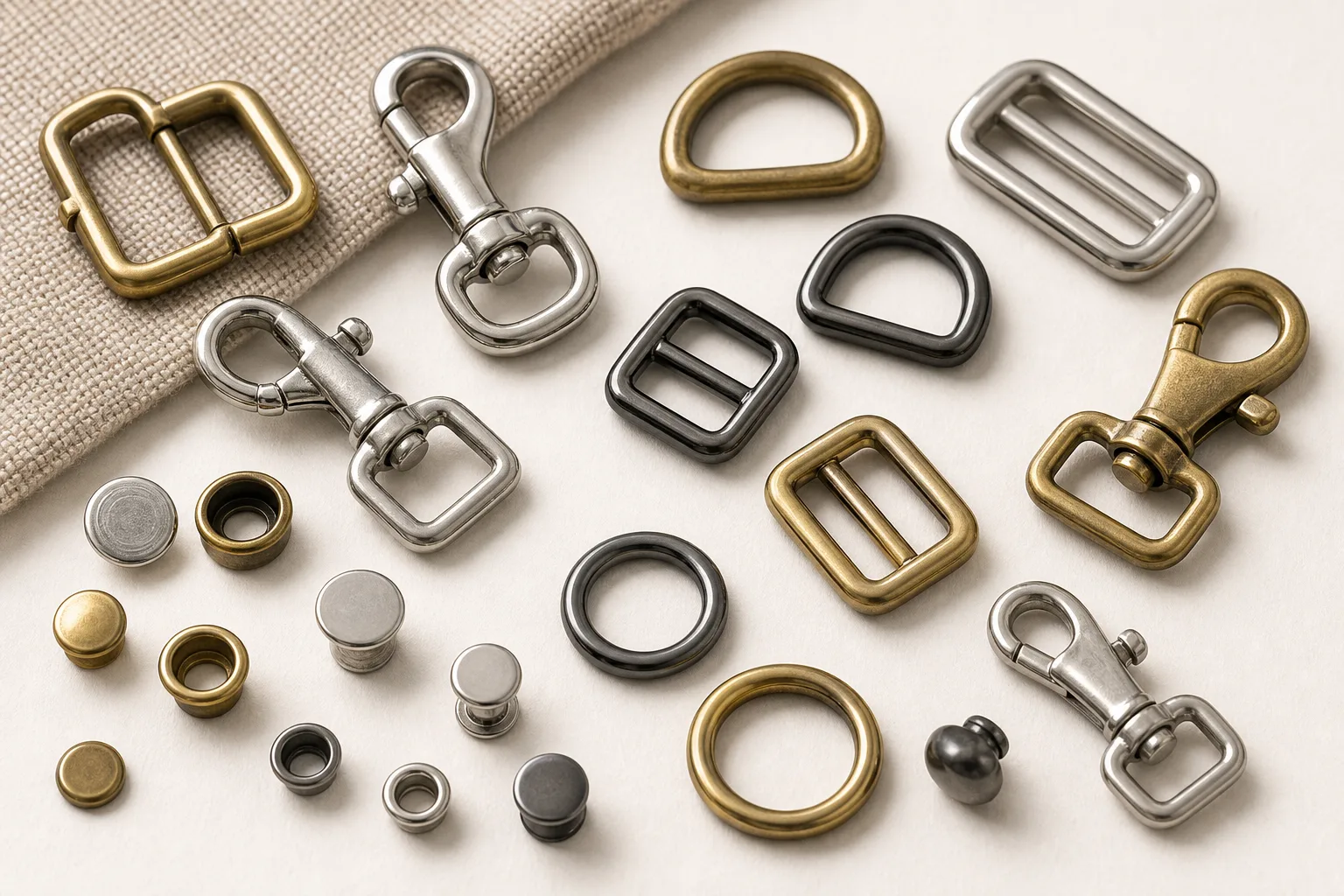
Bright nickel is clean and reflective. Satin nickel is the same tone with the shine taken down. Antique silver is different in kind rather than degree: it is deliberately uneven, with dark recesses and relieved highlights, so it reads as a worked surface rather than a uniform one.
That distinction matters in an inquiry, because asking for a silver finish could return any of the three. Say antique silver with relieved highlights if that is what you mean, and back it with a physical sample.
What it pairs with
It sits comfortably with grey, black and cool-toned leathers, with denim, and with technical fabrics. Against warm tan leather it can read cold in a way that antique brass does not, which is sometimes a deliberate contrast and sometimes an unintended mismatch.
Bring the actual material to the finish decision. A cool antique against a warm hide is a judgement call, and it is much cheaper to make it at sample stage than after bulk.
Geometry decides how much effect you get
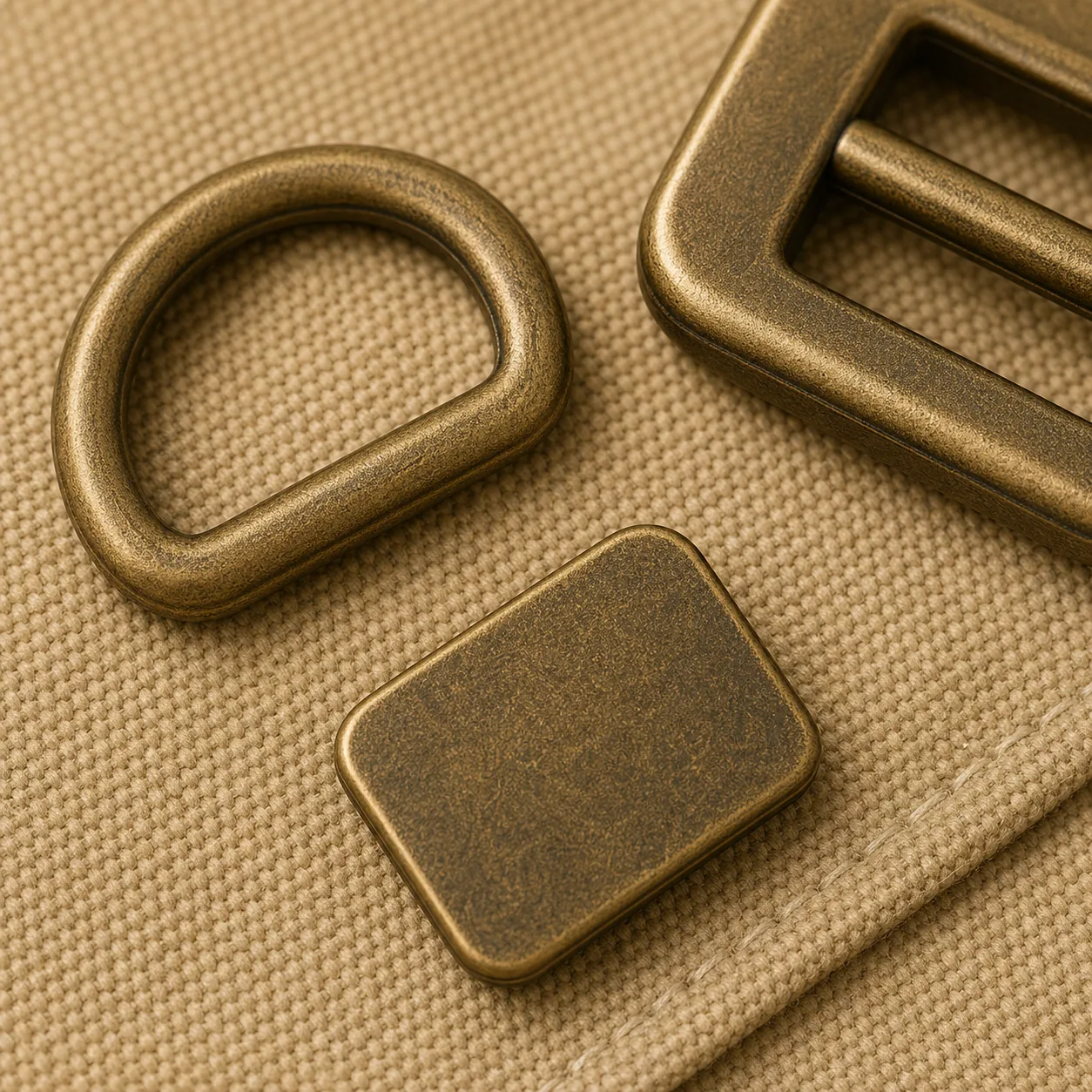
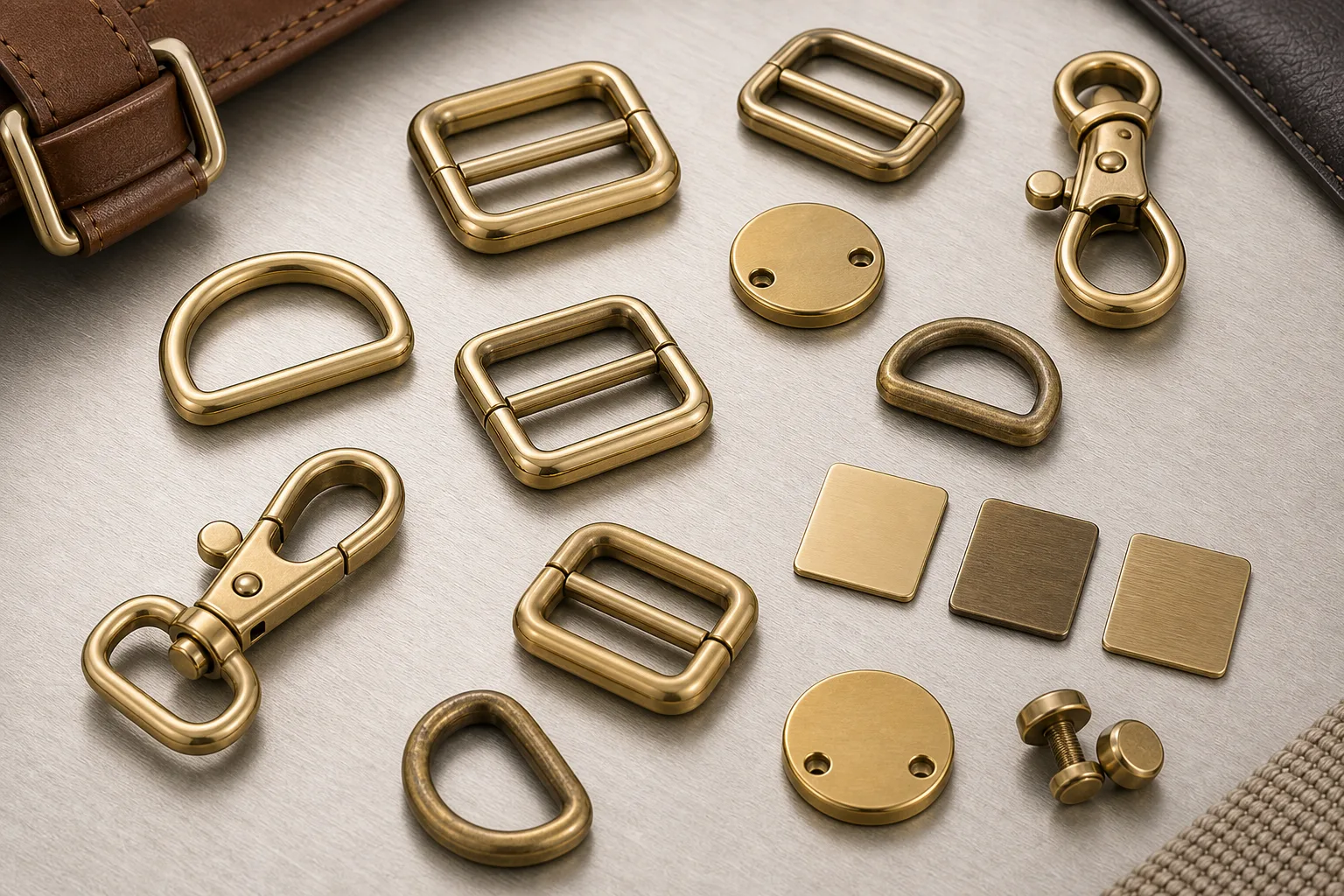
The antique effect needs relief to work against: darkening fills recesses and relieving cuts back the raised areas. A deeply cast buckle shows strong contrast. A flat stamped plate has almost nothing for the effect to grip, and the result often looks patchy rather than aged.
On a set mixing cast and stamped parts, the same process gives visibly different results. Approve every geometry rather than approving one part and assuming the rest follow.
Consistency and limit samples
Because the finish is a deliberate irregularity, it cannot be matched against a single target sample — the honest specification is a range. Approve a light limit and a dark limit for each geometry, and state in the purchase terms that batch acceptance is judged within those bounds.
This converts a recurring argument into a stated tolerance. It is the single most useful thing a buyer can do on any antique finish.
How it wears
Antique finishes hide handling better than even ones, because the surface is already varied. Continued use tends to extend the existing effect rather than create an obvious mark, which is part of why they suit products used hard.
This guide states no durability figures, because they depend on the plating stack, the relieving depth and the handling. If longevity is part of the decision, agree the test and the standard separately.
What to send with an inquiry
A physical tone reference, every part in the set with its construction, the leather or fabric it sits against, the intended approval lighting, acceptable variation as limit samples, the process after assembly, and quantity with repeat pattern.
If a previous run was acceptable, send a part from it. On antique finishes a physical reference from real production beats any description.
Antique silver is the cool member of the antique family: worked, uneven, and dependent on relief. Specify it with physical references rather than a colour name, approve limit samples per geometry, and bring the actual leather or fabric to the decision.
 Finish Guides
 Finish Guides
 Finish Guides
 Finish Guides
 Finish Guides
 Finish Guides