
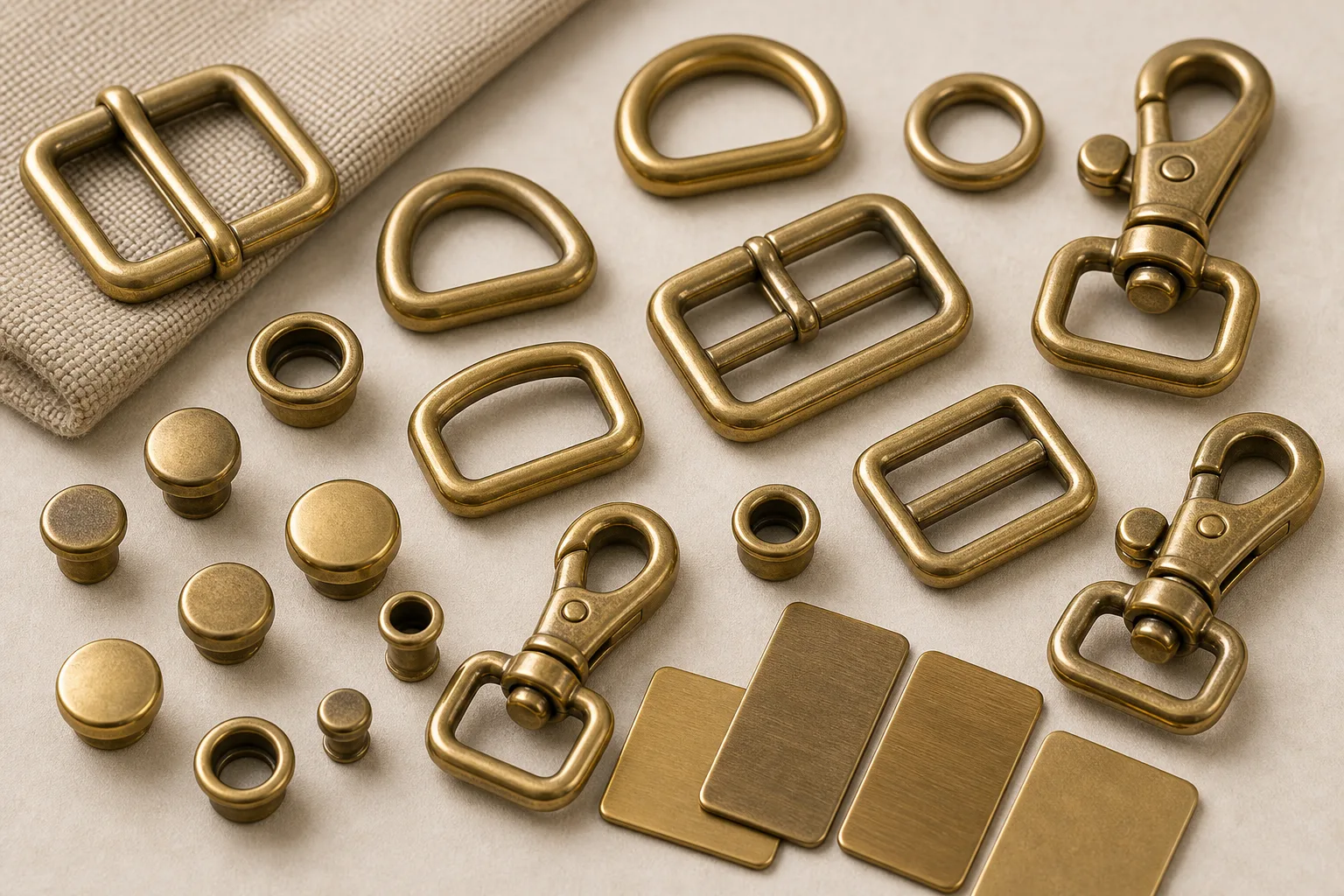
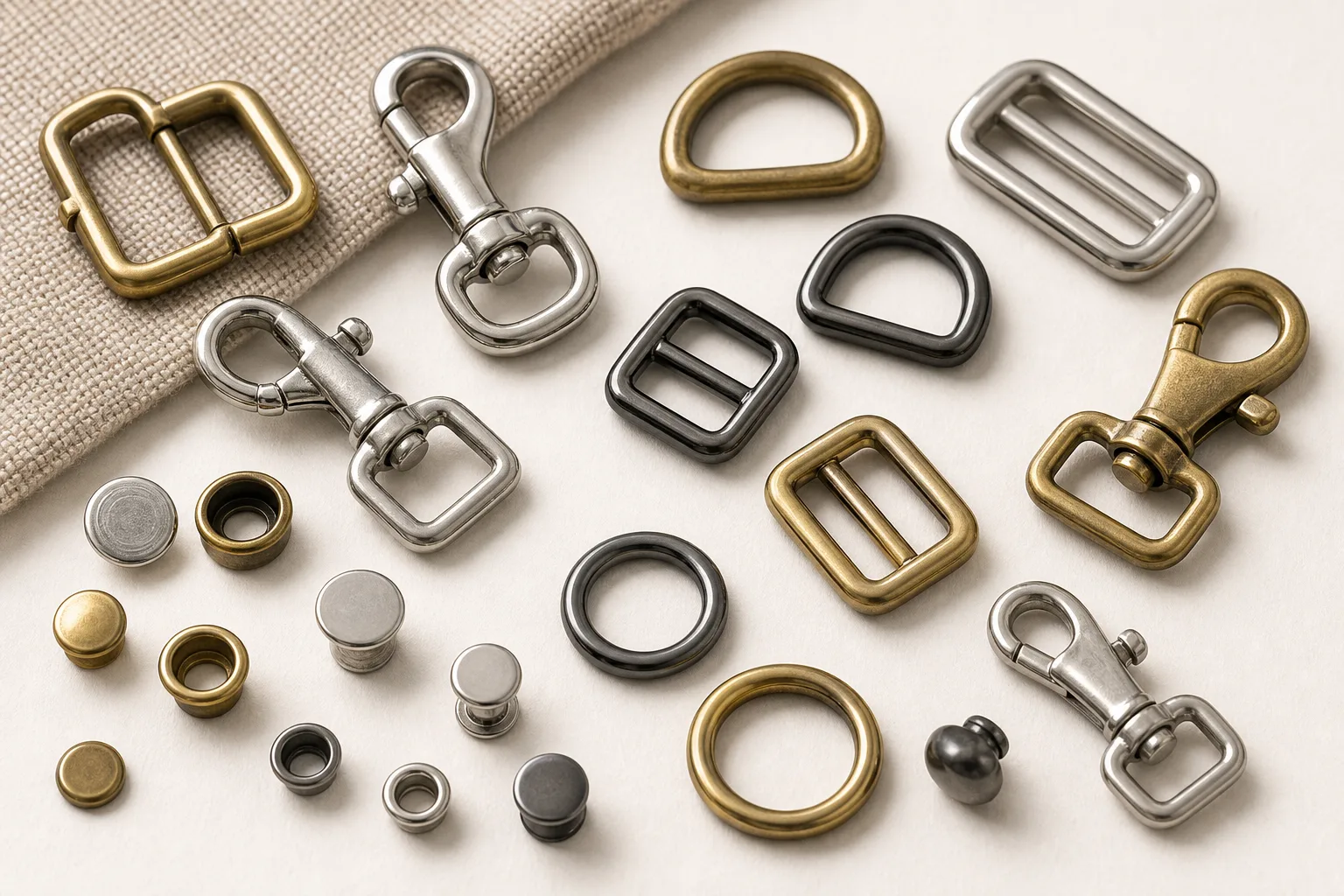
Brass carries a reputation as the quality option, which is not wrong but is not the useful part. What brass actually gives you is a warm base tone that shows through thin or worn finishes, and a wrought forming route that handles thin sections well. Those are the two reasons to specify it.
The base tone, and when it matters
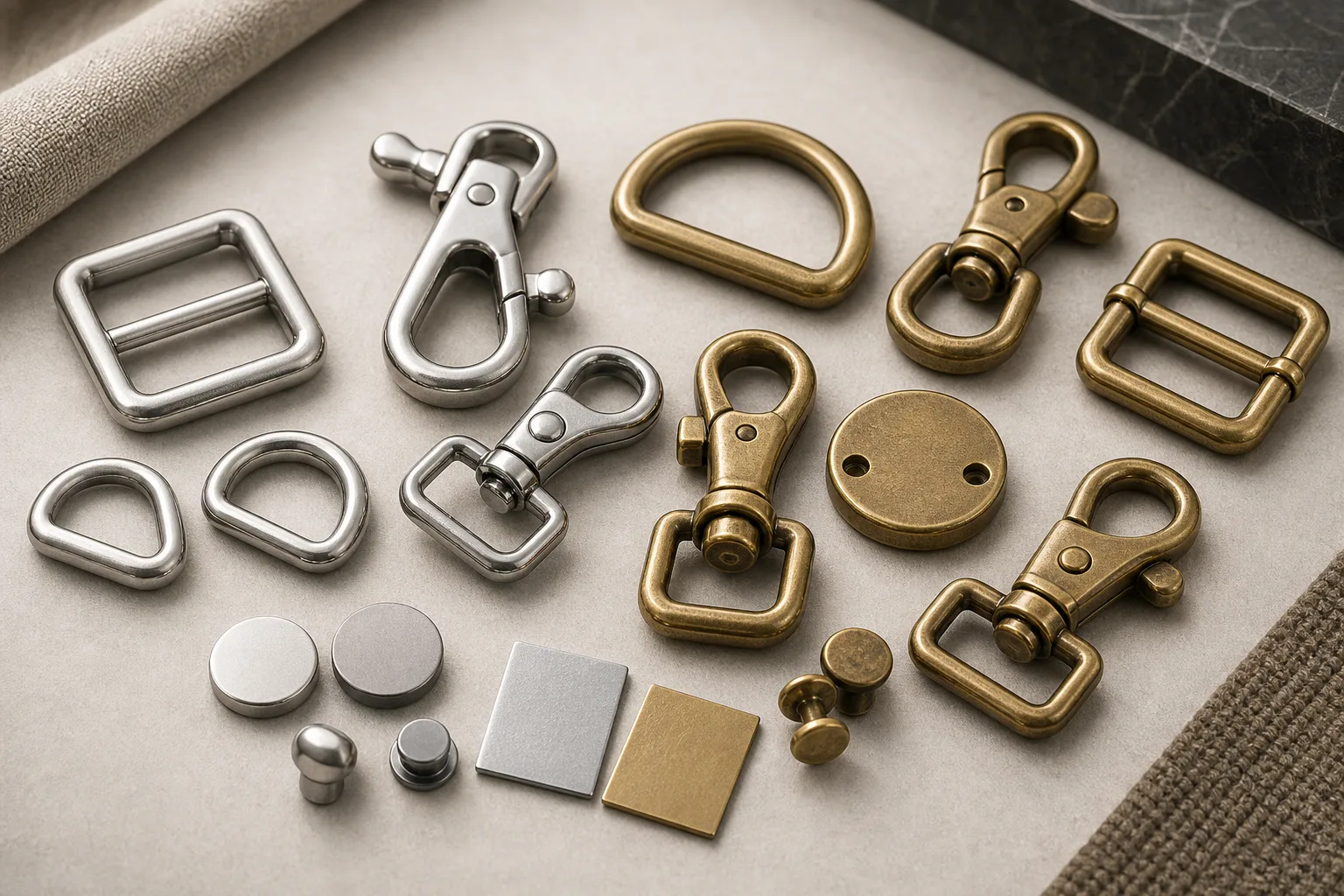
Under plating, the base metal is invisible. Brass earns its place in two situations: when the part is left unplated or lightly finished so the warm tone is the finish, and when an antique or worn-back effect deliberately exposes the base.
On a fully plated part in a colour unrelated to brass, the base tone contributes nothing visible on day one. If a supplier proposes brass for such a part, ask what the reason is — it may be section thickness rather than appearance.
Wrought forming and thin sections
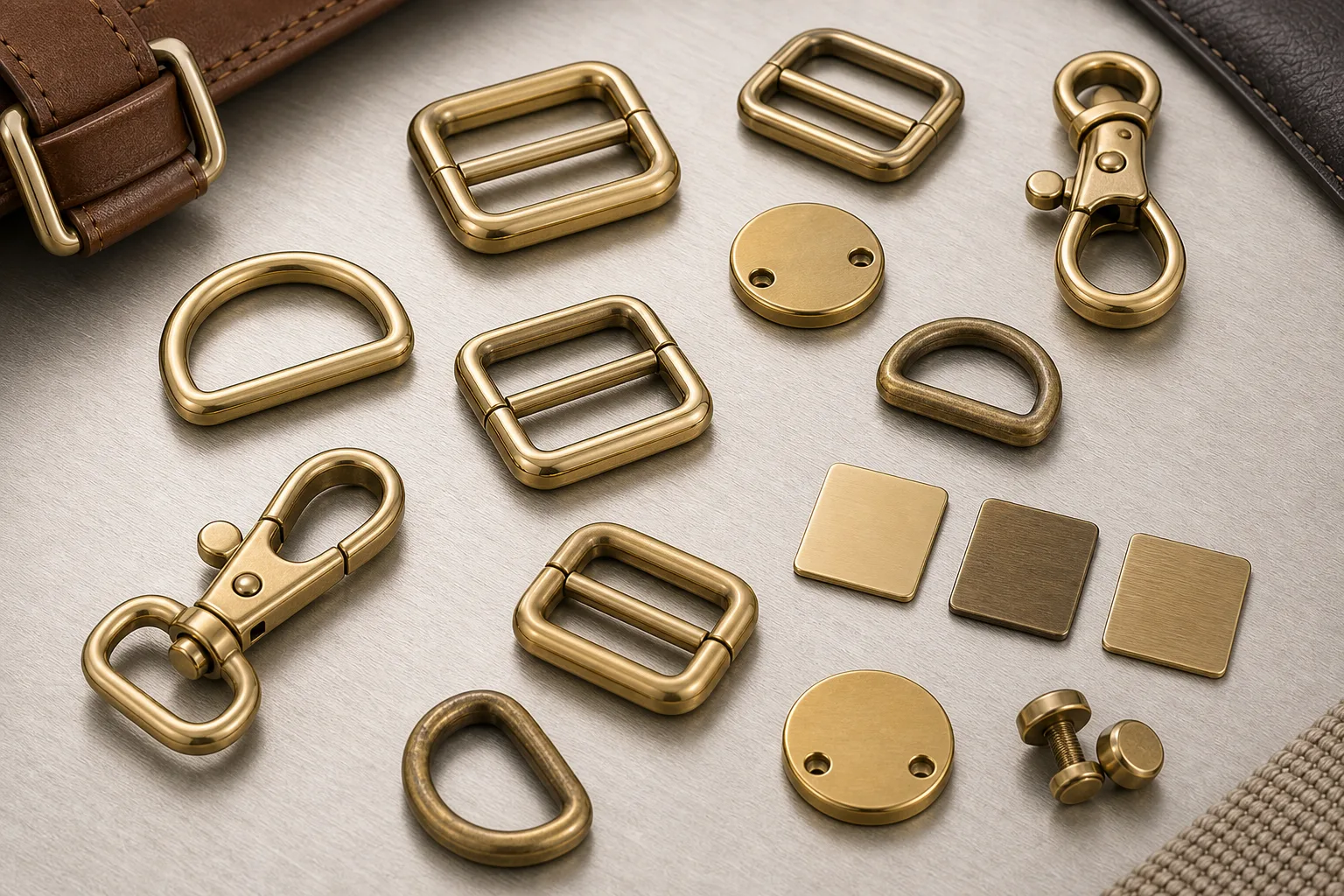
Brass hardware is usually stamped from sheet, machined from bar, or turned. Those routes give strength in a thinner section than casting comfortably reaches, which is why flat rings, thin plates and turned components often come in brass.
The limitation is three-dimensional form. Sculpted shapes with undercuts and varying section are casting territory; asking for them in wrought brass usually means casting brass, at which point the comparison with zinc changes shape.
Weight and feel
Brass is denser than zinc alloy, so a brass part of the same dimensions is heavier. On hardware where perceived quality is part of the product, that weight is often wanted. On a lightweight garment or a technical pack it is a cost.
Because brass parts are frequently thinner in section, the felt result is not always heavier in practice. Compare physical samples rather than reasoning from density alone.
Commercial features to expect
Brass raw material tracks copper prices, so quotations have a shorter validity than for some other materials and can move between seasons. Ask how long a quotation holds and what triggers a re-quote.
Machined brass parts carry machining time per piece, so the cost curve with quantity behaves differently from a cast part. As always, ask for tooling and piece cost separately and compare at your real quantity.
Finishes on brass
Brass takes the standard plated palette, and it also supports unplated and lightly lacquered finishes where the base metal is the look. Unlacquered brass changes appearance with handling over time, which some designs want and others do not — that should be a stated intention, not a surprise.
This guide does not state tarnish rates or corrosion figures, because those depend on the alloy, any lacquer, the environment and the test. If an unlacquered brass look is wanted, discuss how it is expected to age and agree what the approved sample represents.
What to send with an inquiry
Part geometry, section thickness, whether the base metal is visible in the intended design, plated or unplated intent, weight expectations, quantity, quotation validity requirements, and any reference sample.
If the design depends on the brass ageing, say so explicitly and ask what the supplier can commit to on appearance at delivery versus after use.
Specify brass for its warm base tone where that tone will be visible, and for wrought forming where sections must be thin. On a fully plated sculpted part, the reasons to prefer it are weaker than its reputation suggests.
 Comparison Guides
 Material Guides
 Material Guides
 Finish Guides
 Application Guides
 Buyer Guides