
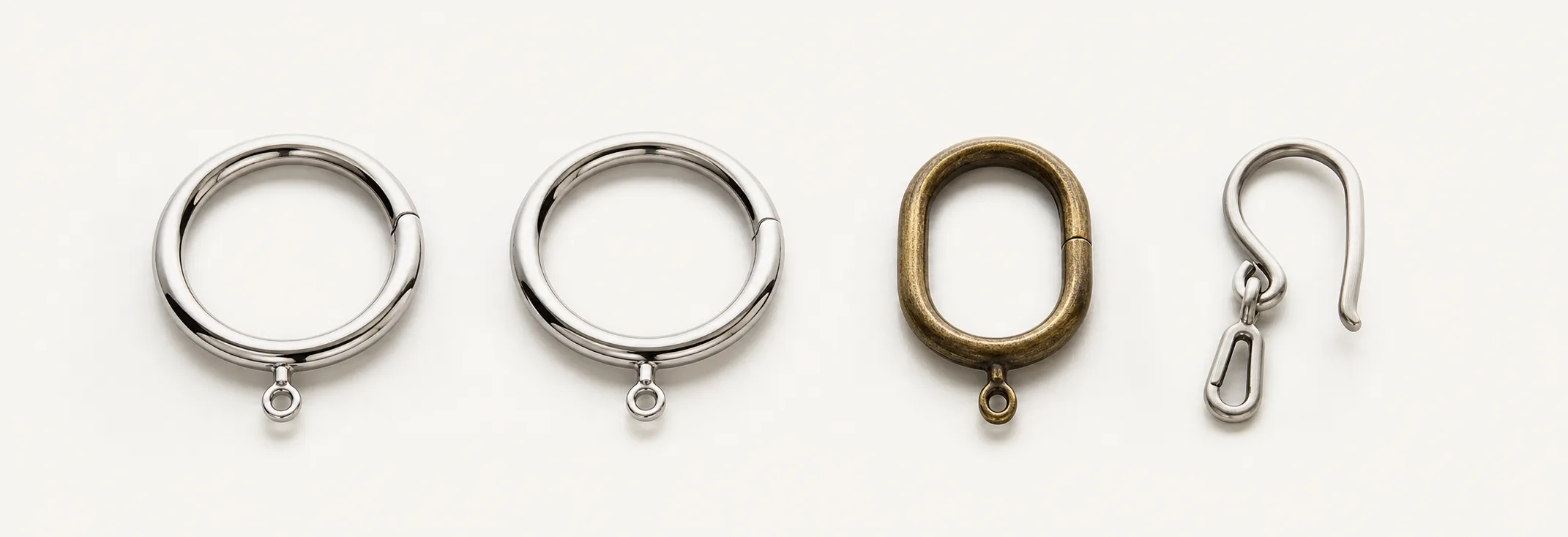

Home textile hardware is judged on how the finished curtain hangs, which is a function of dimensions that are decided before any fabric is cut. Getting the pole diameter, the spacing and the made-up heading thickness right accounts for most of the outcome.
The pole sets the inner diameter
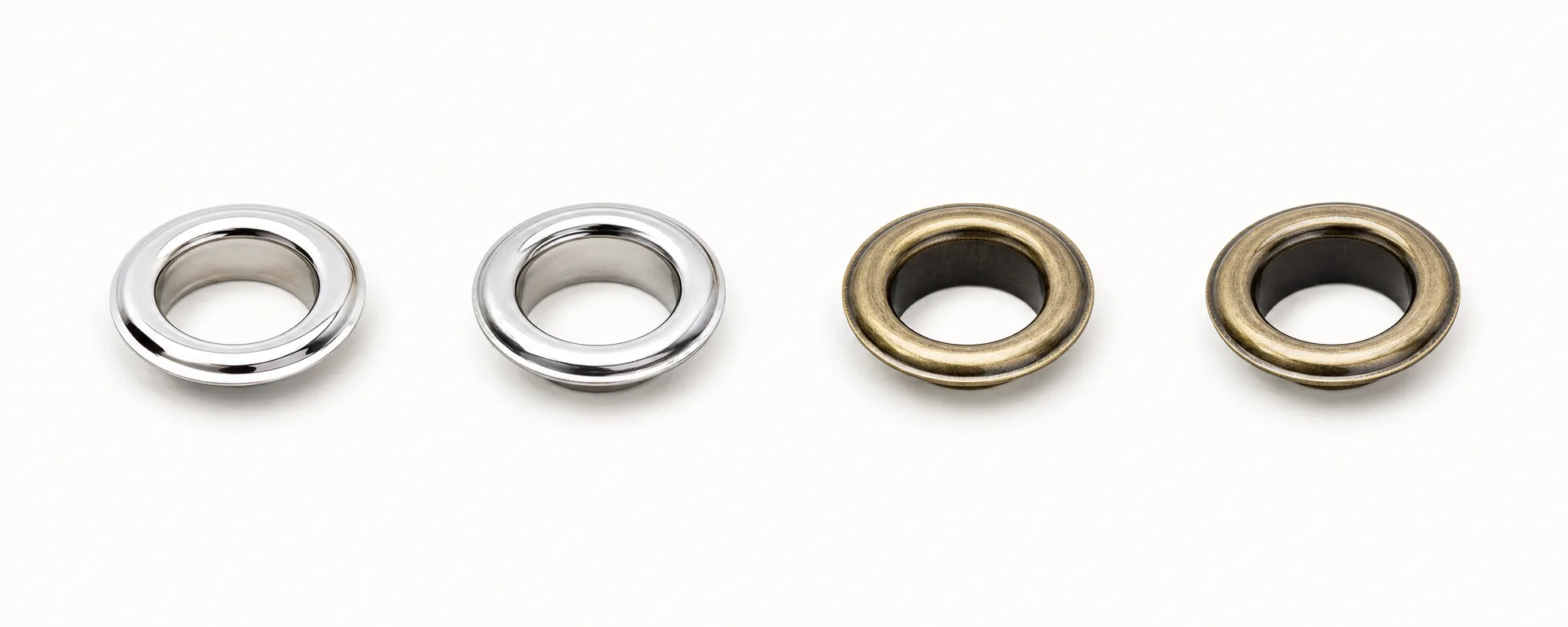
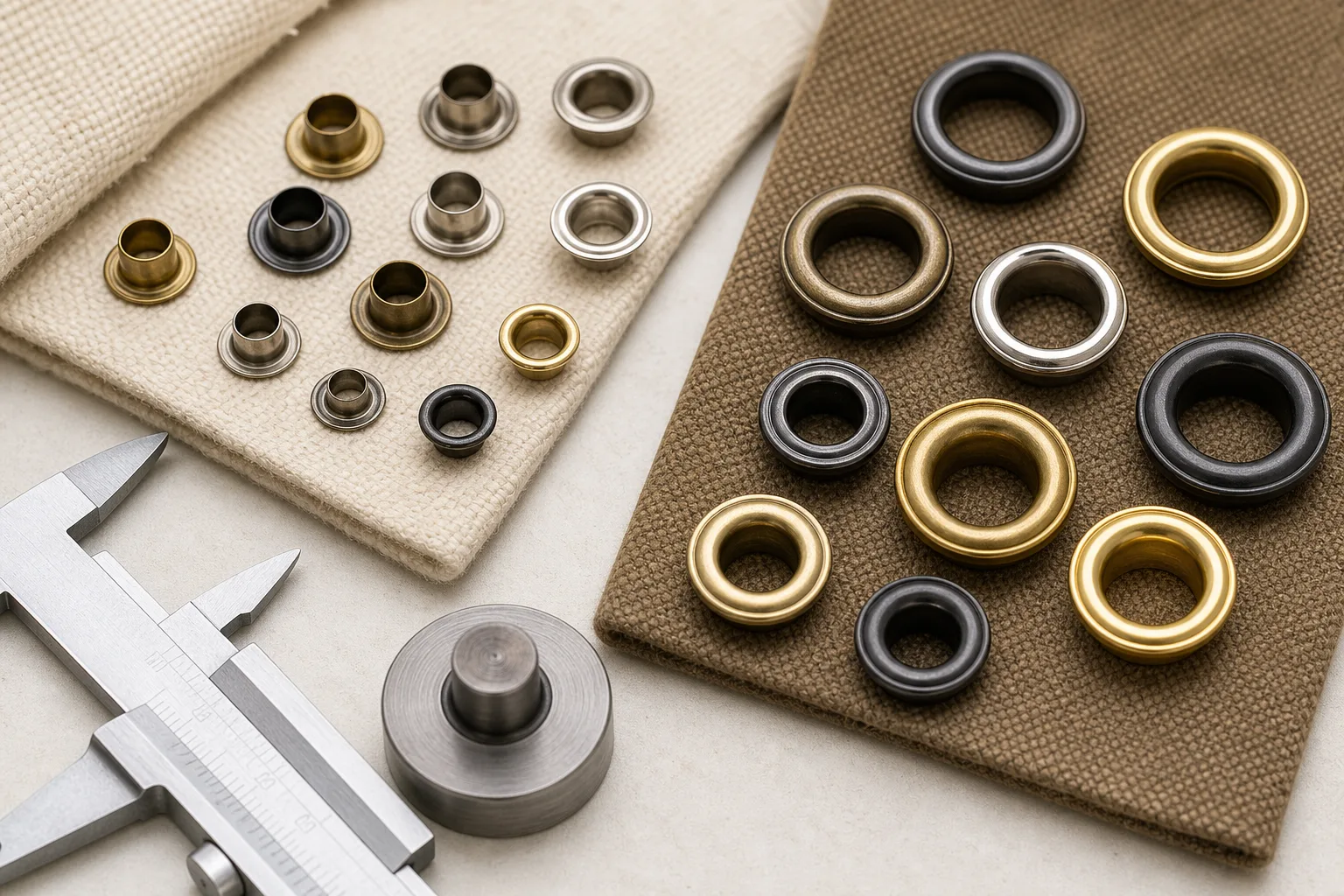
An eyelet has to pass over the pole and slide freely along it, so the inner diameter is chosen against the pole diameter with clearance, not against the fabric or the eyelet’s visual size.
Confirm the pole or track the curtain will hang on, including any finial or bracket the eyelets must pass. A diameter that fits the pole but not the bracket is a common and avoidable problem.
Spacing decides how it hangs
The interval between eyelets, together with the panel width, produces the fold pattern. Wider spacing gives deeper, fewer folds; closer spacing gives a tighter, more regular wave.
Because the appearance the customer is buying is the fold pattern, spacing belongs in the specification alongside the eyelet itself. It also has to divide evenly into the finished panel width, which is a calculation worth doing before ordering.
The heading is thicker than the fabric
The eyelet is set through a made-up heading: face fabric, turn-back, buckram or heading tape, and often lining and interlining. That stack is considerably thicker than the fabric alone.
Take the measurement from a made-up heading sample. Specifying from the fabric weight is the most frequent cause of an eyelet that will not close properly or that closes without holding.
Rings, hooks and track systems
Not every home textile heading uses eyelets. Rings, gliders and hook systems each have their own compatibility requirements with the track or pole, and they are not interchangeable between systems.
State the system by name where you know it. Where you do not, describe the track profile and how the curtain is intended to be drawn.
Finish approval indoors
Curtain hardware is seen in daylight and in domestic lighting, against a large area of fabric, often for years. Tone consistency across a long row of eyelets matters, and the finish is judged against the fabric rather than on its own.
Approve against the actual fabric under both daylight and typical room lighting. A tone that reads correctly in one and not the other will be noticed in the room, not in the sample room.
What to specify
Pole or track type and diameter including brackets and finials, eyelet inner diameter, spacing interval and count per panel, finished panel width and drop, fabric with lining and interlining, made-up heading thickness, ring or hook type where used, finish approved against the fabric, and quantity per panel size.
A made-up heading sample settles the thickness question and the appearance question at once, and is worth producing before the main order.
Curtain hardware is a dimensional problem first: the pole sets the inner diameter, the spacing sets the fold pattern, and the made-up heading sets the closing thickness. Settle those three from real measurements and the finish decision becomes straightforward.
 Buyer Guides
 Application Guides
 Buyer Guides
 Comparison Guides
 Application Guides
 Buyer Guides