
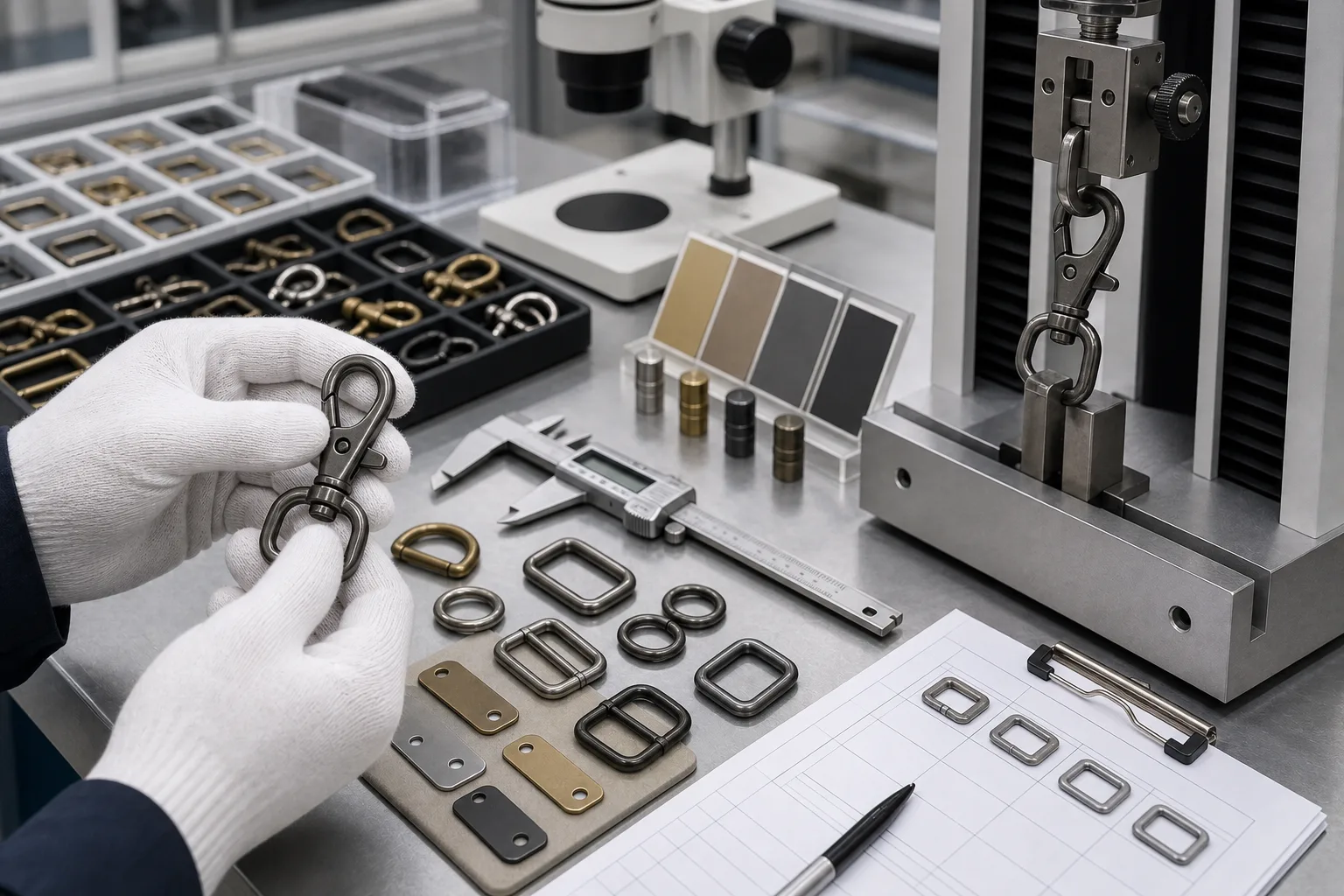
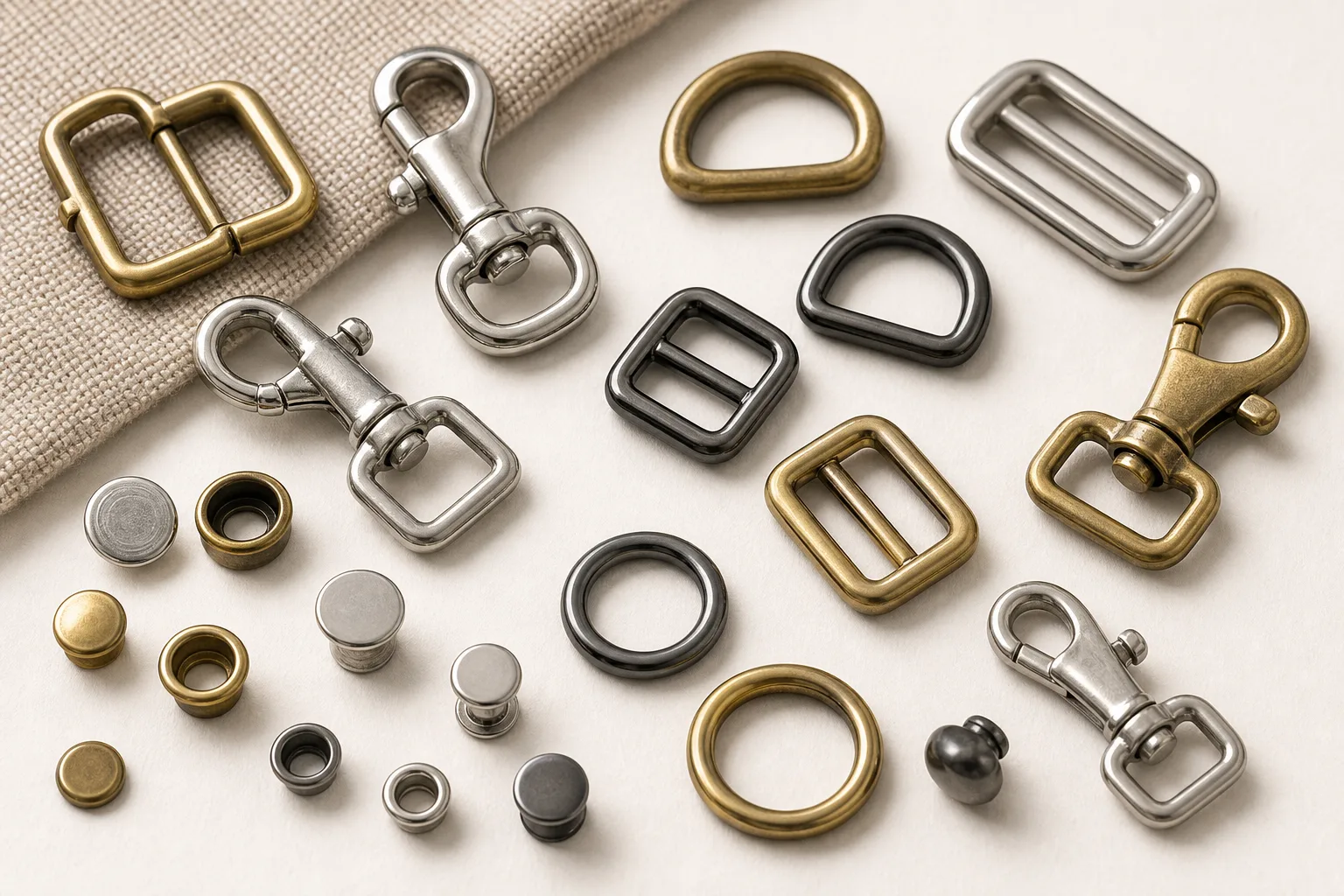
A hardware part and a piece of leather can each be perfectly acceptable and still be a bad combination. The interactions are specific to the actual materials, which is why this is a trial question rather than a specification question — and why the trial has to use the real leather and the real finish.
Staining from corrosion products
When a coating is breached and corrosion begins, the products can migrate onto adjacent material. On pale fabric this is highly visible and effectively unrepairable, which is why coating-dependent materials are risky against light-coloured textiles.
The check is straightforward: expose the assembled combination to the humidity and handling it will realistically see, and look at the fabric rather than only at the part.
Leather tannage and metal
Leathers are tanned by different processes, and some tannages leave residues that behave differently against metal, particularly in humid conditions. A hardware finish that is stable against one leather can discolour against another.
Because this depends on the specific leather rather than on leather in general, the only reliable check is a trial with the actual hide and the actual finished part. Ask the leather supplier and the hardware supplier both — each knows part of the picture.
Abrasion in both directions
Hardware abrades the material it rubs against, and the material abrades the hardware finish. A strap adjuster moving on webbing wears both; a metal corner protector rubs the surface it is meant to protect.
Edge treatment on the hardware matters here: a rolled or radiused edge does far less damage than a sharp stamped one. Ask how edges are finished, particularly on stamped parts.
Colour transfer and dye migration
Dyes can move from textile onto light hardware finishes, and coloured coatings can mark light fabric under pressure and heat. Both are more likely with new, deeply dyed materials and in humid conditions.
The relevant trial is contact under pressure over time — the hardware pressed against the material as it would be in packing or in a closed bag — rather than a brief rub test.
What the garment or bag process adds
Washing, dyeing and pressing after assembly put hardware and material through chemistry and heat together, and interactions that never appear in normal use can appear there.
This is why the wash trial should include the hardware and be assessed on the finished assembly. This guide states no compatibility results for any combination, because they depend on the specific materials, finishes and process.
The trials worth running
Assembled humidity exposure with pale fabric present. Contact under pressure for colour transfer. A wash or finishing trial if the product goes through one. Abrasion of the actual pairing rather than the part alone.
Agree who runs each trial, what is being looked for, and what counts as a pass, before bulk. That agreement is more valuable than any general compatibility statement.
Compatibility is a property of the specific pairing, not of either material alone. Staining, tannage reactions, two-way abrasion and dye transfer are all realistic, and all are caught by trials on the actual materials with the actual process — not predicted from specifications.
 Quality Guides
 Comparison Guides
 Buyer Guides
 Comparison Guides
 Quality Guides
 Buyer Guides
 Material Guides
 Material Guides