
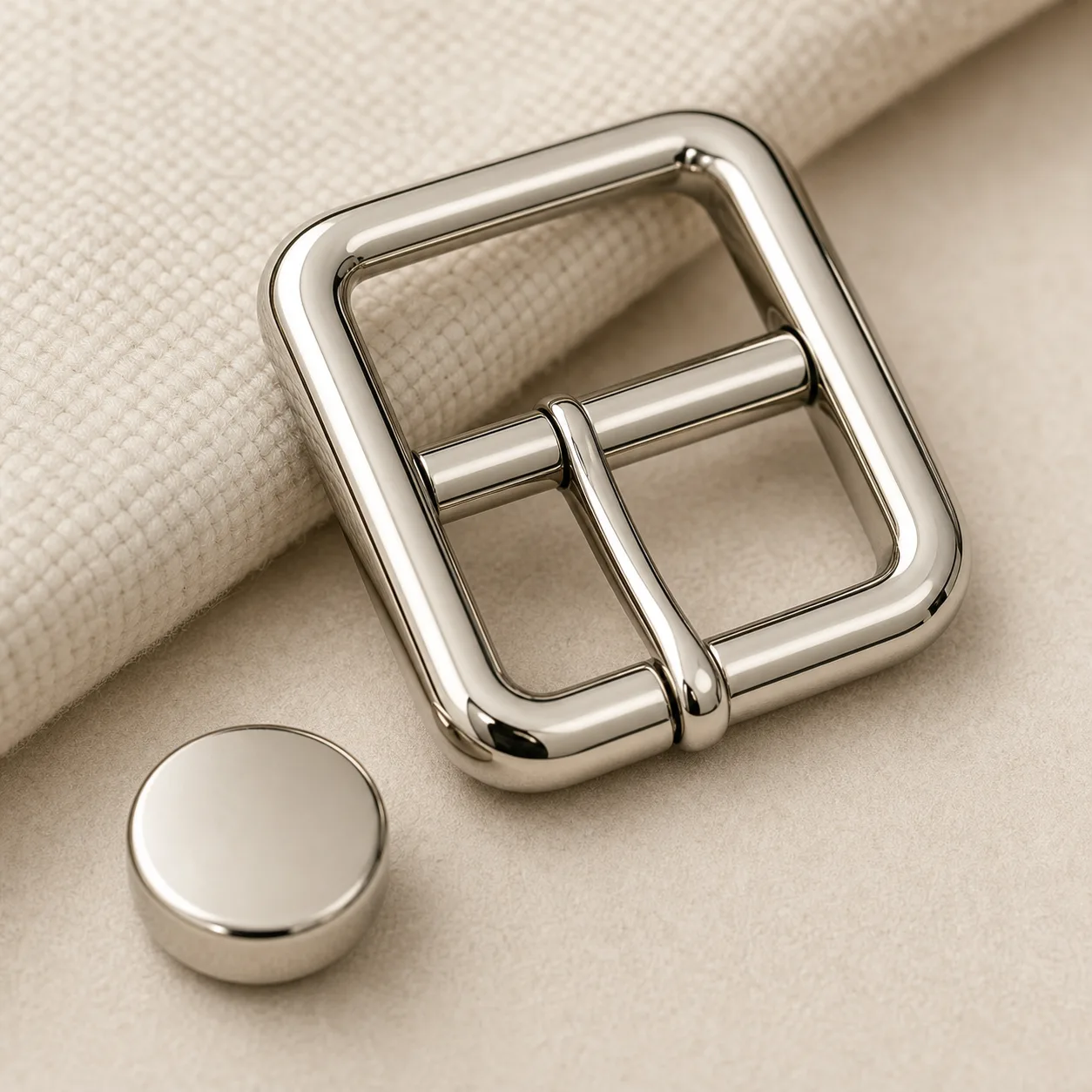
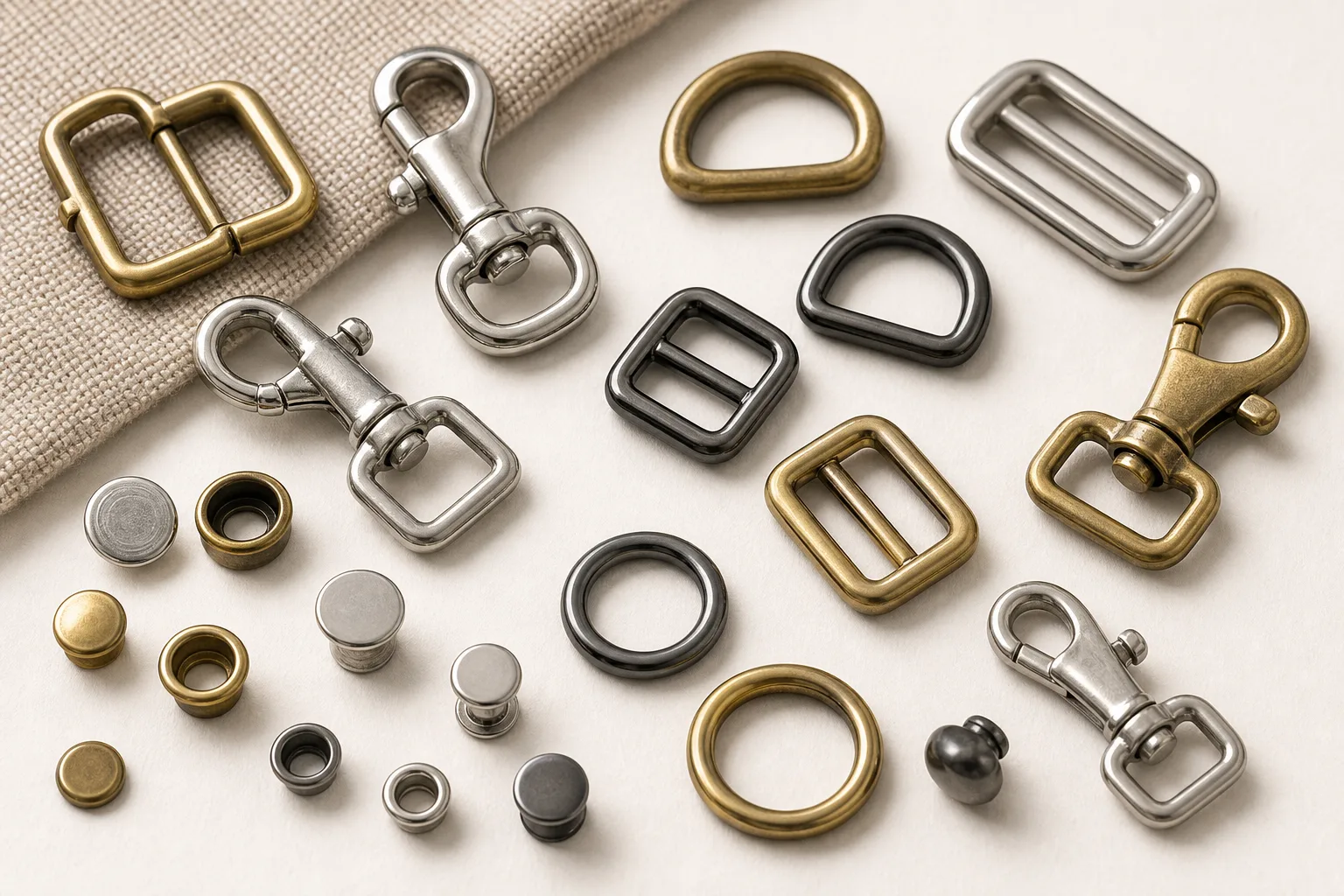
Nickel is the default, which means most buyers never think about it until a specific requirement forces the question. This guide covers the questions that actually arise in sourcing rather than restating what nickel plating is.
What nickel gives you
A bright, clean silver tone that suits most product palettes, a mature supply base with decades of process experience, and a cost position that makes it the default rather than a choice.
It also serves as an underlayer beneath many other finishes, which is why plating stacks often include nickel even when the visible tone is something else.
The nickel-free question
Some markets and buyer standards restrict nickel release from items in prolonged skin contact — the concern applies to trims worn against the body rather than to hardware in general. Whether a particular product falls in scope depends on the market, the product type and how it is worn.
This guide does not state what any regulation requires or what any material complies with. If a nickel-free requirement applies, treat it as a documentation question: ask the supplier what alternatives they offer, what testing exists for the specific finish, and who issued it. Get that in writing before production.
Tone variants
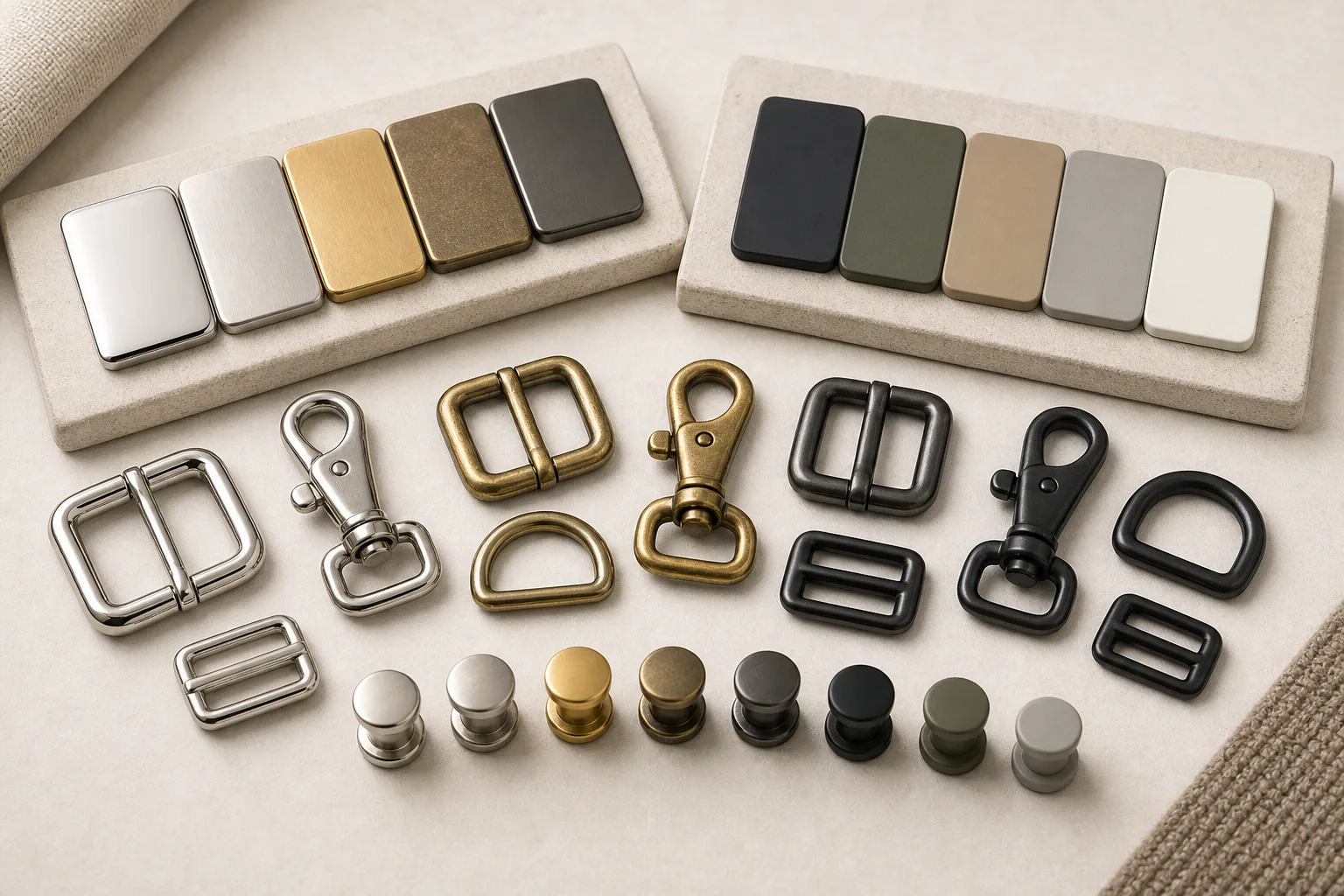
Bright nickel is reflective and clean. Satin nickel is the same tone with lower, even gloss and no grain. Black nickel is a darkened variant that reads closer to gunmetal. Brushed nickel adds a mechanical directional grain.
These are different finishes, not shades of one. Specifying nickel without saying which returns whatever the supplier defaults to, so name the variant and back it with a physical sample.
Consistency across a set
Bright finishes show variation readily because there is no texture to break up reflection. A cast part and a stamped part in the same nickel specification can read differently, since the surface underneath differs.
Approve the whole set together under stated lighting and state that batch matching is against that approved set rather than a colour name.
How it wears
Bright nickel shows scratches more than satin or antique finishes because a polished surface has nothing to disguise them. On hardware that will be handled hard, that is a reason to consider satin or an antiqued alternative.
This guide states no corrosion or abrasion figures, because they depend on the plating stack, the substrate and the test method. Where performance matters, agree the test and the standard and have it run on your part.
What to specify
The variant (bright, satin, black, brushed), a physical approval sample, all parts and their constructions, whether any item is in prolonged skin contact, any applicable buyer or market standard with the documentation required, the process after assembly, and quantity.
If a nickel-free requirement exists, raise it at the start. It changes the finish options and sometimes the base material, and it is expensive to discover after tooling.
Nickel is the default and usually the right one. The two questions worth handling explicitly are which variant you actually mean, and whether any item is in prolonged skin contact — the latter is a documentation conversation to have before production, not after.
 Finish Guides
 Finish Guides
 Finish Guides
 Finish Guides
 Finish Guides
 Application Guides
 Material Guides