
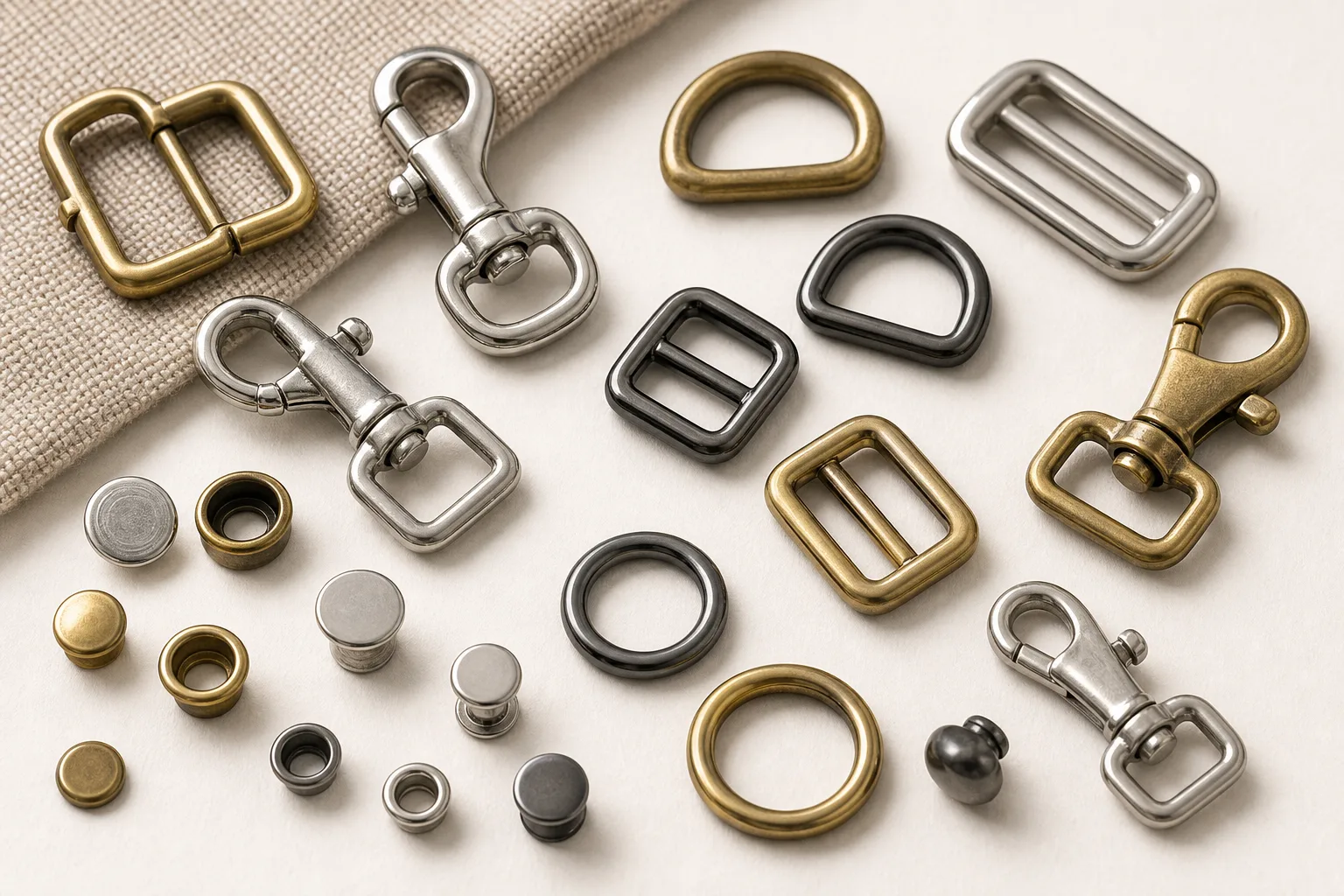
Snap fasteners are sold under a confusing mix of names — press stud, popper, ring snap, spring snap, baby snap — that describe sometimes the socket mechanism and sometimes the back part. The parts themselves are simple. What makes snaps go wrong is almost always the relationship between the back part, the fabric and the press setting, so that is where this guide spends its time.
Four parts, two halves
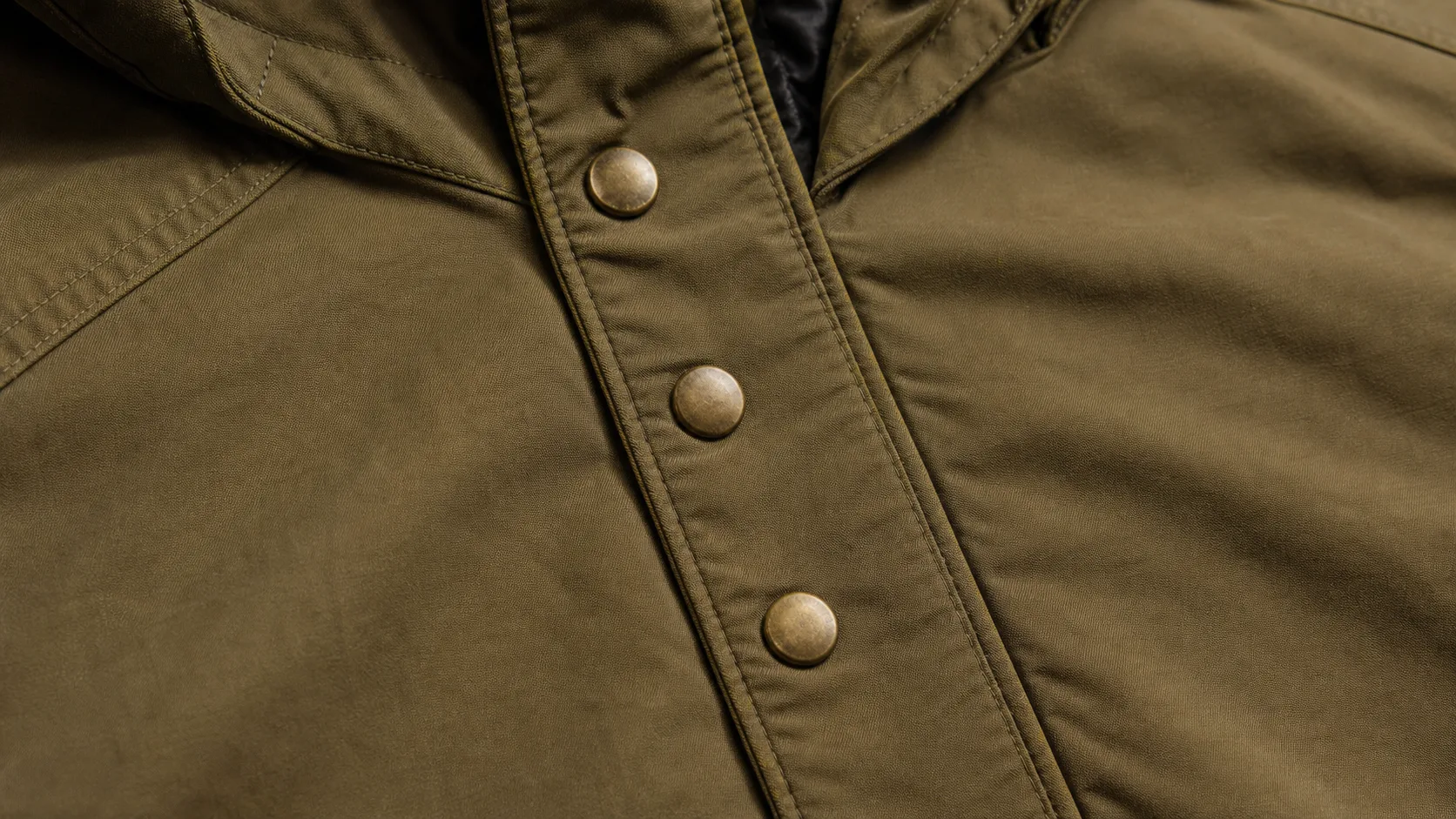
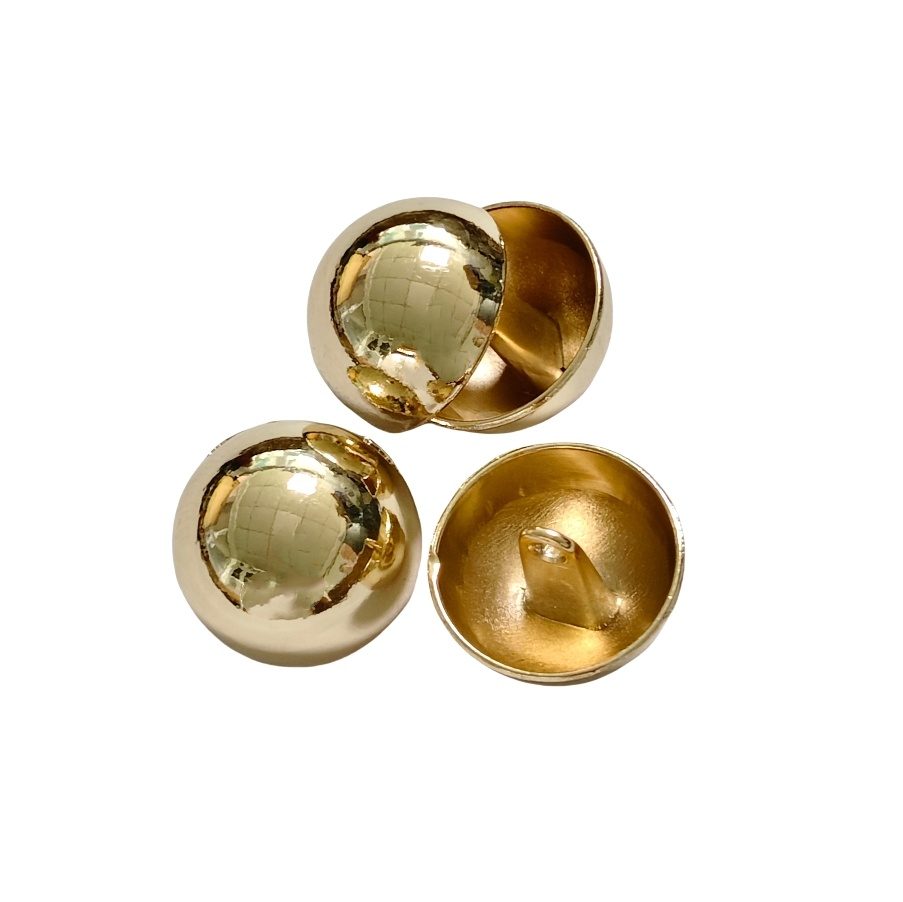
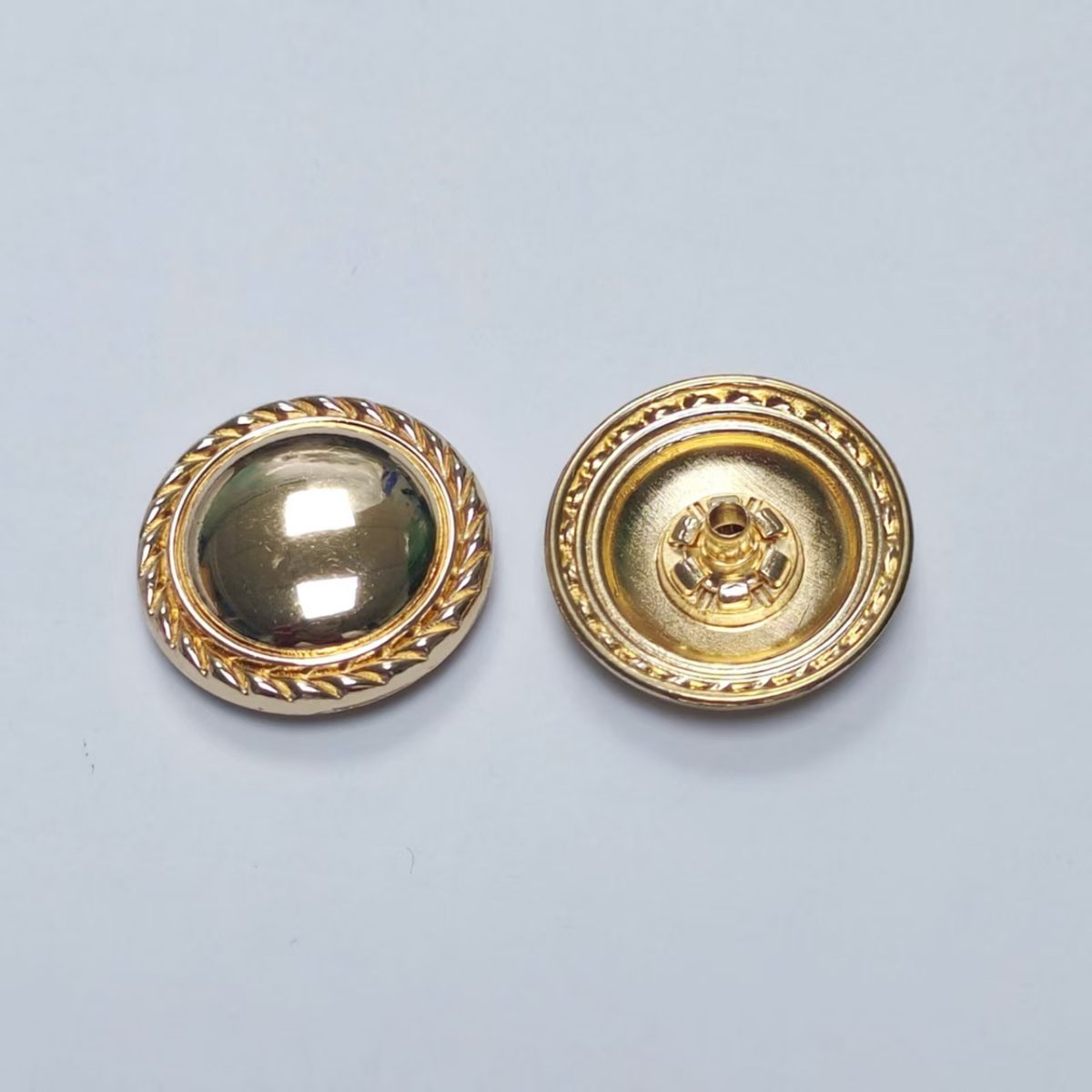
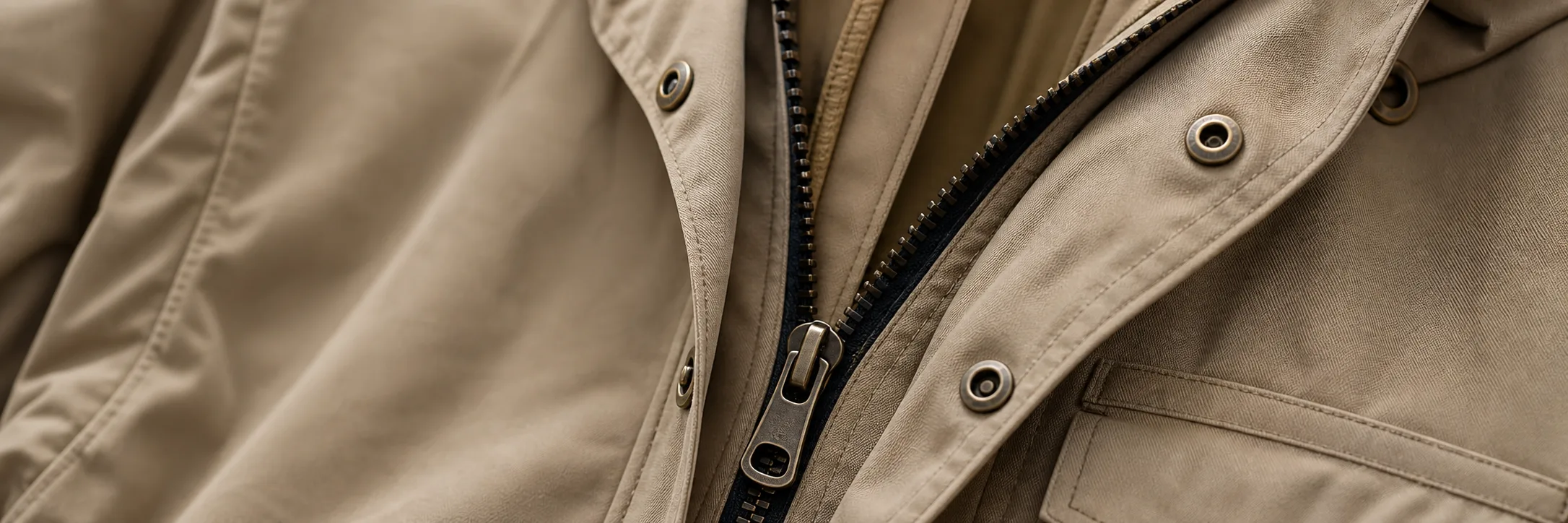
Every snap fastener is four pieces that become two halves. On the outer, visible side sits the cap; behind the fabric it joins a socket, which is the female half that receives and holds. On the other panel a stud sits facing outward, joined behind the fabric by a post or back part. Closing the garment pushes the stud into the socket.
Because each half is two pieces clamped through the fabric, every snap position involves four settings, not two. That matters when you count operations for a garment: eight snaps on a jacket front is thirty-two parts and sixteen press cycles, and each one is a chance for a badly set joint.
Prong snaps
A prong back has several sharp points that pierce the fabric and fold over inside the cap or socket when pressed. No pre-punched hole is needed, which makes these fast to fit and popular on lightweight garments, babywear and shirt plackets.
The prongs are also the limitation. They rely on piercing rather than on a hole, so on very loose weaves they can pull through, and on dense or coated fabric they can fail to fold cleanly. Prong snaps are best on knits and light wovens where the fabric closes around the pierce point.
Ring snaps and open-ring backs
A ring snap uses a plain ring as the back part, set through a punched hole. Because it does not pierce, it does not depend on the weave closing around a point, which makes it more predictable on heavier or coated material. The ring also spreads its bearing over a wider circle than a set of prongs.
The trade-off is process: a hole has to be punched, which is an extra operation and an extra alignment step. On a production line running thousands of pieces this is real cost, so ring backs tend to appear where prongs are not reliable rather than as a default.
Spring snaps versus friction sockets
The socket has to hold the stud and let go on demand, and there are two common ways to do it. A friction socket grips by interference between two turned surfaces; a spring socket has a sprung wire or split ring inside that snaps over a groove in the stud. The spring type generally gives a more defined click and holds its behavior more consistently as the socket wears, because the wire does the work rather than the fit between two surfaces.
Which one suits depends on how the garment is used. A jacket opened a few times a day and a workwear placket opened dozens of times are different duty cycles. Say which you expect; it is a legitimate design input, not a detail to leave to the supplier.
What actually decides whether a snap holds
Three things, in this order. Fabric thickness at the snap position, including facing and interlining, because it sets the post length. Press setting, because an under-set joint releases and an over-set joint cuts the fabric. And reinforcement, because a snap in a single layer of light fabric will pull through no matter which type is chosen.
Almost every snap complaint traces back to one of those three rather than to the snap itself. The workable process is to send the real fabric stack, let the supplier trial post length against it, and approve after a set trial rather than from a loose sample.
What to send with an inquiry
Snap type, cap diameter, back type (prong or ring), socket type (friction or spring), fabric and total thickness at the position, number of snaps per garment, expected opening frequency, logo requirement on the cap, and material and finish direction. If there is a garment process after attachment — washing, dyeing, pressing — include it.
A fabric swatch of the real placket construction is worth more than any written description, because post length can then be trialled rather than estimated.
Snap types describe how the back grips and how the socket holds, not tiers of quality. Prong backs suit light knits and wovens, ring backs suit heavier or coated material, and spring sockets hold their behavior better under frequent opening. The decisive input in every case is the fabric stack at the snap position.
 Buyer Guides
 Buyer Guides
 Quality Guides
 Application Guides
 Buyer Guides
 Application Guides