
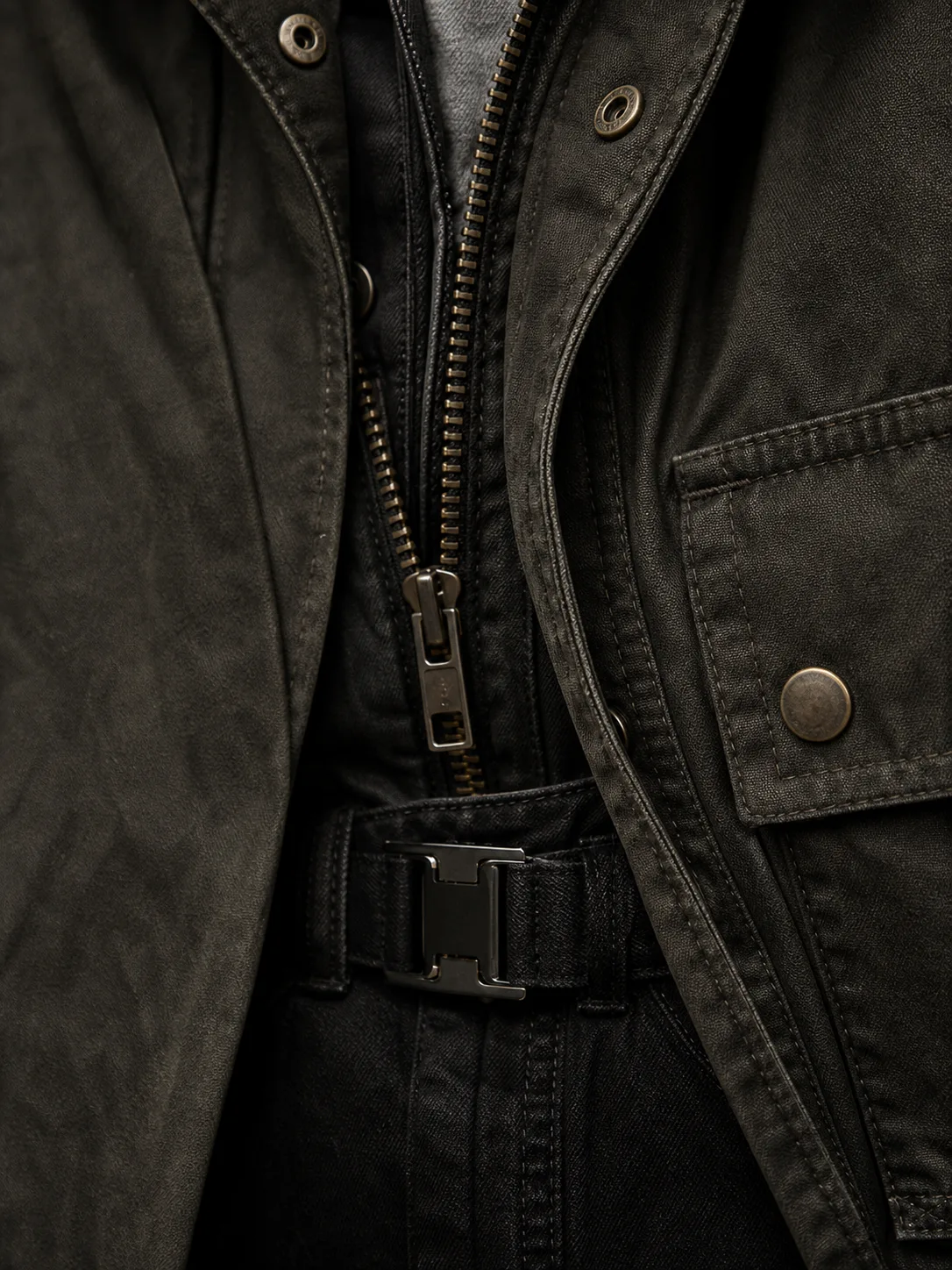
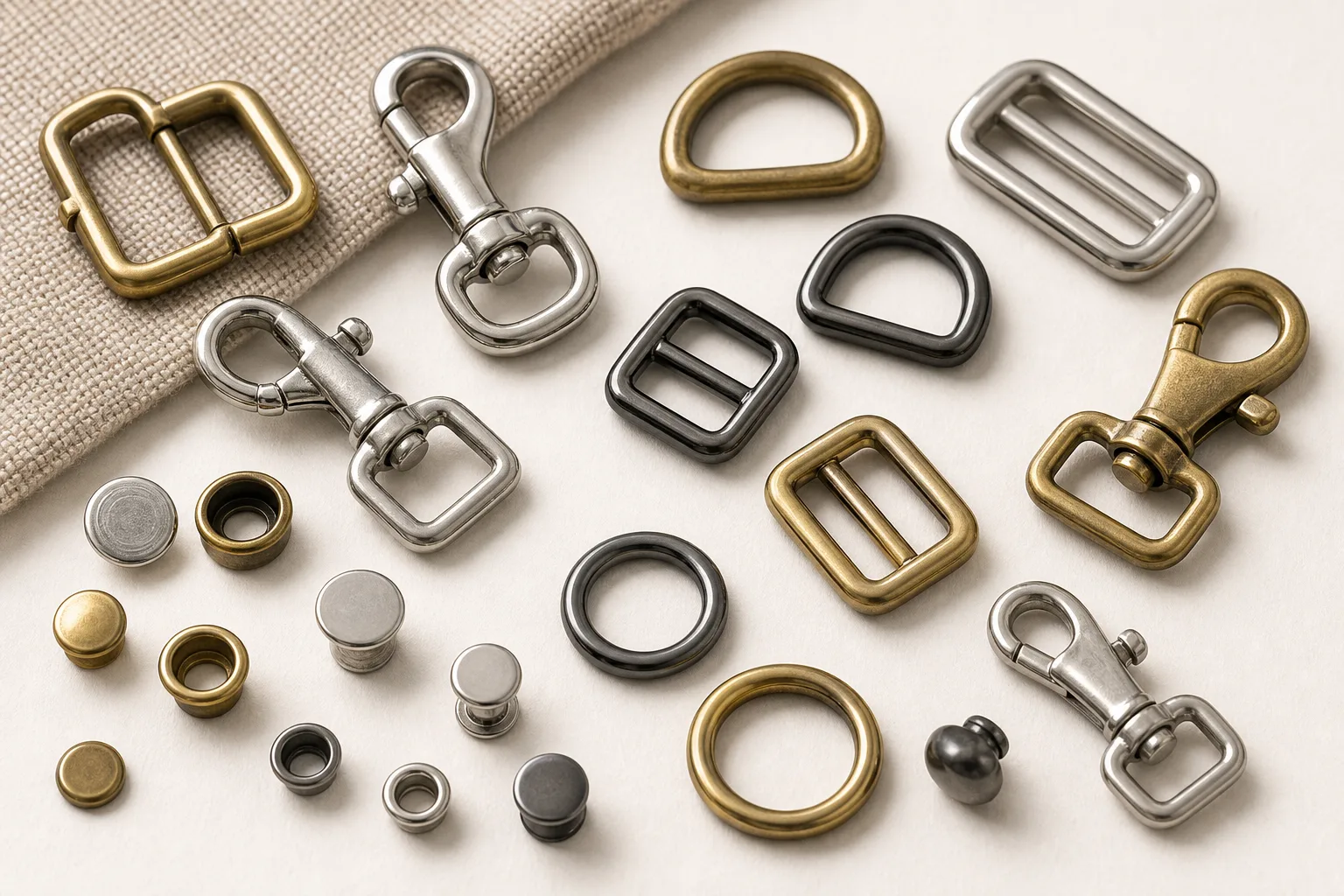
Garment hardware sits on a substrate that moves, stretches, is pressed and is washed — conditions no bag hardware faces. That is why a part that performs perfectly on a bag can be entirely wrong on a jacket, and why placement is discussed here before product type.
The fabric sets the limit
A prong needs enough substance to grip without tearing. A tack needs a stable, non-stretch zone. A sew-on part needs a seam or a reinforced area to distribute the pull. Lightweight wovens, knits and technical laminates each restrict which of these is available.
Where the base fabric cannot support the intended attachment, the answer is normally a reinforcement layer at that position rather than a different fastener. That is a garment engineering decision and it belongs in the discussion before the hardware is chosen.
Placement is a load decision
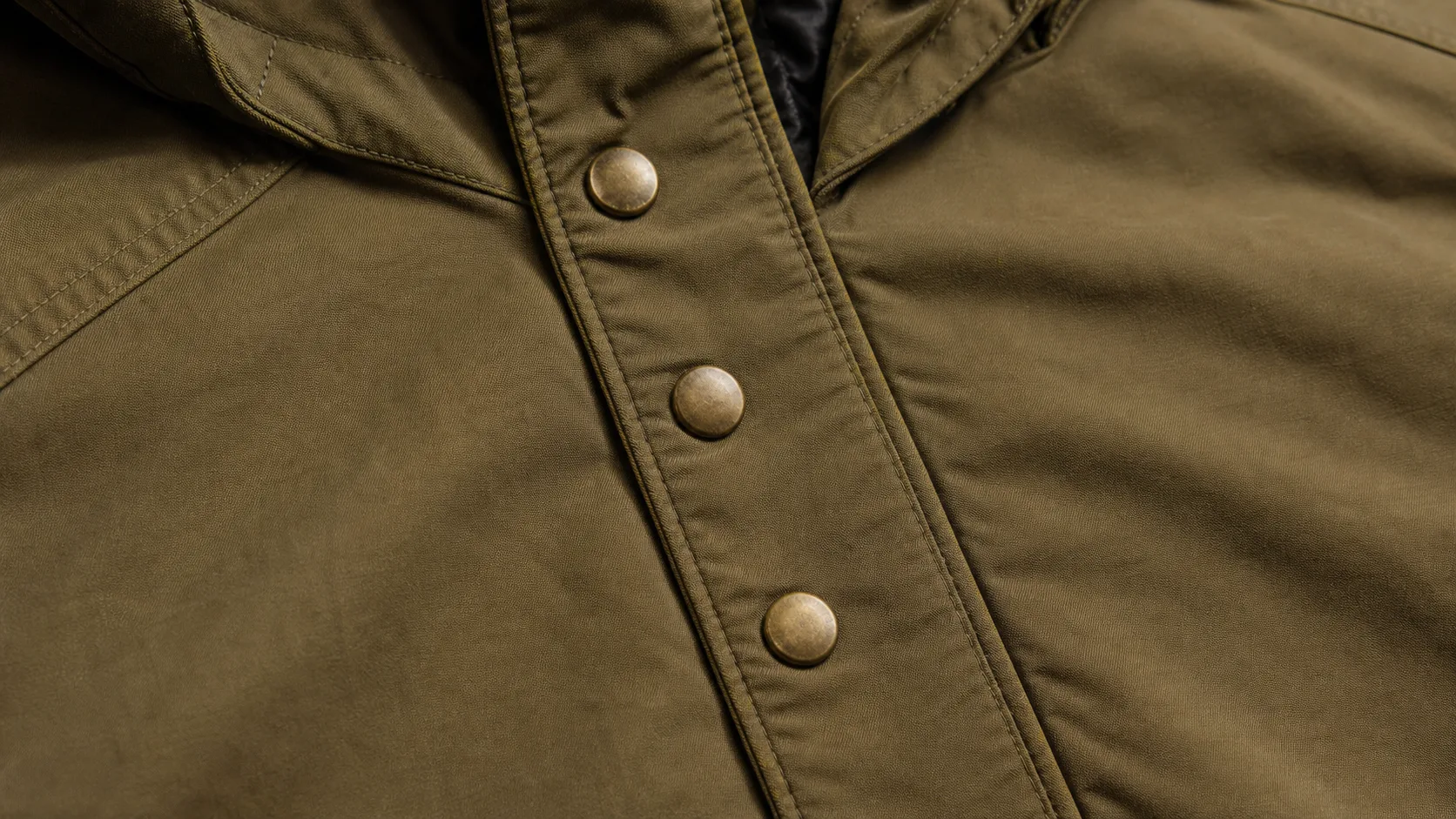
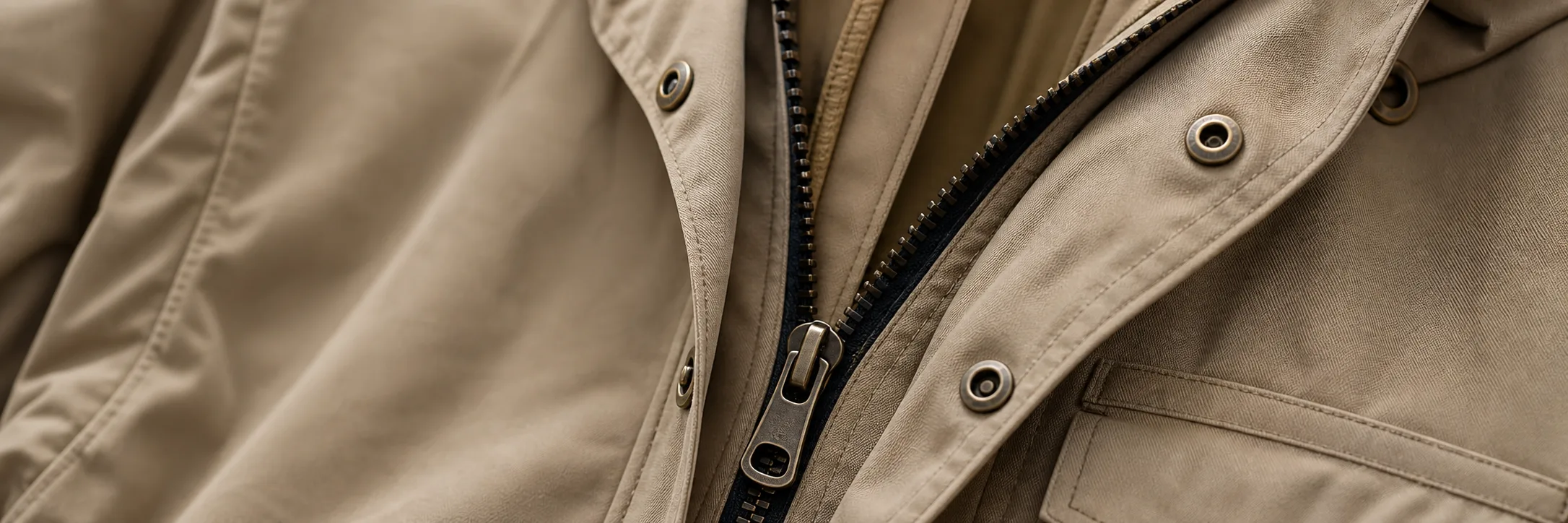
A snap at a cuff is opened and closed constantly and pulled at an angle. A snap at a placket front is loaded in shear when the wearer moves. A decorative stud at a yoke carries almost nothing. The same component in these three positions has three different service lives.
Mapping each hardware position against how it is used, before selecting parts, catches the mismatches that otherwise appear as a scattered set of unrelated complaints after production.
Interlining and reinforcement
Most reliable garment hardware sits over some form of reinforcement: an interlining patch, a facing, a taped seam or a doubled panel. The reinforcement carries the concentrated load into the surrounding fabric so the hardware does not tear a hole around itself.
Reinforcement also affects the part specification directly, because the total material thickness at that point determines prong length or post length. A change of interlining late in development can make a previously correct component the wrong length.
Washing, pressing and the finish
Garments are washed and pressed, often repeatedly, and hardware goes through the same cycle. Heat, moisture, detergent and mechanical action all act on the finish, and some processes act on the base metal as well.
State the intended care regime when specifying. This guide gives no resistance figures, because they depend on the finish, the base material, the process and the test method — but the care regime is what makes such a discussion possible at all.
Skin contact and comfort
Garment hardware often touches skin, directly or through one thin layer. Edges, burrs, back-side profiles and how a part sits when the wearer bends are comfort issues that show up in returns rather than in inspection reports.
Where skin contact is prolonged, restricted-substance and skin-contact requirements may apply in your market. Those requirements should be stated with the enquiry so material and finish direction can be reviewed against them from the start.
What to specify
Garment type and fabric, weight and construction, total thickness at each hardware position including interlining, the attachment method intended, position and how it is used, care and wash regime, skin contact expectation, finish with a physical reference, and quantity per colourway and size.
A fabric swatch with the intended reinforcement is the single most useful thing to include. Prong and post lengths are set from it, and getting them from a swatch is far cheaper than getting them from a failed first sample.
Garment hardware is chosen from the fabric outwards. Establish what the fabric and its reinforcement can carry, fix the total thickness at each position, then select parts whose geometry matches — and state the wash regime so the finish can be reviewed honestly.
 Application Guides
 Buyer Guides
 Application Guides
 Buyer Guides
 Buyer Guides
 Quality Guides
 Application Guides