
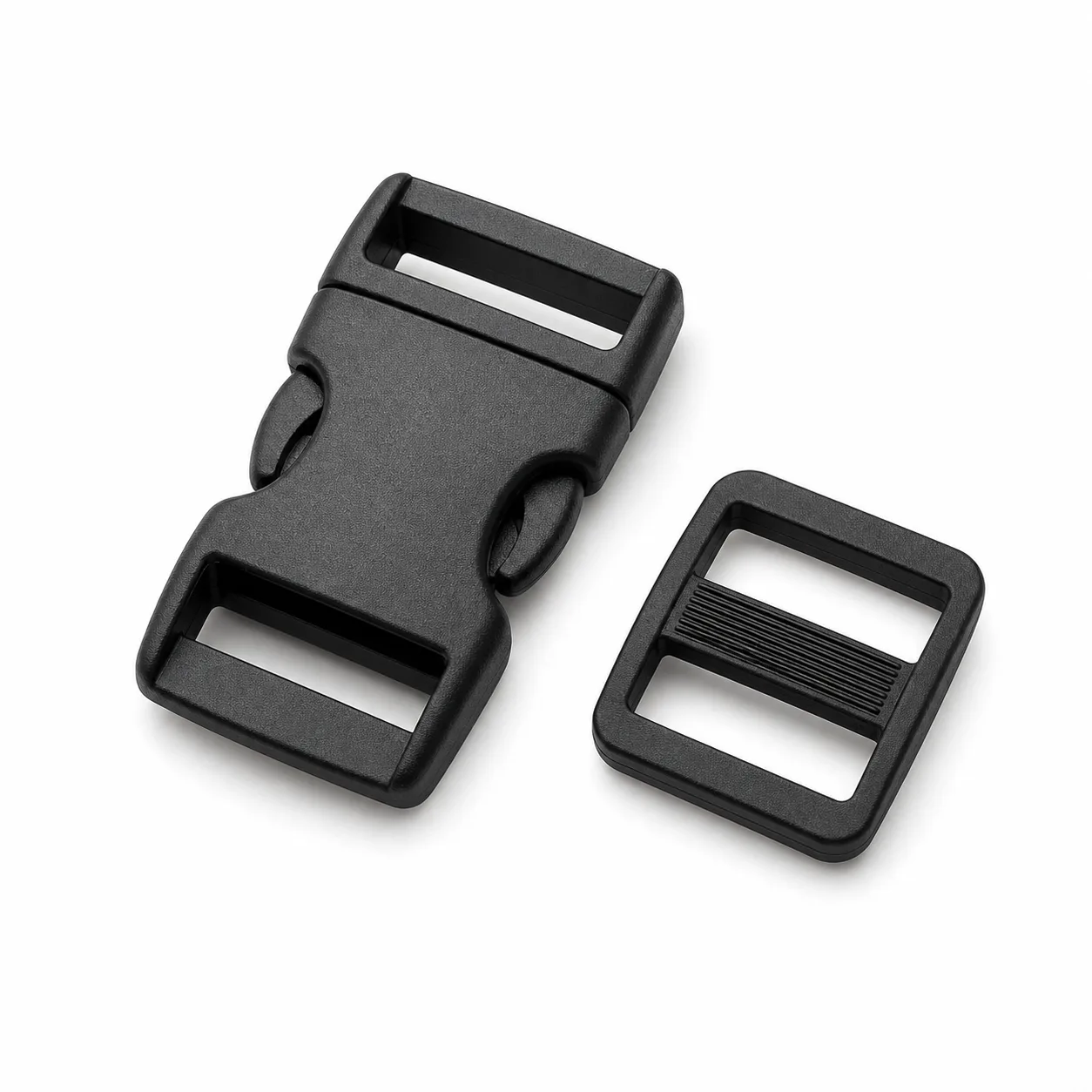
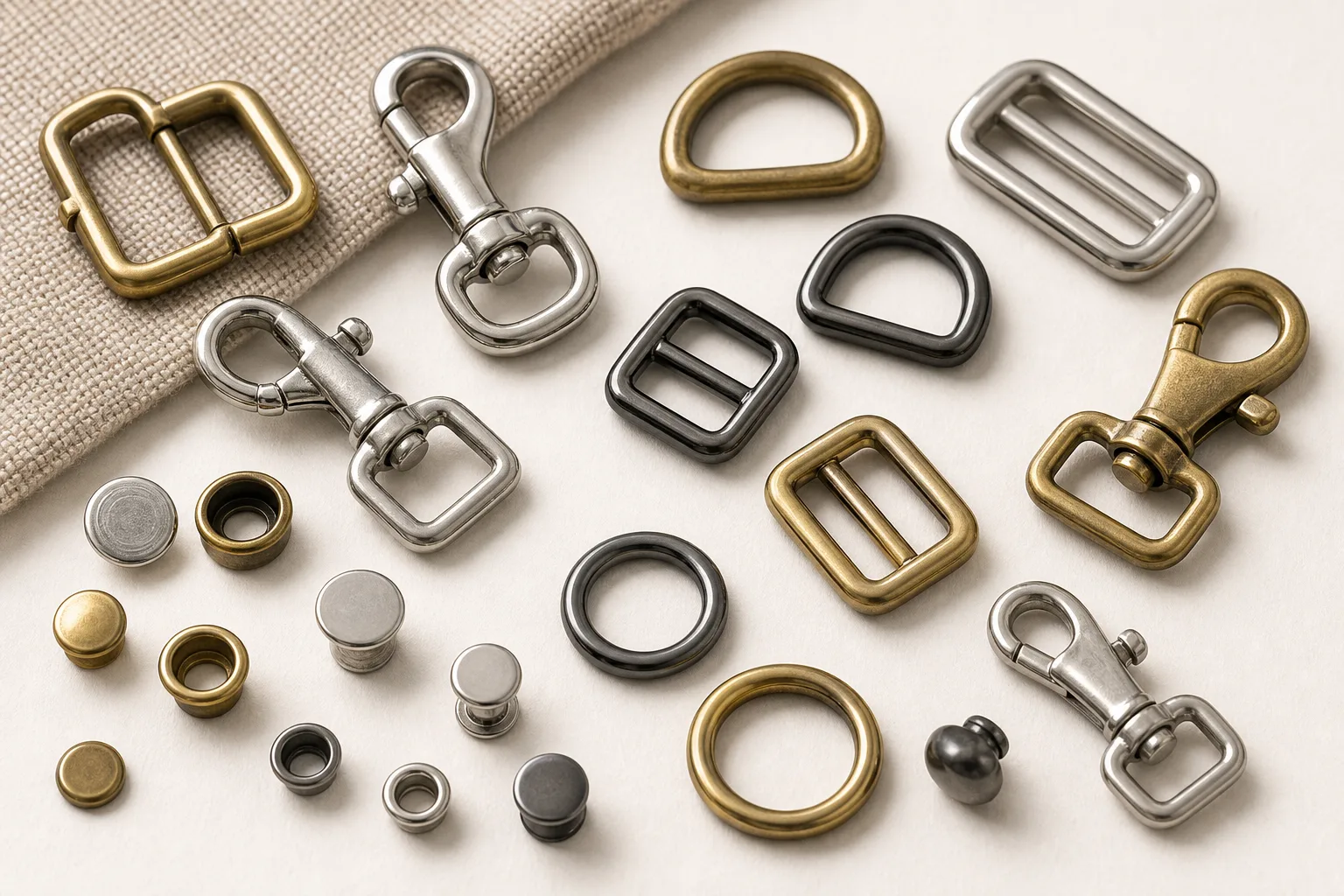
Technical webbing hardware is overwhelmingly acetal, and the reason is narrower than general durability. A buckle works by a controlled deflection that must return the same way every time, and acetal does that consistently across humidity and use. Everything else about specifying it follows from that.
Stiffness with reliable return
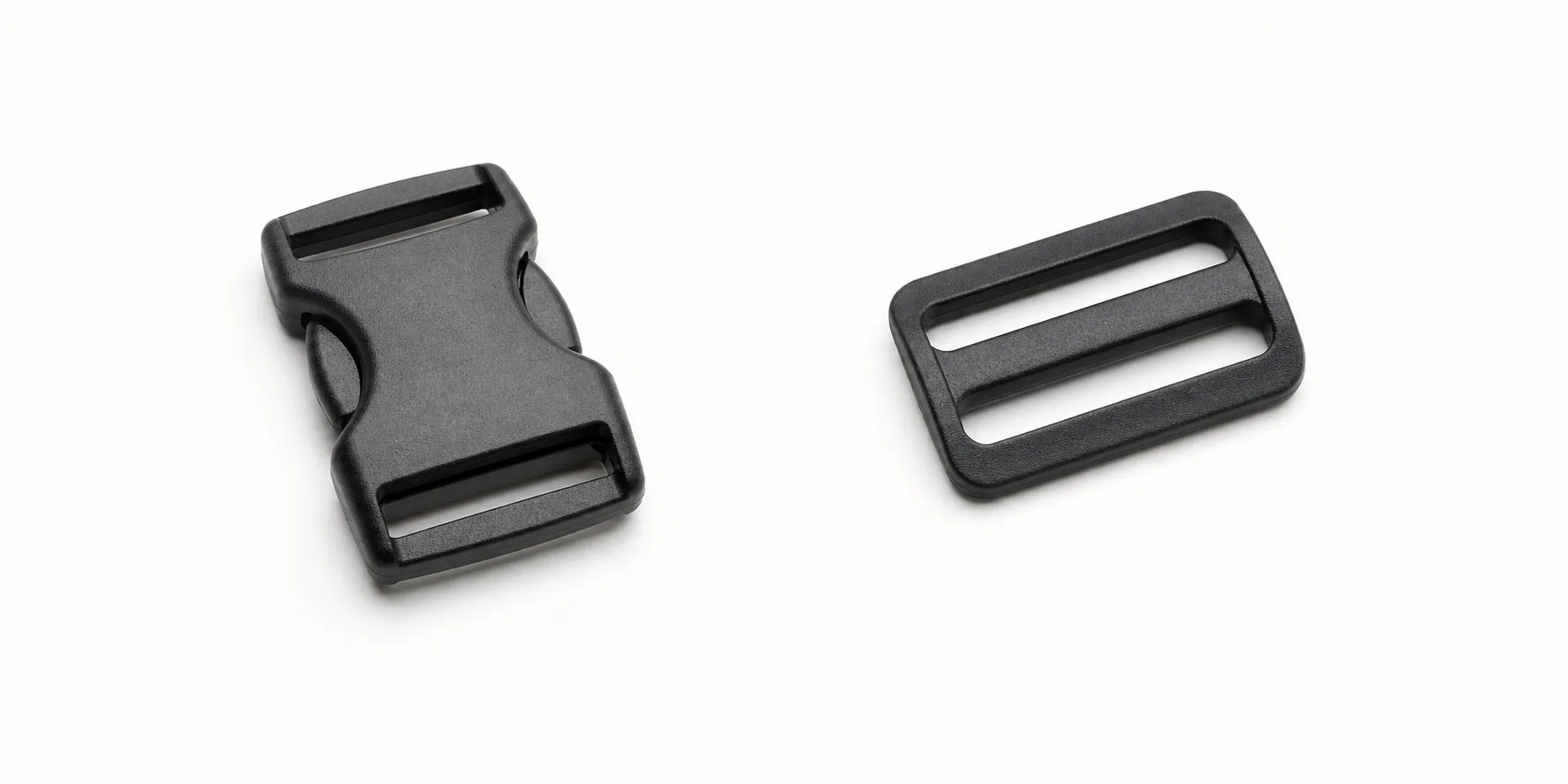
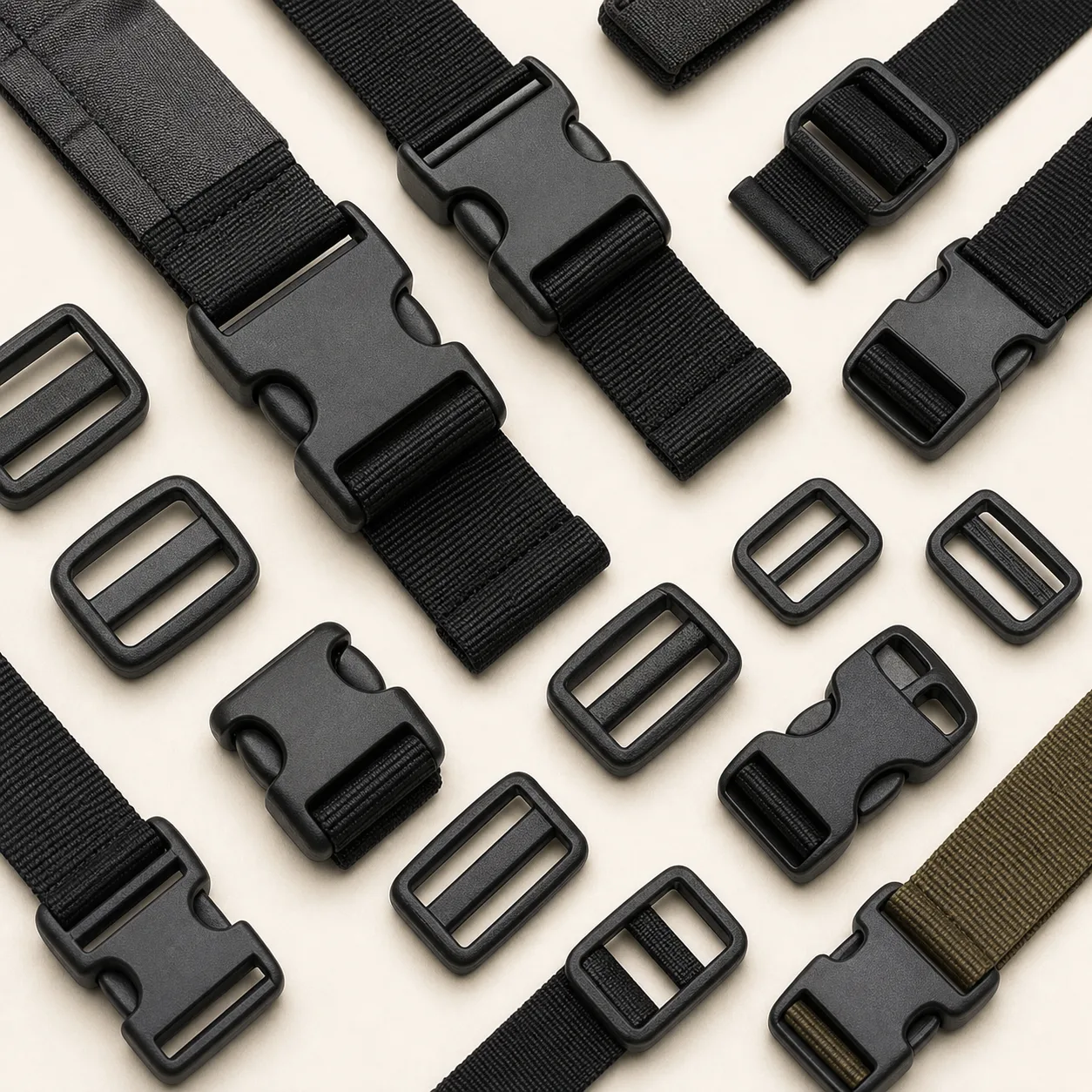
A side-release buckle locks because two arms deflect and spring back. Too soft and the arms do not hold; too brittle and they crack rather than flex. Acetal sits usefully in that range and keeps sitting there over many cycles.
The same property matters in adjusters. A ladder lock or tri-glide grips webbing by geometry, and if the part relaxes under load the grip changes. Dimensional stability is not an abstract virtue here — it is what stops a strap slipping after six months.
Moisture and climate
Acetal absorbs very little moisture from the air compared with some other engineering plastics, so parts hold their dimensions across dry cold and humid heat. For a product sold worldwide, that consistency is worth having.
That is one of the practical reasons it is preferred over nylon in buckles, even though nylon is tougher under impact. The two properties trade against each other, and buckle mechanisms need the stability more.
What injection moulding asks of the design
The part comes out of a tool, so shape is fixed by tooling and changes cost a tool modification. Wall thickness needs to be reasonably even so the part cools without distortion, and there will be gate marks and ejector marks somewhere — worth agreeing where they fall on visible faces.
Logos and part markings can be moulded in at no per-piece cost, which is a real advantage over marking metal parts individually. Artwork should be prepared for the size it will occupy, as with any moulded mark.
Colour and matching to webbing
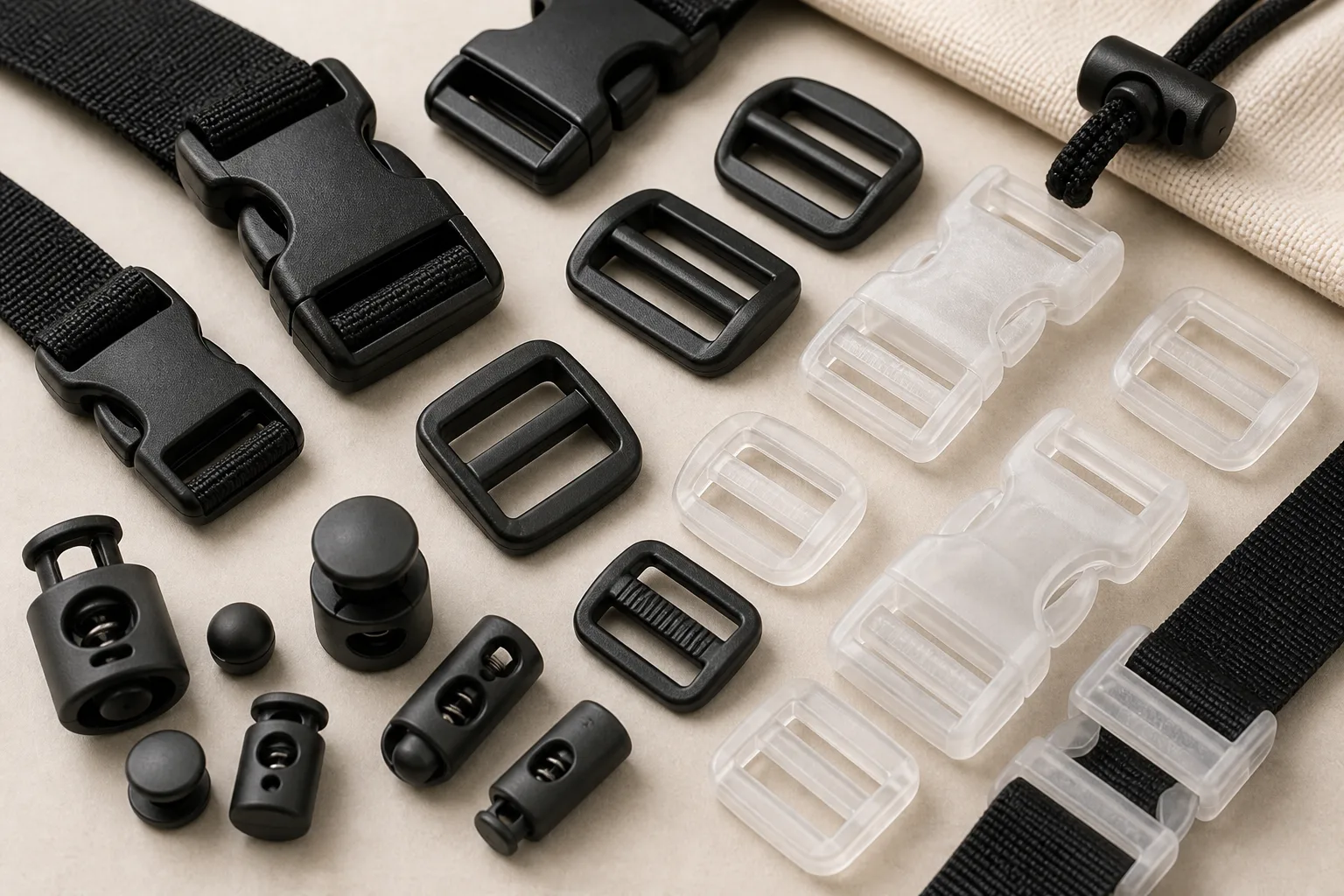
Acetal parts are usually coloured in the material rather than coated, so the colour goes through the part and does not wear off at edges. Matching to webbing is done by physical sample, because a moulded polymer and a dyed textile of the same colour reference will rarely look identical.
Where a set includes several moulded parts, approve them together — different geometries in the same colour can read differently depending on wall thickness and surface texture.
Cold, ultraviolet and outdoor use
Plastics stiffen as temperature falls, and how much depends on the grade and any additives. Ultraviolet exposure affects colour and surface over time. Both are real for outdoor products and both are addressed by grade selection rather than by material family alone.
This guide does not state temperature limits, impact values or UV performance for acetal, because those depend on the specific grade and the test method. If the product is used cold or outdoors, say so and ask what grades are available.
Specifying it so it holds
Name the polymer in the purchase specification rather than accepting plastic buckle, state whether recycled content is permitted, approve colour by physical sample, and state that the material may not change without written notice. Keep the approved sample.
Send the webbing specification too. Acetal hardware is designed around specific webbing dimensions, and substituting webbing changes the grip regardless of how well the buckle is specified.
Acetal is the standard for webbing hardware because a buckle mechanism needs stiffness with reliable return and dimensional stability, not because it is generically stronger. Specify the polymer by name, approve colour physically, and send the webbing with the inquiry.
 Material Guides
 Comparison Guides
 Buyer Guides
 Comparison Guides
 Material Guides
 Finish Guides