
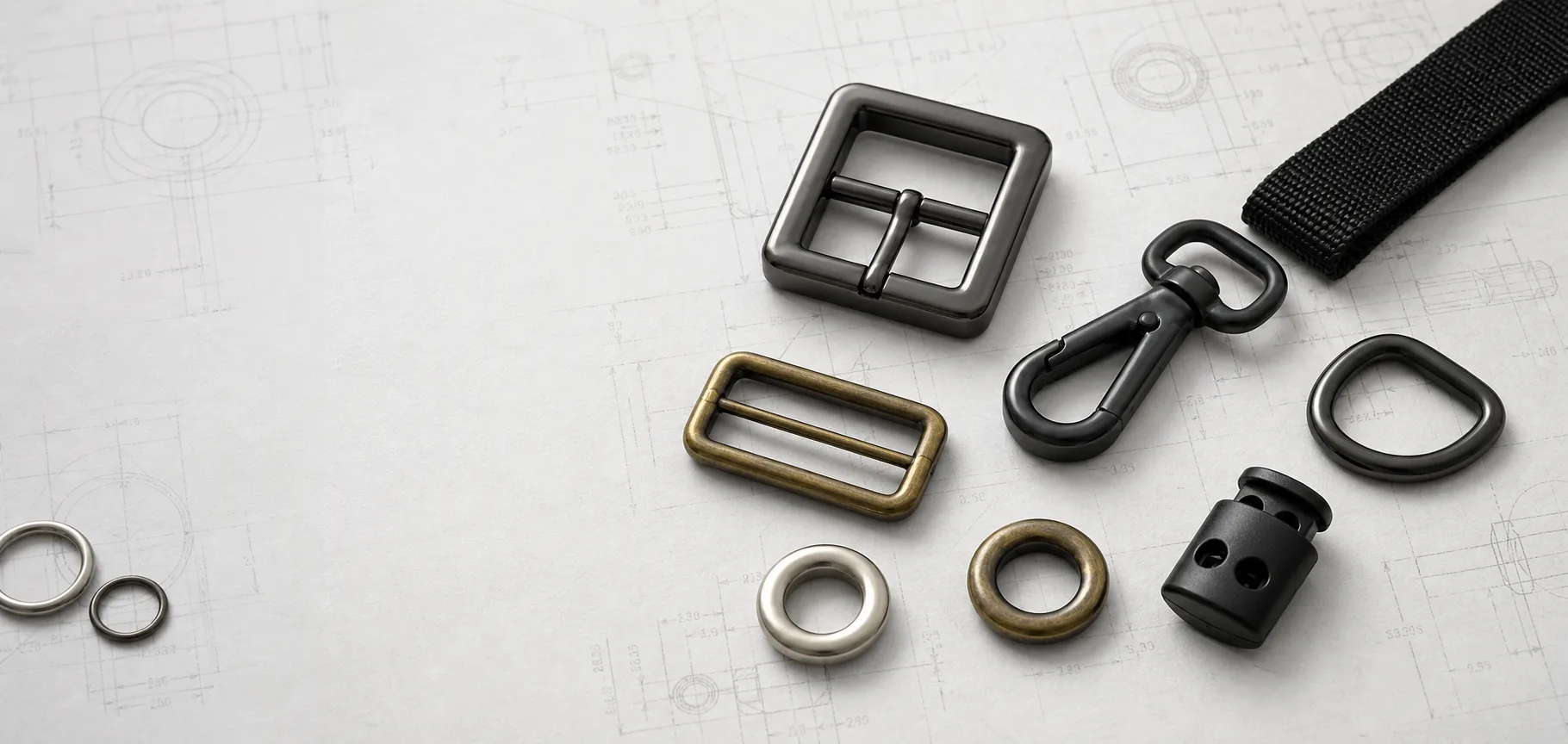
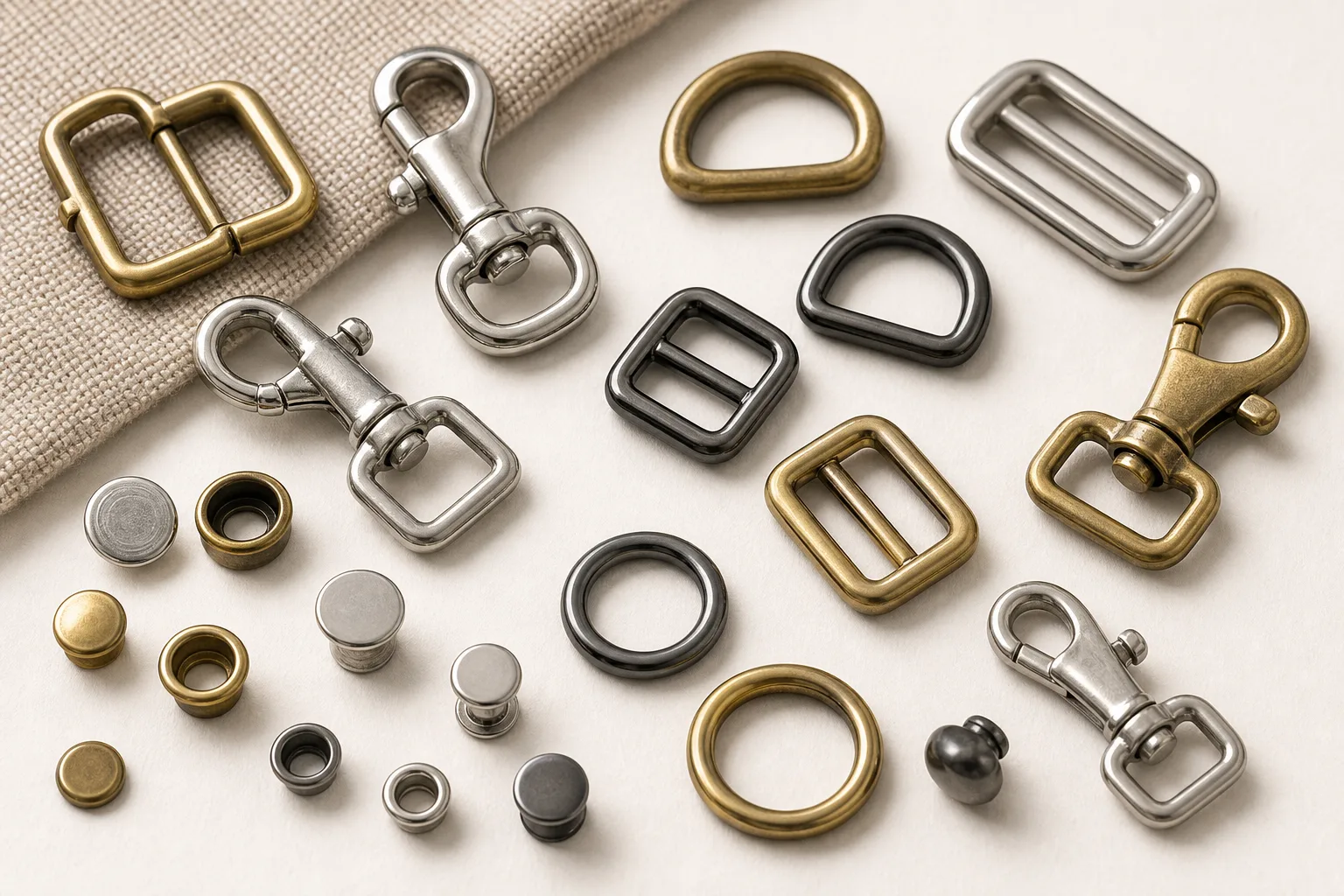
Aluminum enters a hardware conversation for one reason: someone has a weight target. That is a legitimate requirement on packs, technical gear and anything carried all day. What often goes unexamined is what changes alongside the weight — the forming route, the finish palette and how the surface behaves.
Weight is the reason, and it is real
The density difference between aluminum and zinc alloy is large enough to be felt across a set of hardware, not just measured. On a technical pack with buckles, adjusters, rings and hooks, switching the metal parts changes what the user carries in a way they notice.
Whether that matters depends entirely on the product. On a fashion bag, the weight of the hardware is part of the perceived quality and lightness is not a selling point. State the weight target if there is one; if there is not, aluminum is usually the wrong starting point.
Forming routes and what they allow
Aluminum hardware is commonly extruded and cut, machined from bar, or stamped from sheet. Those routes suit constant-section shapes, turned parts and flat forms. Complex sculpted geometry with undercuts is not their natural territory.
Zinc alloy pressure die-casting handles that geometry directly. If the design has relief, undercuts or varying wall thickness, moving it to aluminum usually means redesigning it, splitting it into parts, or accepting a different look.
Anodizing versus plating
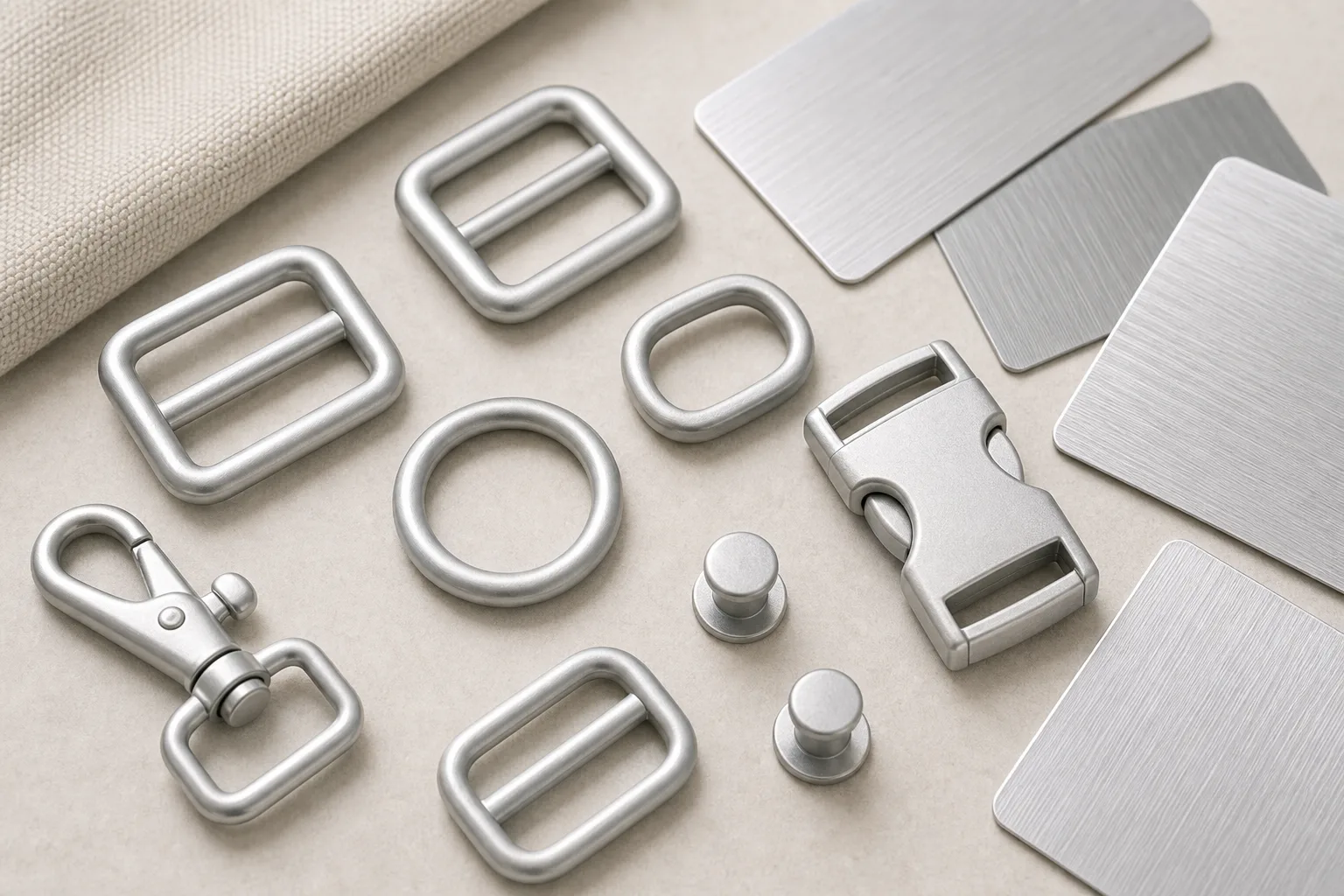
Aluminum is normally anodized: the surface is converted electrochemically into an oxide layer that is part of the metal rather than deposited on it, and it can be dyed in a range of colours. The result has a characteristic appearance — often slightly matte, with the metal texture visible through it.
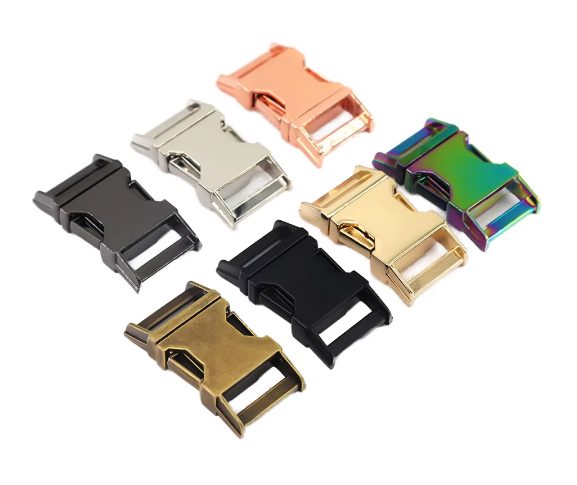
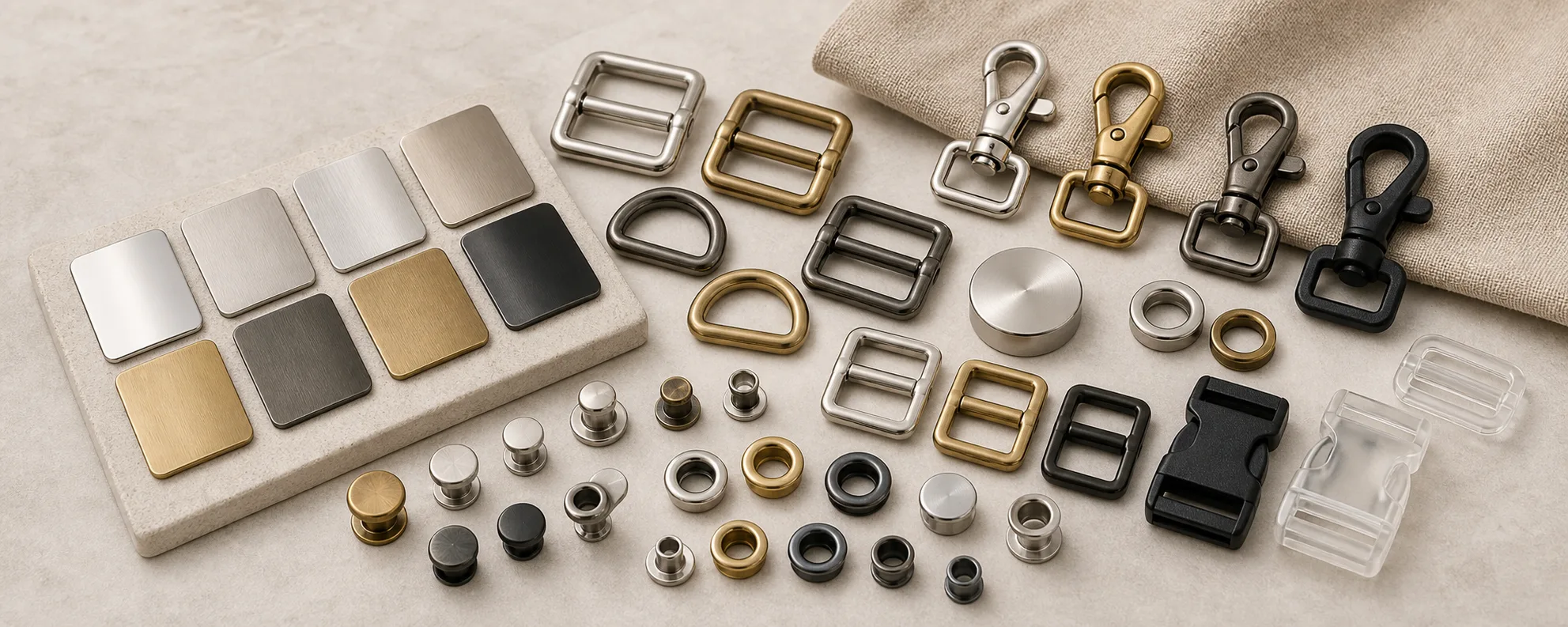
Zinc alloy is normally plated, which gives the familiar metallic tones and a different surface quality. Neither route can produce the other look convincingly. If the brand has a hardware appearance standard, check which route it corresponds to before choosing the material.
Surface behaviour in use
An anodized layer is integral to the surface, so it does not flake in the way a coating can, but it is thin and can be abraded through on high-contact edges, exposing bright metal underneath. Plated zinc behaves differently again, with its own edge and wear characteristics.
This guide does not state abrasion cycles, coating thickness or corrosion figures for either. Those depend on the alloy, the process specification and the test, and the useful step is to agree what will be tested on your part rather than to compare general claims.
Cost and where each is used
The cost comparison is not a simple ranking. Machined aluminum parts carry machining time per piece; cast zinc carries tooling up front and low piece cost after. Which is cheaper depends on complexity and quantity, so ask for the breakdown rather than a unit price.
In practice, aluminum appears on technical outdoor and sports hardware where weight is specified, on some premium minimal designs where the anodized look is wanted, and on parts that are essentially extruded sections. Zinc alloy remains the default for shaped, plated, logo-bearing hardware.
What to specify
The weight target if there is one, part geometry and section, the intended finish appearance, whether the part has high-contact edges, expected quantity, and whether a brand hardware appearance standard applies. For aluminum, state the intended anodized colour and finish level.
A physical reference of the appearance you want is more useful than a colour name, because anodized and plated surfaces of nominally the same colour do not look alike.
Aluminum buys weight reduction and an anodized appearance, at the cost of geometric freedom and the plated finish palette. Zinc alloy keeps the geometry and the finishes and gives that weight back. Start from whether a weight target actually exists.

 Comparison Guides
 Comparison Guides
 Application Guides
 Comparison Guides
 Material Guides
 Finish Guides