
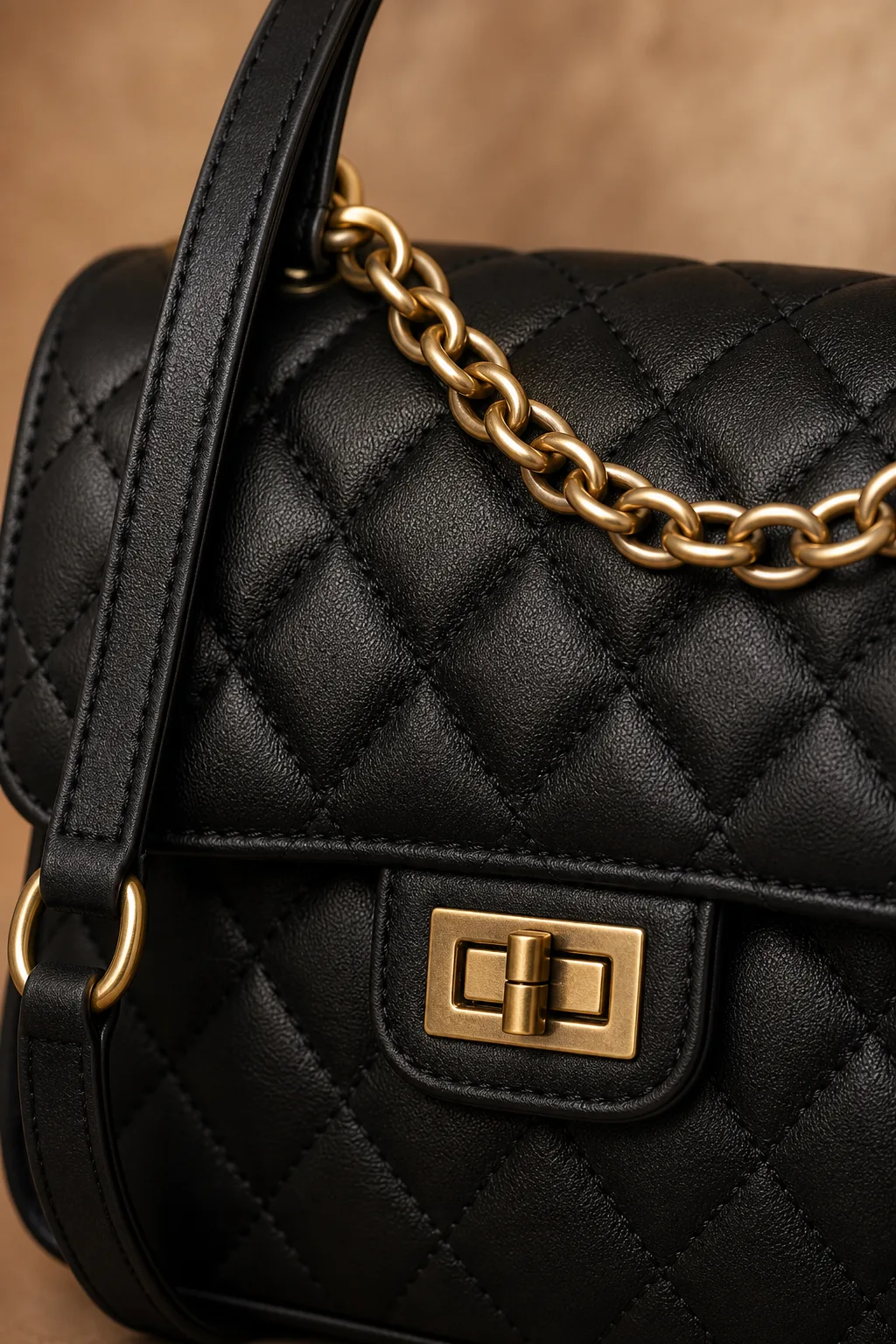
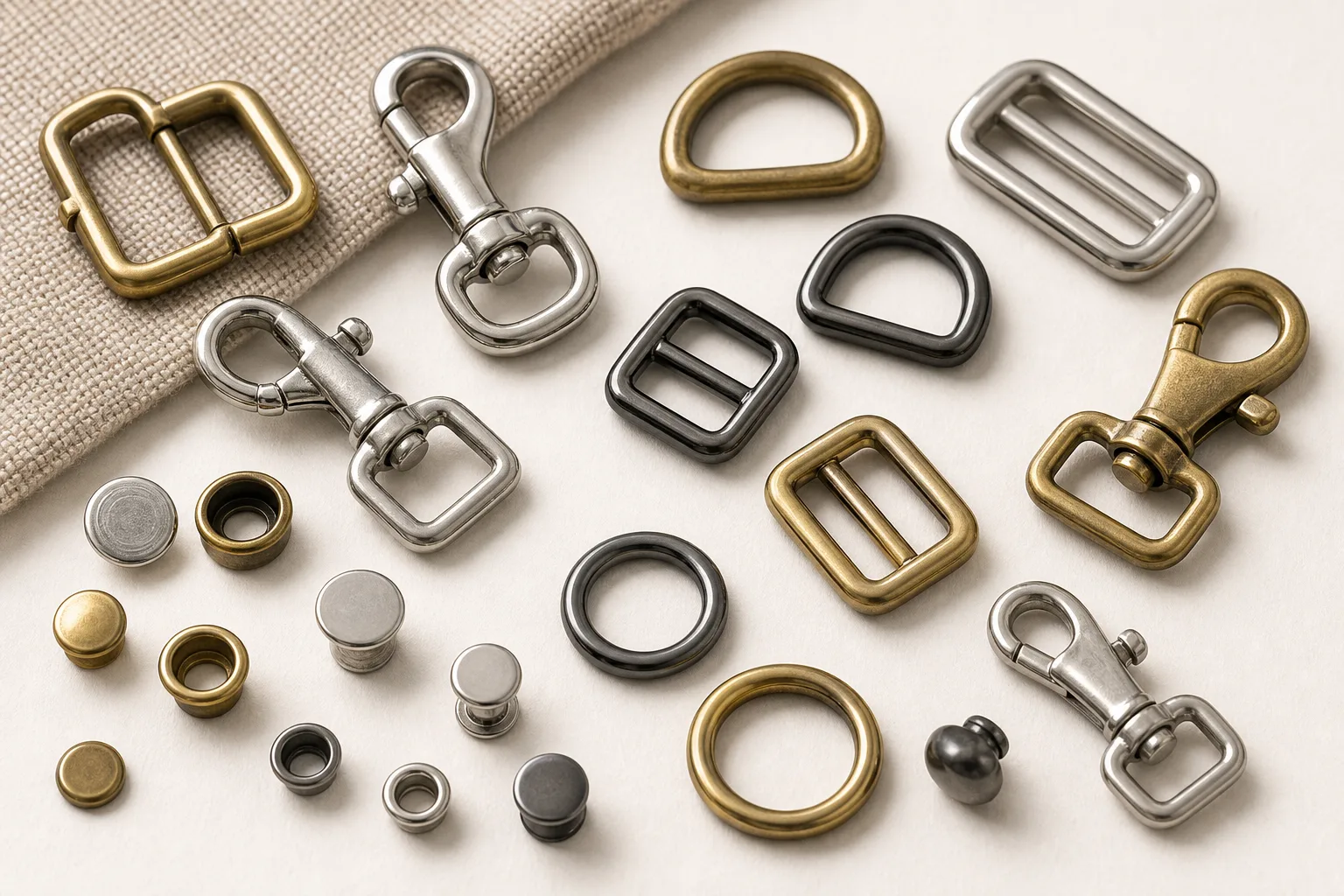
A handbag carries less weight than a backpack and carries it for less time, which makes it tempting to treat the hardware as a purely visual decision. That works until the first strap tears out at the ring. The useful way to approach this category is to accept that the appearance requirement is genuinely primary, and then make sure it does not quietly override the two structural decisions underneath it.
The load is intermittent, and that changes what matters
A tote is loaded and unloaded several times a day, often unevenly, and is frequently set down by one handle. The peak load is modest but it arrives suddenly and repeatedly at a small number of points. That is a fatigue pattern rather than a strength pattern, which means the failure mode is loosening and elongation over months rather than a break under a single pull.
Practically, this shifts attention away from the rated strength of a ring and towards how it is held. A ring that cannot open, a rivet set that cannot work loose, and a stitched tab that does not stretch will outlast a heavier part attached carelessly.
Appearance is part of the specification, not a preference
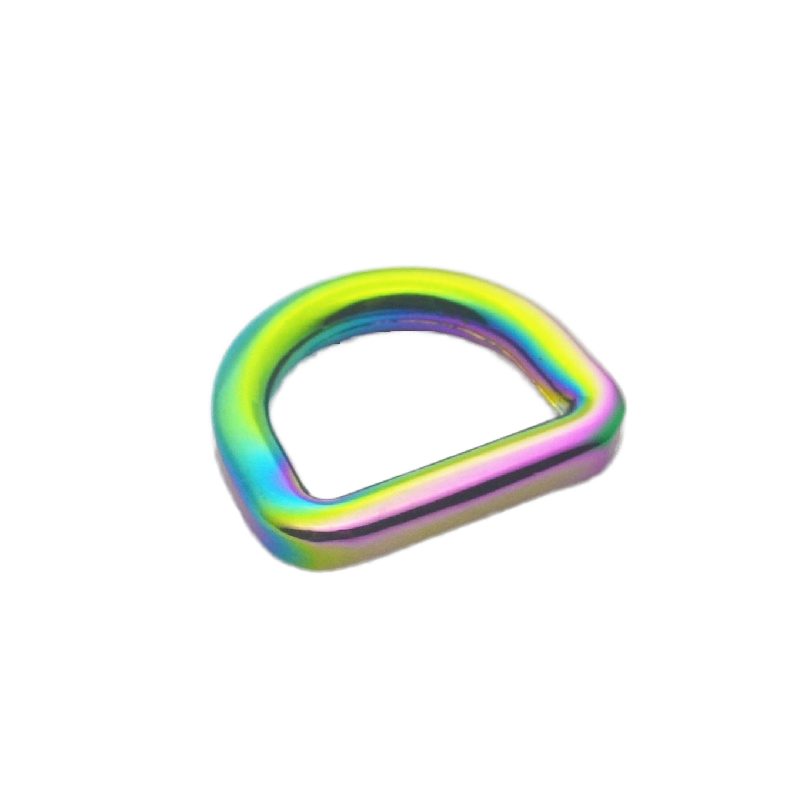
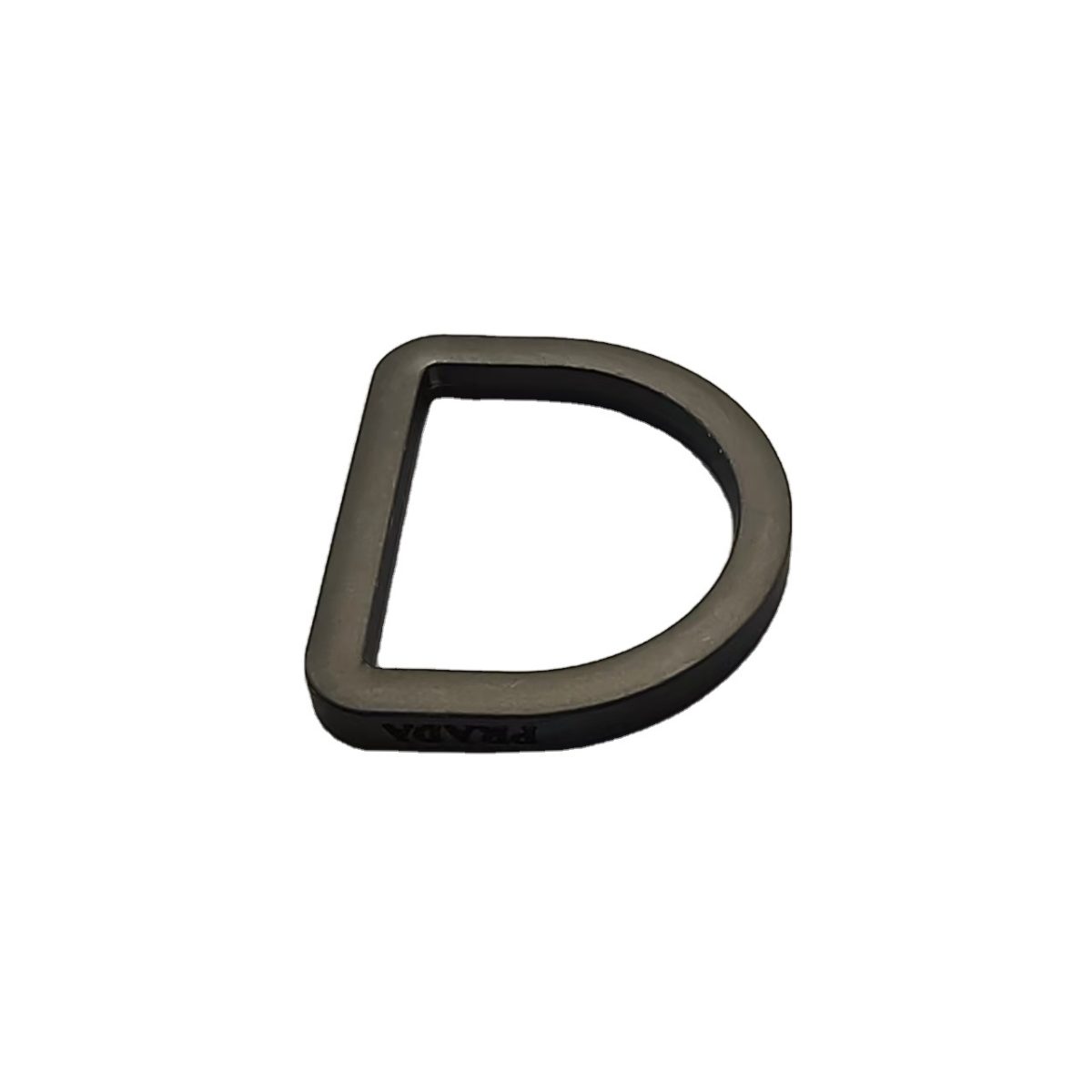
On this product the hardware is visible at conversation distance and is often the only metal on the bag. Tone, gloss level and how the finish ages are functional requirements, because a set that goes patchy in six months makes the whole product look worn regardless of how the leather held up.
The practical consequence is that finish and material must be chosen together for every visible part in the set, and approved from one physical reference. Specifying a tone by name across parts made from different base materials is the most common route to a mismatched set.
Attachment decides the failure mode
There are only a few ways hardware attaches to a handbag: stitched through a folded tab, riveted, screwed, or held by a turned edge. Each has a different failure signature. Stitched tabs stretch and fray, rivets loosen or pull through, and screw fittings back out unless they are secured.
Choose the method against the material it goes into. Thin garment leather and a heavy ring is a mismatch no matter which ring you pick; the fix is a reinforced tab or a wider bearing surface, not a stronger ring.
Closures behave differently from carry points
Magnetic closures, twist locks and flap hardware are operated far more often than the carry hardware is loaded. They are wear items, and their finish wears first because fingers land on the same spot every time.
Where a closure sits in a visible position, consider whether the finish is one that shows handling. A deep matte surface and a bright plated surface age very differently under the same use, and neither is wrong — but the choice should be deliberate.
Where handbag hardware actually fails
In practice the recurring complaints are a strap ring that opens, a rivet that works loose at a handle root, a plated tone that goes uneven, and a closure that loses its snap. Only one of those is a strength problem.
Reviewing samples with that list in hand is more productive than asking for higher specifications across the board. Open the ring, work the closure repeatedly, and load one handle rather than two.
What to specify
Bag type and expected carried weight, the attachment method for each hardware position, the material the hardware is fixed into and its thickness, the finish with one physical reference for the whole set, whether a closure is a wear point, logo requirement, and quantity per colourway.
Send a reference bag or photographs of the intended attachment if the construction is at all unusual. Attachment problems are much cheaper to catch at sample stage than after tooling.
Handbag hardware is chosen for appearance, but it survives or fails on how it is attached. Specify the attachment and the base material alongside the part, approve the finish across the whole set from one reference, and treat closures as wear items rather than static fittings.
 Buyer Guides
 Quality Guides
 Comparison Guides
 Application Guides
 Application Guides
 Application Guides