
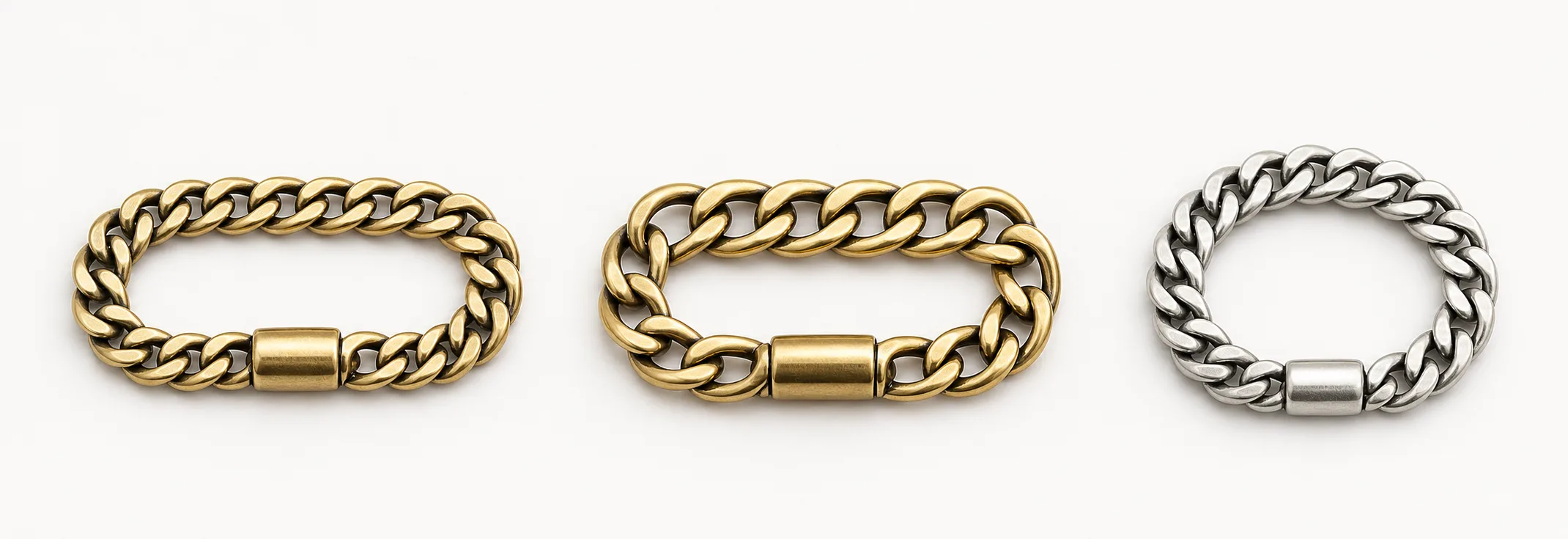
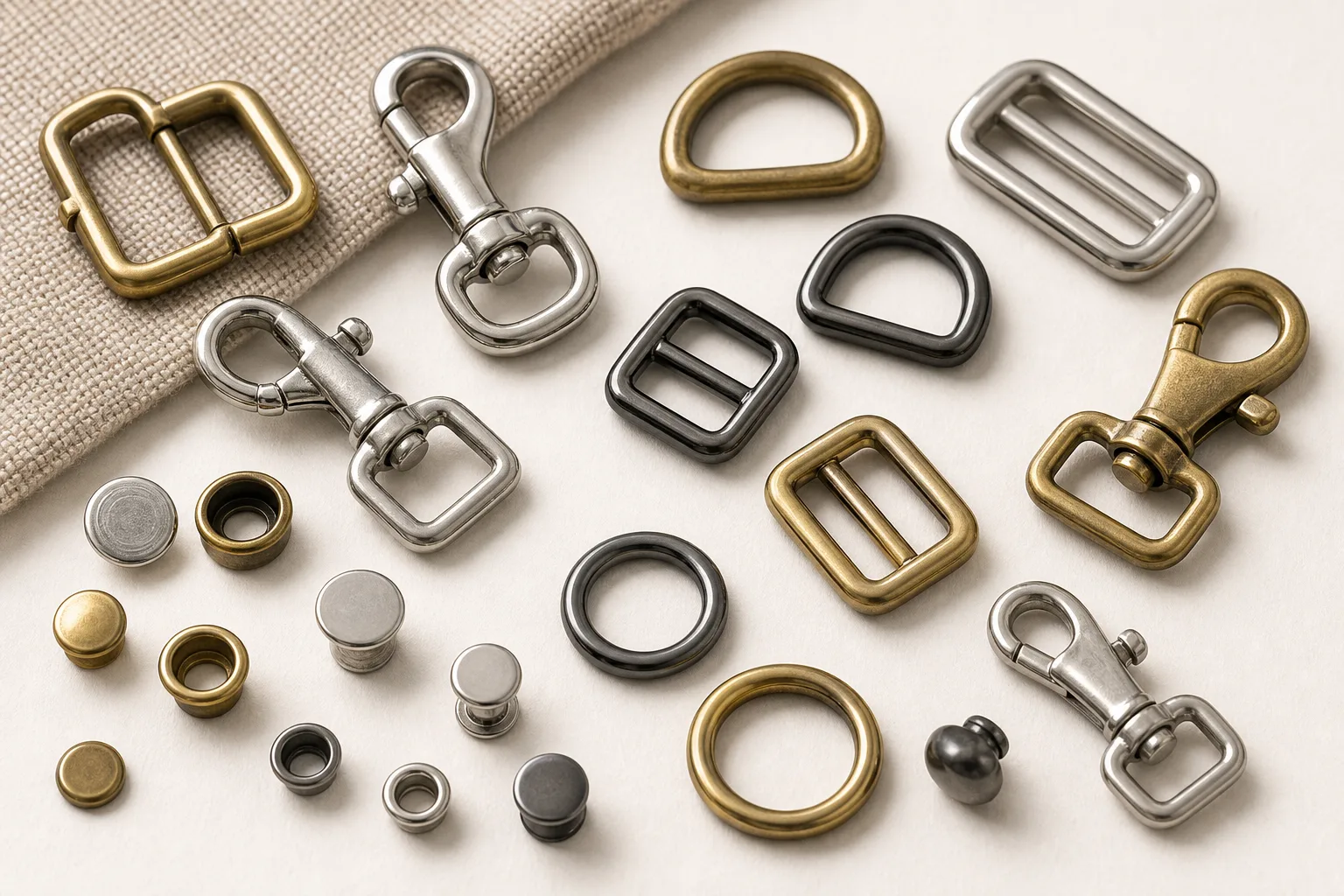
Structural hardware is judged on whether it holds. Decorative hardware is judged on whether it looks like it belongs, which is a harder specification to write and a much easier one to get wrong. A trim set that is technically correct part by part can still look wrong on the product if the finishes drift or the profiles do not agree.
Decorative does not mean unloaded
Trims described as decorative still take handling: corner protectors are dropped on, edge trims are dragged along surfaces, studs are rubbed against clothing. What separates them from structural parts is that they are not in the load path of the product, not that they lead an easy life.
This matters when choosing attachment. An adhesive-backed trim is fine on a panel that is never flexed and poor on one that is; a prong-set stud on soft leather without a reinforcement will eventually work loose. Ask what the trim will actually be subjected to, not just where it sits.
Attachment methods and what they demand
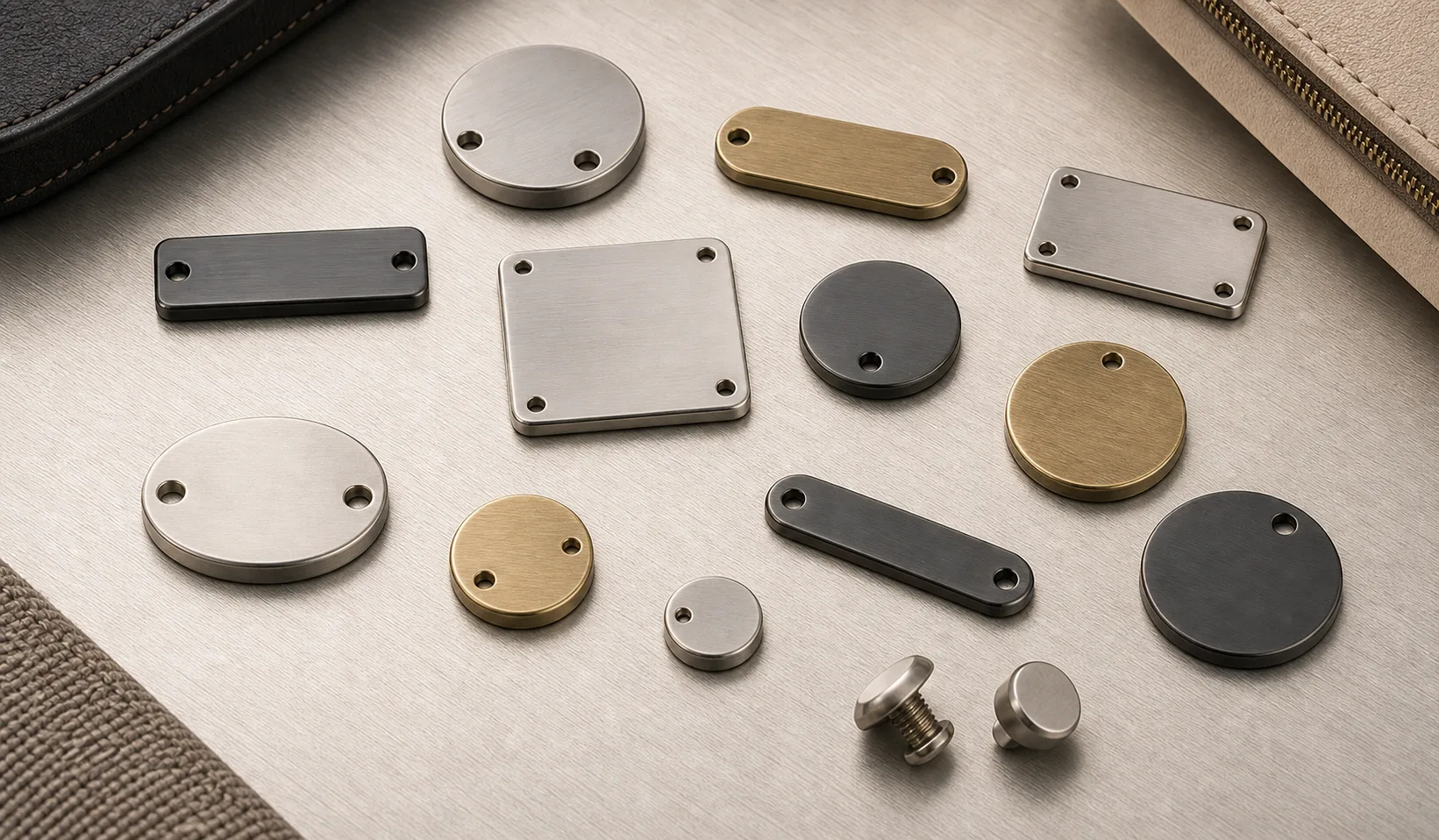
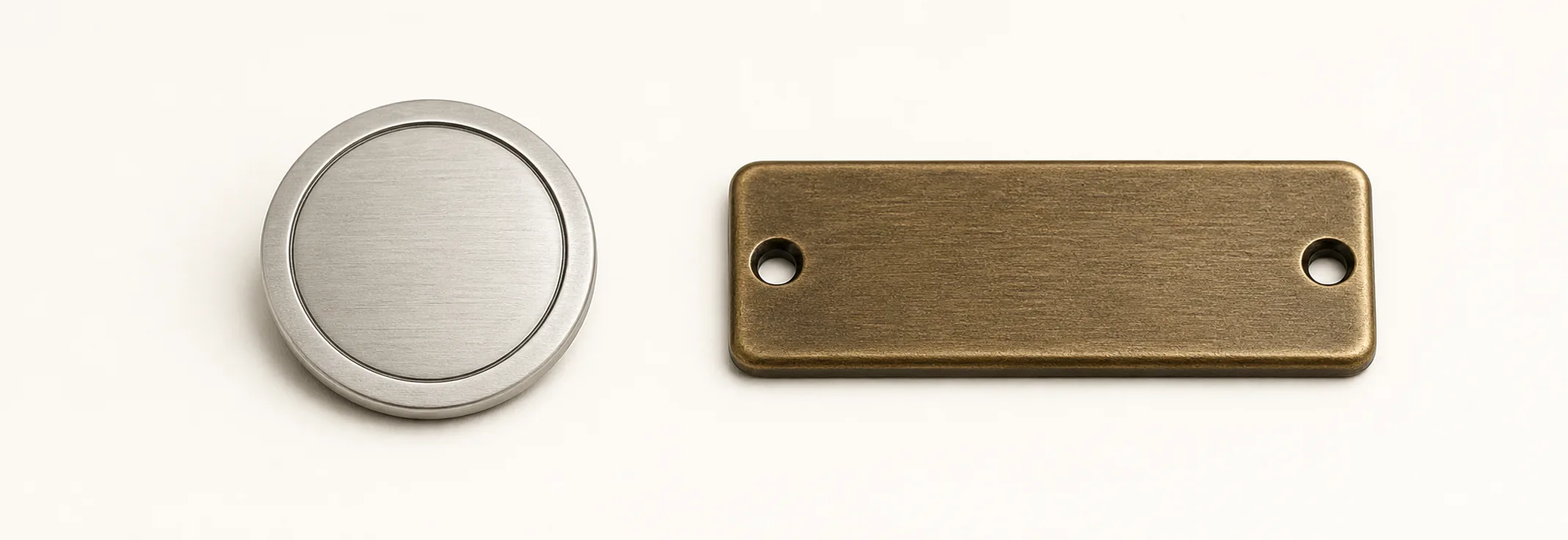
Rivet or prong attachment gives a mechanical joint and is the norm for studs, conchos and small plates; it needs a hole or slits and the correct post length for the material stack. Sew-on flanges suit soft goods and give the sewing operator a familiar operation. Screw fixings suit thicker leather and allow later removal. Adhesive backing is fastest but depends heavily on the surface and on the panel not flexing.
On a lined bag, remember that a mechanical attachment has a back side. If the reverse falls inside a lined compartment it may be invisible, or it may rub against the contents for the life of the product.
Finish consistency across a set
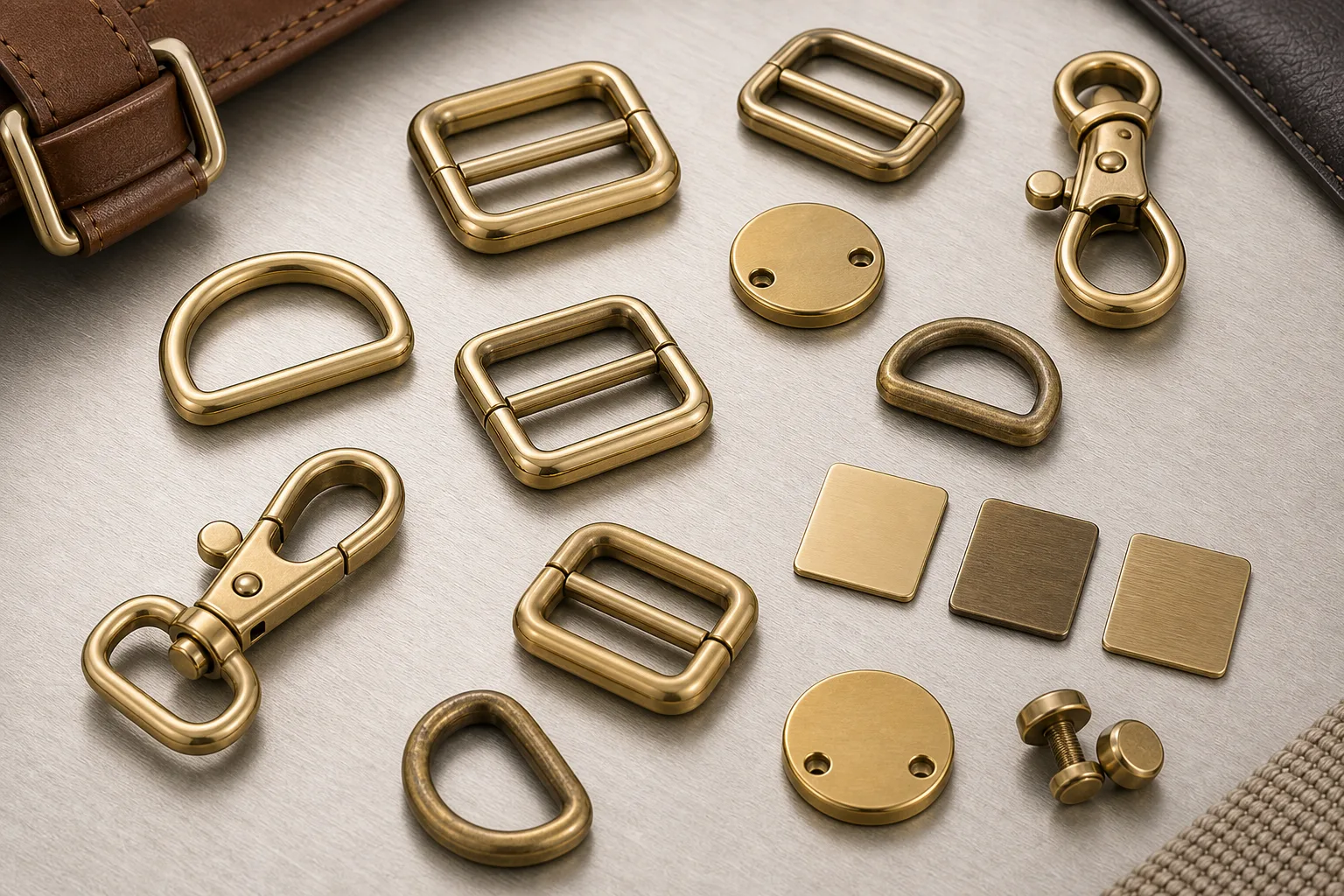
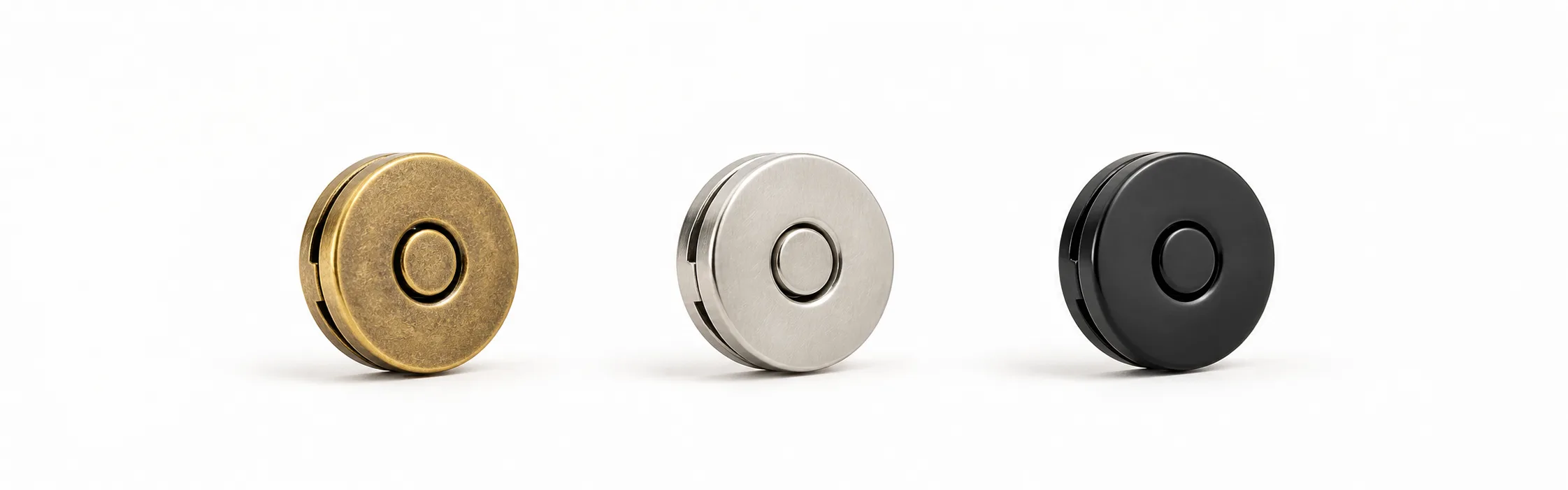
The most common failure with decorative hardware is not a defective part but a set that does not match. Trims often come from different tooling, in different base materials, and in different production batches — a cast zinc plate, a stamped brass corner and a plated steel stud can all be specified as antique brass and arrive visibly different from each other.
The way to control this is to approve the set together, on one card, in the intended lighting, and to state that batch-to-batch matching is against that approved set rather than against a colour name. This is a specification the buyer has to ask for; it is not automatic.
Profile, weight and how the product feels
Decorative hardware changes how a product feels in the hand. A heavy cast plate on a soft bag drags the panel; a row of studs stiffens a strap. On garments the weight question is sharper still, because a trim heavy enough to distort a lightweight fabric will show as a pucker after the first wash.
Discuss weight and profile against the actual base material. Suppliers can offer the same appearance in lighter constructions — thinner stampings, hollow backs — but only if they know weight is a constraint.
Logo and brand-facing detail
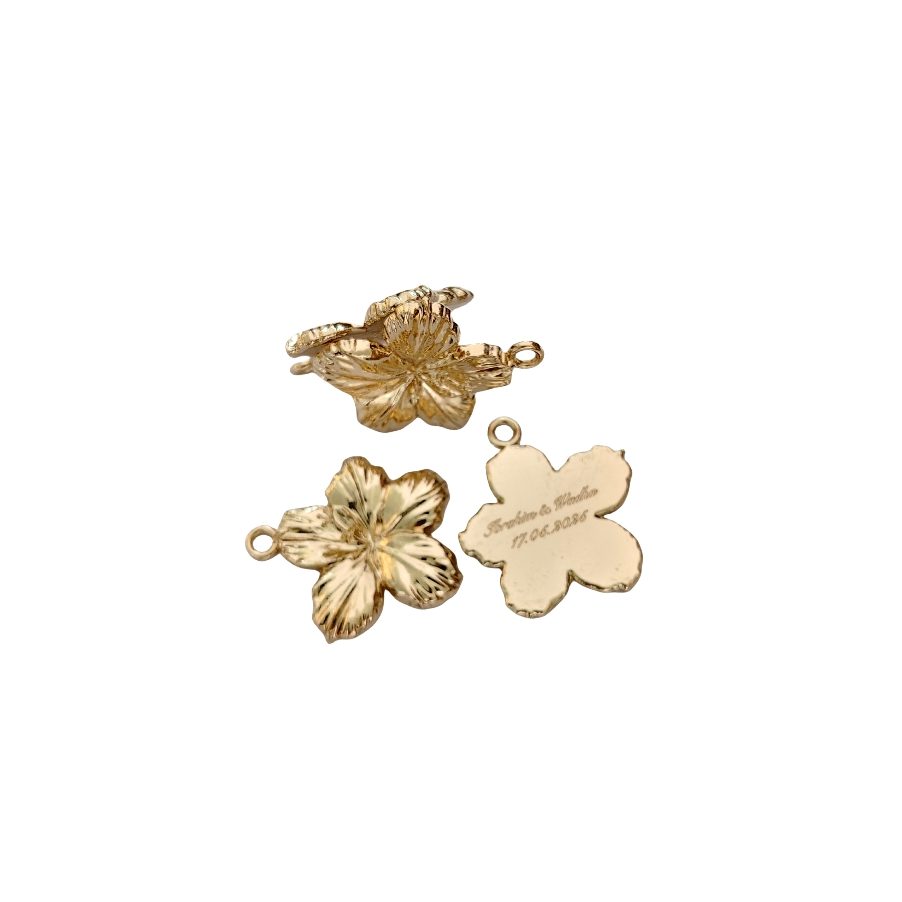
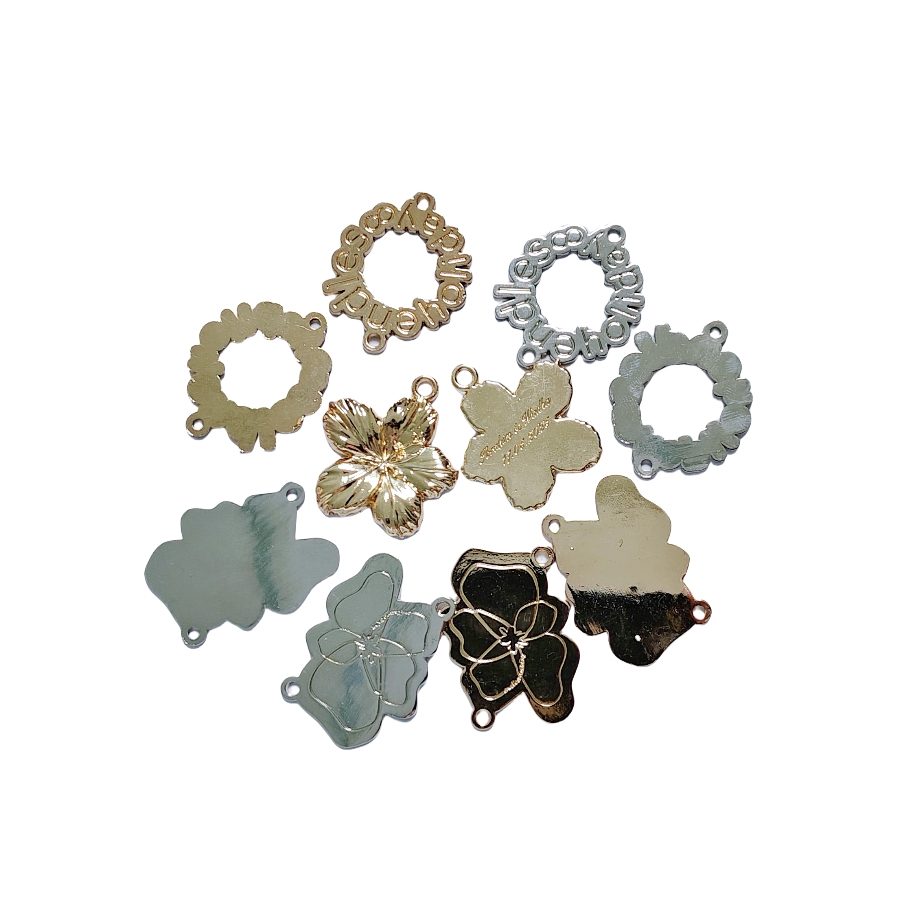
Decorative trims are often where a brand mark appears. The mark method should follow the construction: cast parts take relief and engraved detail; stamped parts suit shallow marks, laser marking or enamel fill. Choosing the mark first and the construction second is how tooling gets remade.
Where trims will be visible in product photography, ask what the surface looks like under directional light rather than under a diffuse lightbox. Brushed and antique finishes photograph very differently from polished ones, and the sample review is the moment to see that.
What to send with an inquiry
The set of trims wanted and where each one sits, attachment method for each, base material and thickness at each position, weight constraints, logo artwork and intended marking method, finish direction for the whole set, and quantity per product. Say which parts are brand-facing and which are secondary.
A layout drawing or a photograph of the product with trim positions marked is worth sending. It lets the supplier flag positions where the chosen attachment will not work before samples are cut.
Decorative hardware is specified as a set, not as parts. Attachment must suit each position, weight must suit the base material, and finish must be approved across the whole group at once — because a trim set is judged by whether it looks deliberate, and mismatch is what breaks that.
 Buyer Guides
 Quality Guides
 RFQ & Sample Guides
 Buyer Guides
 Buyer Guides
 Finish Guides
 Custom Hardware Guides
 Buyer Guides