

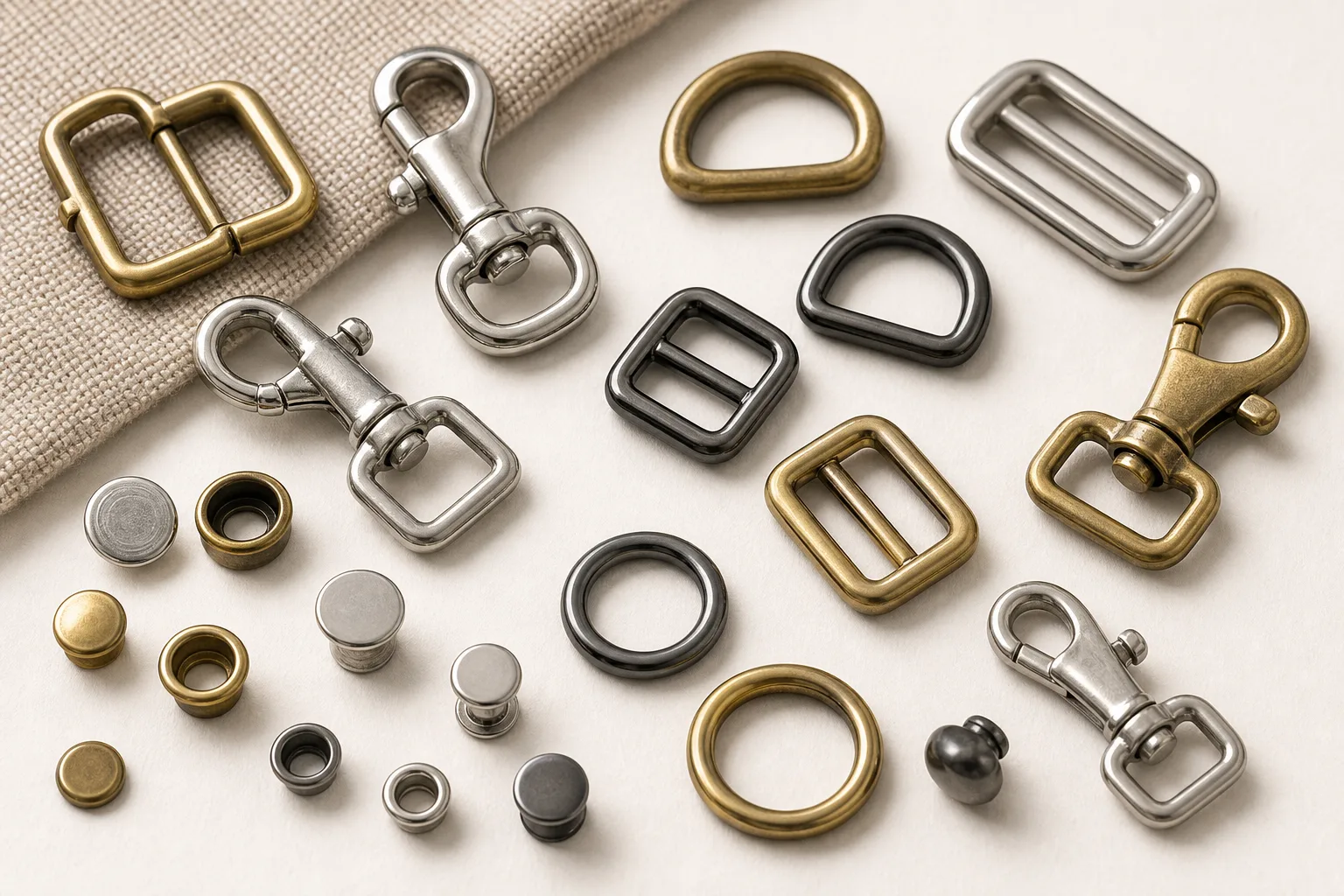
A dog reaching the end of a lead applies a sharp load that has nothing to do with its resting weight, and it does so repeatedly. Add chewing, outdoor exposure and the fact that a failure lets an animal loose near traffic, and this becomes a category where the structural positions deserve real attention.
Separate the structural positions from the rest
On a typical collar-and-lead set only a few positions carry the load: the clip that joins lead to collar, the collar closure, the D-ring the clip attaches to, and on a harness the attachment ring and its stitched anchor.
Everything else — sliders, keepers, decorative parts — is convenience. Concentrating specification and review effort on the structural few is more effective than raising requirements across the whole set.
The load is a snatch, not a hang
An animal accelerating to the end of a lead produces a peak far above its standing weight, applied in a fraction of a second and often at an angle. This is a shock-loading problem.
Because of that, the assembly matters as much as the part: the stitching, the webbing and how the ring is captured all participate. Review a made-up assembly under a sharp pull rather than reviewing loose components. This guide states no load figures — they depend on the assembly, the webbing and the test method, and belong in a discussion about your specific product.
Gates, springs and what opens by accident
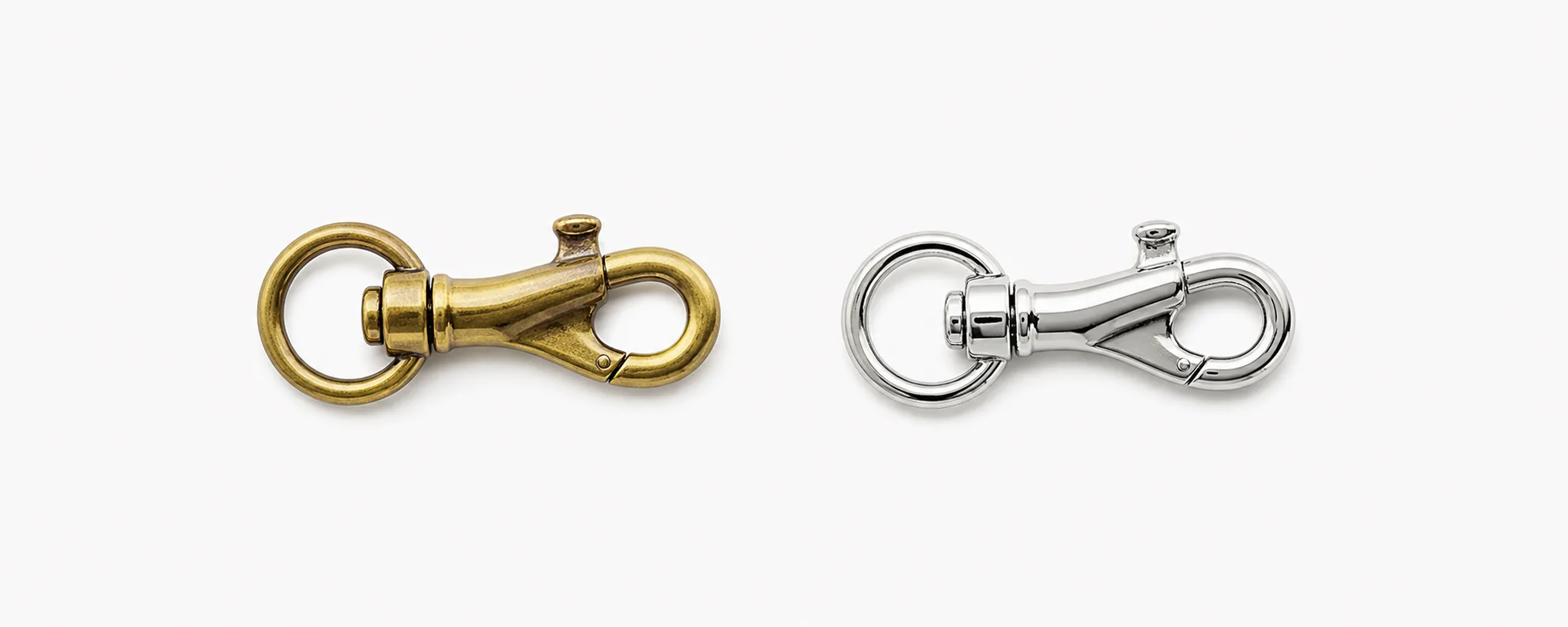
The lead clip is a moving mechanism holding a live animal. A gate that can be pushed open against a body, or a spring that weakens with grit and moisture, is the most consequential failure in the category.
Review the gate under a sideways load and after contamination, not only when clean and unloaded. Ask how the mechanism behaves as the spring ages rather than only how it performs new.
Chewing, licking and prolonged mouth contact
Pet hardware is chewed, licked and dragged. Coatings can be worn or removed by an animal in ways no human-worn product experiences, and mouth contact may bring restricted-substance requirements in some markets.
Where the product is likely to be mouthed, state that in the enquiry along with the market requirement scope you need to satisfy, so material and finish can be reviewed against it from the start.
Outdoor exposure, every day
Collars and leads are outdoors daily, wet often, and are rarely dried or maintained. Where the animal swims in salt water or the product is used in winter road conditions, the exposure is more demanding still.
Describe the environment and use frequency; that description drives the material recommendation more usefully than a material name requested up front.
What to specify
Product type and animal size range, webbing widths, which positions are structural, expected exposure environment, whether mouth contact is likely and any restricted-substance scope required, the mechanism type for clips, finish, and quantity per size.
Send a made-up product or a description of the stitched assembly at each structural position. The part alone does not determine the result here.
Pet hardware is reviewed at a small number of structural positions under shock loading, with the assembly included. Give the clip mechanism particular attention, describe the exposure and any mouth contact, and keep the requirements proportionate elsewhere.
 Quality Guides
 Application Guides
 Buyer Guides
 Material Guides
 Application Guides
 Buyer Guides
 Application Guides
 Application Guides