
On a pair of jeans the waistband button takes more repeated strain than almost any other trim on the garment. It is opened and closed daily, sits at the point where the body flexes, and goes through industrial washing before it ever reaches a customer. The construction used there is not a style decision, and understanding why makes the specification much easier to write.
How a tack button is set
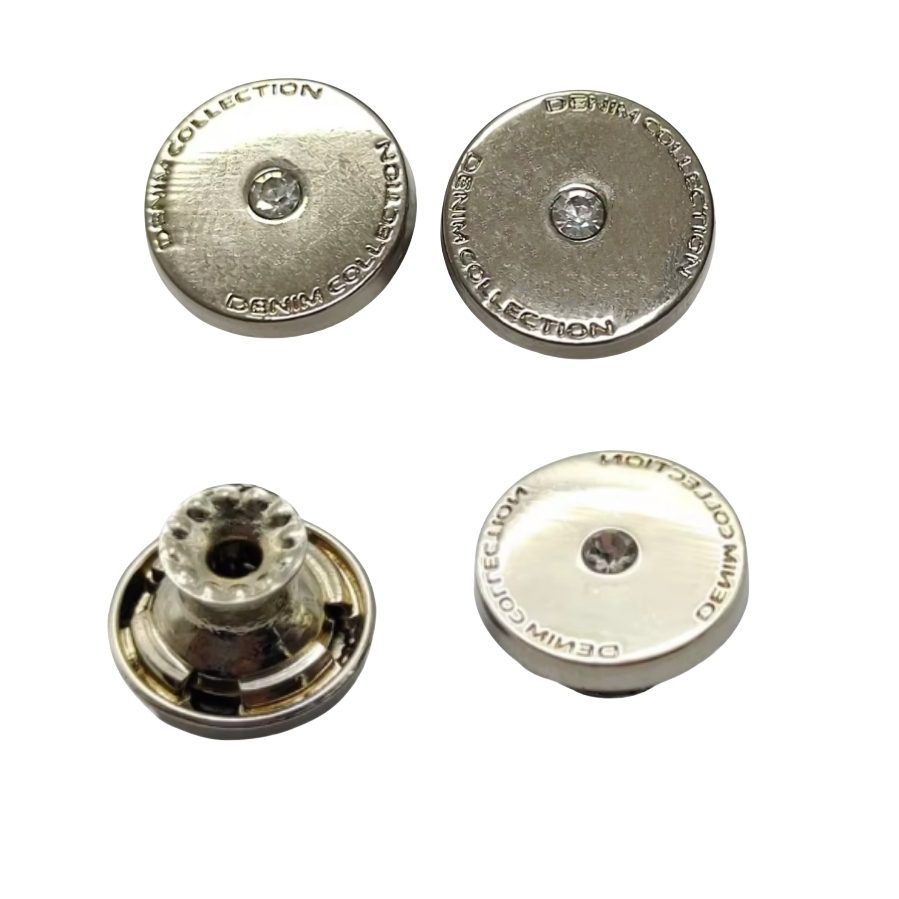
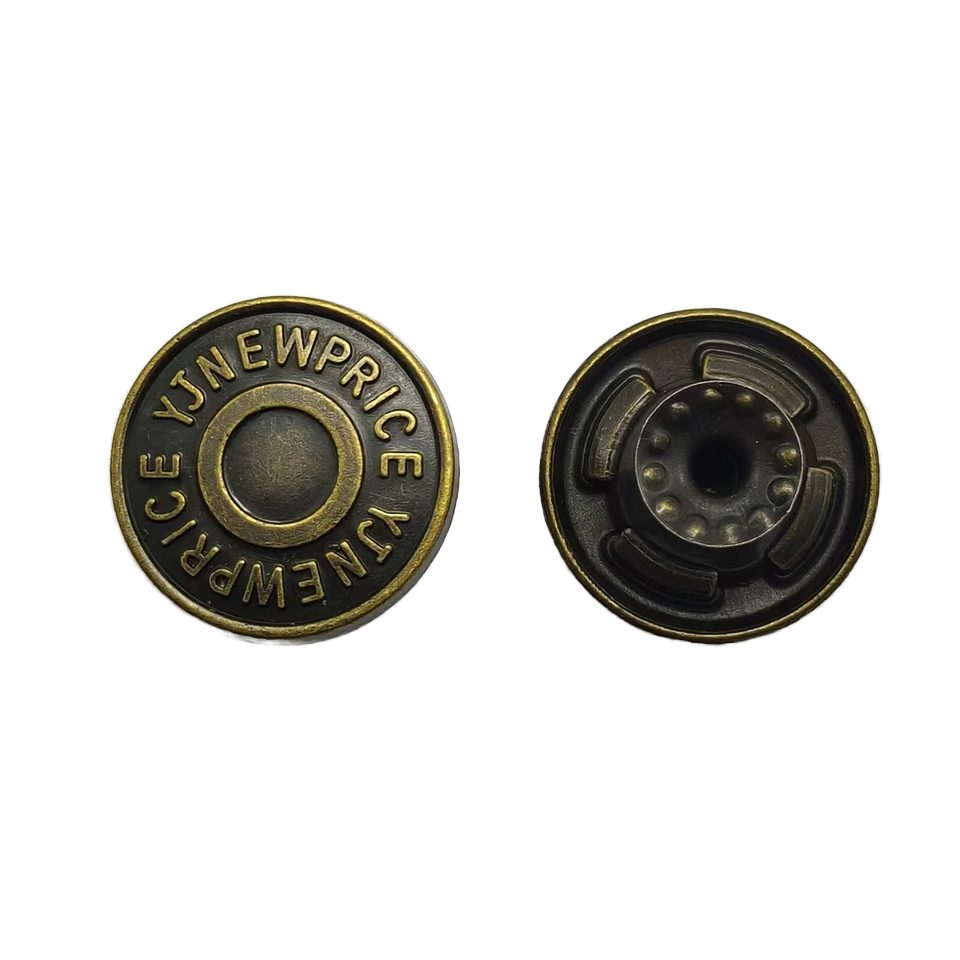
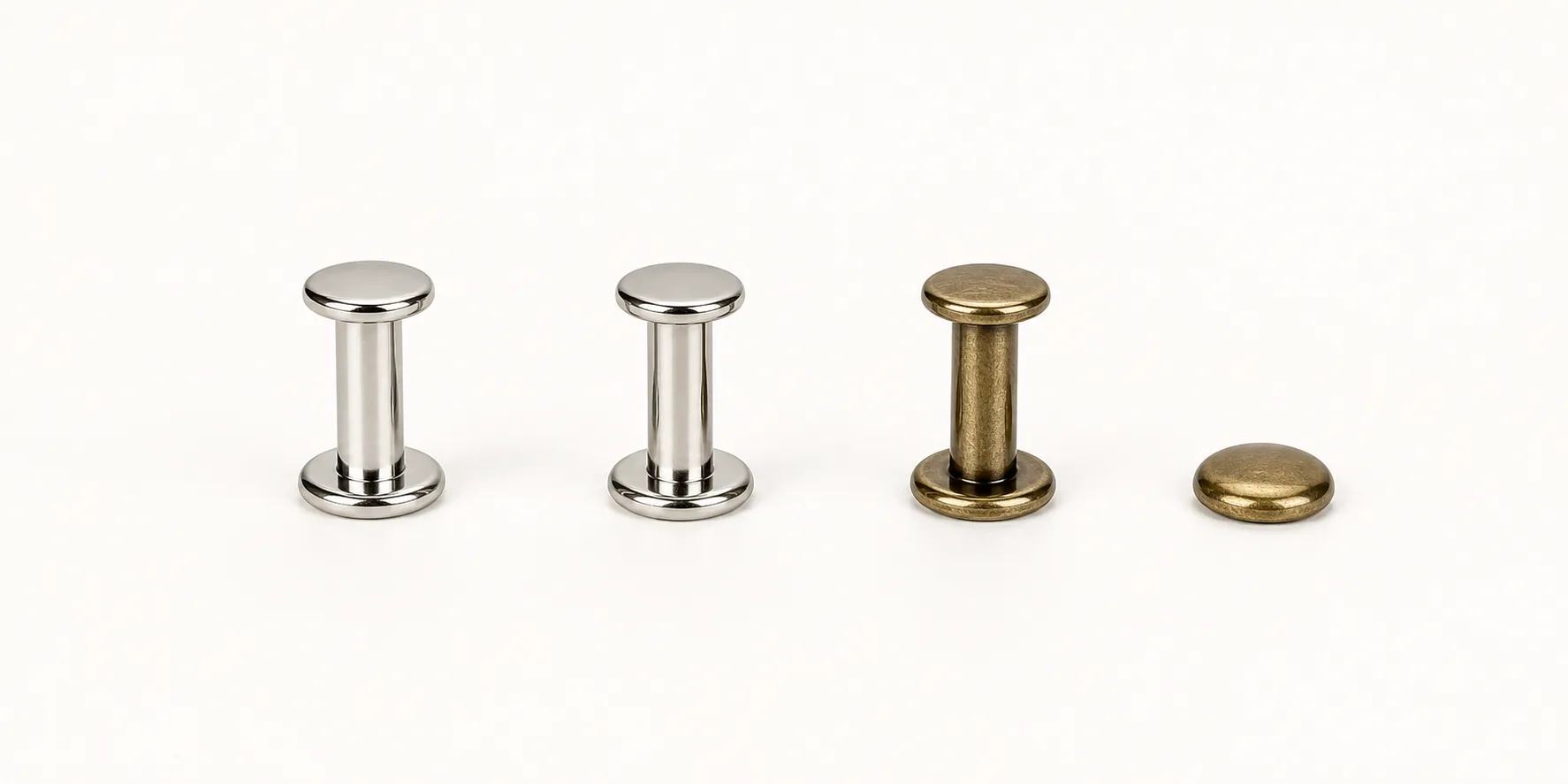
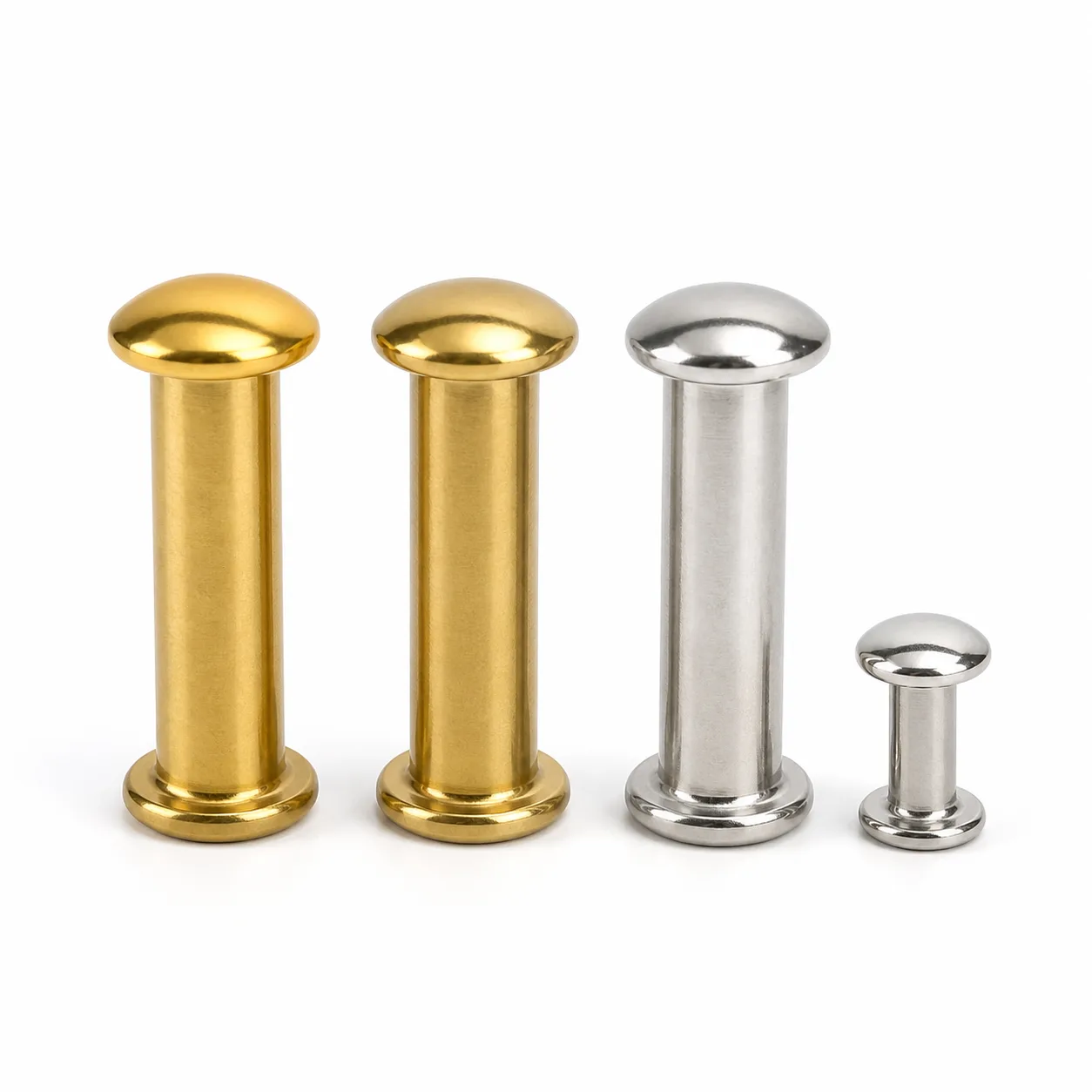
A tack button comes in two parts: the button head and a tack, sometimes called a nail or pin. The tack is pushed through the denim from the reverse and the head is placed over it on the face; a press then drives the two together so the tack deforms inside the head and locks. The fabric is clamped between them and becomes part of the joint.
Because the fabric is inside the joint, the tack length must suit the actual thickness at that point — and a jeans waistband is usually several layers plus a facing. Too short and the tack does not reach far enough into the head to lock; too long and it can bottom out or push through the face. This is the single most common cause of buttons that come loose in wear.
How a shank button differs
A shank button is sewn through the loop on its back. No press is involved, no fabric is captured, and the joint is thread rather than metal. That makes it easy to fit anywhere and easy to replace, and it puts the strength question onto the stitching and the fabric rather than onto the button.
On denim the trade-off is clear. Thread at a high-strain closure point is a wear item; a metal-to-metal tack joint is not. Shank buttons make sense on lighter denim garments, on jackets where the strain is lower, and where the design wants visible stitching.
Fixed versus movable tack buttons
Tack buttons come in fixed and movable versions. A fixed button sits tight against the fabric. A movable, sometimes called a jeans button with a spinning or floating head, can rotate and tilt slightly on its tack, which lets it self-align as the waistband flexes.
The movable version is common on heavier denim because it reduces the leverage the button applies to the fabric when the waistband bends. It is not automatically better — it is a different behaviour, and which one suits depends on the denim weight and the fit.
What the wash does
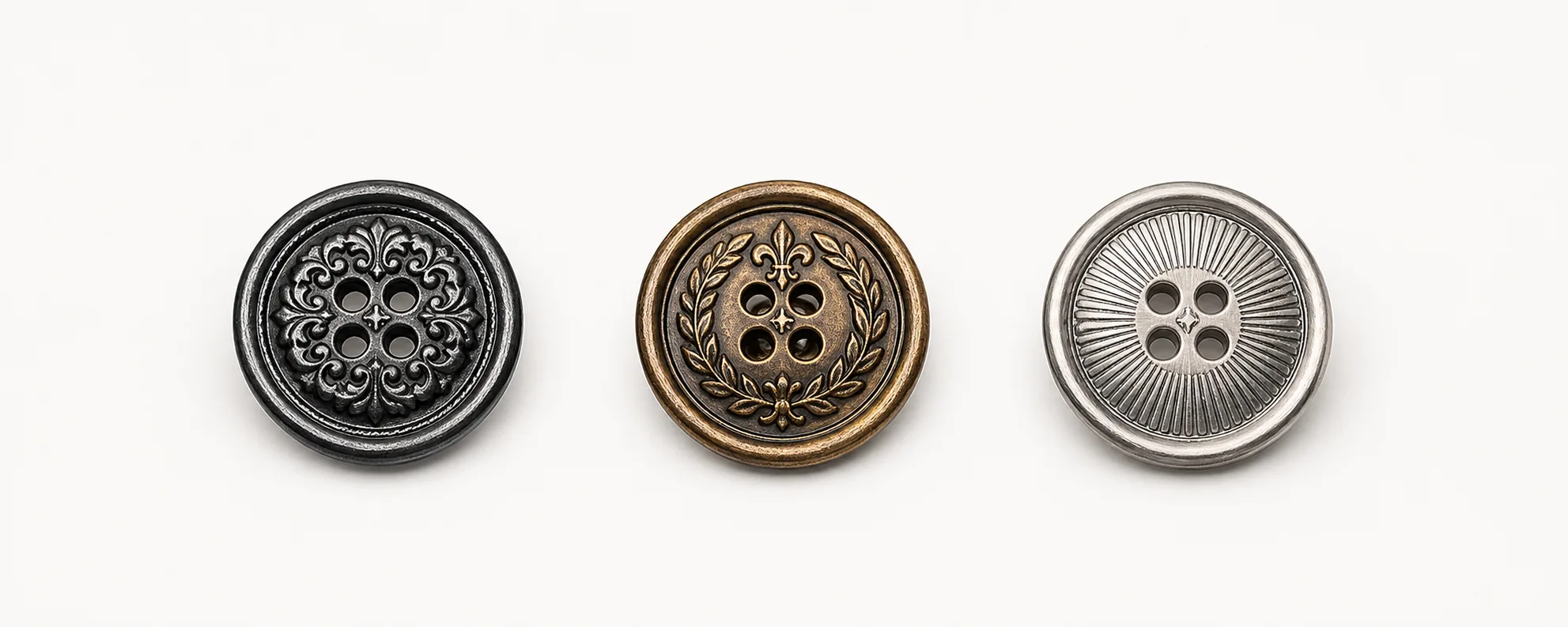
Denim garments are washed hard after assembly: stone wash, enzyme wash, bleaching and sometimes garment dyeing. These processes act on the button finish, on the tack joint and on the fabric around it. Antique brass, gunmetal and painted finishes each respond differently, and the effect is part of the intended look on many denim programmes.
Because the outcome depends on the specific wash recipe, this guide does not predict how any finish will come out. The workable approach is to run the wash trial with the actual button on the actual fabric, and to approve the sample after the wash rather than before it.
Choosing between them
Use a tack button on a denim waistband, on workwear closures and anywhere the closure is opened daily under strain. Use a shank button on lighter garments, on jackets and shirts, and where the design wants a sewn appearance or where the factory has no press.
Factory capability is a real constraint, not a footnote. Setting tack buttons needs a press, the correct die for the head profile, and an operator who checks the set joints. If the garment factory does not have this, the choice is made for you regardless of what suits the fabric.
What to specify
Button type, head diameter, tack length for the confirmed fabric stack, fixed or movable, logo artwork and marking method, material and finish direction, wash process the garment will go through, and quantity per garment. Send a denim swatch of the real waistband construction — including facing and interlining — so the tack length can be trialled rather than estimated.
If you are matching an existing pair of jeans, send the button from it. Head profile, tack length and finish can all be read from a physical sample faster than from any description.
Tack and shank are two different joints, not two styles. A tack button captures the fabric in a metal joint and suits high-strain denim closures; a shank button relies on thread and suits lighter garments and factories without a press. The decisive specification in both cases is the fabric stack at the button position.
 Comparison Guides
 Comparison Guides
 Application Guides
 Comparison Guides
 Buyer Guides
 Comparison Guides