
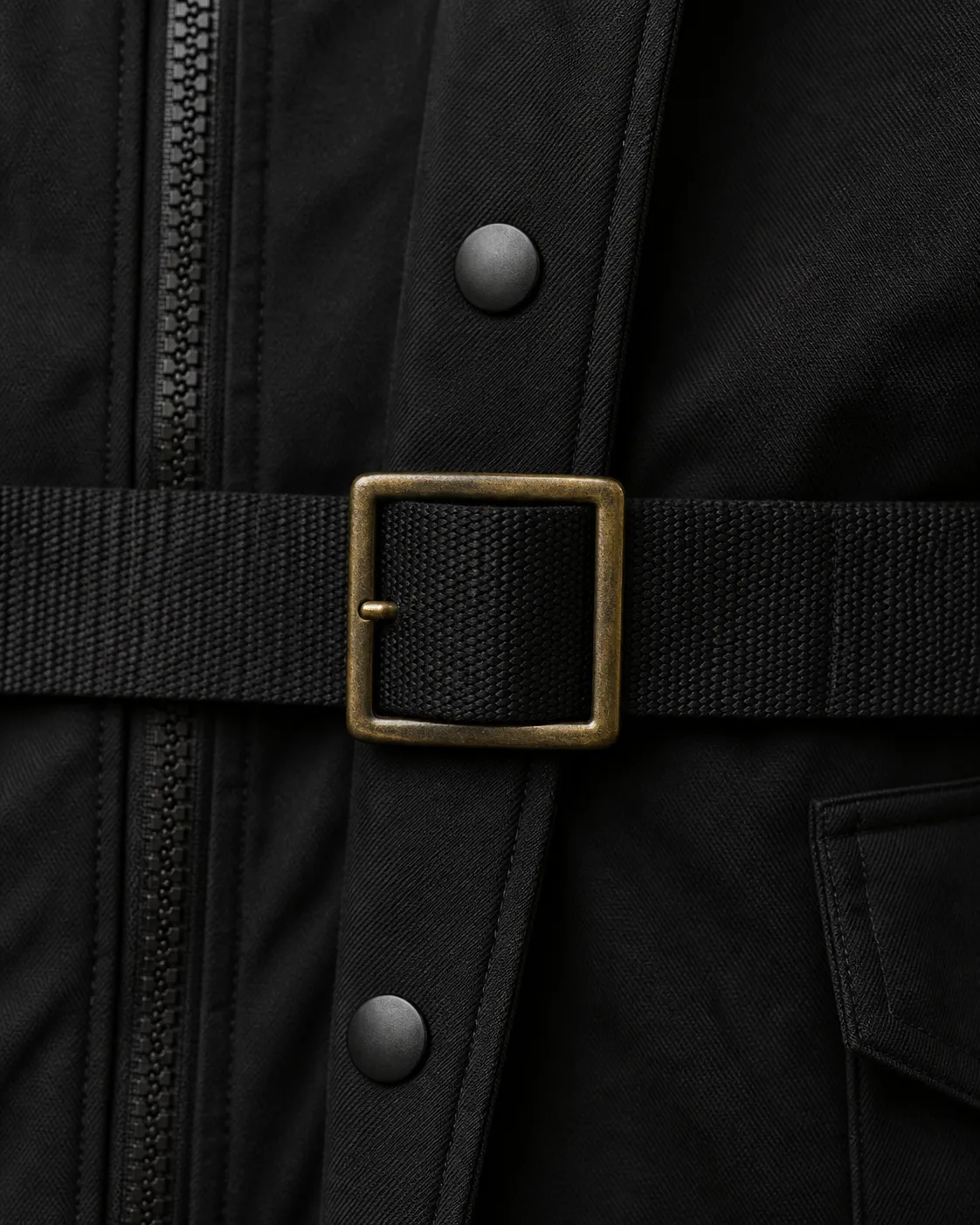
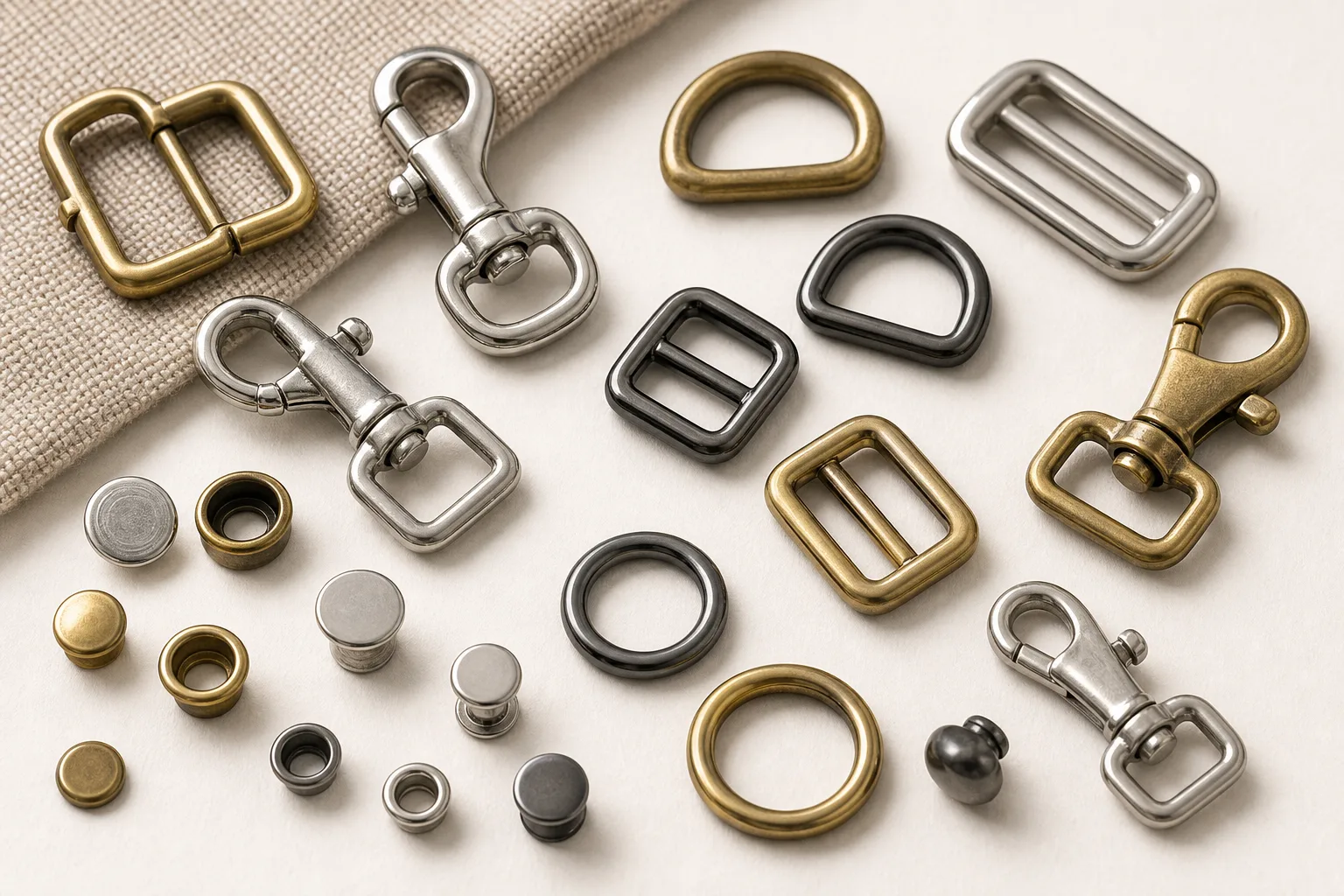
On a pair of jeans this is not a style question. The waistband button is opened and closed daily at the point where the body flexes, and it goes through industrial washing before it reaches a customer. The comparison is really between a metal joint and a thread joint at a high-cycle position.
Metal joint versus thread joint
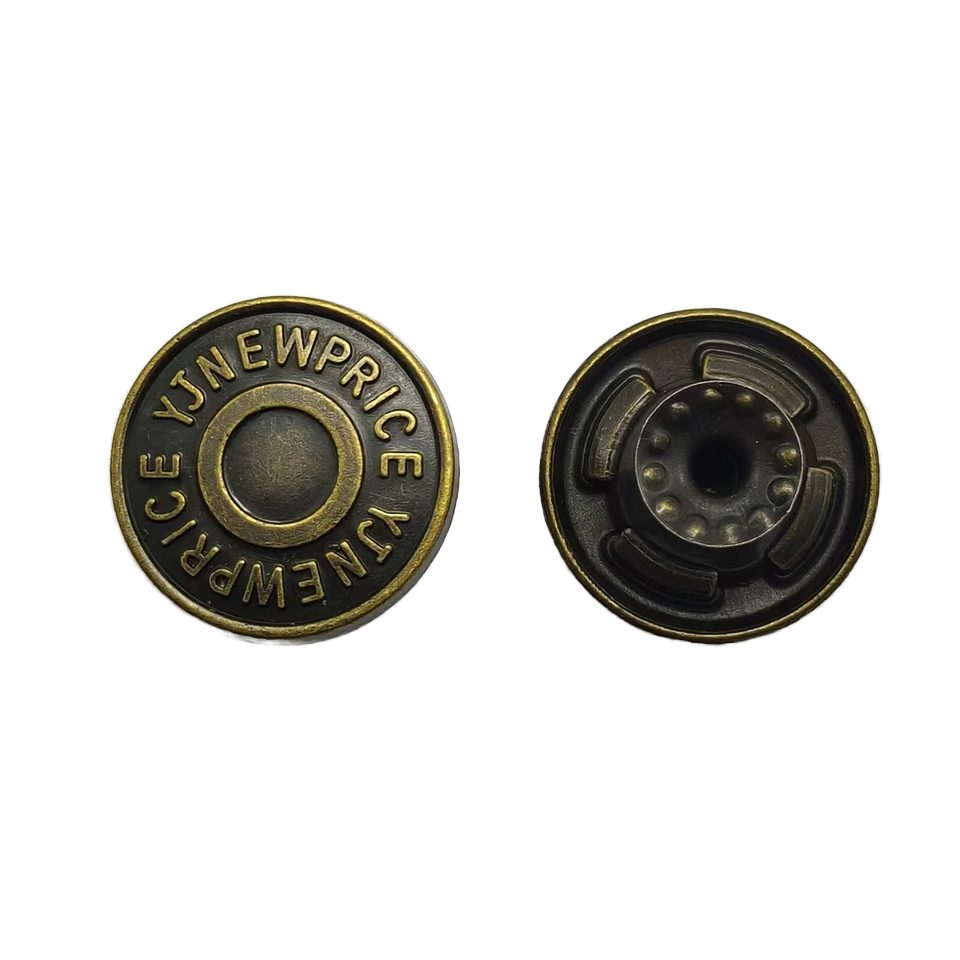
A tack joint is metal deforming into metal with fabric clamped between. There is no thread to abrade, and the joint does not loosen through use in the way stitching can. That is the whole reason the waistband position standardised on it.
A sew-through relies on thread passing through holes and into the fabric. Thread is a wear item, and at a position opened daily under load it wears. On a jacket cuff or a patch pocket that is fine; on a waistband it is a shorter-lived solution.
Where sew-through still belongs on denim
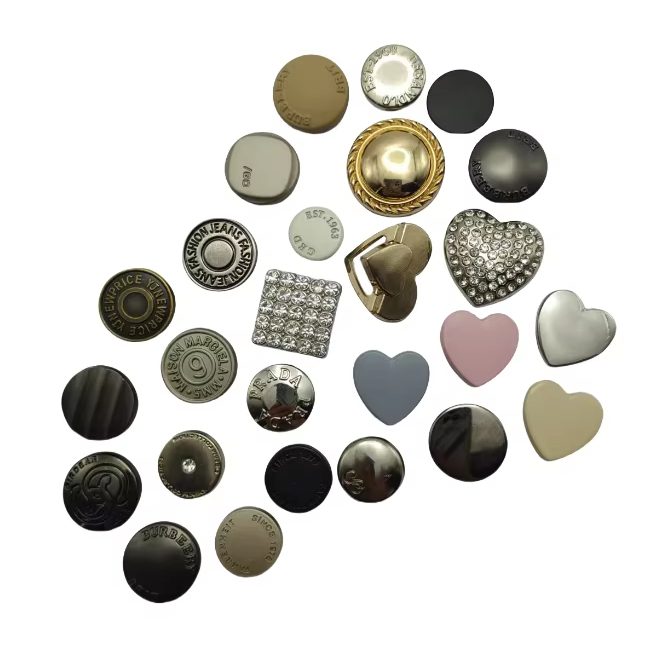
Denim garments are not only jeans waistbands. Jackets, shirts, lighter pieces and decorative closures all use sew-through buttons, and there the lower strain and the visible stitching are both acceptable or wanted.
Sew-through is also the fallback when the garment factory has no press. That is a legitimate constraint, but it should be a known decision rather than a substitution made late.
What the factory needs
Tack buttons need a press, the correct die for the head profile, an operator who checks set joints, and a trial to confirm tack length on the actual waistband. Sew-through needs a button machine or hand sewing and nothing else.
When a style moves to a new maker, this is one of the first things to confirm. Late substitutions from tack to sew-through change the product, and they are usually made under time pressure without a wash trial.
The waistband stack
A jeans waistband is several layers plus a facing, and the thickness at the button position is greater than the flat denim. Tack length has to be set against that made-up stack; a length chosen from flat fabric will be short and the joint will not lock properly.
This is the single most common cause of buttons that come loose in wear, and it is entirely avoidable by sending a made-up waistband sample rather than a fabric swatch.
The wash, and what it does to each
Both go through the garment wash, and the wash acts on the finish, on any coating and on the thread. On denim the aged appearance is often intended, and antique and gunmetal finishes are chosen for how they come out of it.
This guide does not predict how a given finish survives a given wash recipe, because that depends on the plating specification and the process. Run the trial with the real button on the real fabric and approve the sample after the wash rather than before.
How to specify
Button type, head diameter, tack length against the confirmed waistband stack for tack buttons, hole count and thread requirement for sew-through, logo artwork and method, material and finish direction, wash process, quantity per garment, and the press capability at the garment factory.
Send a made-up waistband, not a flat swatch. It settles tack length, set quality and appearance after wash in one object.
On a denim waistband the comparison is a metal joint against a thread joint at a daily-cycle position, which is why tack buttons dominate there. Sew-through remains right on lighter denim garments and where no press exists — as a decision, not a late substitution.
 Comparison Guides
 Comparison Guides
 Application Guides
 Comparison Guides
 Buyer Guides
 Comparison Guides