
Denim is unusual because the garment is normally finished after assembly. Stone, enzyme, bleach and abrasion processes act on the hardware exactly as they act on the fabric, which puts the laundry between the buyer and the finish they approved.
The wash happens after the hardware goes on
In most denim programmes the button and rivets are set during assembly and the garment then goes through wet processing. Whatever the laundry does to the indigo, it also does to the hardware surface, and mechanical processes add abrasion on top.
This is why a finish approved on a clean sample can arrive looking quite different in bulk. The realistic approval is on hardware that has been through the same process the production garments will see.
Tack buttons and shank length
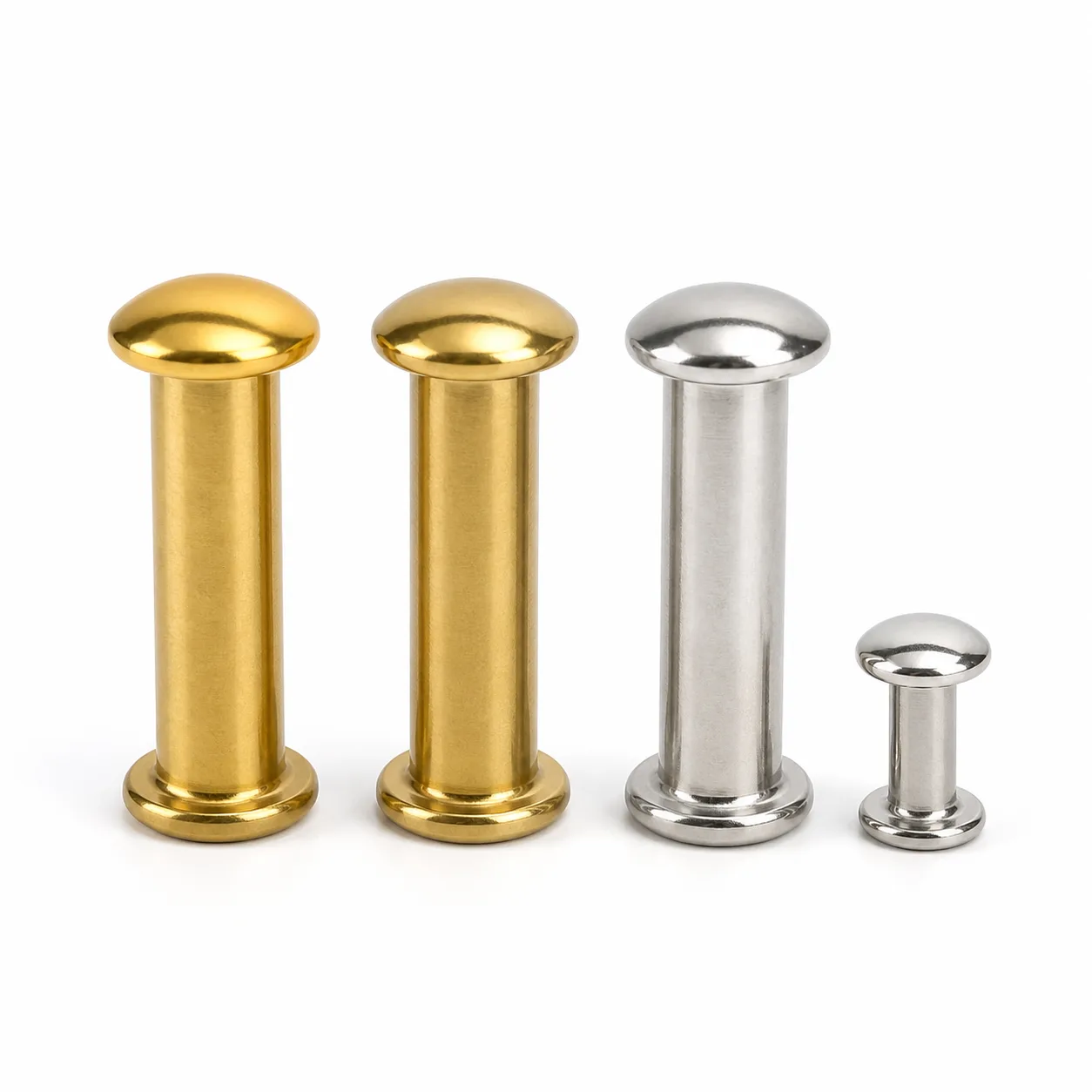
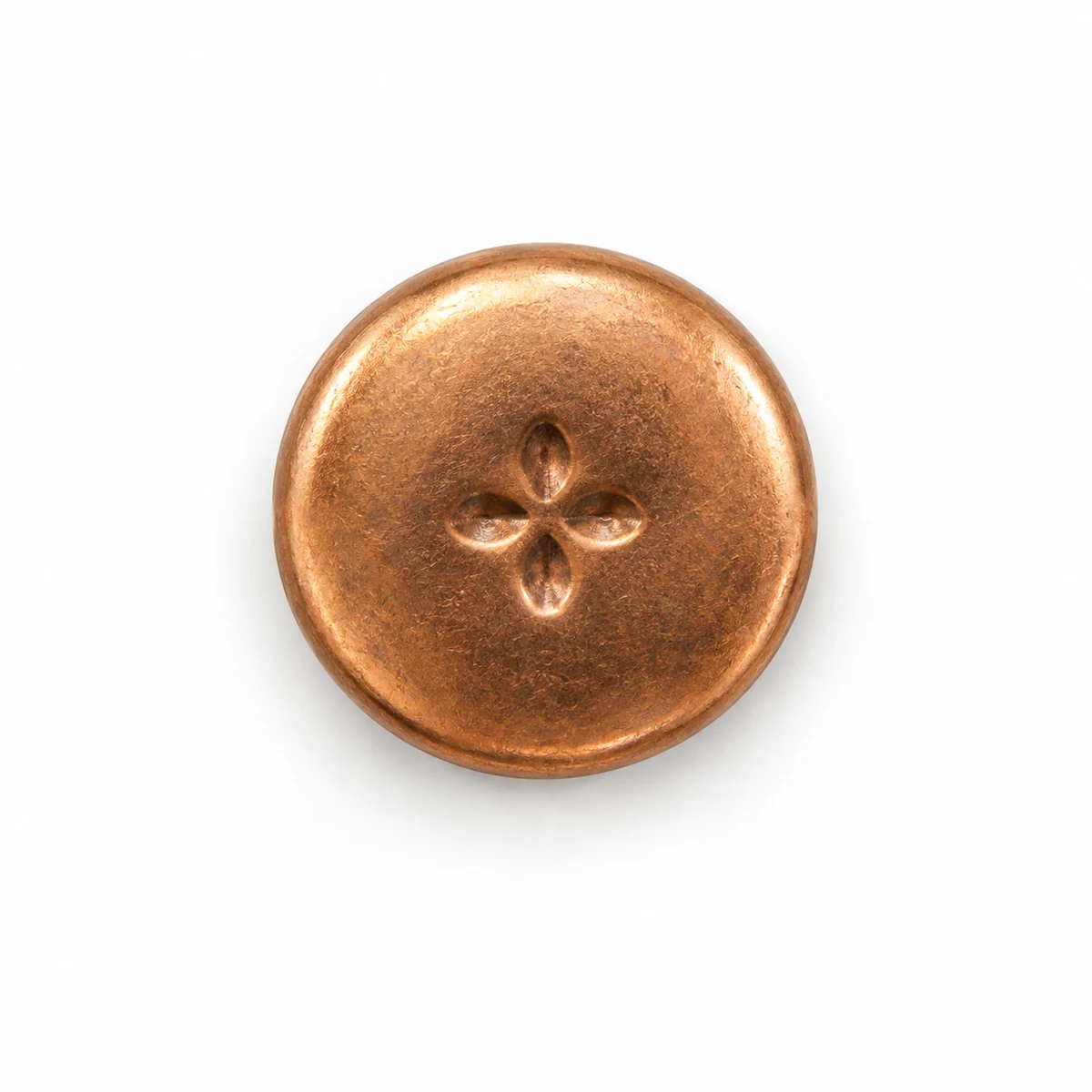
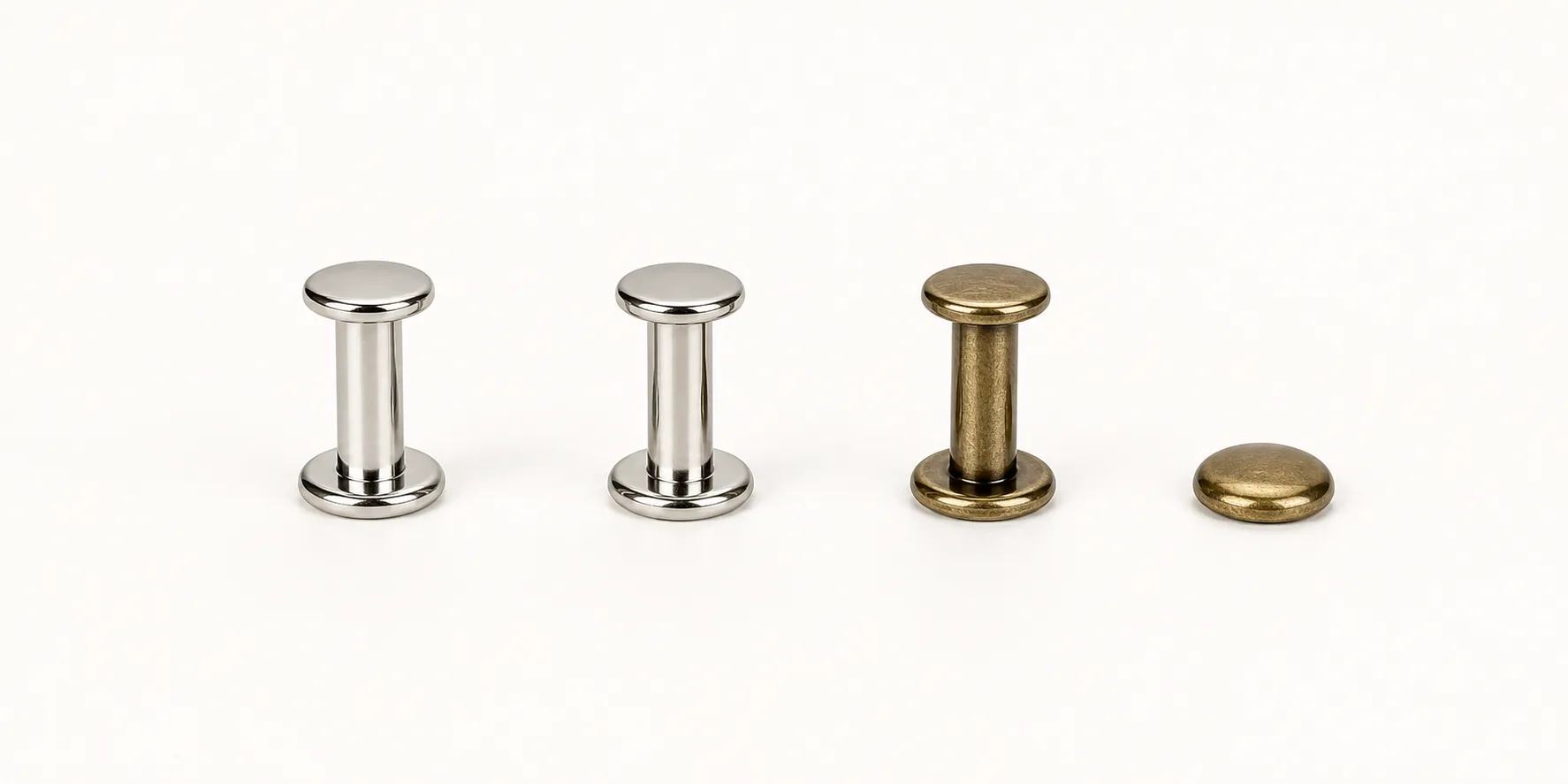
A tack button is a two-part fastener: a cap and a tack that is set through the fabric. The tack length must match the material stack at the waistband — shell, facing, waistband interlining and any turn-back — with enough engagement to hold but without excess.
Waistband construction differs between styles far more than the fabric weight suggests, so the stack should be measured on the actual construction rather than assumed from the denim weight alone.
Rivets sit where the seams concentrate stress
Rivets exist to reinforce pocket corners and other points where the seam changes direction under load. Their placement is a pattern decision; their size follows the thickness of the seam stack at that exact point, which is usually the thickest place in the garment.
A rivet that is short for its stack sits proud or holds poorly. One that is long deforms. Because pocket corners vary between styles, this dimension is worth confirming per style rather than carrying forward.
What the laundry does to a finish
Different finish families respond differently to wet processing and abrasion, and some denim programmes deliberately want the hardware to age with the fabric. Others want it to stay as-set. Both are legitimate, but they are opposite specifications and must be stated.
Say which you want, and give the laundry recipe or at least its type when asking for a recommendation. Without it, any finish suggestion is guesswork, and this guide states no resistance figures because they are meaningless detached from a specific process.
Keeping a set consistent across the garment
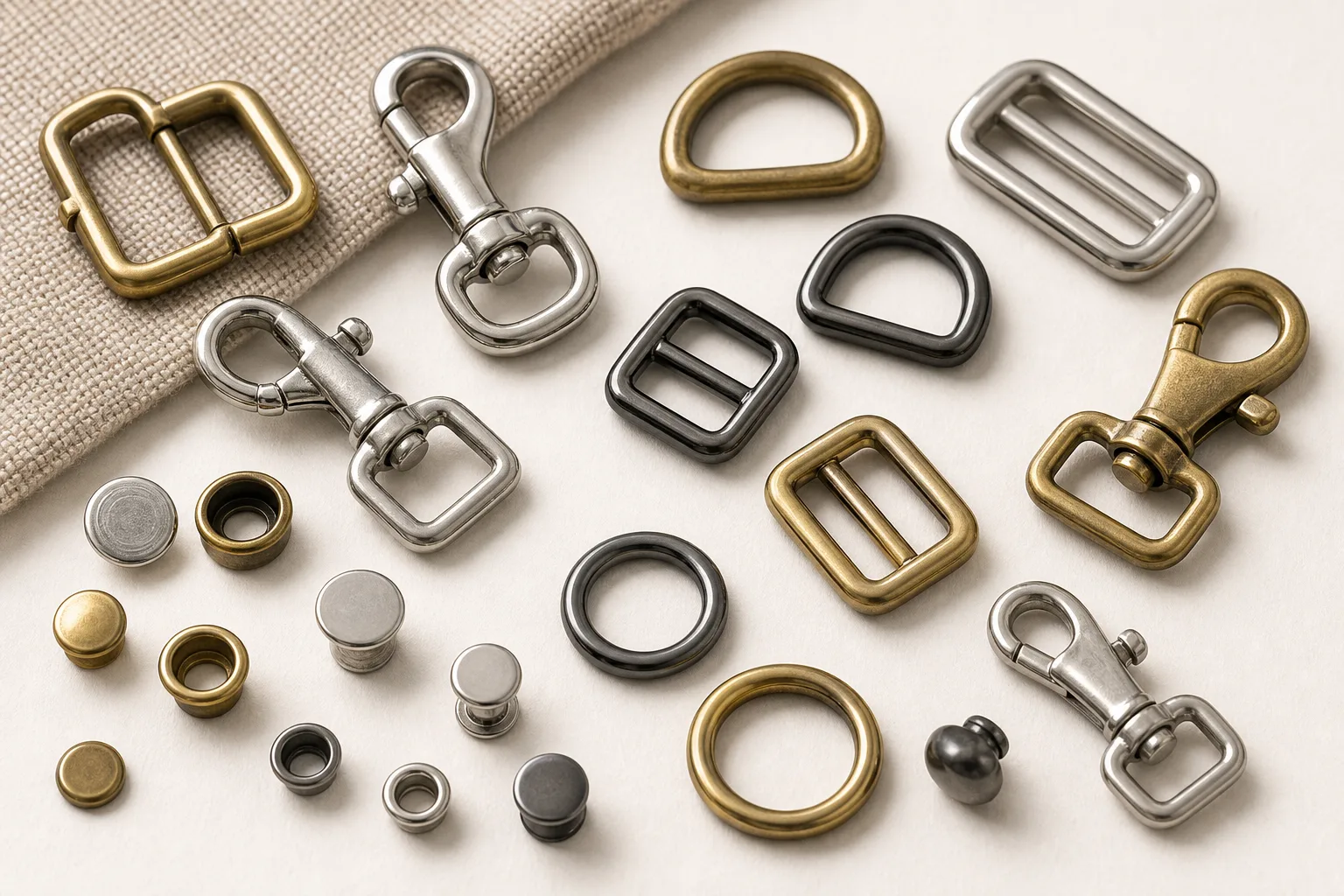
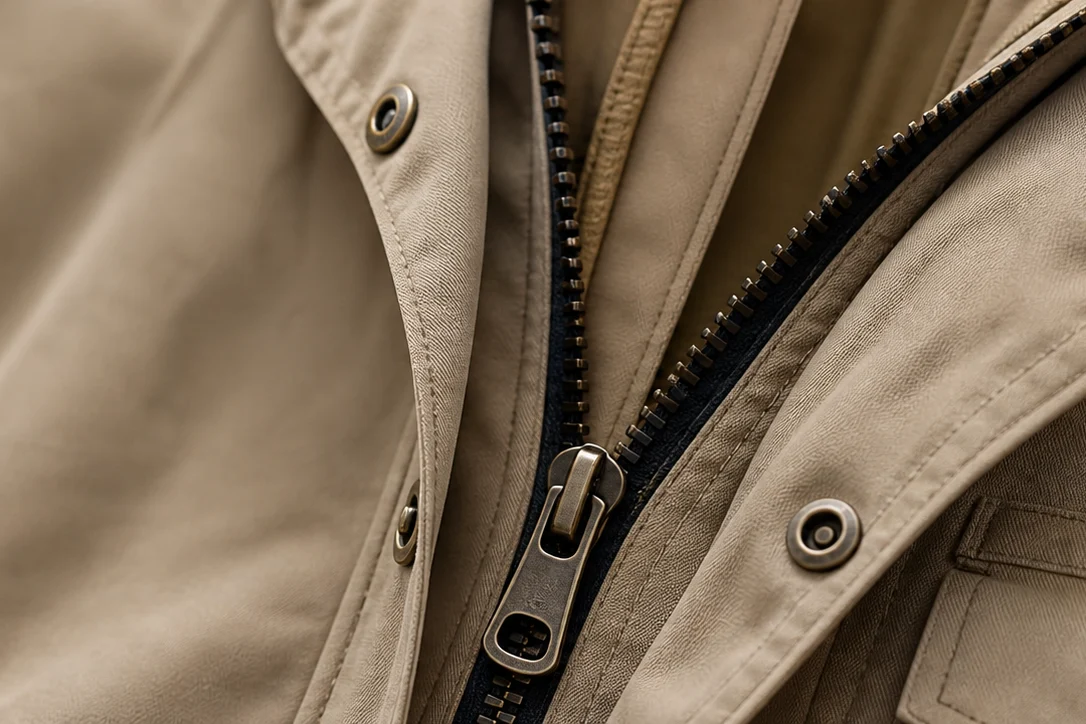
A pair of jeans carries a button, several rivets, sometimes a zipper puller and often a branded plate. These are frequently different parts from different tooling, and they must read as one set after washing.
Approve them together, after processing, in the same light. Approving the button alone and assuming the rivets will match is how a set drifts apart in bulk.
What to specify
Denim weight and the full material stack at the waistband and at pocket corners, button and rivet type, the laundry recipe or process type, whether the hardware should age with the garment or stay as-set, logo requirement, the complete set of parts to be matched, and quantity per style and size.
Send a garment or a made-up waistband section if one exists. Stack thickness taken from a real construction is worth more than any description of the fabric.
Denim hardware is specified around the laundry. Size the parts from the real material stack at each position, decide explicitly whether the hardware should age with the garment, and approve the whole set after processing rather than before it.
 Comparison Guides
 Application Guides
 Application Guides
 Comparison Guides
 Comparison Guides
 Quality Guides