
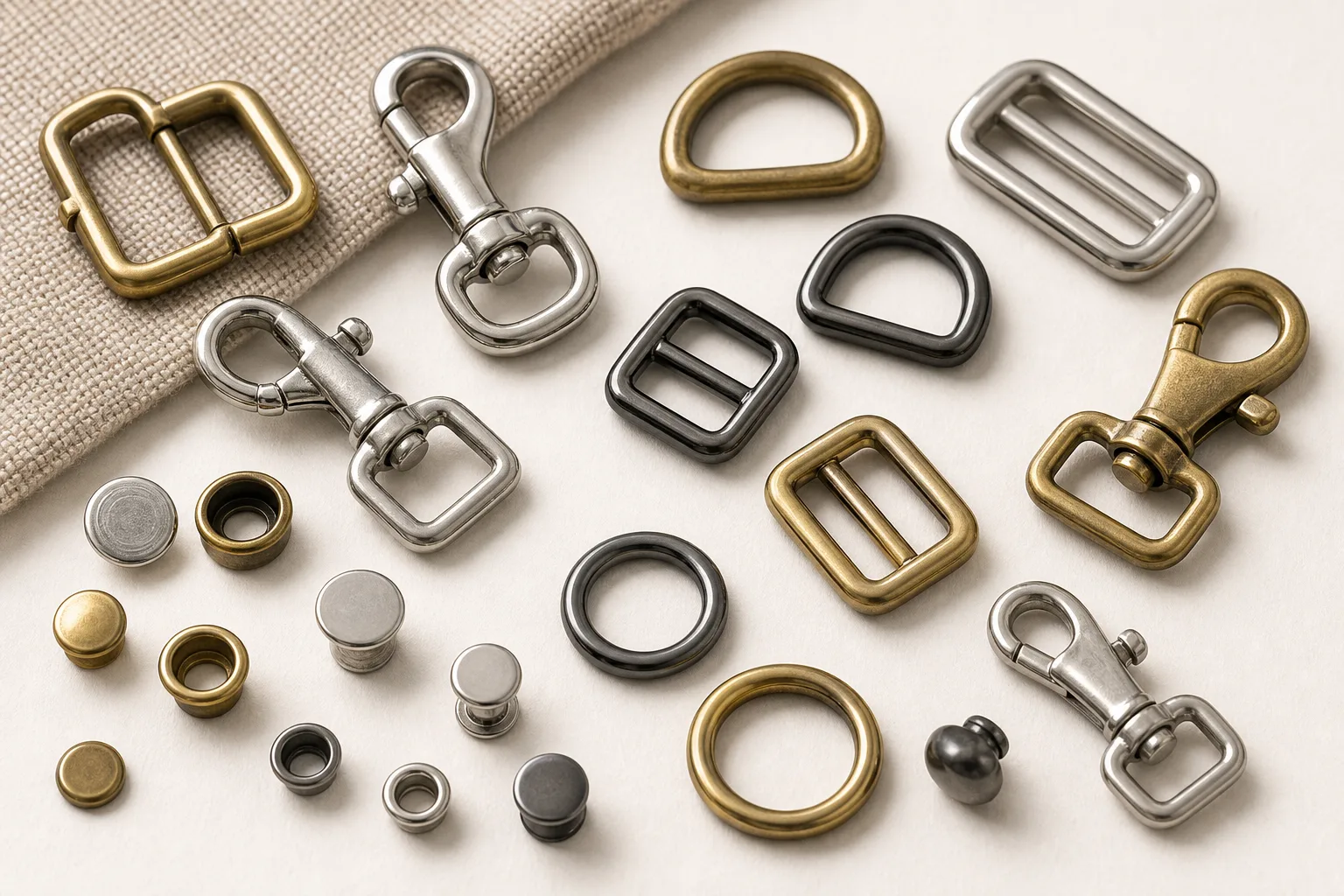
Rivets are used at exactly the points where a bag or a garment is most likely to fail: pocket corners, strap ends, handle attachments, stress points at seam junctions. They are simple parts, but a rivet that is chosen without reference to the material stack it sets into will either spin loose or cut through, and both are discovered after production rather than before.
What a rivet does that stitching does not
Stitching distributes load along a line of holes; a rivet concentrates it into a single clamped point with a large bearing surface on both faces. That is useful precisely where a seam ends and load turns a corner — the pocket corner on jeans is the classic example, and it exists because the corner was where the stitch line failed.
Because the rivet clamps rather than sews, the material is inside the joint. Its thickness, compressibility and surface all become part of the specification, which is the main reason rivet inquiries need a swatch rather than a fabric name.
Single-cap and where it belongs
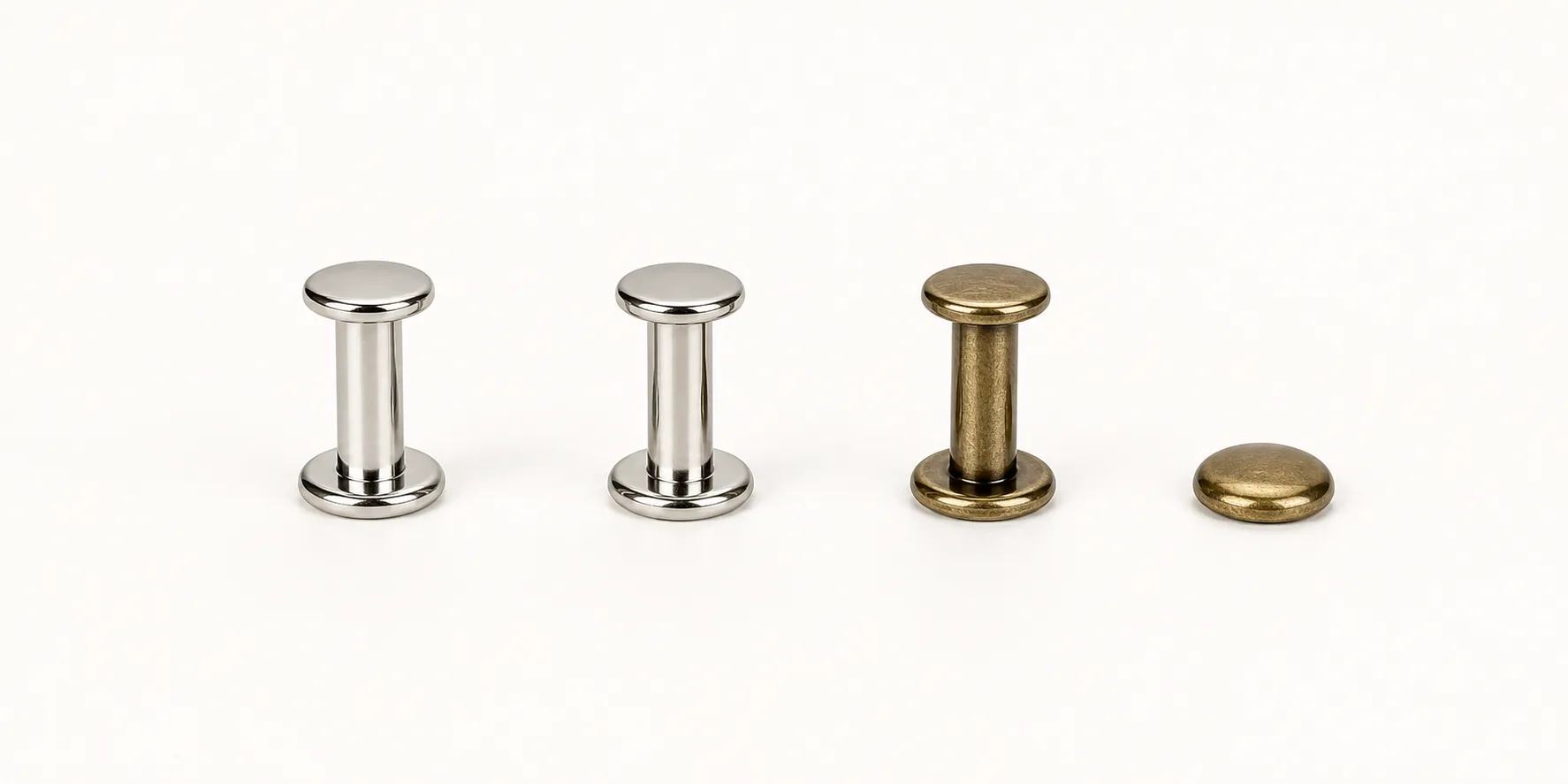
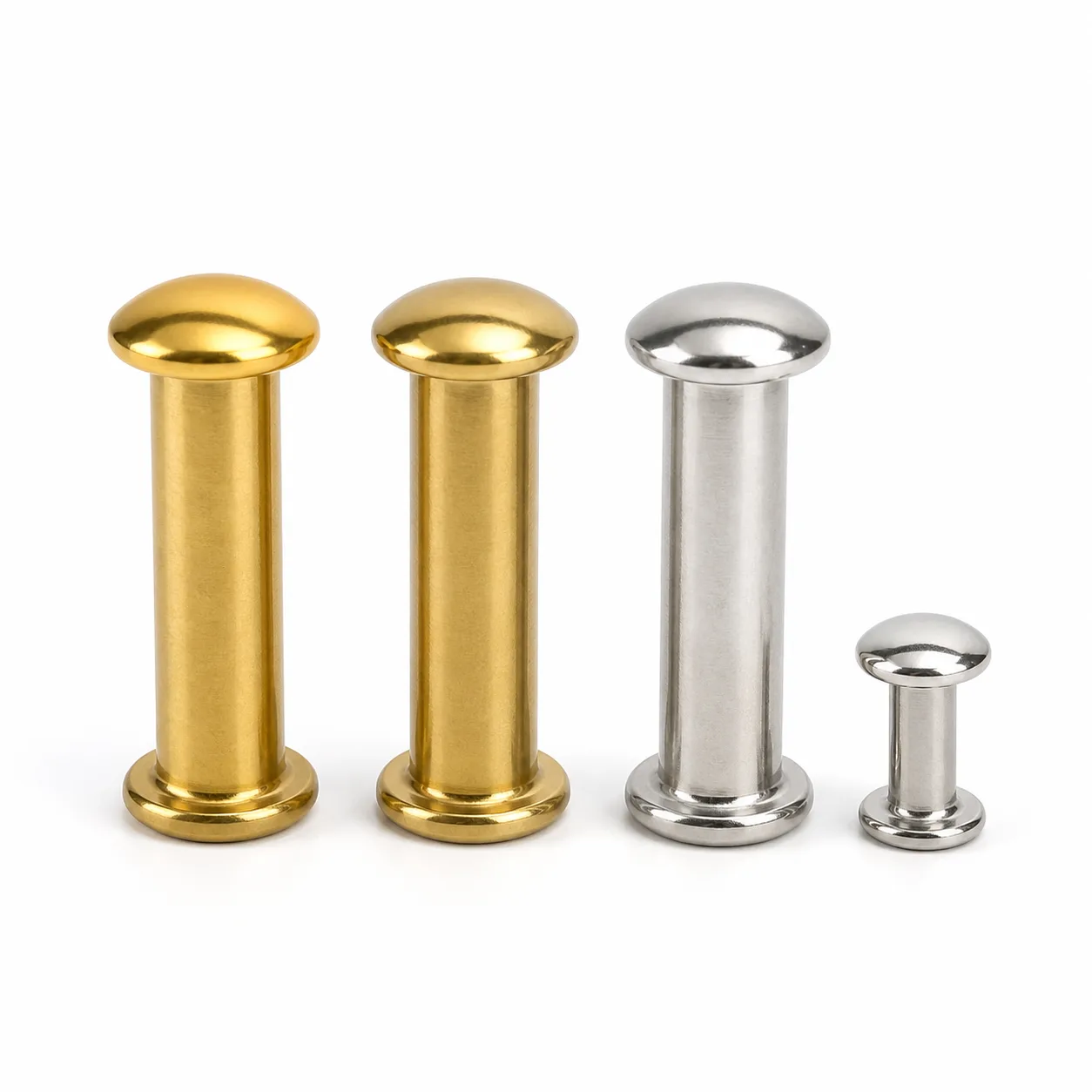
A single-cap rivet finishes one face and leaves a flared or clinched post on the other. Use it where the back is lined, hidden inside a bag, or otherwise never seen. Because there is only one cap, it is lighter and usually cheaper, and the flared back can sit flatter against a lining than a second cap would.
The flared back does need somewhere to go. Against a hard interior panel it can create a raised point that eventually wears the lining, so on bags it is worth checking what the back of the rivet will rub against over a couple of years of use.
Double-cap and where it belongs
A double-cap rivet finishes both faces, which is why it is standard on denim pocket corners, on unlined leather straps and anywhere a user will see or feel the reverse. Both caps can carry a logo, though usually only one is marked.
Double caps are also slightly more forgiving on abrasive contact, because a smooth domed cap rather than a flared post sits against skin or lining. The cost is a second part, a marginally thicker joint, and a slightly narrower window on post length.
Post length and the material stack
The post must be long enough to reach into the cap and lock, and short enough that it does not bottom out and split the cap. That window is measured against the total thickness of everything the rivet passes through: outer material, any interlining, seam allowances folded into the corner, and lining.
Denim pocket corners are a good illustration, because the corner is where several folded layers meet and the stack is much thicker than the flat fabric elsewhere. A post length chosen against flat denim will be too short at the corner. Sending a made-up corner rather than a flat swatch removes this problem entirely.
Cap diameter, profile and finish
Cap diameter sets the bearing surface and therefore how load is spread; a small decorative cap on a high-load corner concentrates the pull. Profile — flat, domed, or with a raised logo — is mostly appearance, but a tall dome on a strap that runs against clothing will show wear sooner than a low profile.
Finishes on rivets go through the same garment processes as buttons: washing, dyeing, pressing. As with buttons, this guide does not predict how a given finish will survive a given wash, because that depends on the plating specification and the wash recipe. Trial the actual rivet on the actual fabric and approve after the wash.
What to prepare for a quotation
Single-cap or double-cap, cap diameter and profile, post length against the confirmed stack, the material and total thickness at the rivet position, rivets per product, logo requirement, material and finish direction, and any garment process after setting. Note whether the reverse face is visible.
Send a made-up sample of the actual position if you can — a denim corner, a strap end, a handle attachment. It answers post length, stack thickness and cap diameter in one object.
The single-cap and double-cap distinction is about how many faces need finishing, not about strength grade. What decides whether either sets properly is post length against the real material stack at the real position, which is thicker at corners and folds than a flat swatch suggests.
 Comparison Guides
 Comparison Guides
 Application Guides
 Material Guides
 Comparison Guides
 Comparison Guides
 Comparison Guides