
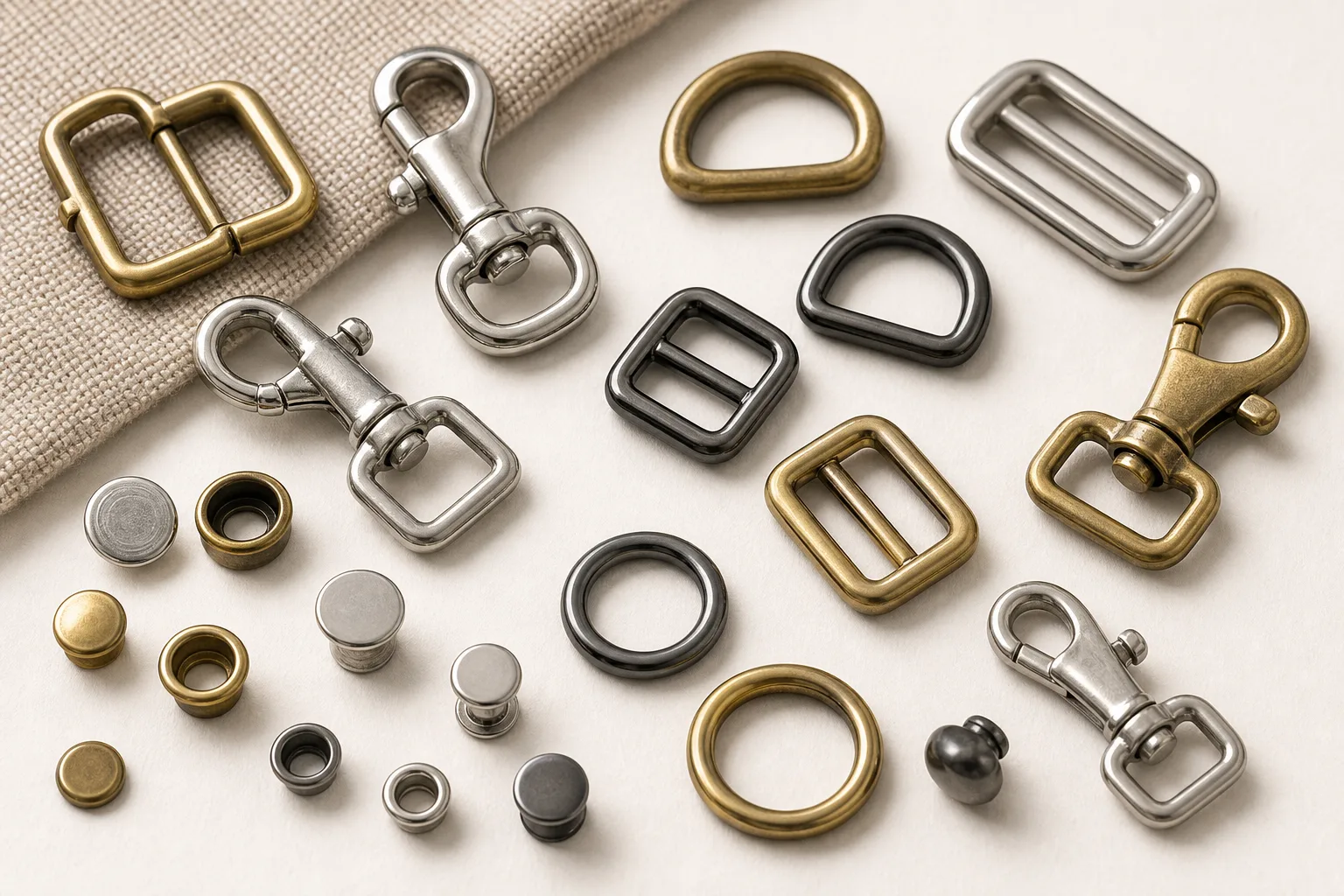
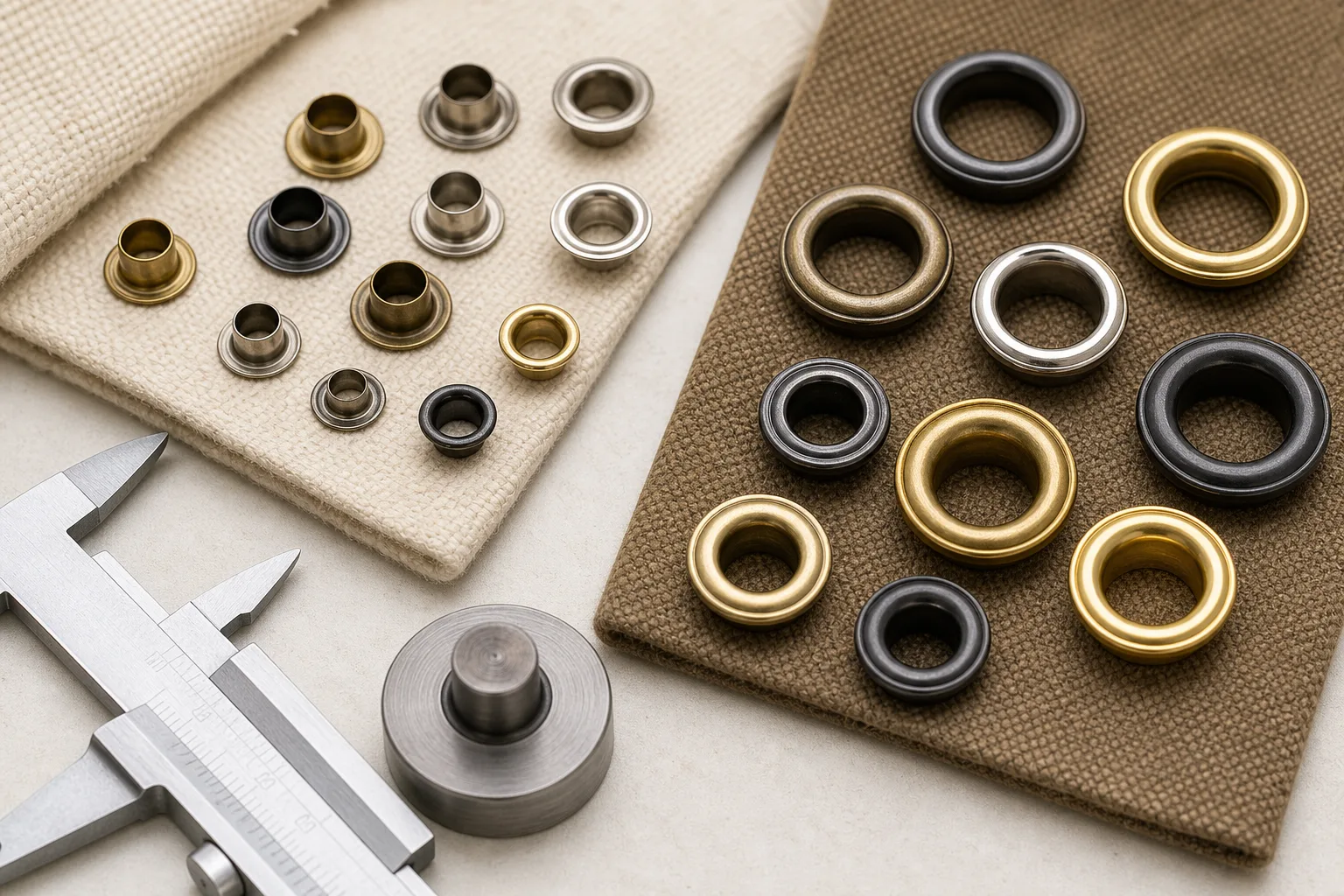
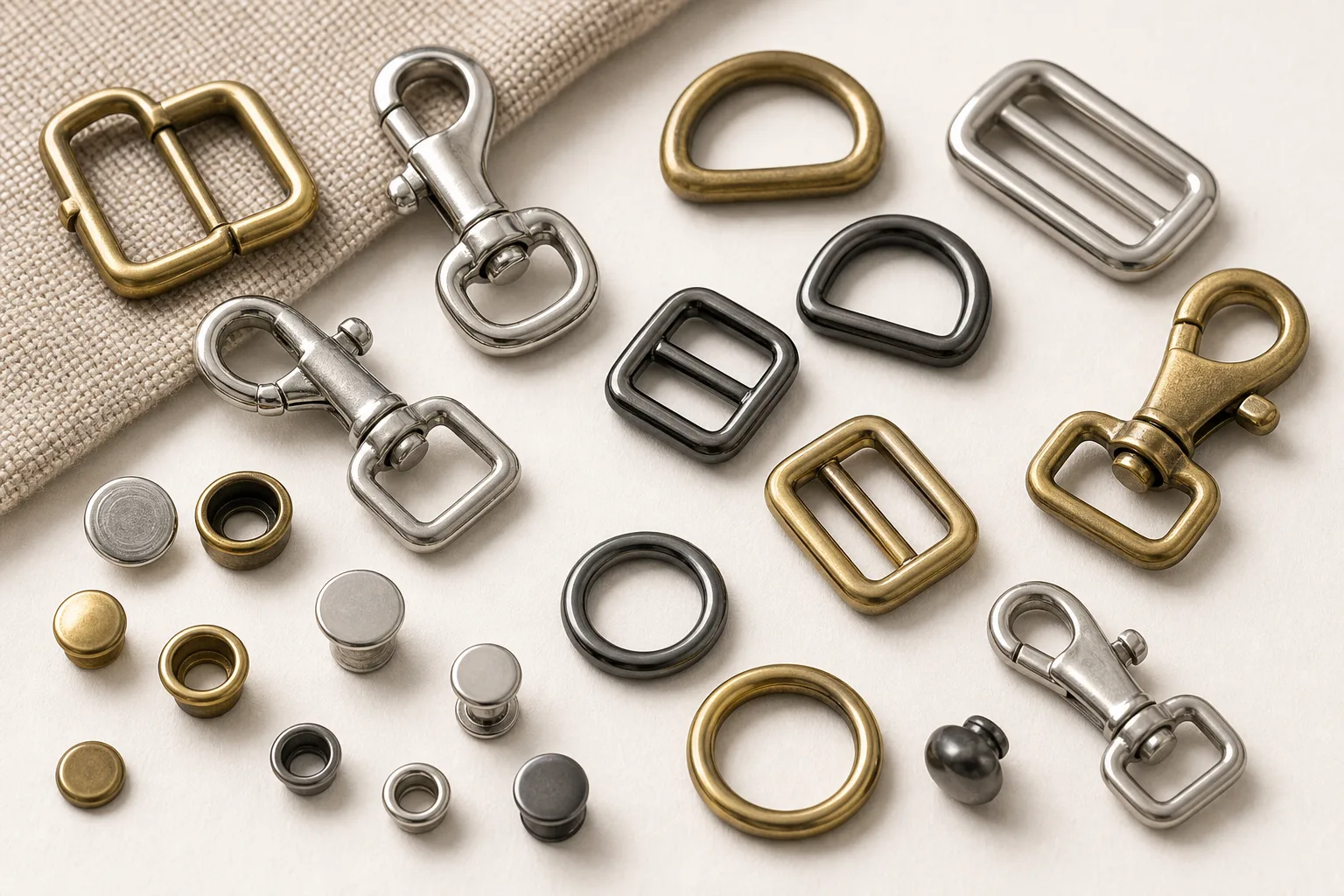
This pairing appears whenever cost pressure meets a large parts count — garment trims, eyelets, simple rings, buttons. The two are not close substitutes: one is a wrought route and one is a casting route, and they differ sharply in what happens after the finish is damaged. Both facts matter more than the raw material price.
Two different manufacturing routes
Iron hardware in this category is usually stamped from sheet or formed from wire. Those processes are fast, the tooling for simple shapes is inexpensive, and the part cost at volume is low. What they do not do easily is three-dimensional form, undercuts, relief detail or varying section.
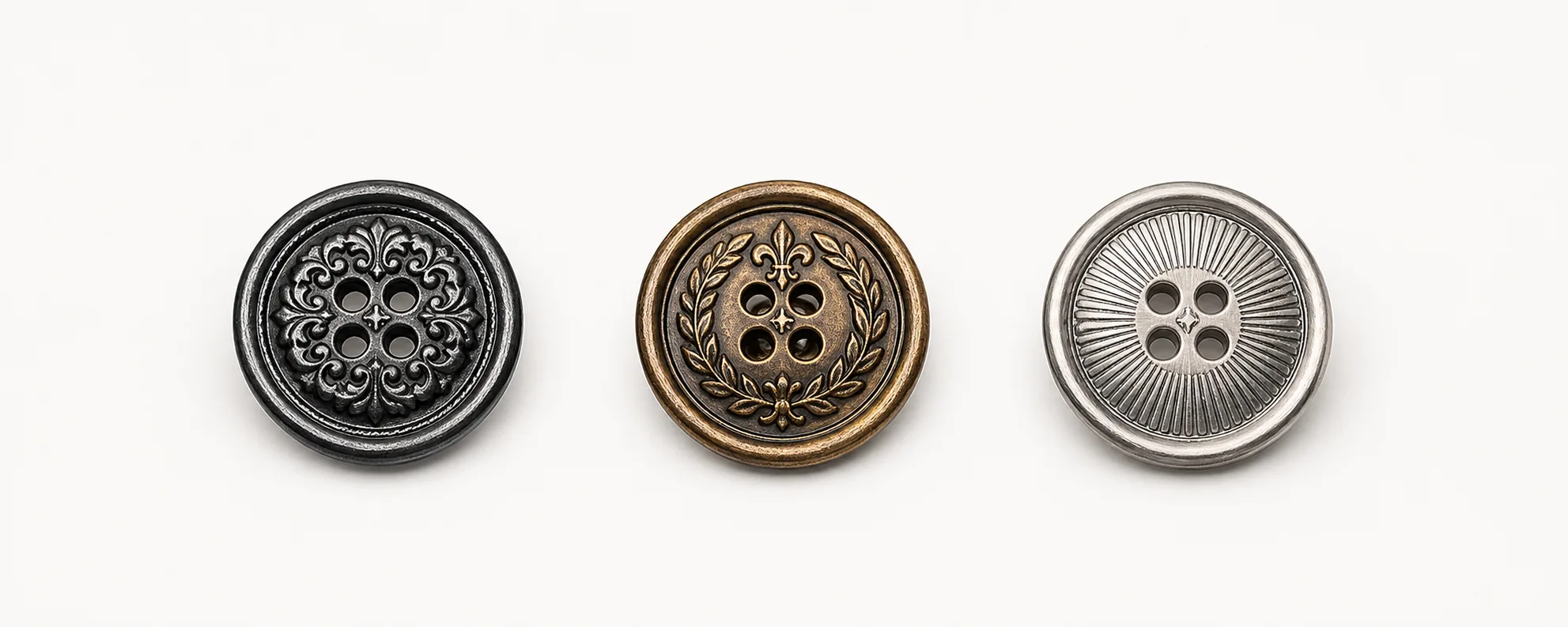
Zinc alloy die-casts. Tooling costs more and takes longer, but once it exists, shaped buckles, sculpted buttons, logo relief and hollow backs are all economical. The comparison is therefore between a cheap route for simple parts and a more capable route for complex ones.
What happens when the coating is damaged
Iron relies on its coating. Once the coating is breached — a scratch, an impact, an abraded edge — the exposed iron is unprotected, and iron corrosion is visible, spreads under the surrounding coating and stains adjacent material. On a garment, rust marks on fabric are usually a bigger problem than the damaged part itself.
Zinc alloy also depends on plating, but zinc corrodes differently: the products are generally less visually aggressive and do not stain textile in the same way. Neither is immune, and neither should be assumed to survive a given environment without testing — the difference is in what a failure looks like when it happens.
Weight and feel
Iron is denser than zinc alloy, so an iron part of the same dimensions is heavier. On a garment with many trims, this changes how the fabric hangs. On a bag, a heavy part on a light panel drags.
Feel differs too: a stamped iron part is typically thinner in section than a cast zinc equivalent, so it can feel less substantial even while weighing more. Where perceived quality matters, this is worth checking on a physical sample rather than reasoning from density.
Where each is normally chosen
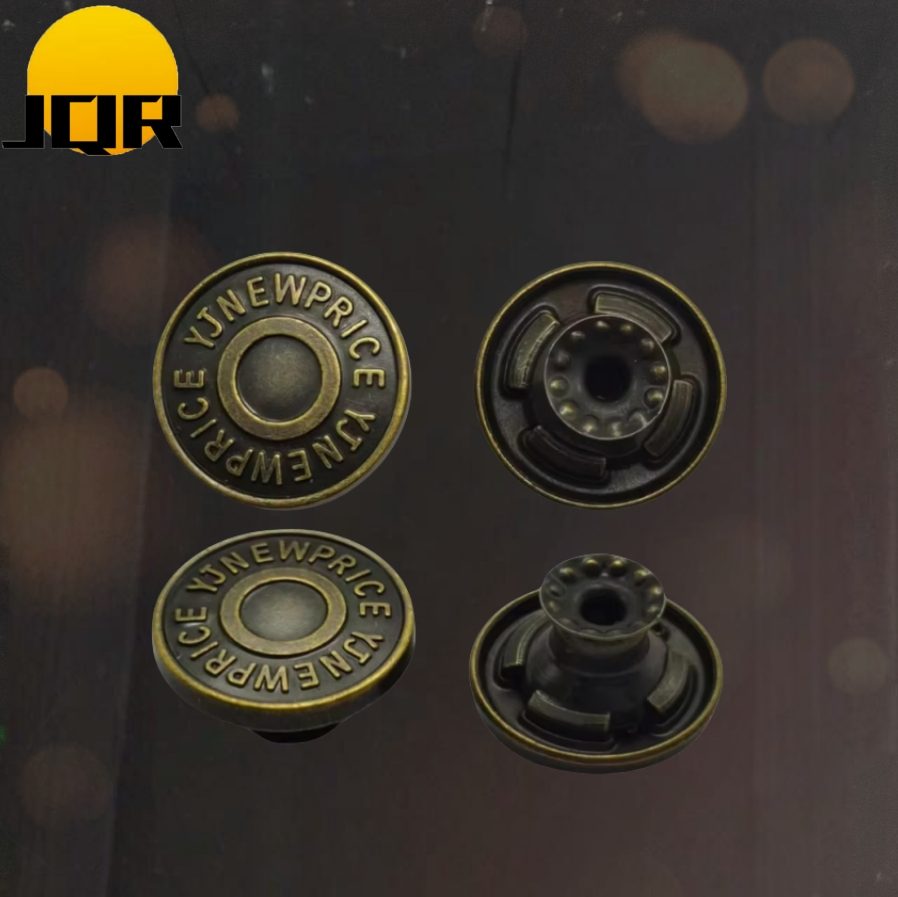
Iron suits high-volume, simple, low-visibility parts: plain eyelets, basic rings, simple button backs, internal components. The economics are strong and the exposure is usually low.
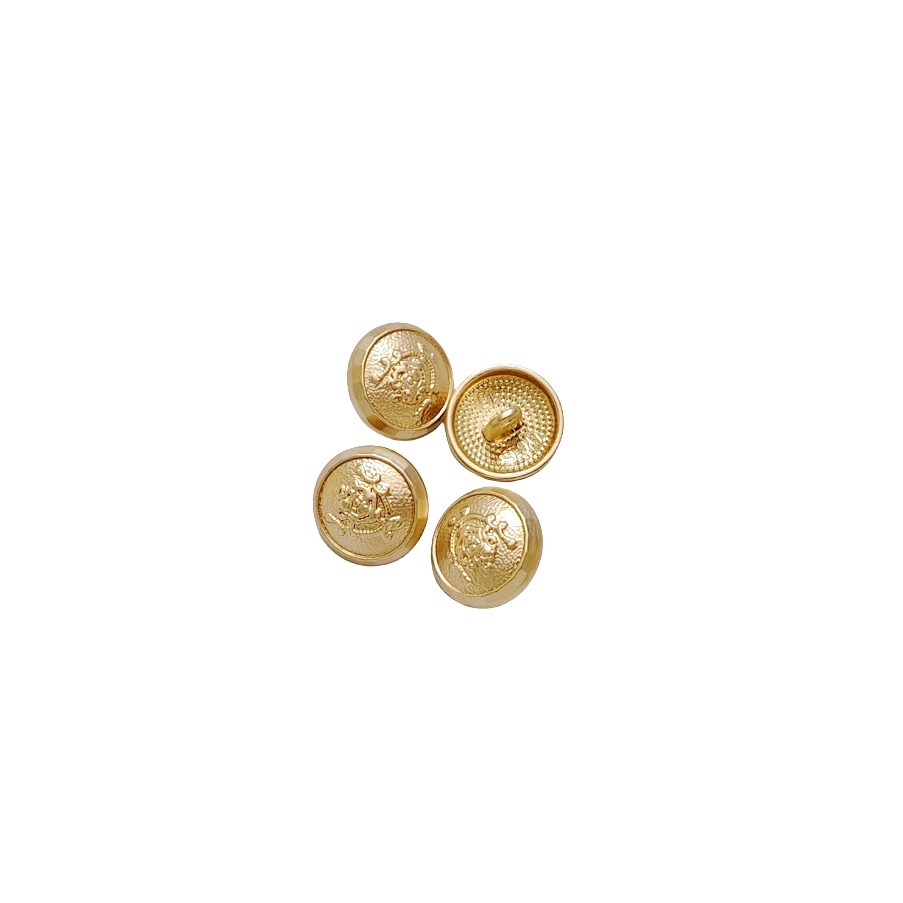
Zinc alloy suits parts that are shaped, visible, logo-bearing, or in positions where a rust mark would be unacceptable — visible garment buttons, decorative bag hardware, anything against light-coloured fabric.
The wash and the warehouse
Two situations catch iron trims out. Garment washing puts the trim in water with chemistry, and any coating weakness shows there rather than in the factory. Long storage in a humid warehouse does the same slowly, and the product can leave the factory clean and arrive marked.
This guide does not state how any coating will perform in either case. What is safe to say is that both are foreseeable, and that a wash trial plus a stated storage assumption belong in the specification conversation.
How to decide
Ask whether the part is simple or shaped, whether it is visible, whether it sits against light or delicate fabric, and what the product goes through after assembly. Simple, hidden, dry, high volume points to iron; shaped, visible, washed or against pale fabric points to zinc alloy.
Where cost pressure is real, a mixed approach is normal: iron for the hidden bulk, zinc for the visible few. State which is which so the supplier quotes both correctly.
Iron is a wrought route that is cheap for simple parts and depends completely on its coating; zinc alloy is a casting route that shapes freely and fails less visibly. Decide by geometry, visibility and what the product goes through, not by material price alone.
 Comparison Guides
 Comparison Guides
 Comparison Guides
 Material Guides
 Buyer Guides