OEM / ODM Hardware Manufacturing

Pull Strength and Load Testing Concepts

What load and pull testing measures in soft goods hardware, why the assembly rather than the component usually determines the result, and how to specify a meaningful test.

15+ Years Industry ExperienceOEM/ODM Custom SolutionsQC Ready Global StandardsFast Lead Sample Support
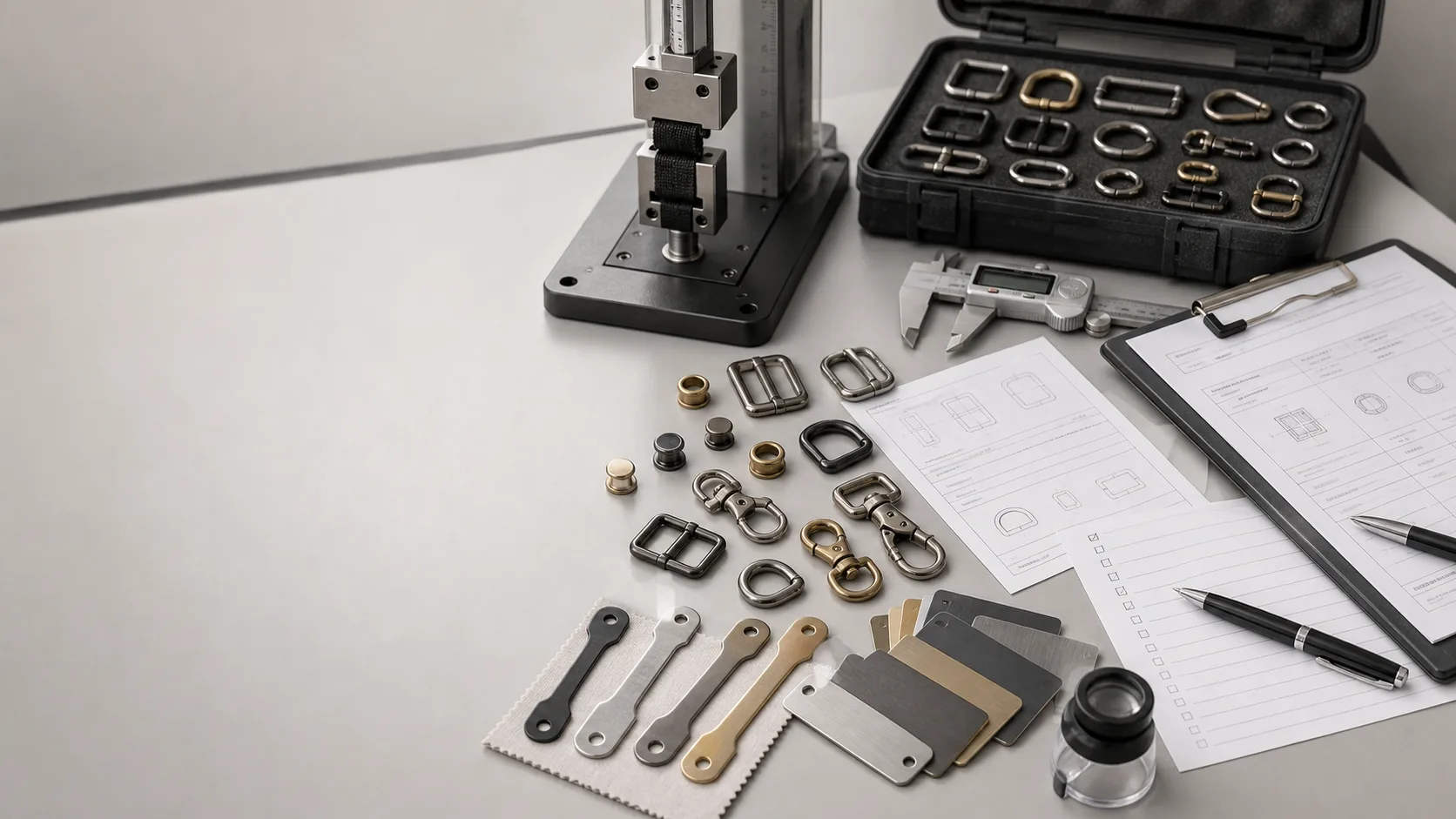
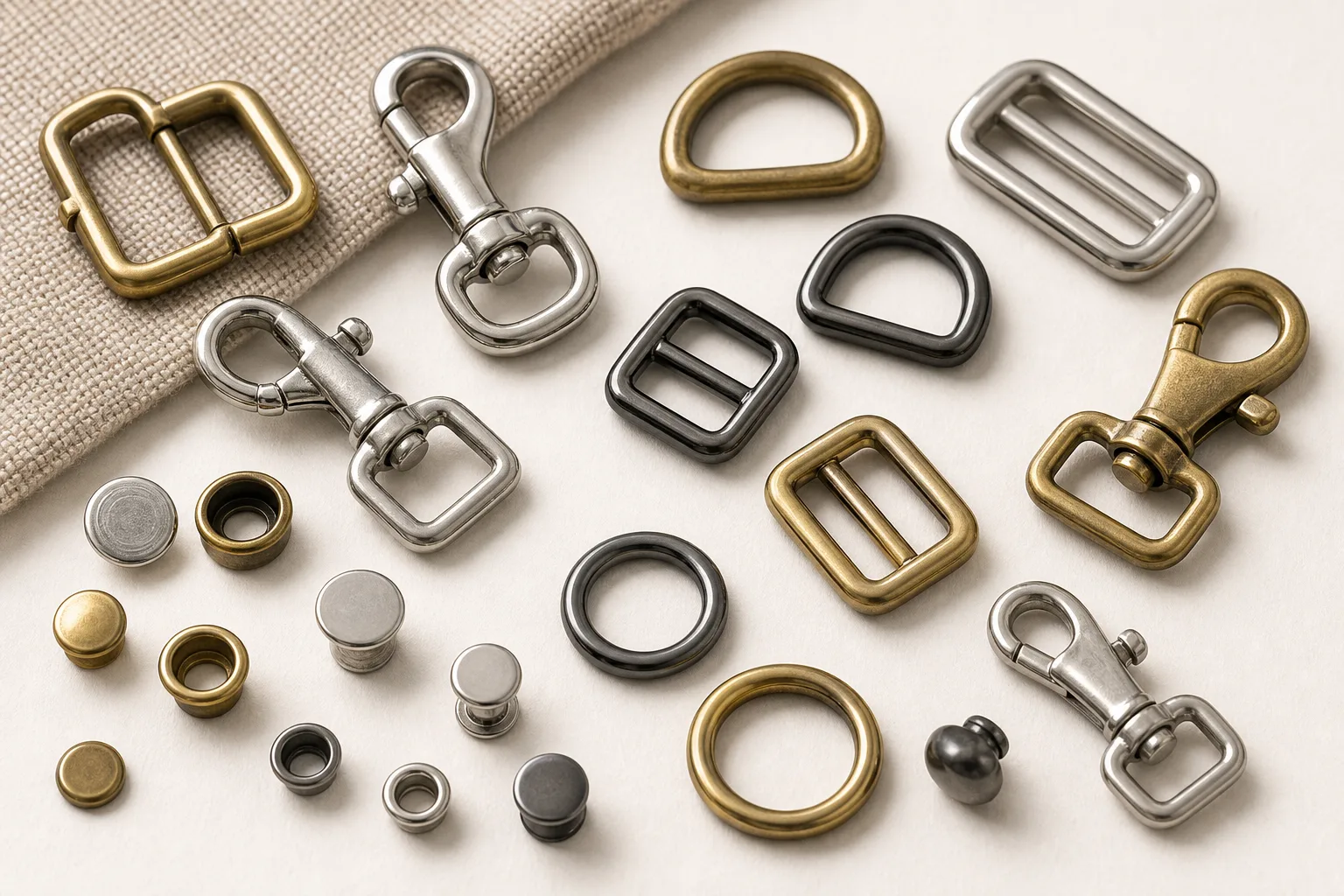
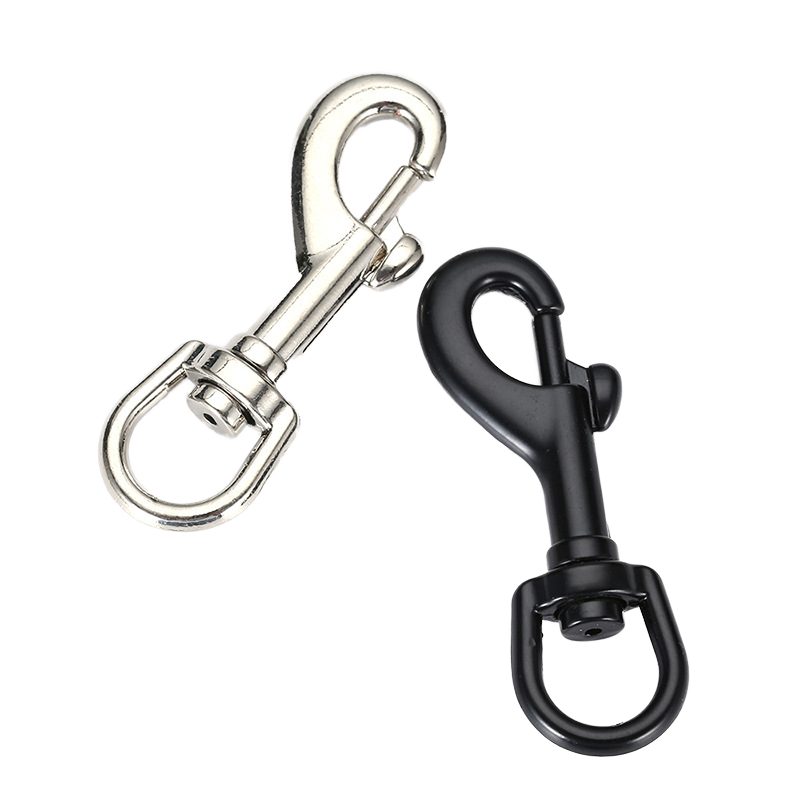
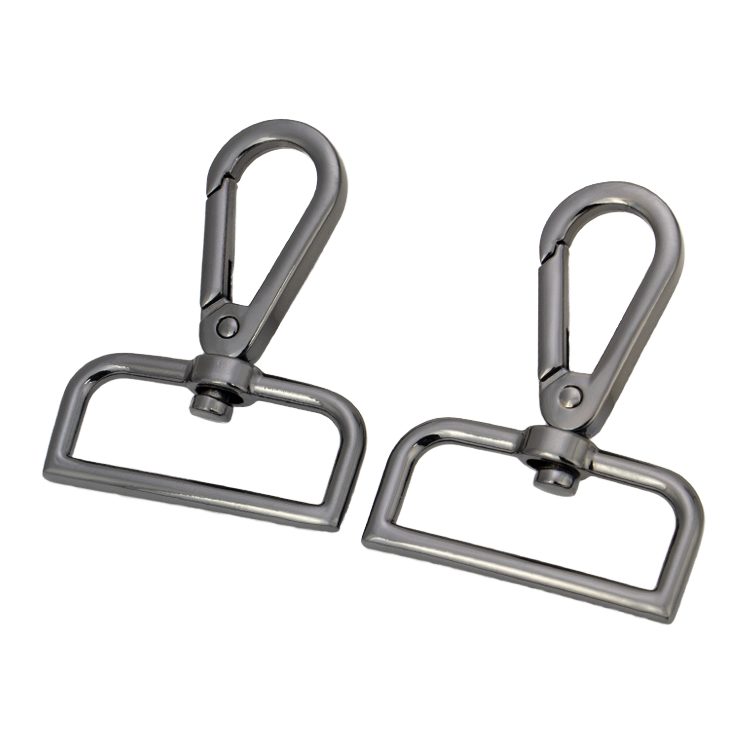
Photorealistic hardware product assortment for related buyer guide products

Article guidance connected to products and RFQ actions

Buyer guides should lead into material/finish decisions, related product categories, downloadable checklists and expert review.

Direct Answer

Guide

Buyers ask for a strength figure hoping for a single number that settles the question. The number exists, but it belongs to a test setup rather than to a part, and understanding that is what makes it useful rather than misleading.

What is actually being tested

When a snap fastener is pulled from a garment, or a ring is pulled from a strap, the result reflects the fastener, the fabric or webbing, the reinforcement and the attachment method together. The weakest of those governs.

This is why a stronger component often does not raise the measured result at all: the limit was somewhere else. Diagnosing which element failed matters more than the figure itself.

Direction and fixturing change everything

The same assembly pulled straight, at an angle, or in shear gives different results. How the sample is held, how quickly load is applied, and whether it is applied steadily or suddenly all affect the outcome.

A figure reported without its direction and fixturing cannot be compared with another figure. When comparing two suppliers’ numbers, first establish whether the tests were the same.

Static, cyclic and shock

A steadily increasing pull measures ultimate resistance. Repeated loading measures fatigue behaviour. A sudden load measures something different again. Products fail in all three ways, and a single static figure does not describe the other two.

Choose the test that resembles how the product is used. For a lead clip, sudden loading is the relevant question; for a garment fastener, repeated operation usually is.

Reading a failure, not just a number

The most useful output of a load test is where and how it failed: the fastener deformed, the fabric tore, the stitching pulled, the ring opened. That tells you what to change.

Ask for failure mode alongside any value. A test that reports only a number has discarded the more actionable half of the result.

Testing the assembly you actually ship

Testing a component on a standard test fixture answers a question about the component. Testing it on your fabric, with your reinforcement and your stitching, answers the question about your product.

Where a load requirement matters, supply real assemblies for testing. Component-level results can be reassuring and still not represent what leaves your factory.

How to specify

State the use case and the failure that concerns you, whether the concern is static, cyclic or shock loading, the direction of loading, what the assembly consists of, and whether the test should be on the component or the made-up product.

This guide gives no load values, because they depend on the assembly, materials, method and fixturing, and a value quoted without those is not usable. Ask for method and failure mode with every figure.

Load testing measures an assembly under a specific method. Test what you actually ship, choose static, cyclic or shock testing to match the real use, and treat the failure mode as the primary output rather than the number.
Key Terms

Failure mode

Where and how an assembly gave way under load — the part, the material, the stitching — and the most actionable output of a load test.

Fixturing

How a sample is held and loaded during a test; changing it changes the result, so results are only comparable when fixturing matches.

Buyer Checklist

  • Use case and the failure of concern
  • Static, cyclic or shock loading
  • Loading direction
  • Assembly composition
  • Component-level or made-up product test
  • Method and fixturing recorded
  • Failure mode reported

Key Takeaways

Supply real assemblies rather than components for load testing, match the test type to how the product is used, and always ask for the failure mode alongside any figure.

  • The assembly is tested, not the component
  • A figure without direction and fixturing is not comparable
  • Match static, cyclic or shock testing to real use
  • Failure mode is more useful than the number

FAQ

Which materials and finishes are available for Pull Strength and Load Testing Concepts?

Pull Strength and Load Testing Concepts is quoted in Zinc Alloy, Stainless Steel and Iron. Available surface finishes are Matte Black. Material and finish are quoted together, because tooling and plating cost change with the combination.

What is Pull Strength and Load Testing Concepts used for?

On this site Pull Strength and Load Testing Concepts is catalogued under Backpacks, Outdoor Gear and Pet Accessories. End use decides the specification that gets quoted — load, exposure and washing requirements differ between them, so state the end use in the RFQ rather than the part name alone.

Where does Pull Strength and Load Testing Concepts sit in the product range?

Pull Strength and Load Testing Concepts appears in D-Rings & O-Rings, Hooks & Snap Hooks and Snap Buttons. Related items in the same category can be quoted on one RFQ, which is usually how buyers keep finish and packaging consistent across a set.

What should buyers prepare before sending a Pull Strength and Load Testing Concepts RFQ?

Prepare product type, application, material, finish, size, quantity, logo requirement, sample expectation and any testing or document request.

Can Pull Strength and Load Testing Concepts samples be requested before bulk production?

Yes. Sample availability and timing should be reviewed by product structure, material, finish and buyer requirements.

Can testing documents be provided for Pull Strength and Load Testing Concepts?

Testing or compliance documents depend on actual material, finish, testing scope and available records. Requirements should be confirmed before sampling.

Start Your Project

Request a Quote

Send article context with product, application, material, finish and testing requirements so the sourcing team can review the request.

RFQ
+86 151 7024 4792info@nceco.cn