
Indoors, plated zinc alloy and stainless steel can look and behave similarly for years. Outdoors the comparison changes, because hardware gets dragged, dropped and abraded, and because the environment keeps working on whatever is exposed. The useful question is not which material is better but what happens after the surface is damaged.
Where the corrosion resistance lives
In stainless steel the resistance is a property of the alloy, present throughout the section. Damage the surface and the exposed metal is still stainless. In plated zinc alloy the resistance comes from the plating system; the base is protected as long as the coating is intact, and a deep scratch changes the situation locally.
That is the whole comparison in one sentence, and it explains why the two behave similarly on a shelf and differently on a product that lives outside.
Salt, humidity and the specific environment
Environments differ enormously. Coastal and marine exposure is much more aggressive than dry inland use; a product stored in a humid warehouse behaves differently from one used and dried daily. Even within stainless steels, different grades are formulated for different exposure, which is why the grade should be stated rather than the word alone.
This guide does not give corrosion figures or salt-spray hours for either material. Those depend on the grade, the plating system, the geometry and the test method, and a figure without those four attached is not usable. State your environment and ask what testing the supplier can arrange on your part.
What each route makes easy to manufacture
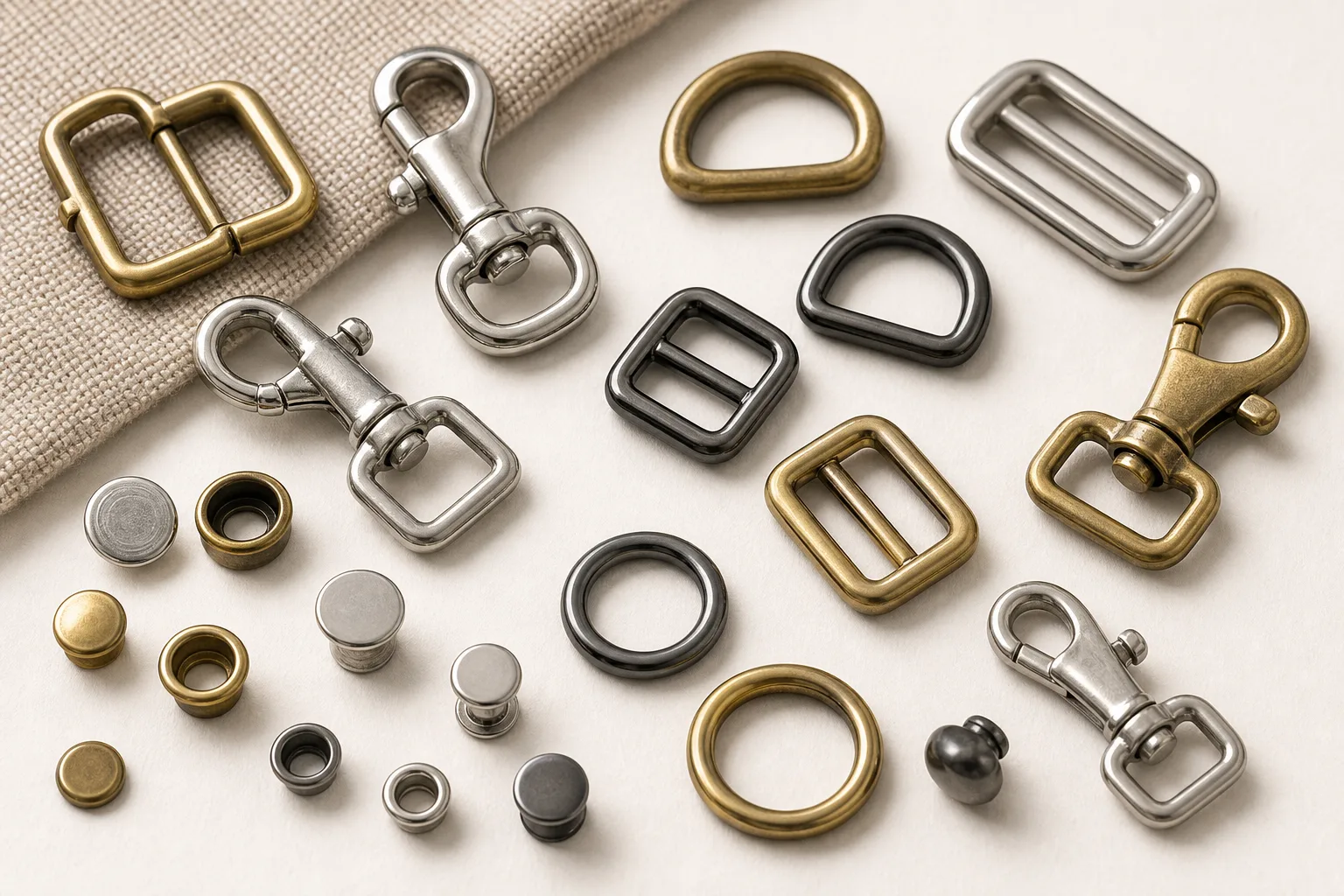
Zinc alloy die-casts, so complex shaped outdoor hardware — moulded buckles, shaped hooks, logo-bearing parts — is economical once tooled. Stainless is usually stamped, machined or investment cast; simple shapes are straightforward, complex geometry is a bigger step.
This is a real constraint on design, not a footnote. A shaped part that is easy in cast zinc may need redesigning, or a different process, to be made in stainless. Ask early rather than after the design is fixed.
Appearance and how each ages
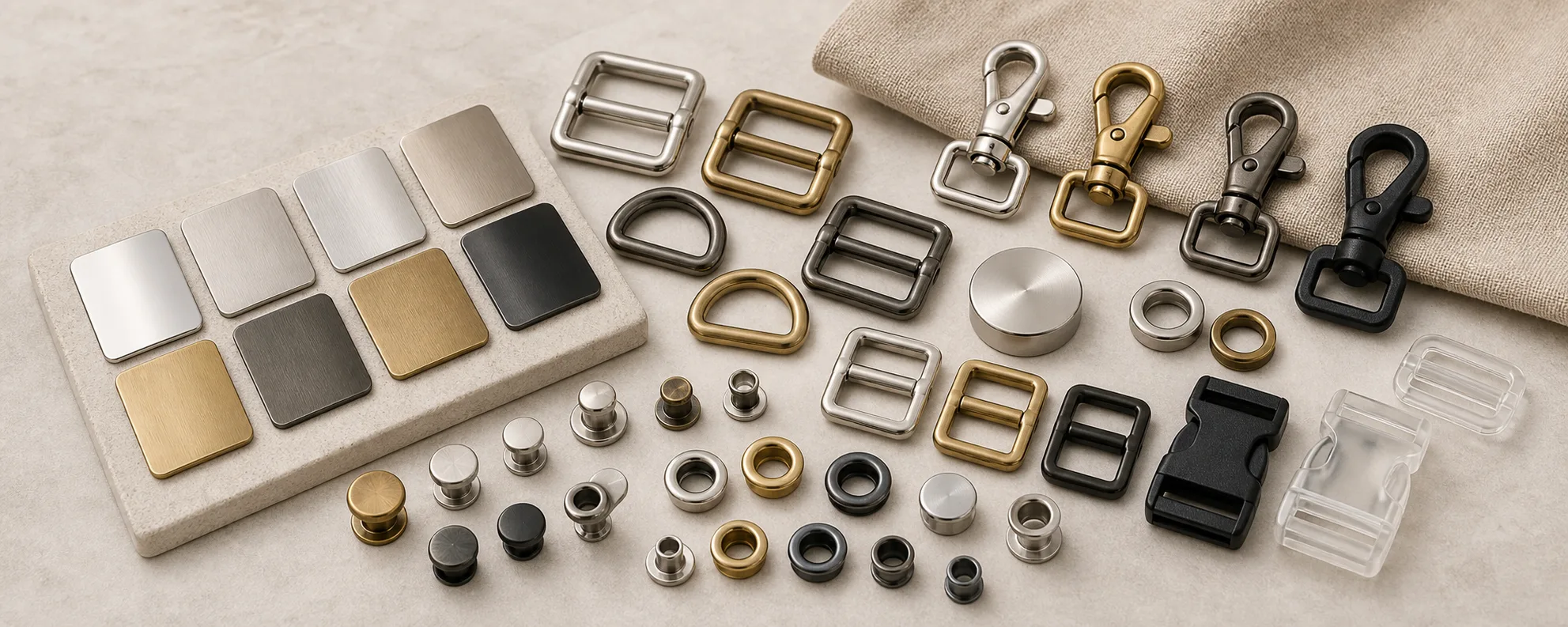
Stainless has its own tone and can be polished, brushed or bead-blasted, but it is not a wide palette. Plated zinc can be finished in the full range of metallic tones and antiqued effects, which is why decorative outdoor hardware often uses it despite the exposure.
They also age differently in appearance. Stainless tends to dull and mark; plated zinc tends to hold its look until the coating is breached and then change locally. Which is preferable depends on whether the product is meant to look new or to weather.
Weight, cost and where each is chosen
Stainless is denser and generally more expensive per part, especially for complex shapes. On a product with many hardware pieces, both weight and cost accumulate. That is one reason technical outdoor products use plastic where they can and reserve metal for load-critical positions.
A common and sensible pattern is mixed: stainless in the few positions where exposure and load coincide, plated zinc where appearance matters, plastic where weight does. The requirement is that the set still looks deliberate.
What to specify
The environment in concrete terms — coastal, freshwater, urban, stored wet, dried after use — the part geometry, whether the hardware is in the load path, expected abrasion, appearance requirement, weight constraints, and for stainless the grade. Then agree what testing will be done and against which standard.
If a competitor or reference product survives your environment, send it. Identifying what it is made of and how it is finished is a faster route than reasoning from general material properties.
Outdoors, the decisive difference is what happens when the surface is breached: stainless keeps its resistance, plated zinc loses it locally. Set against that, zinc casts complex shapes more economically and offers a wider finish palette. Mixed sets chosen position by position are usually the practical answer.
 Comparison Guides
 Quality Guides
 Buyer Guides
 Buyer Guides
 Comparison Guides
 Material Guides
 Material Guides