
PVD is usually presented to buyers as the premium option, which is true about price and only sometimes true about fitness for the job. The two processes work differently, produce different surfaces and cost differently, and the useful comparison is about what each one can actually do rather than which sounds more advanced.
How each process deposits the layer
Electroplating is a wet process. The part goes into a bath, current flows, and metal ions deposit onto the surface. The equipment is widely available, the process is well understood across the hardware industry, and a plating line can run a wide range of colours by changing the chemistry and the sequence.
PVD is a dry, vacuum process. Source material is vaporised and condenses onto the part as a very thin film, often a compound rather than a pure metal. It needs a vacuum chamber, and the cycle is a batch rather than a continuous line, which is a large part of why the economics differ.
Colour range: what each can reach
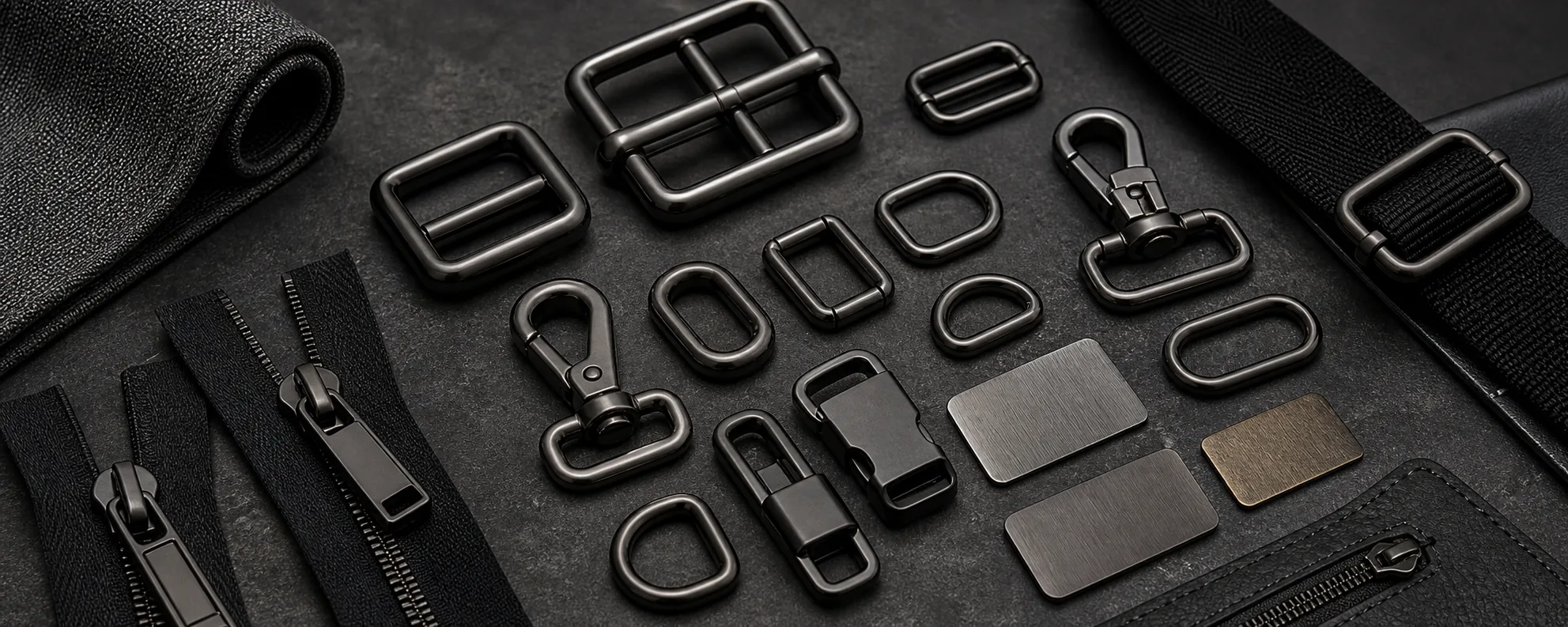
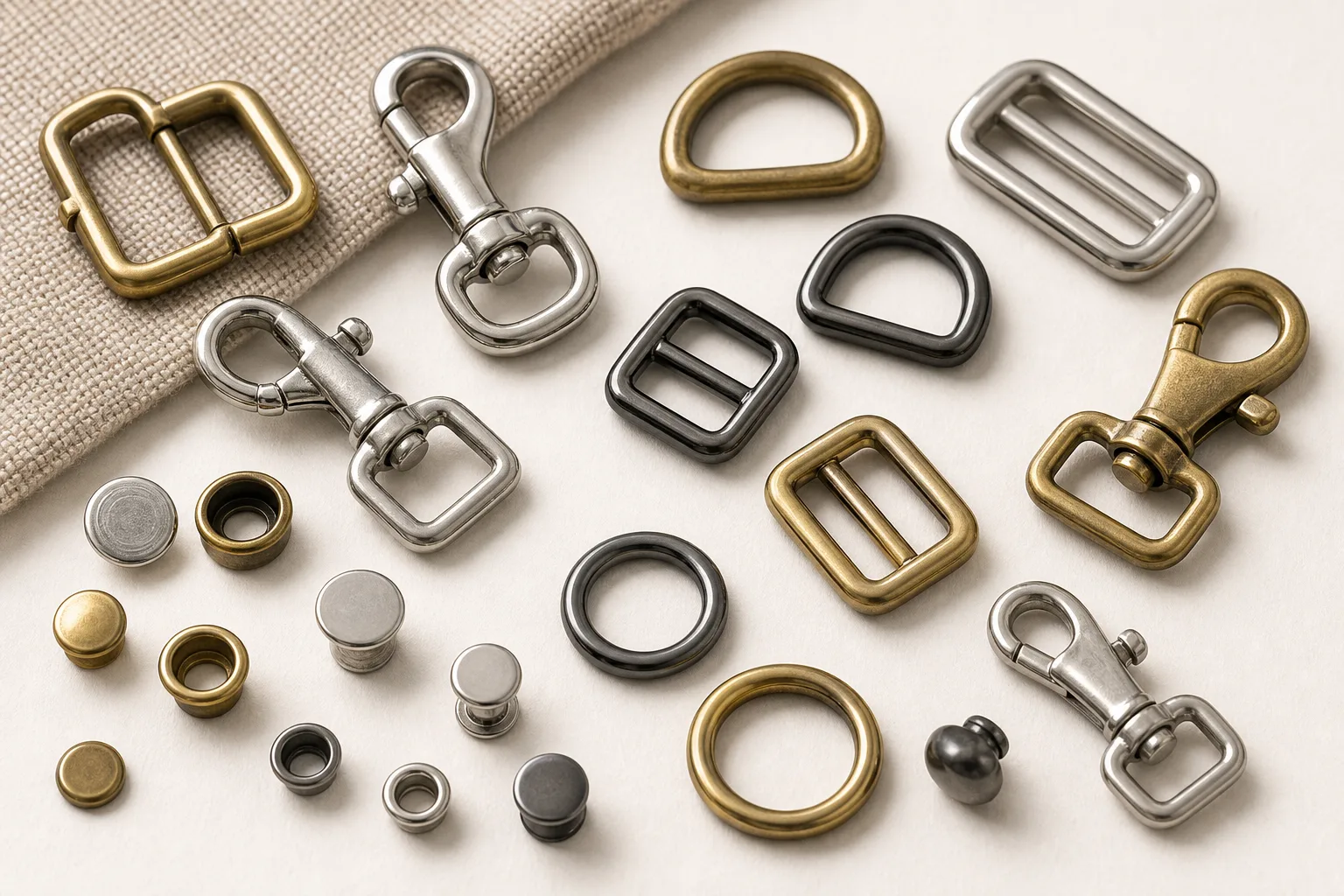
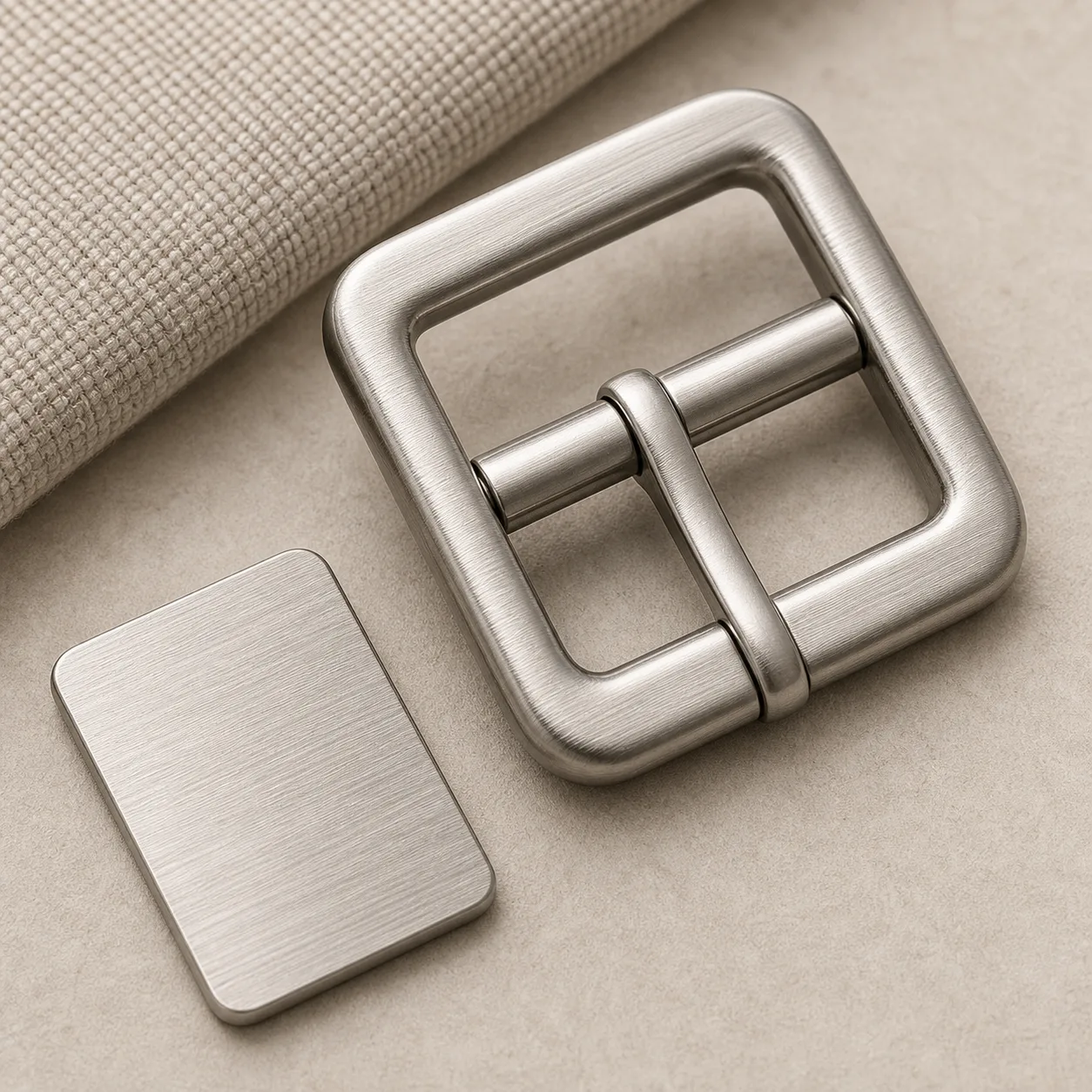
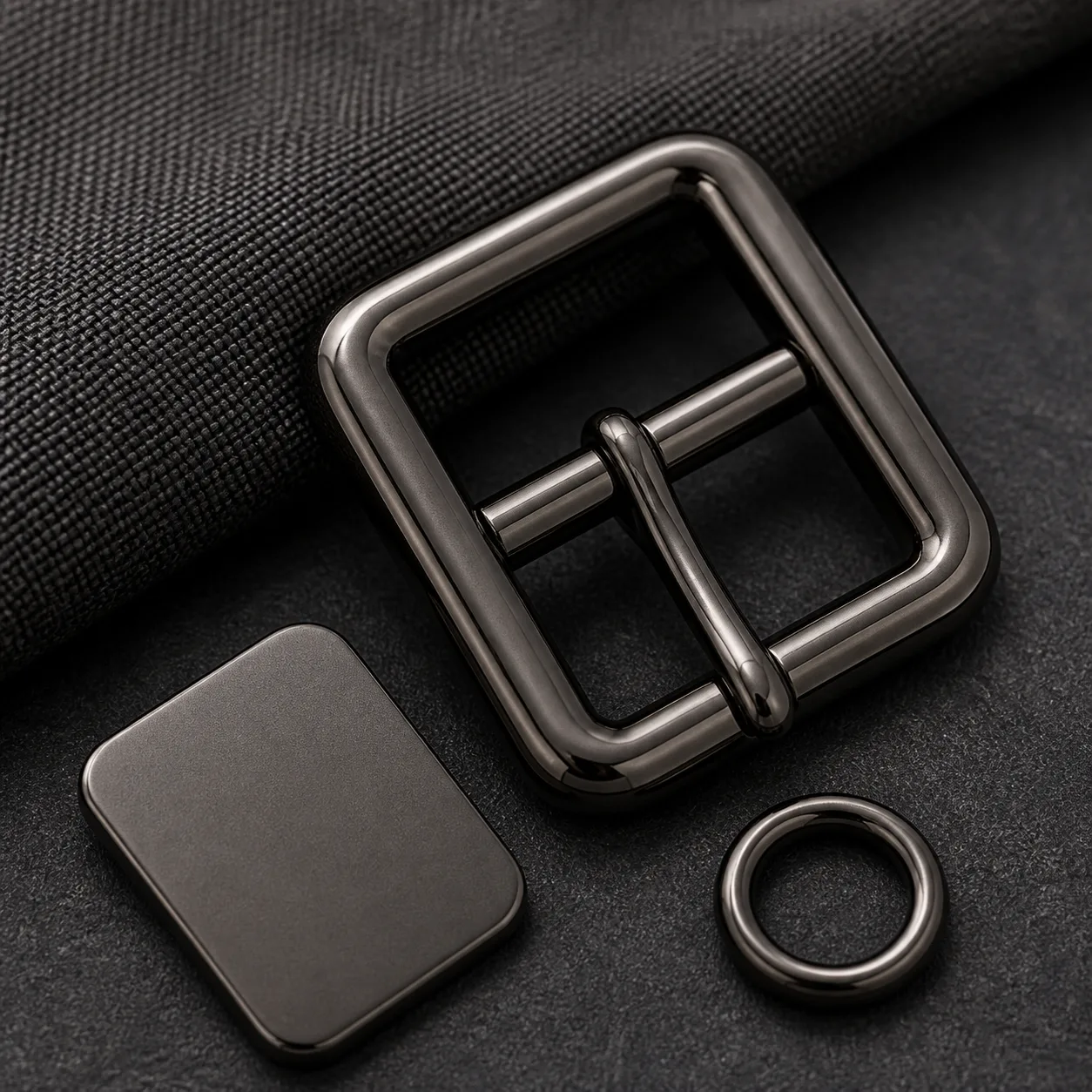
Electroplating covers the familiar hardware palette: nickel, brass, gold tones, gunmetal, black nickel, antique effects built up in layers. The industry has decades of recipes for matching these.
PVD produces a narrower set of colours determined by the compound deposited, typically in gold, dark and grey families. It cannot simply reproduce an arbitrary plated antique effect, and matching an existing plated part in PVD is a real project rather than a substitution.
Surface hardness and what it buys
The usual reason to consider PVD is that the deposited film is hard, which matters where the surface is rubbed continuously — a watch case, a frequently handled catch, hardware that runs against another surface.
On most bag and garment hardware, the surface is not under continuous abrasion; it is knocked, scratched occasionally and otherwise left alone. In those positions the harder film buys less than the price difference suggests, which is why the industry has not moved to it wholesale.
Cost structure, not unit price
Plating cost scales with part surface area, rack density and the number of layers. PVD is a batch process in a chamber, so cost relates to how many parts fit in a cycle and how long the cycle runs. Small parts pack well; large or awkward parts do not.
That means the comparison depends on your part and your quantity. Ask for both quoted against your actual part rather than accepting a general statement that PVD costs more — for some geometries at some quantities, the gap is smaller than expected.
Evaluating durability claims
Both processes can be specified well or badly. A thin, poorly adhered PVD film on a badly prepared surface will fail sooner than a well-specified plating stack. Surface preparation and the underlying layers matter as much as the final deposition in both cases.
This guide does not give hardness values, film thickness or abrasion cycles for either process, because those depend on the specific process specification, the substrate and the test method. If durability is the reason for the choice, agree the test and the standard, and have it run on your part with your finish.
Where each is normally chosen
Electroplating remains the default across bag and garment hardware: the palette is wider, the supply base is deeper, and antique and multi-tone effects are practical. PVD appears where a specific hard, uniform colour is wanted and the budget supports it, or where a brand has standardised on it for a product line.
A sensible test: if you cannot state which specific property of PVD you are buying, and how you would verify it, the plated route is probably the right starting point.
PVD gives a hard, thin film in a limited palette at a higher price; electroplating gives a wide palette at lower cost with a deeper supply base. Choose on the property you actually need and can verify, not on which process sounds more advanced.
 Finish Guides
 Finish Guides
 Finish Guides
 Finish Guides
 Finish Guides
 Finish Guides