
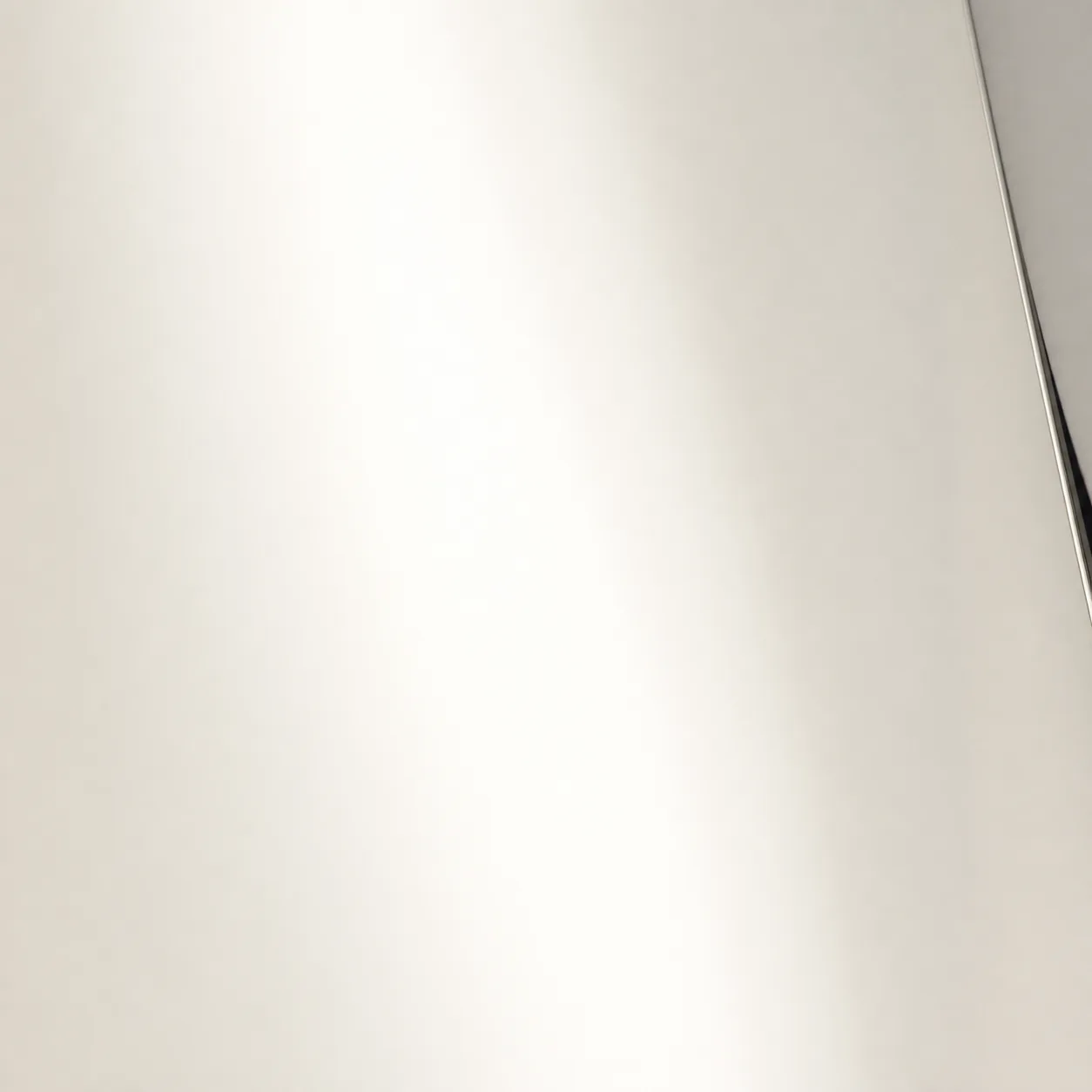
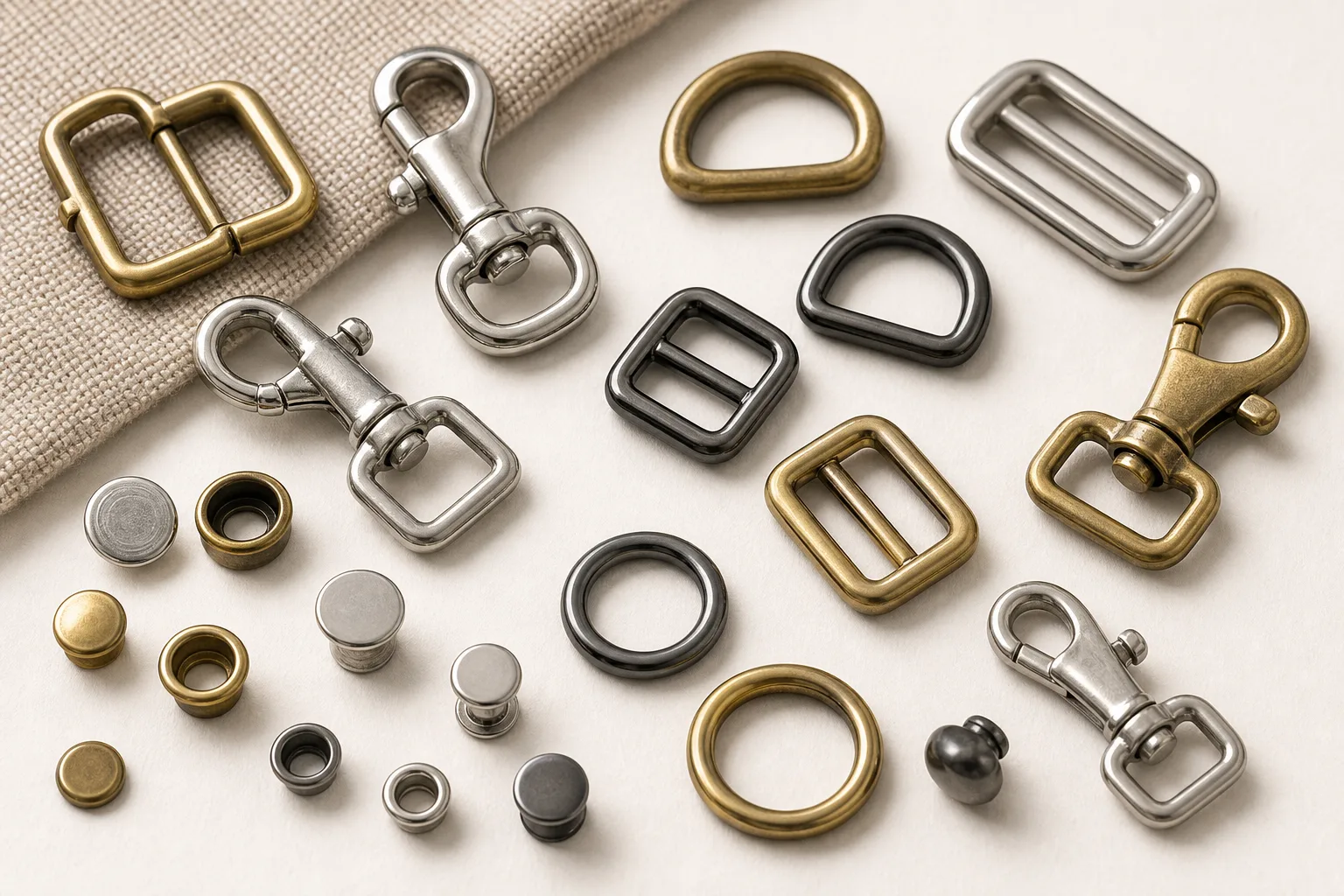
Satin nickel is often chosen after a brushed sample disappoints on a shaped part. That is not a coincidence: the two are frequently discussed as if interchangeable, and the reason satin works where brushed does not comes down to how each is produced.
No direction, and why that matters
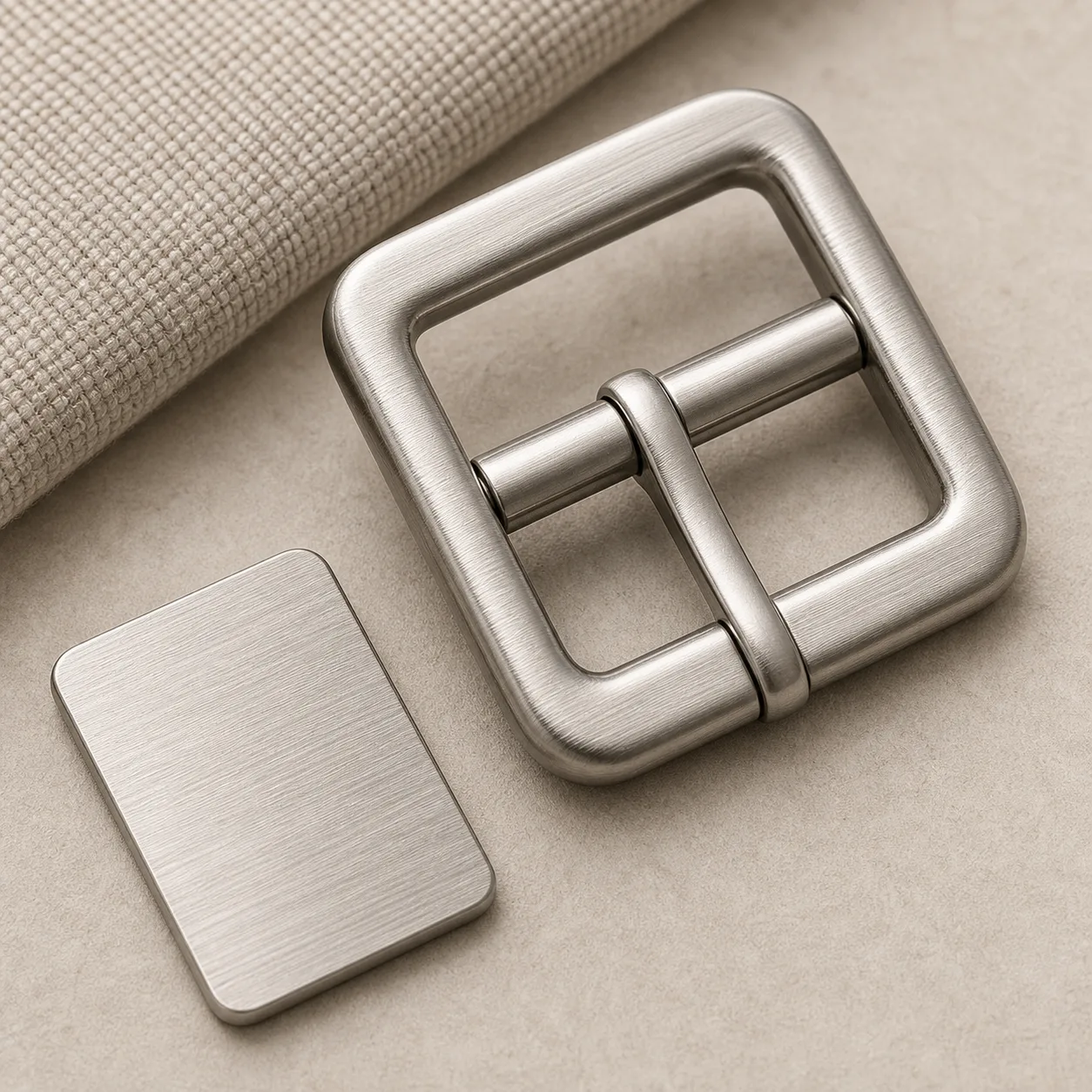
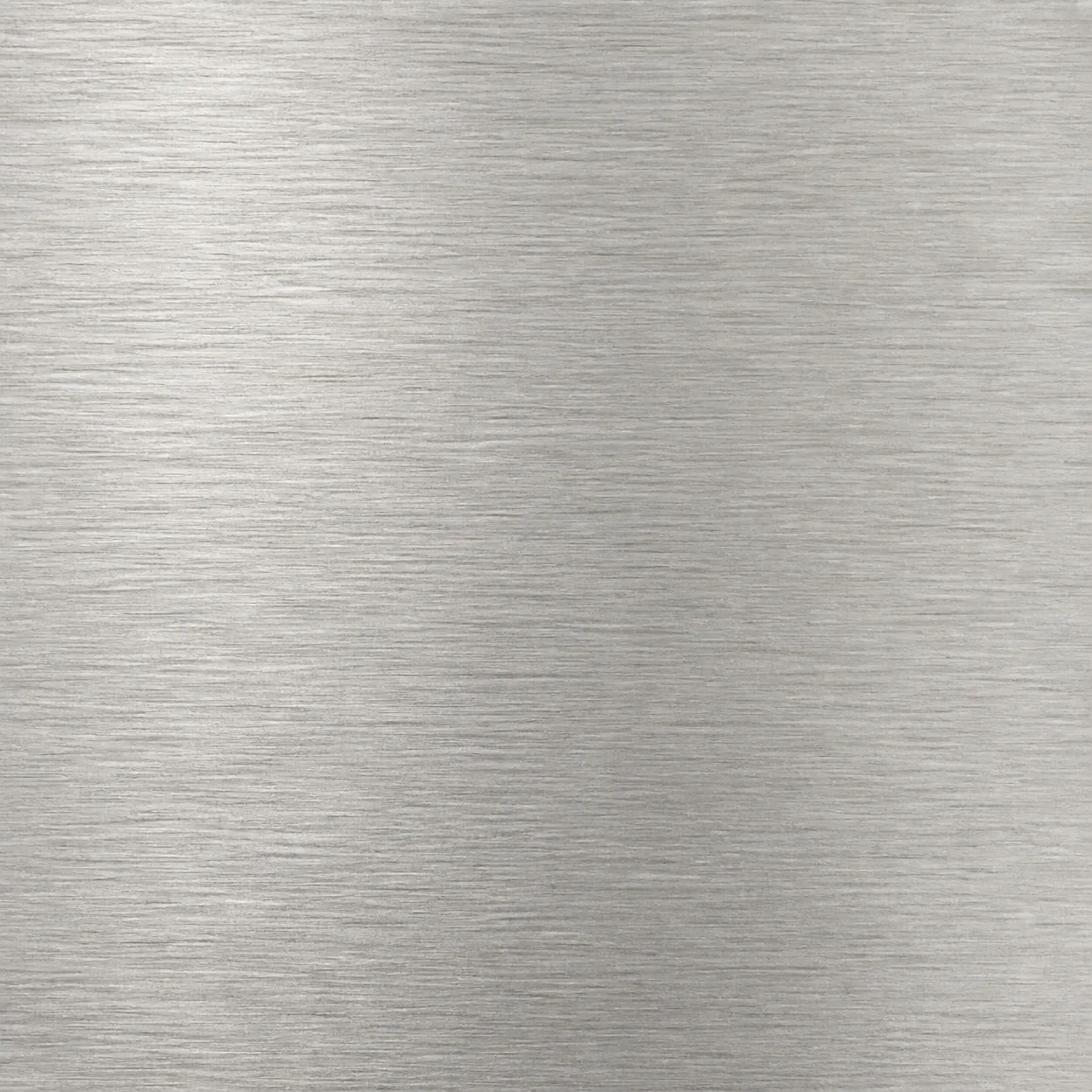
Brushing is mechanical and leaves parallel lines, so the surface changes appearance with viewing angle and the grain direction must be specified. Satin is a gloss level rather than a texture direction, produced chemically or by the plating itself.
The practical consequence is that satin looks the same from every angle and across every part in a set, with no alignment to plan. On an assembly where several parts sit together, that removes a whole class of problems.
It reaches complex geometry
A brushing tool reaches flat and gently curved surfaces; deep recesses, tight corners and undercuts it cannot touch. On a sculpted cast part, brushing may only be possible on prominent faces, leaving mixed surface character.
Satin follows the geometry, because it comes from the plating process rather than from a tool contacting the surface. For shaped hardware that needs a uniform low-gloss look, it is usually the practical answer.
Gloss level is the specification
Satin covers a visible range from near-matte to a soft sheen. Two suppliers can both deliver satin nickel and produce noticeably different parts.
Pin the gloss with a physical sample, and if the set is made by more than one supplier, have them all match that same reference rather than matching each other in principle.
Fingerprints and handling
A low-gloss even surface tends to show handling marks more than a textured one, because there is no grain to break them up. On hardware handled constantly, that is worth considering.
It also hides light scratches better than a bright polished finish, which shows every mark. Satin sits between the two, which is a large part of its appeal.
Where it is used
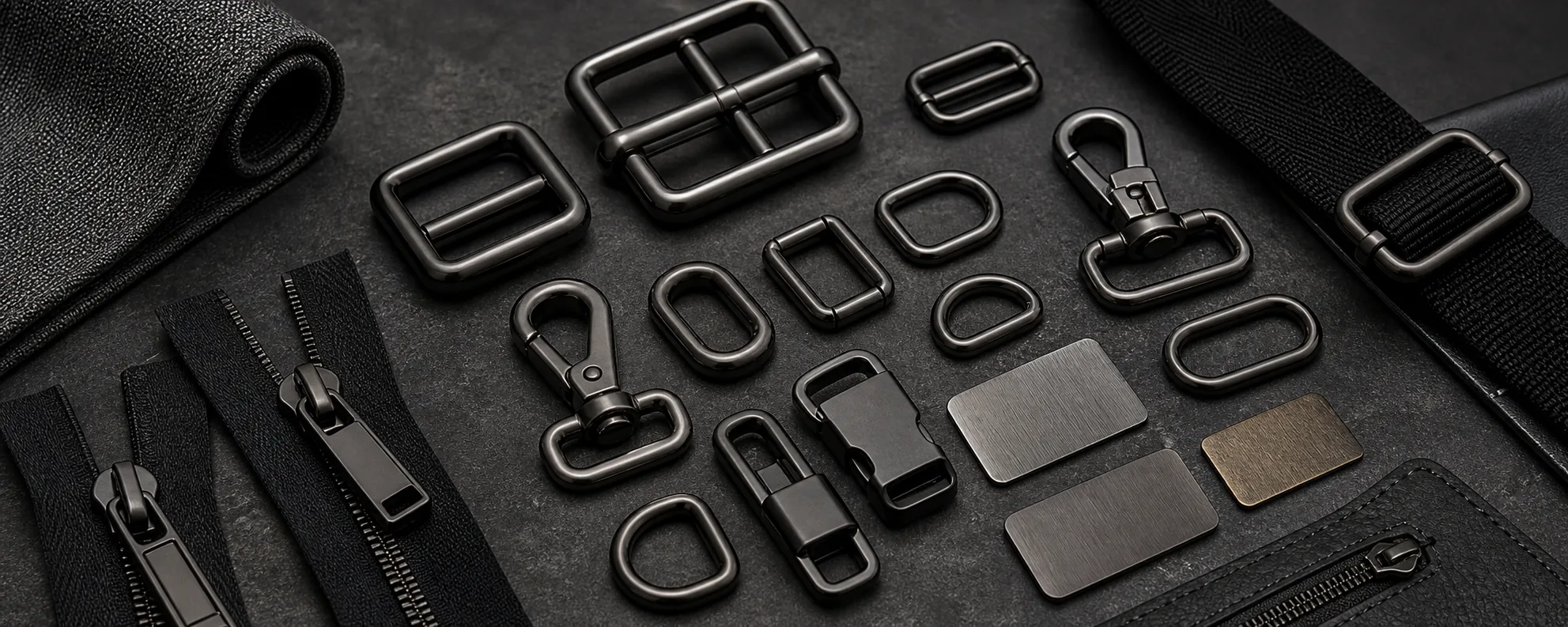
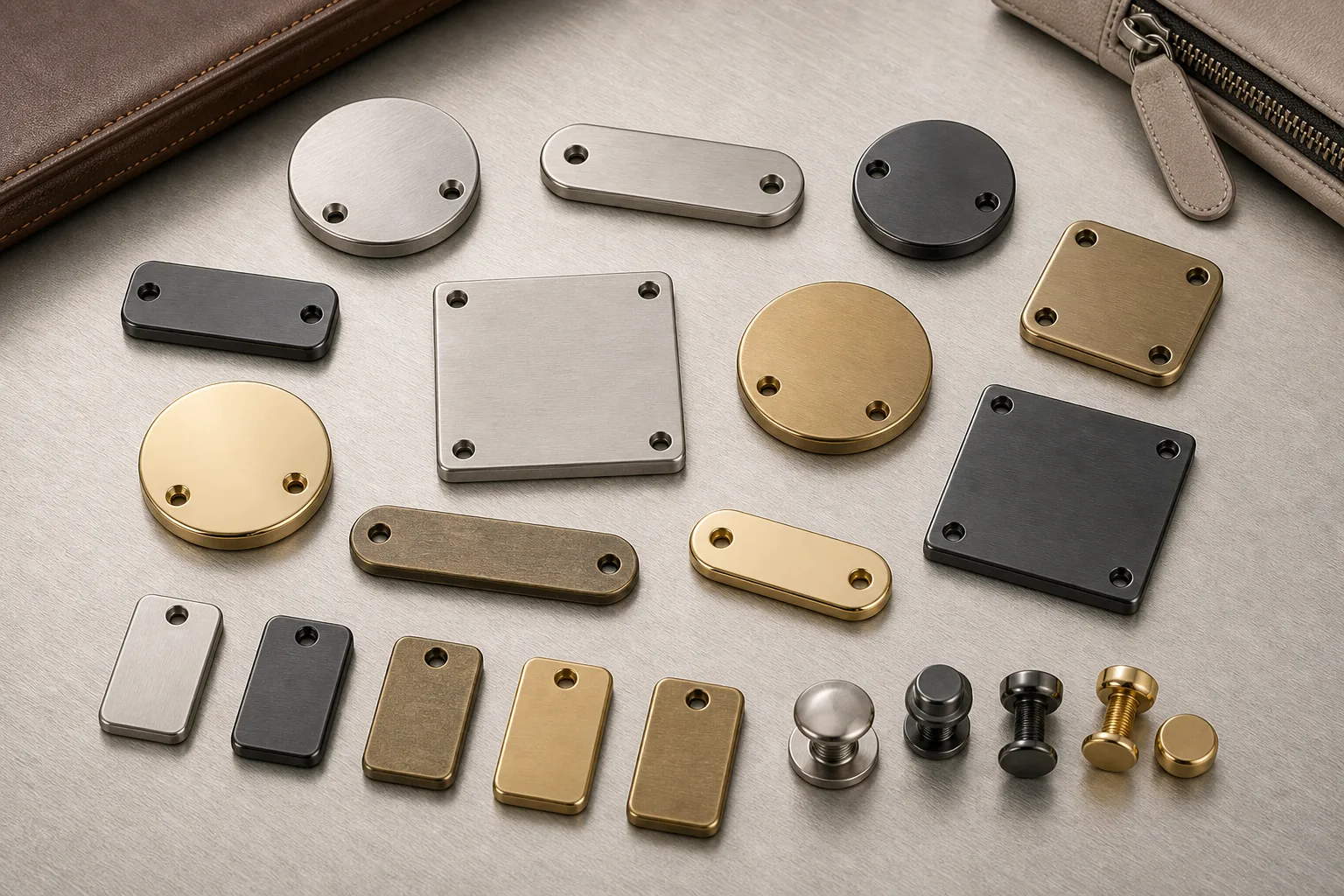
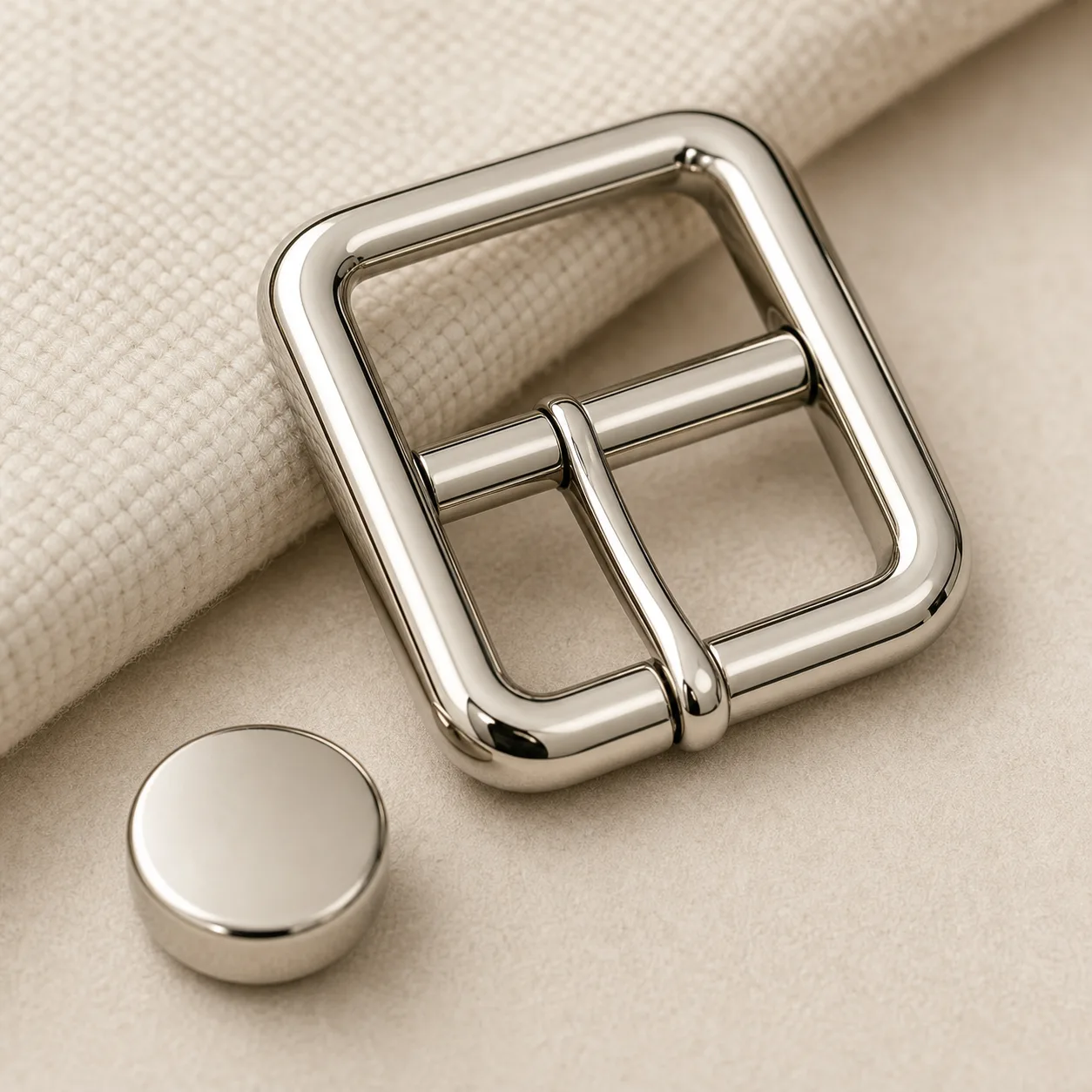
Satin nickel suits hardware that should read as quality metal without drawing attention: bag hardware on understated designs, garment trims, shaped parts where brushed cannot reach, and sets mixing constructions that must match.
It is less suited to designs wanting visible texture or a deliberately worked look, which is antique or brushed territory.
What to specify
Gloss level by physical sample, all parts and their constructions, the material the hardware sits against, handling frequency, the process after assembly, and quantity.
This guide states no wear or corrosion figures, because they depend on the plating stack and the test method. If durability matters, agree the test and standard on your part.
Satin nickel is a gloss level without direction, which is why it matches across constructions and reaches shaped geometry where brushing cannot. Specify the gloss with a physical sample and have every supplier match that same reference.
 Finish Guides
 Finish Guides
 Finish Guides
 Finish Guides
 Finish Guides
 Finish Guides