
Attachment is usually decided late, after the part and the finish, and that is backwards. It determines which factories can make the product, whether a damaged part can be replaced, and how load reaches the material. Deciding it early removes a whole class of late problems.
Sewing: the low-equipment route
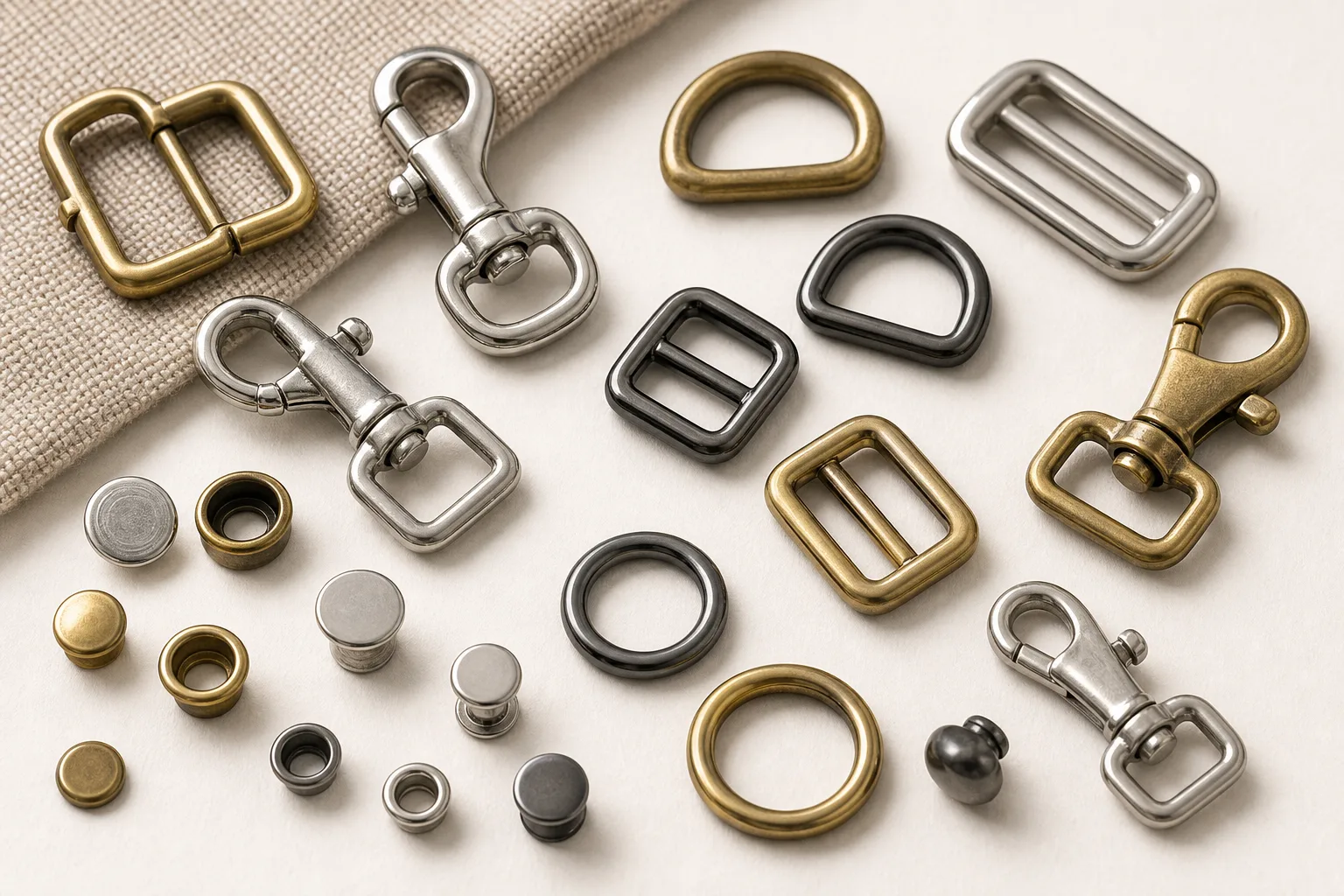
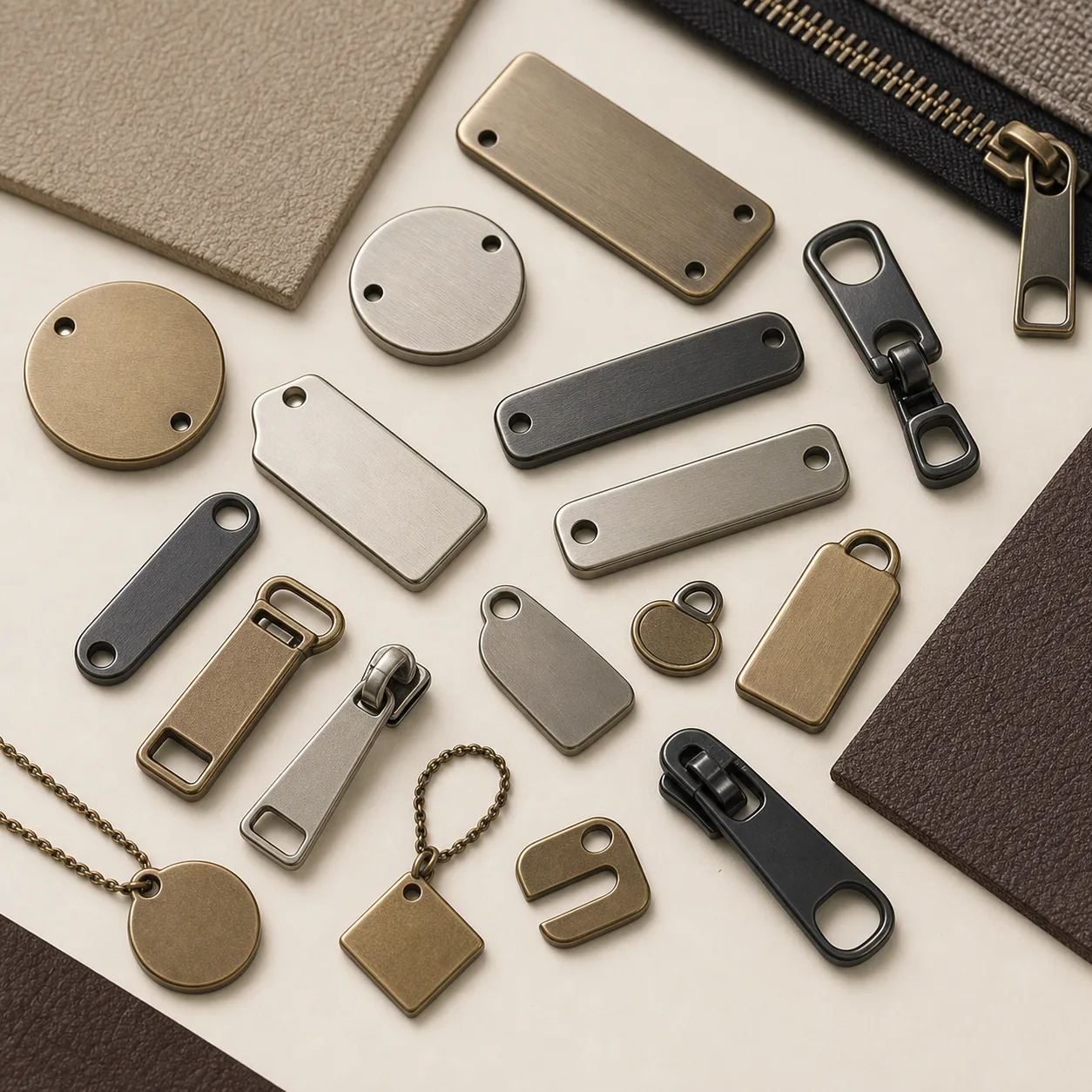
Sewn hardware has a flange, loop or tab that the operator stitches through. Any factory that makes the product can already do it, no dies or presses are involved, and changing the position late is comparatively easy.
The load goes into the thread and then into the fabric along the stitch line, which spreads it but also means the thread is a wear item. Where a sewn attachment carries real load, the stitch pattern and thread specification become part of the hardware discussion rather than a separate sewing detail.
Riveting: the mechanical joint
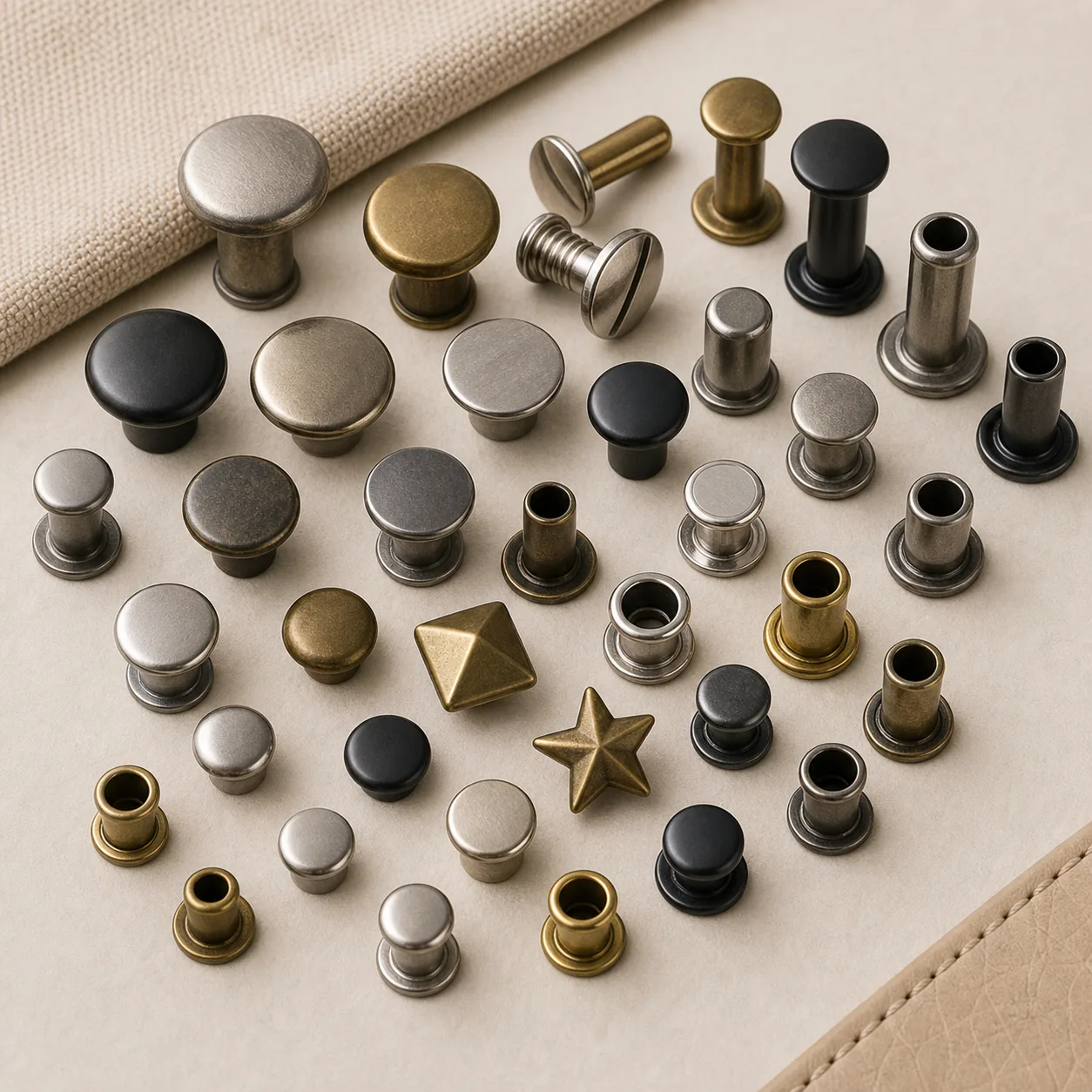
A rivet clamps the material between two metal faces. The joint is strong, compact and does not depend on thread, which makes it the normal choice at stress points — strap ends, corners, handle attachments.
It needs a press, the right die, and a post length matched to the material stack. It is also effectively permanent: removing a rivet damages the material. Factories without the equipment cannot fit them, so confirm capability before designing them in.
Screwing: the removable option
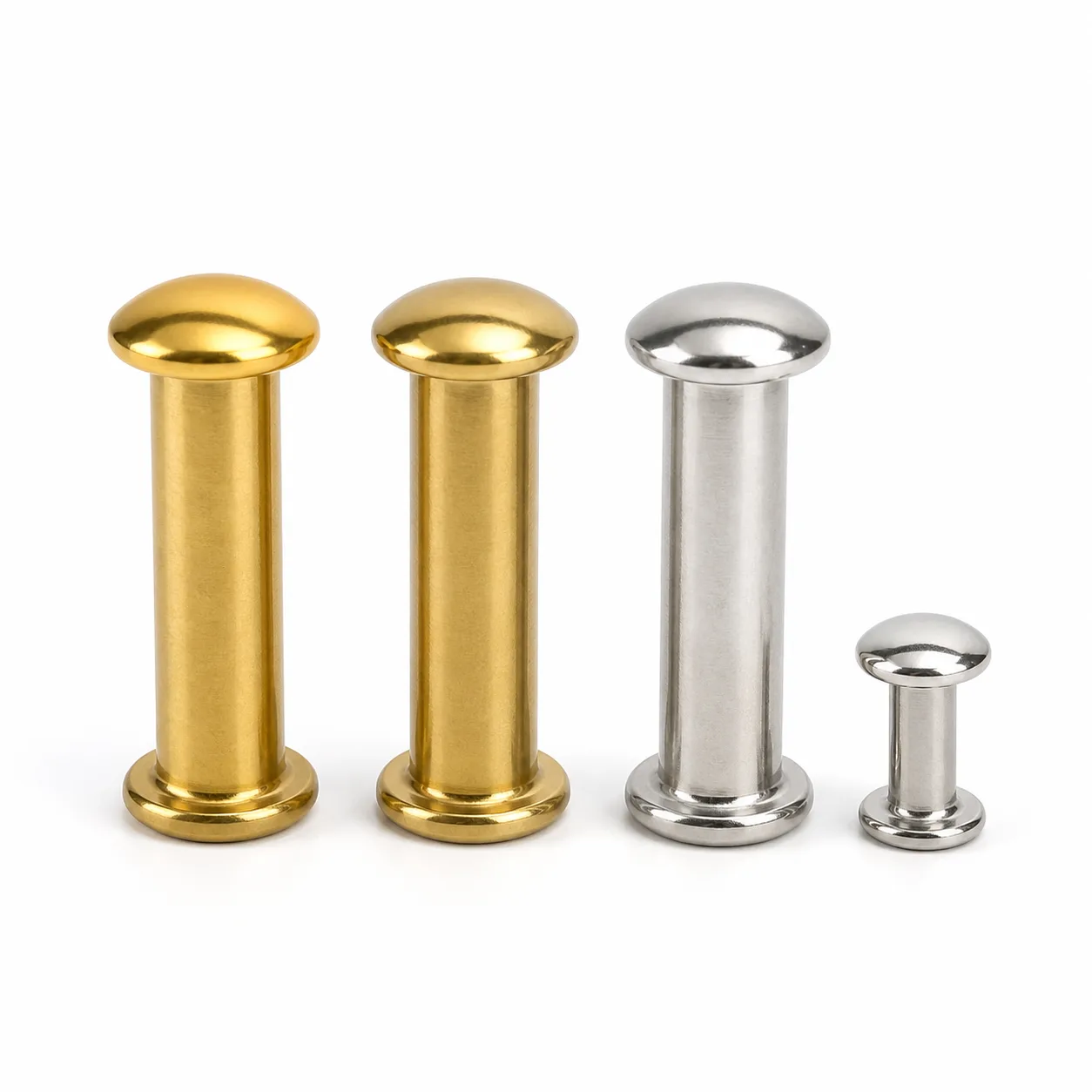
A threaded fixing lets a part be removed and refitted — useful for replaceable components, for parts that must come off for cleaning or service, and on thicker leather where a screw purchase is available.
The trade-offs are that screws can loosen with vibration or repeated flexing unless secured, and that a screw head is a visible design element. Where a part is genuinely replaceable, this is the route; where it is not, the removability is a liability rather than a feature.
What happens when something fails
A sewn attachment usually fails gradually as thread wears or a stitch breaks, and it is repairable. A rivet fails suddenly if it was under-set, and is not repairable without replacing the area. A screw loosens progressively and can be retightened, if the user knows to.
That difference matters for products with a service or repair proposition. If the brand offers repairs, sewn and screwed attachments support that; riveted ones generally do not.
What the material can take
Thin fabric cannot take a rivet without reinforcement, and a screw needs enough thickness to hold. Soft, loosely woven material lets stitching cut through under concentrated load. Every attachment route has a material minimum, and reinforcement — a patch, an interlining, a stiffener — is a normal part of the answer rather than an admission of a bad choice.
Send the material and stack thickness at each attachment point. That single piece of information rules out impossible combinations before samples are made.
How to decide
Ask three questions per position: does the factory have the equipment, does the part ever need to come off, and what is the material at that point. Those usually settle it. Where a position is both high-load and thin-material, the answer is often reinforcement plus riveting rather than a different attachment.
State the attachment method in the parts list alongside the part itself, so quotations include the right back parts and the factory sees the equipment requirement at quotation stage.
Attachment decides factory capability, repairability and how load reaches the material, so it belongs early in the specification rather than at the end. Sewing is low-equipment and repairable, riveting is strong and permanent, screwing is removable and can loosen.
 Comparison Guides
 Buyer Guides
 Buyer Guides
 Material Guides
 Quality Guides
 Comparison Guides