
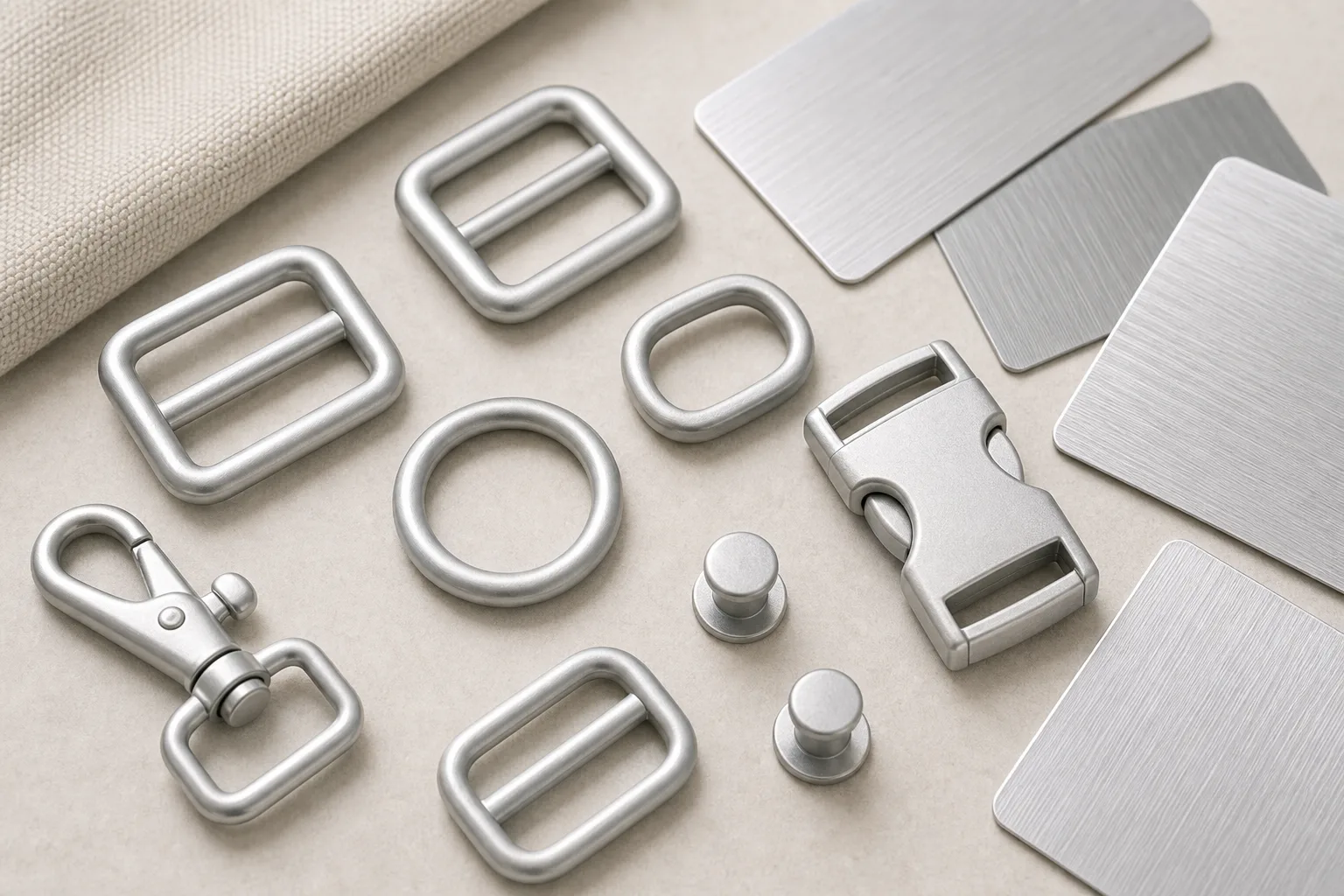
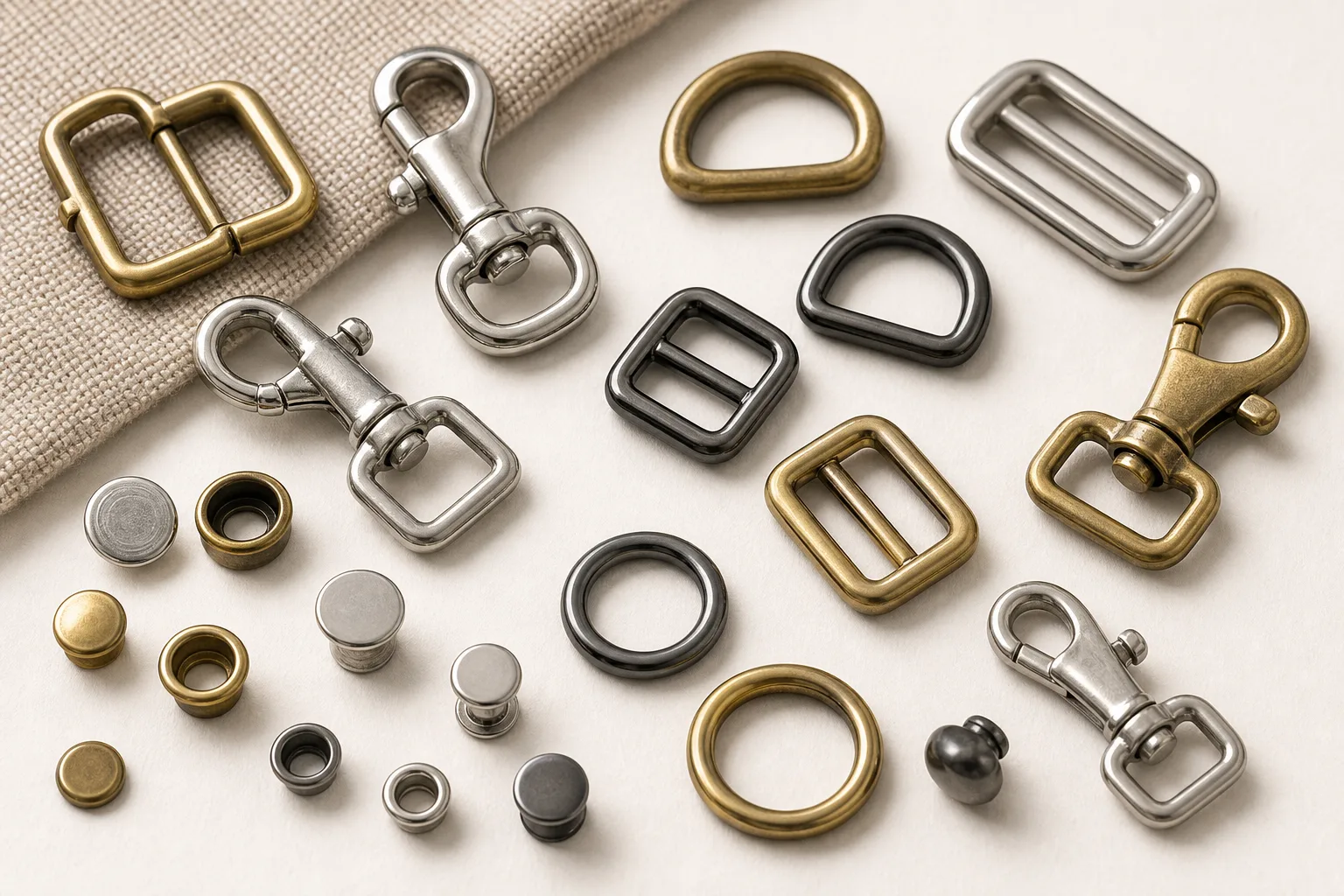
Aluminum belongs in a hardware conversation when someone has written down a weight target. Without that, it usually complicates the design without buying anything the product needs. With it, the material brings a specific set of consequences for geometry and finish that are worth understanding before committing.
The weight case
On a technical pack or a piece of sports equipment carrying a dozen or more metal fittings, moving those parts to aluminum changes what the user carries in a way they notice. That is the legitimate reason to use it.
On products where hardware weight contributes to perceived quality — fashion bags, belts, formal accessories — lightness works against the brief. State whether weight is a target or a non-issue before the material discussion starts.
Forming routes and practical shapes
Extrusion produces constant-section profiles that are then cut and finished, which suits sliders, tubes, rails and simple adjusters. Machining from bar suits turned and precise parts. Stamping suits flat forms.
Sculpted geometry with undercuts and varying section is not the natural territory of these routes. A design developed for cast zinc usually needs rework to be produced in aluminum, and that should be discussed before the design is fixed.
Anodizing: a converted surface
Anodizing grows an oxide layer out of the aluminum itself and dyes it before sealing. Because it is part of the metal, it cannot flake, and the metal texture usually remains visible through the colour, giving a characteristic slightly translucent look.
The layer is thin, so high-contact edges can wear through to bright aluminum. That is a different ageing pattern from plating, and whether it reads as acceptable is a design decision rather than a defect.
Colour matching and mixed sets
Anodized colour and plated colour do not match, even under the same colour name, because one is dyed metal and the other is deposited metal. On a set combining aluminum and zinc parts sitting next to each other, this is visible.
The realistic options are to accept a deliberate contrast, to move all visible parts to one material, or to choose colours where the difference is least noticeable. Decide it early, because it is expensive after tooling exists.
Cost behaviour
Machined aluminum carries machining time per part, so the cost curve with quantity is flatter than a cast part that front-loads tooling. Extruded parts are cheap per unit length once the die exists.
Because of that, the cheaper route depends on geometry and quantity together. Ask for tooling and piece cost separately and compare at your real volume rather than at a sample quantity.
What to specify
The weight target, part geometry and section, the intended forming route if known, anodized colour and finish level with a physical reference, whether the part sits next to parts in other materials, expected edge abrasion, and quantity.
This guide does not state anodic layer thickness, hardness or corrosion figures, because those depend on the process specification and the test. If performance matters, agree what will be tested and against which standard.
Aluminum answers a weight target and brings an anodized appearance, at the cost of geometric freedom and the plated palette. Without a stated weight requirement, it usually adds constraints without buying anything the product needs.
 Comparison Guides
 Finish Guides
 Comparison Guides
 Application Guides
 Material Guides
 Material Guides