
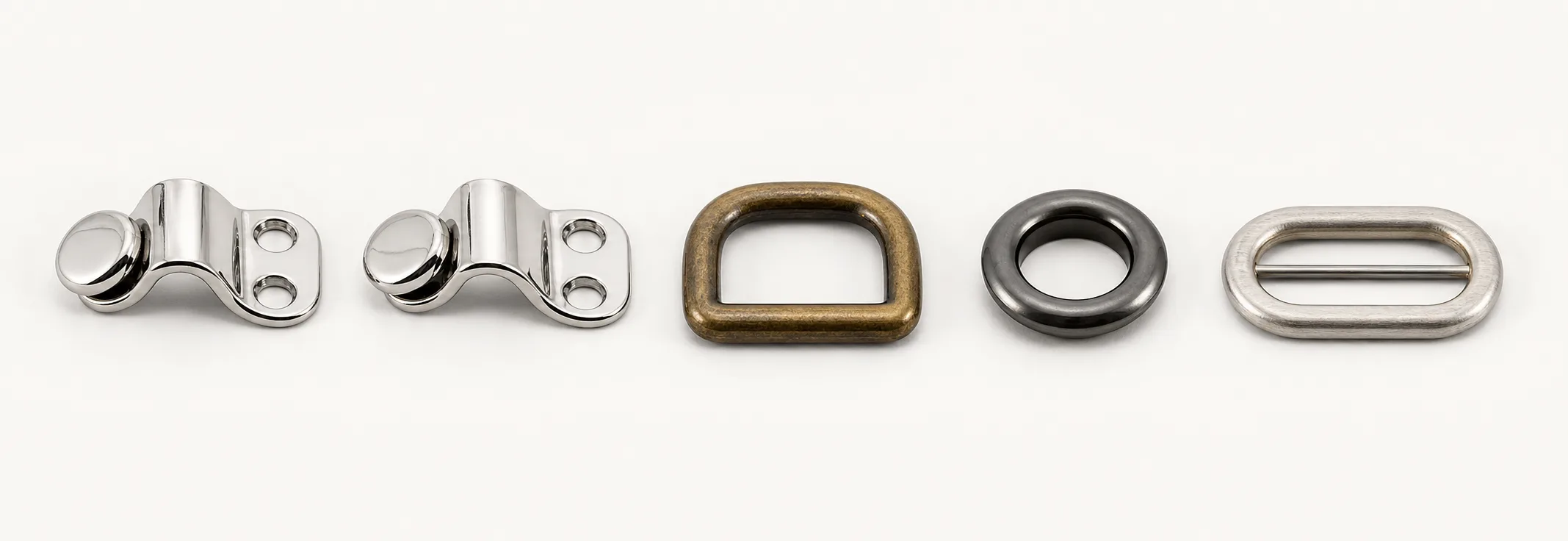
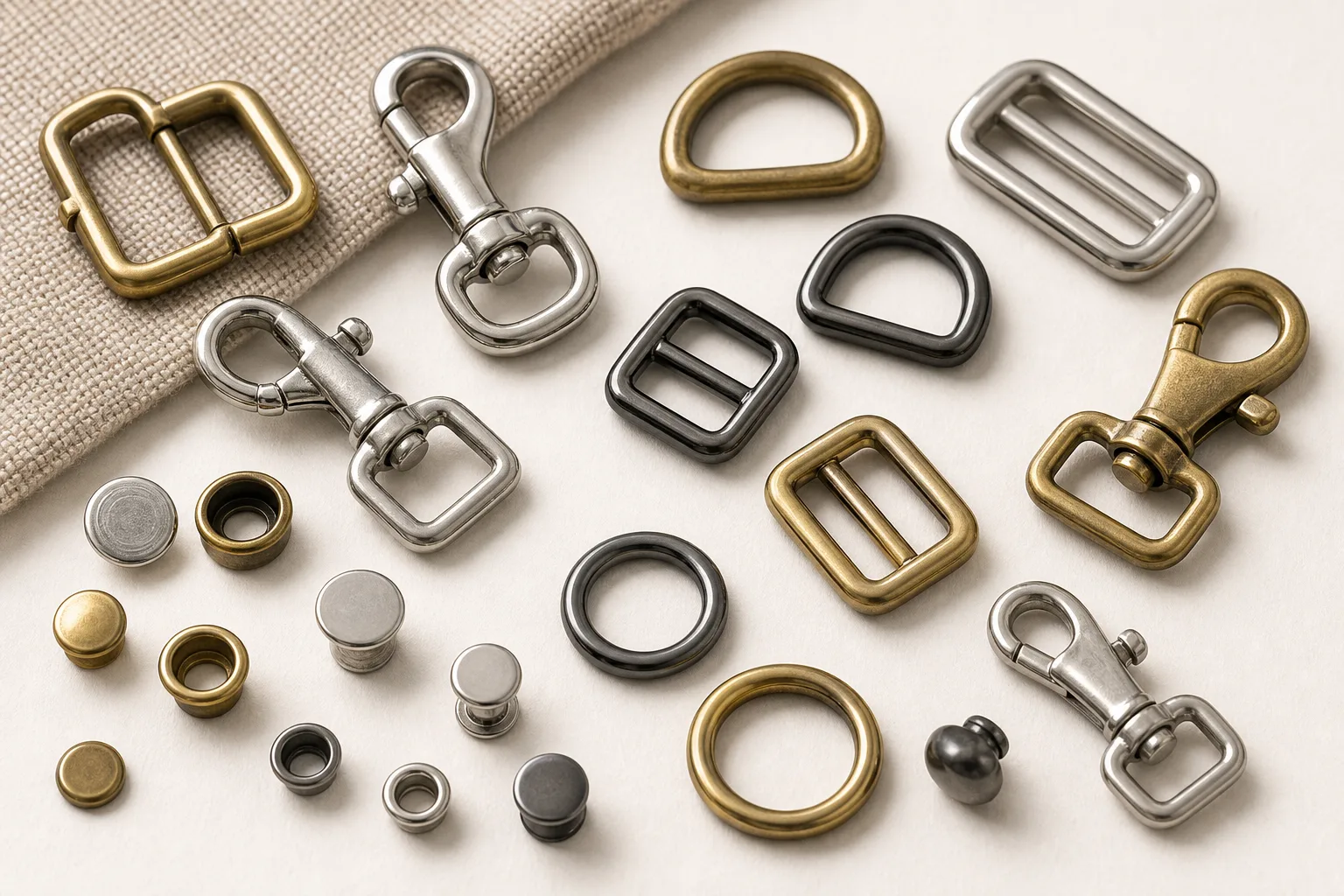
Eyelets and speed hooks are among the most heavily cycled components in any soft goods product: loaded and unloaded every time the shoe is put on, abraded by the lace throughout wear, and flexed with the upper. That combination makes them worth specifying properly rather than carrying over from a previous style.
The upper sets the eyelet dimensions
An eyelet is set through the upper and clinched, so its length must suit the total thickness at that point — outer material, any reinforcement, lining and the eyestay. A change in lining or eyestay construction changes the required length even when the outer material is unchanged.
Measure at the actual eyelet position rather than on a flat piece of the upper material. The eyestay is usually the thickest zone in the upper, and that is where the eyelets live.
The lace does the wearing
Laces saw back and forth through eyelets under tension every time the shoe is fastened. Over a shoe life this abrades the inner edge of the eyelet and, in the other direction, abrades the lace.
Edge condition and the radius the lace runs over therefore matter more than they would in a static fitting. A rough or square inner edge shortens lace life noticeably even when the eyelet itself remains sound.
Speed hooks change the load pattern
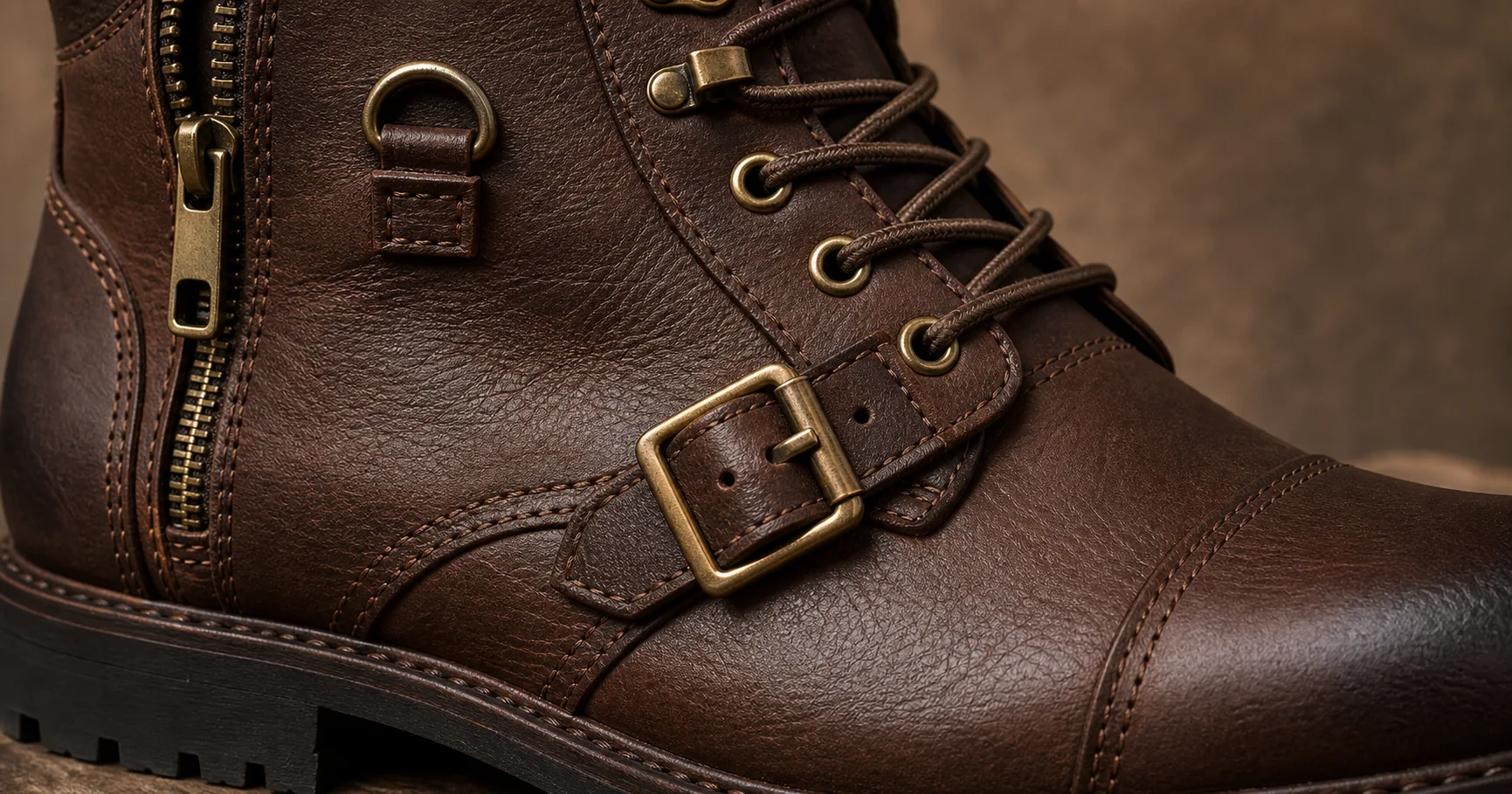
Hooks are used at the upper positions of boots to let the lace be tensioned and released quickly. They take a directional load, and they protrude, which makes them the parts most likely to catch on obstacles or on the opposite leg.
Where hooks are used, the attachment and the hook geometry both matter: a hook that holds well but snags is a field complaint, and one that releases easily under a snag may not hold tension.
Flex, moisture and what corrodes
The upper flexes with every step, and the hardware near the flex zone moves with it. Footwear is also routinely wet, and moisture is retained in the upper materials around the hardware rather than draining away.
Describe the intended use — indoor, urban, trail, wet-work — when asking for a material recommendation. As elsewhere in this library, no corrosion figures are stated here, because they depend on the material, finish, exposure and test method.
Appearance across a set that is seen up close
A shoe carries many eyelets in a visible row, sometimes mixed with hooks in a different part geometry. Small differences in tone or gloss are obvious when parts sit in a line at close range.
Approve eyelets and hooks together, in a row, in the light the product will be sold under — not as individual loose parts in a bag.
What to specify
Shoe type and use environment, upper construction with total thickness at the eyestay, eyelet and hook positions and counts, lace type and diameter, expected lacing tension, finish with a reference approved across the full set, and quantity per size run.
Send an upper section if one exists. Eyelet length taken from an actual eyestay is one of the few dimensions that is genuinely hard to get right any other way.
Footwear hardware is specified from the eyestay thickness and the lacing system outwards. Get the eyelet length from the real construction, pay attention to the inner edge the lace runs over, and approve the whole visible row together.

 Application Guides
 Buyer Guides
 Application Guides
 Buyer Guides
 Comparison Guides
 Application Guides