
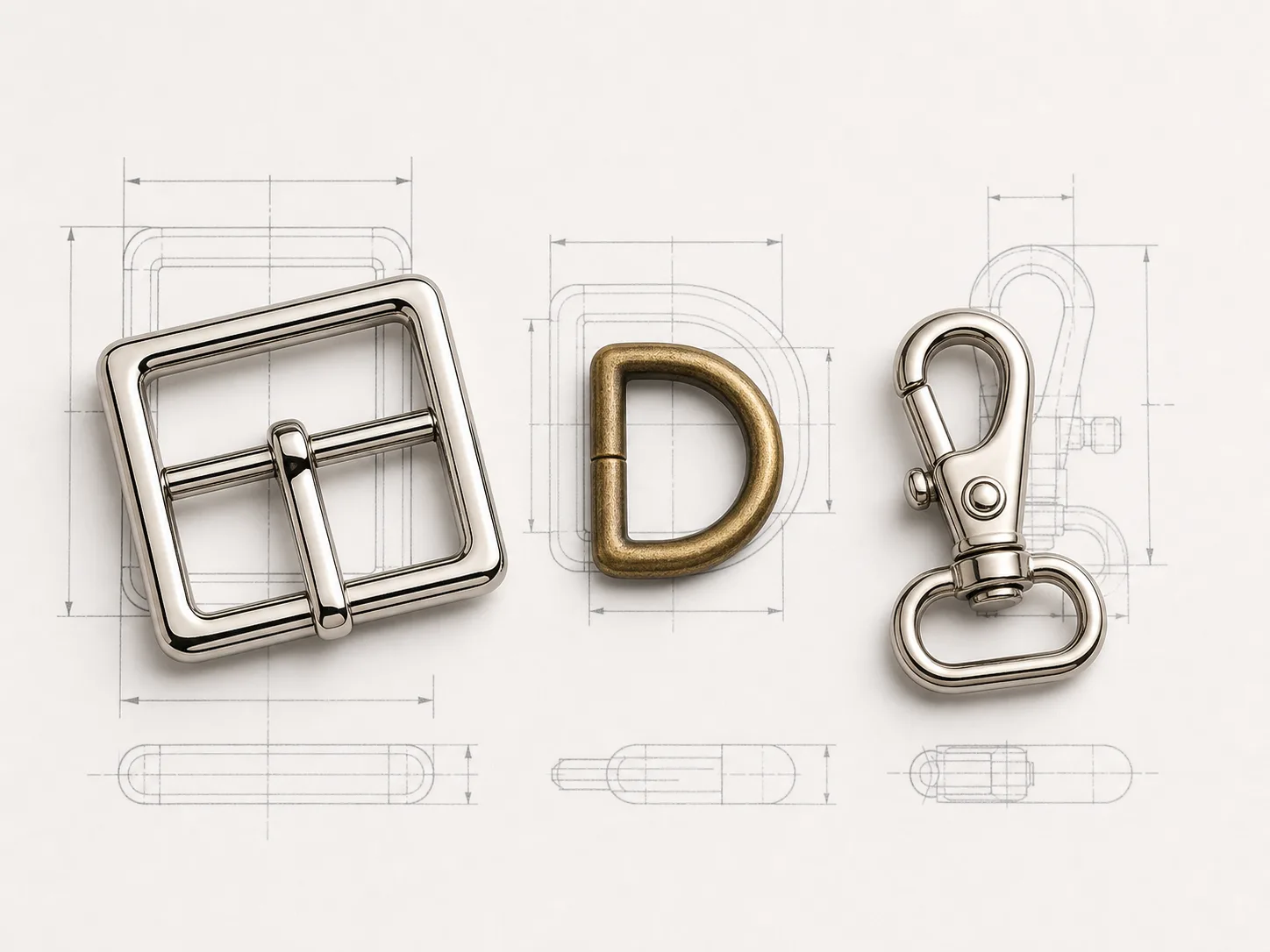

A specification sheet is not paperwork. It is the document both sides will read when something arrives that is not what someone expected, and its usefulness at that moment depends entirely on whether its statements can be checked.
Identity: what this document describes
Start with a part number, a version and a date. Specifications change during development, and an unversioned sheet makes it impossible to establish later which one production was run against.
Include the buyer’s and supplier’s references if they differ, plus the product or style the part belongs to. Parts get reused across styles, and knowing where a part is used affects how a change is assessed.
Dimensions with tolerances, not nominal values alone
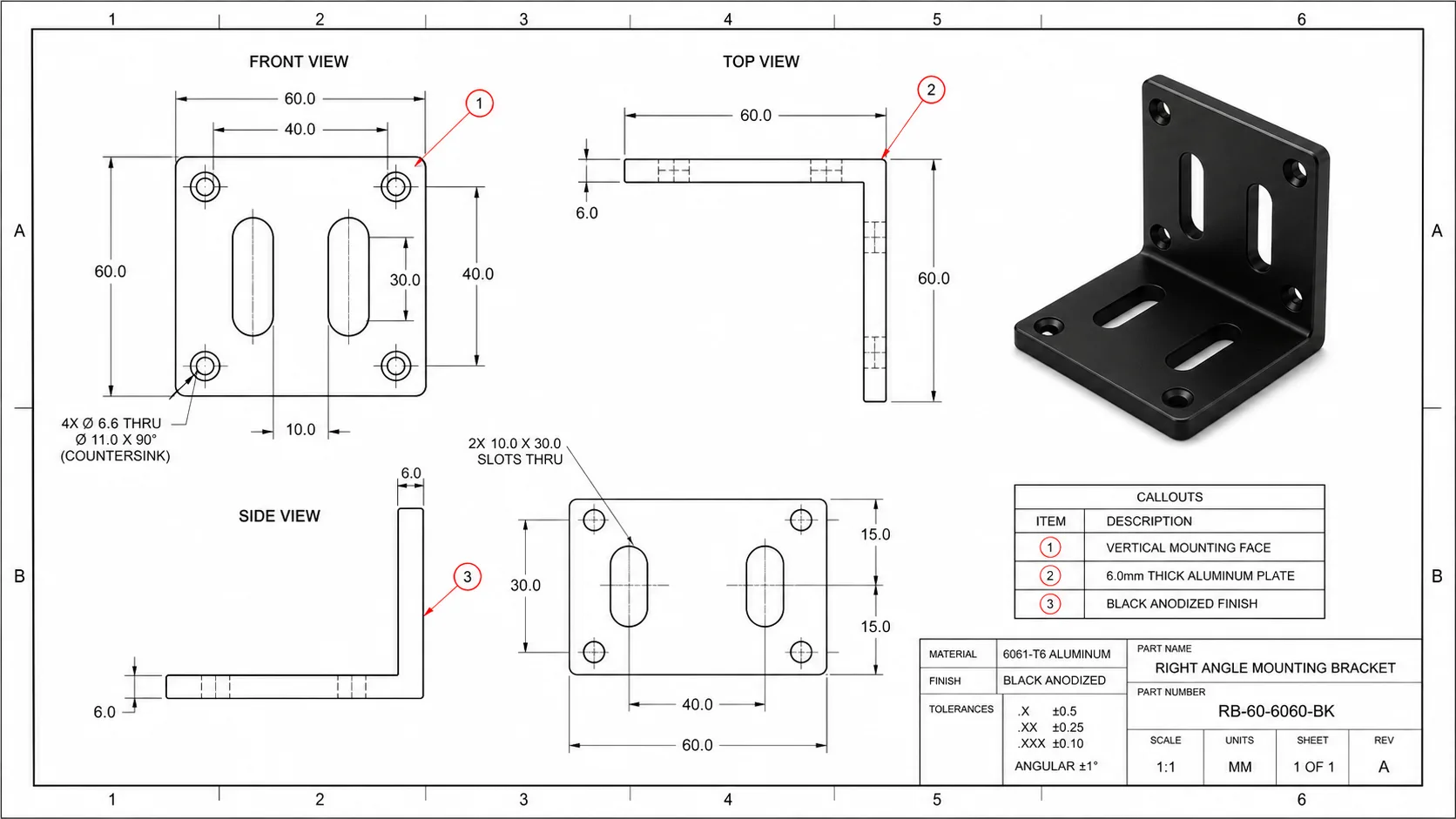
A dimension without a tolerance is not a requirement, because every real part deviates from nominal. State the tolerance for the dimensions that matter functionally, and mark the others as reference.
Distinguish between dimensions that must hold for the part to work — a slot width, an inner diameter, a post length — and dimensions that merely describe the shape. Applying tight tolerances everywhere raises cost without improving the outcome.
Material and finish, stated as a pair
Record the base material and the finish together, because the combination is what determines both appearance and behaviour. Where the appearance is critical, name the approved physical sample and its date rather than relying on a colour name.
Avoid stating performance figures on the sheet unless they come from an agreed test with a named method. A figure without a method cannot be verified and is a source of dispute rather than protection.
Function: what the part has to do
Some requirements are behavioural rather than dimensional: a closure must not open under a particular condition, an adjuster must hold on a particular webbing, a gate must return under its own spring.
Write these as observable checks. “Holds on 25 mm webbing of the approved type without slipping when pulled by hand” can be checked by anyone; “secure” cannot.
Marking, packing and what accompanies the goods
Logo content and placement, any part marking, inner and outer packing, quantity per bag or box, labelling and any document that must ship with the goods all belong on the sheet. These are the requirements most often agreed verbally and most often forgotten.
If a document is required at delivery, name it and its scope here, so it is part of the specification rather than an afterthought.
Change control
State who may change the specification and what happens to material already in production when it changes. Even a single line to this effect prevents the most common category of production dispute.
When a change is made, issue a new version rather than editing in place, and keep the superseded version. The history is what lets you diagnose a problem that appears three orders later.
A specification sheet earns its place by being checkable. Version it, give tolerances to the dimensions that matter, state material and finish as a pair against an approved sample, write functional requirements as observable checks, and control how it changes.
 RFQ & Sample Guides
 RFQ & Sample Guides
 RFQ & Sample Guides
 RFQ & Sample Guides
 RFQ & Sample Guides
 RFQ & Sample Guides
 RFQ & Sample Guides
 RFQ & Sample Guides